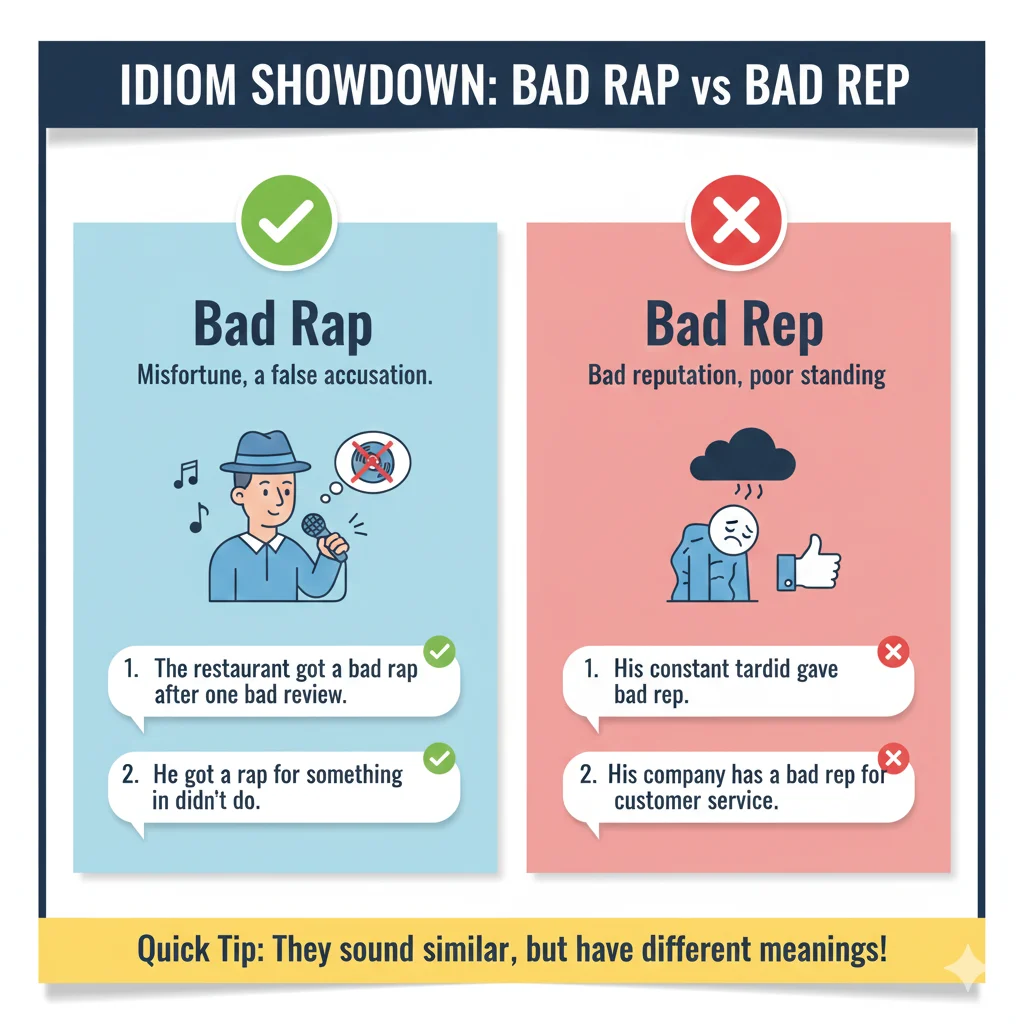
Many people often get confused between bad rap and bad rep. Even native English speakers sometimes mix them up! Both phrases sound similar, but they have different meanings and uses. If you’ve ever wondered whether to say, “He got a bad rap” or “He has a bad rep,” this guide is for you.
In this article, you’ll learn what bad rap and bad rep mean, how to use them correctly, and how to avoid common mistakes. We’ll include simple explanations, real-life examples, and fun memory tips so that even beginners can grasp the difference. By the end, you’ll confidently choose the right phrase in conversations, writing, or social media. Learning these small differences can make your English sound more natural and polished.
What Does Each Word Mean?
1. Bad Rap
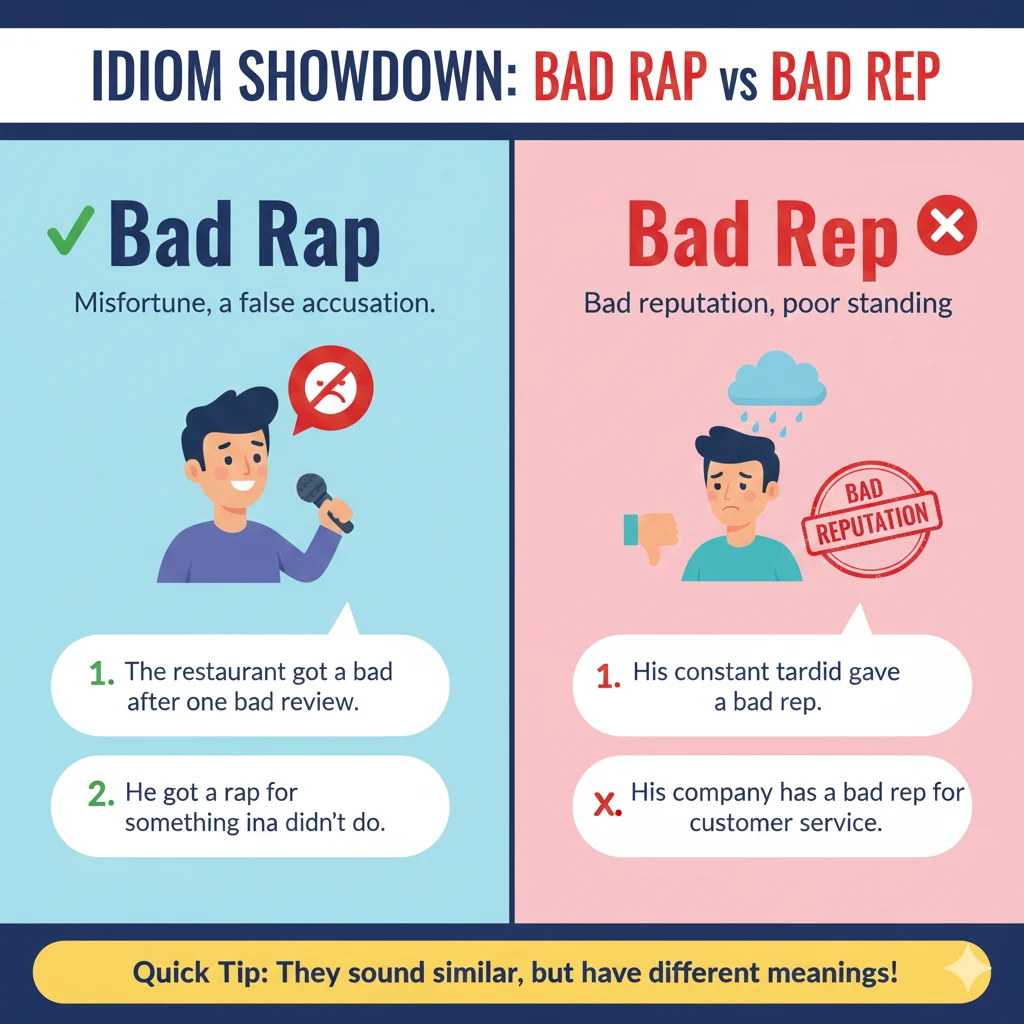
Meaning: A bad rap refers to false blame or undeserved criticism. When someone gets a bad rap, it means people think badly of them unfairly.
Part of Speech: Noun phrase
Examples:
- The singer got a bad rap for something he didn’t do.
- Small businesses often get a bad rap for high prices.
- That movie got a bad rap, but I loved it.
Memory Tip: Think of “rap” like “reputation unfairly blamed.” If it’s bad rap, the blame is not fully deserved.
2. Bad Rep
Meaning: A bad rep (short for “bad reputation”) refers to a real negative opinion about someone or something. Unlike bad rap, a bad rep is usually deserved.
Part of Speech: Noun phrase
Examples:
- That restaurant has a bad rep for slow service.
- He has a bad rep because he often breaks promises.
- Video game players know which websites have a bad rep for scams.
Memory Tip: Think of “rep” as “reputation.” If it’s bad rep, the person really did something to earn it.
The Key Difference Between Bad Rap and Bad Rep
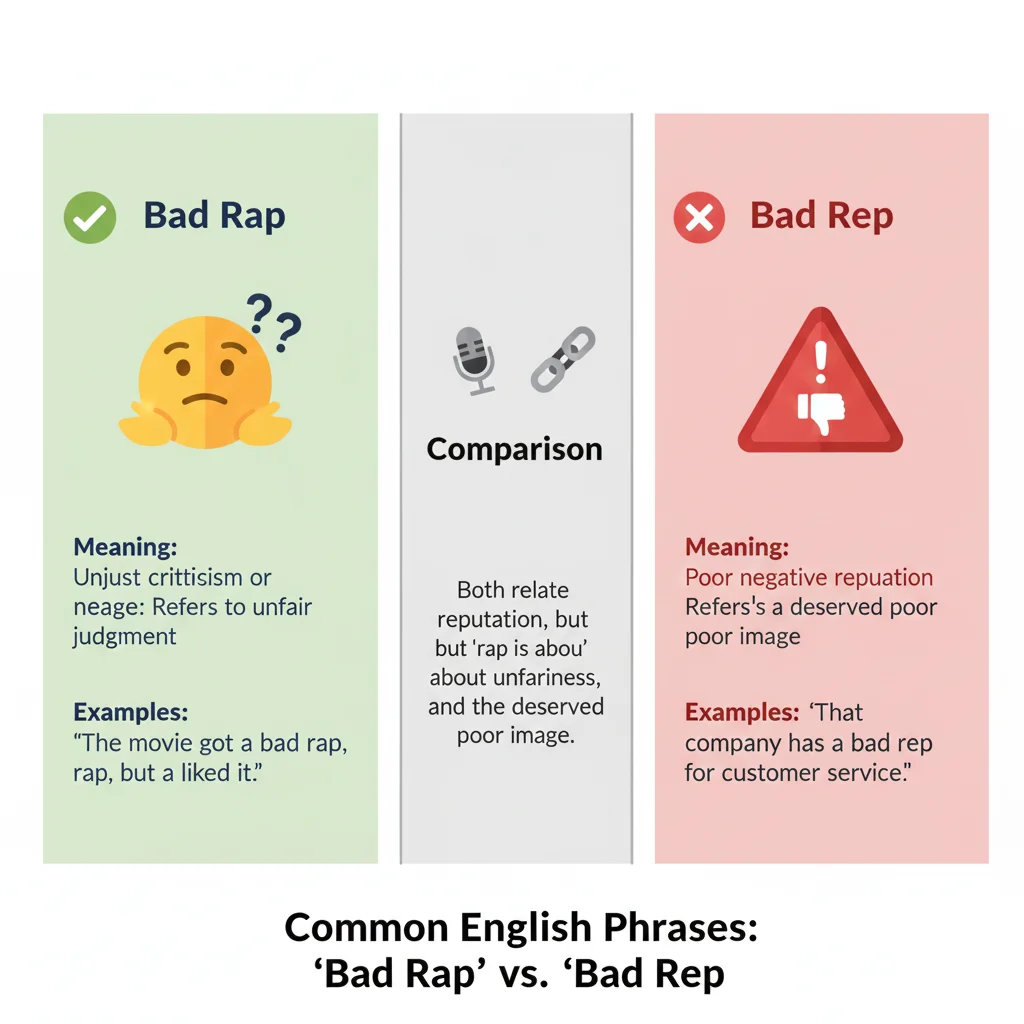
| Phrase | Meaning | Usage Example | Key Tip |
|---|---|---|---|
| Bad Rap | Undeserved blame or criticism | “She got a bad rap for missing the meeting.” | Use when the criticism is unfair. |
| Bad Rep | Real negative reputation or opinion | “He has a bad rep for being late.” | Use when the reputation is deserved. |
Quick Tip:
- Bad rap = unfair blame
- Bad rep = deserved reputation
Common Mistakes and How to Avoid Them
Mistake 1: Using “bad rap” when it’s deserved
- ❌ “He got a bad rap for cheating on the test.”
- ✅ “He has a bad rep for cheating on the test.”
Why: Cheating earns real criticism, so it’s bad rep, not bad rap.
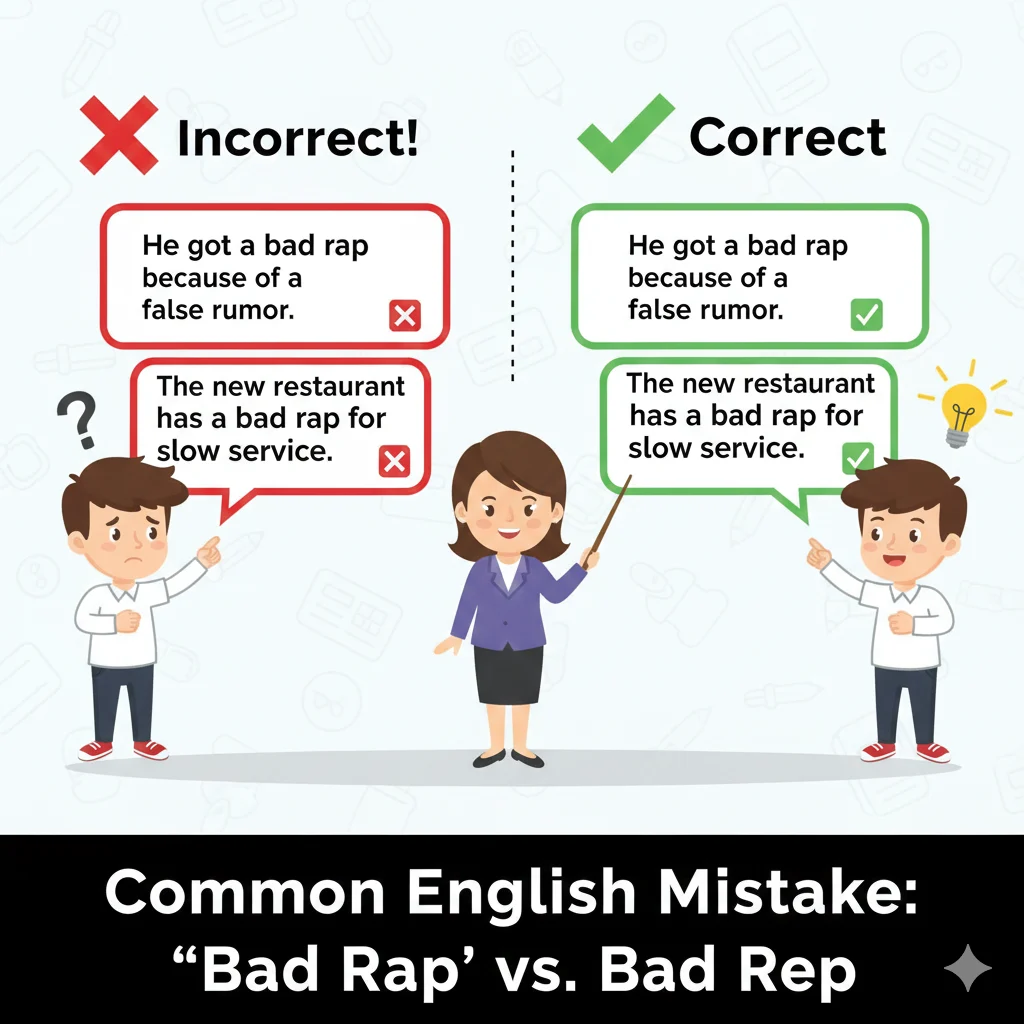
Mistake 2: Using “bad rep” for false blame
- ❌ “She has a bad rep for something she didn’t do.”
- ✅ “She got a bad rap for something she didn’t do.”
Why: If the blame is unfair, the correct phrase is bad rap.
Mistake 3: Confusing informal and formal writing
- In essays or formal writing, “bad rap” may be too casual; you might use “undeserved criticism” instead.
When to Use Bad Rap
Use bad rap in situations where someone is unfairly judged or blamed. It is more common in informal speech, journalism, and conversations.
Examples:
- He got a bad rap for missing one class.
- Local artists often get a bad rap from critics.
- That TV show received a bad rap, but I think it’s funny.
- Don’t give him a bad rap; he’s really hardworking.
- The team got a bad rap for losing, but they played well.
Real-life tip: You can use bad rap in school, work, or even social media when talking about unfair judgment.
When to Use Bad Rep
Use bad rep when someone or something really has a negative reputation. It’s often used in casual and semi-formal situations.
Examples:
- The local café has a bad rep for rude staff.
- He has a bad rep among his classmates for cheating.
- That brand earned a bad rep after several product complaints.
- Don’t buy from that website; it has a bad rep.
- Some politicians have a bad rep due to past scandals.
Memory hack: If it’s deserved, it’s a bad rep. Imagine a visual: a reputation “stamp” marked BAD.
Quick Recap: Bad Rap vs Bad Rep
- Bad Rap: Unfair blame or criticism. Example: “She got a bad rap for something she didn’t do.”
- Bad Rep: Real negative reputation. Example: “He has a bad rep for being late.”
- Tip: Ask yourself: Is it deserved? Yes → bad rep, No → bad rap.
Advanced Tips
- Origin: “Rap” originally meant “blame or criticism” in slang. “Rep” is short for “reputation.”
- Formal usage: In essays, replace bad rap with “undeserved criticism” and bad rep with “poor reputation.”
- Online writing: Using the wrong phrase in social media can confuse readers, so double-check the meaning.
Mini Quiz
Fill in the blanks with bad rap or bad rep:
- That singer got a ______ for missing the concert, but it wasn’t his fault.
- The café has a ______ for serving cold coffee.
- Don’t give him a ______; he tried his best.
- He earned a ______ for lying to his friends.
- That actor got a ______ for a movie he didn’t act in.
- Online forums warn about websites with a ______.
- She received a ______ for her excellent work. (Trick: Is it deserved?)
FAQs
1. Is “bad rap” the same as “bad rep”?
No. Bad rap is unfair blame; bad rep is real negative reputation.
2. Can I use “bad rap” in formal writing?
It’s more casual. For essays, use “undeserved criticism.”
3. Is “bad rep” slang?
It’s informal but widely understood. You can also say “poor reputation.”
4. How can I remember the difference?
If the criticism is unfair → bad rap; if deserved → bad rep.
5. Can one person have both a bad rap and a bad rep?
Yes. They might be unfairly blamed for something they actually did.
Conclusion
Understanding the difference between bad rap and bad rep is simple once you remember the key idea: bad rap = unfair blame, bad rep = real negative reputation. By practicing these phrases in daily conversations, writing, or even social media posts, you’ll sound more natural in English. Always check whether the criticism is deserved or not before choosing the right phrase. Small differences like this make a big impact in communication.
Remember, every mistake is a learning opportunity. With a little attention and practice, using bad rap and bad rep correctly will become second nature. Keep reading, practicing, and improving your English every day — your confidence will grow with every sentence!

Caribbean-born novelist Jean Rhys (1890–1979) explored alienation, identity, and female psychology with lyrical, haunting, and emotionally rich prose.