English has many phrases that sound alike but have very different meanings. One of the most commonly confused phrases is “bear in mind” and “bare in mind.” Many learners and even native speakers often mix them up because they sound similar. Using the wrong phrase can change the meaning of your sentence or make your writing look unprofessional.
In this guide, you will learn exactly what each phrase means, the key differences, and how to use them correctly. We will include easy examples, common mistakes, memory tricks, and even a mini quiz to test your understanding. By the end of this article, you’ll be able to confidently use bear in mind in your writing and speaking, while knowing why bare in mind is usually incorrect. This guide is simple, practical, and perfect for beginners.
What Does Each Phrase Mean?
1. Bear in Mind
Meaning: To remember or consider something when making a decision or thinking about a situation.
Part of Speech: Idiomatic verb phrase
Examples:
- Bear in mind that the exam starts at 9 a.m.
- You should bear in mind your friend’s allergies before cooking.
- Bear in mind that traffic is heavy on Fridays.
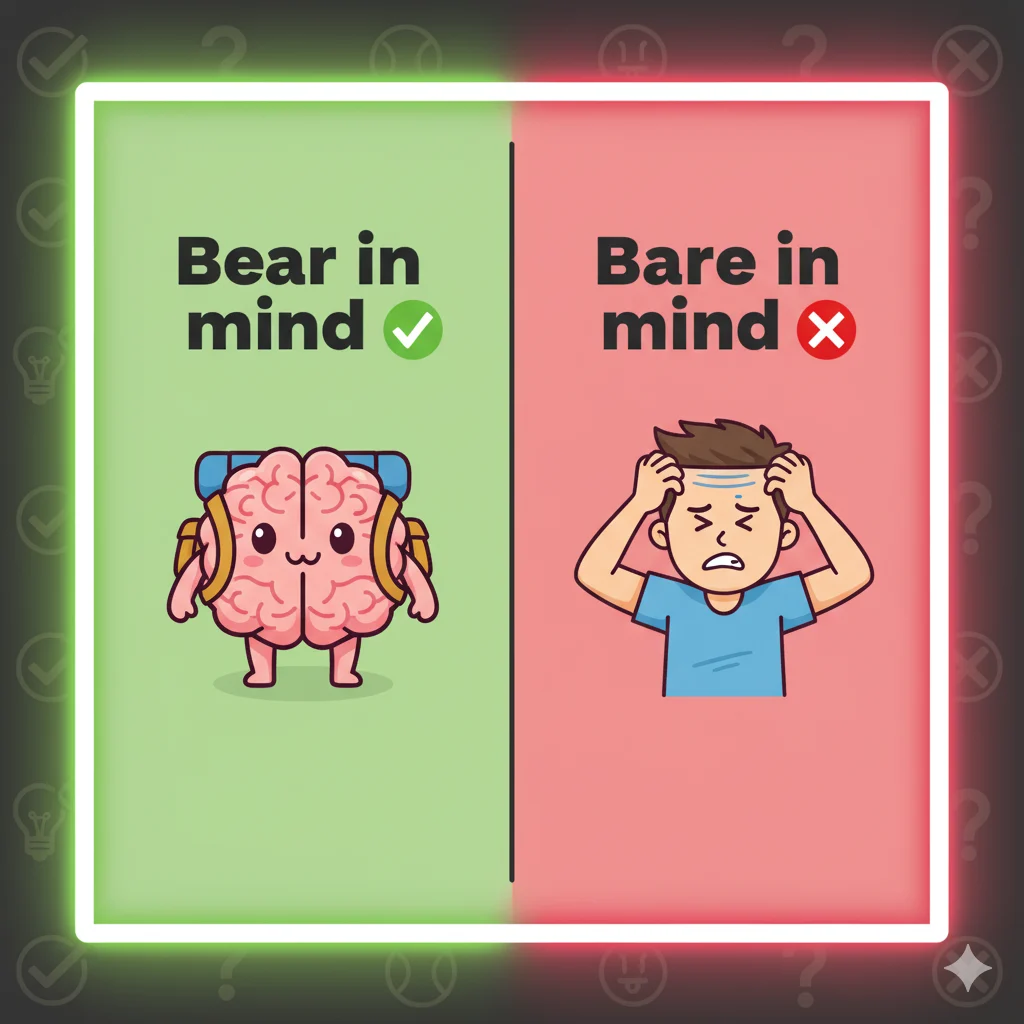
Mini Story: Imagine carrying a backpack full of important notes—those notes help you remember things. “Bear in mind” is like carrying that memory in your mind.
2. Bare in Mind
Meaning: The phrase “bare in mind” is almost always incorrect in English. “Bare” means to uncover or expose. So saying “bare in mind” would literally mean “expose in your mind,” which doesn’t make sense in everyday English.
Part of Speech: Not standard English
Examples (Incorrect):
- ❌ Bare in mind that it’s raining today.
- ❌ Please bare in mind your homework deadline.
- ❌ Bare in mind that he is on vacation.
Quick Tip: If you see “bare in mind” in writing, it is usually a spelling mistake. Always use bear in mind.
The Key Difference Between Bear in Mind and Bare in Mind
| Phrase | Meaning | Usage | Example |
|---|---|---|---|
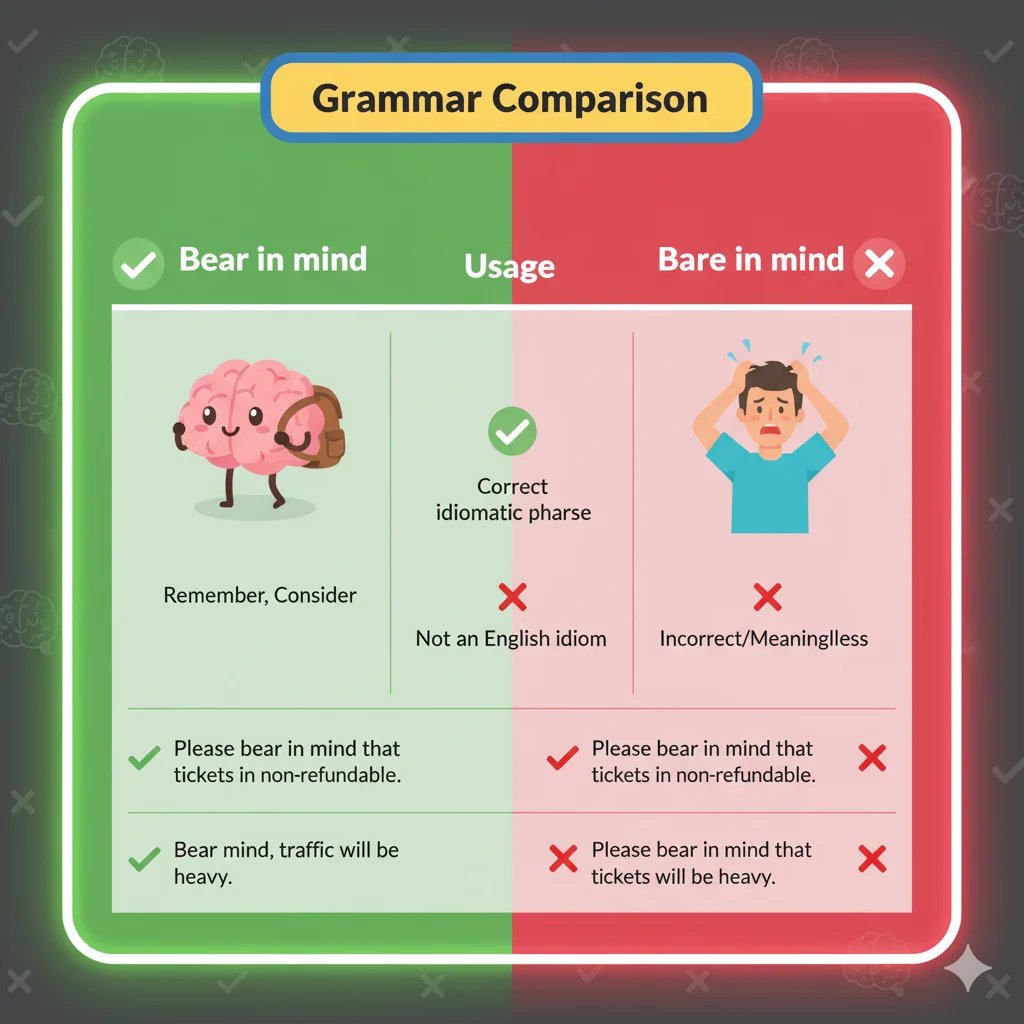
| Bear in Mind | Remember or consider something | Correct idiomatic expression | Bear in mind that she is new to the team. |
| Bare in Mind | Expose in mind (nonsensical) | Incorrect | ❌ Bare in mind your responsibilities. |
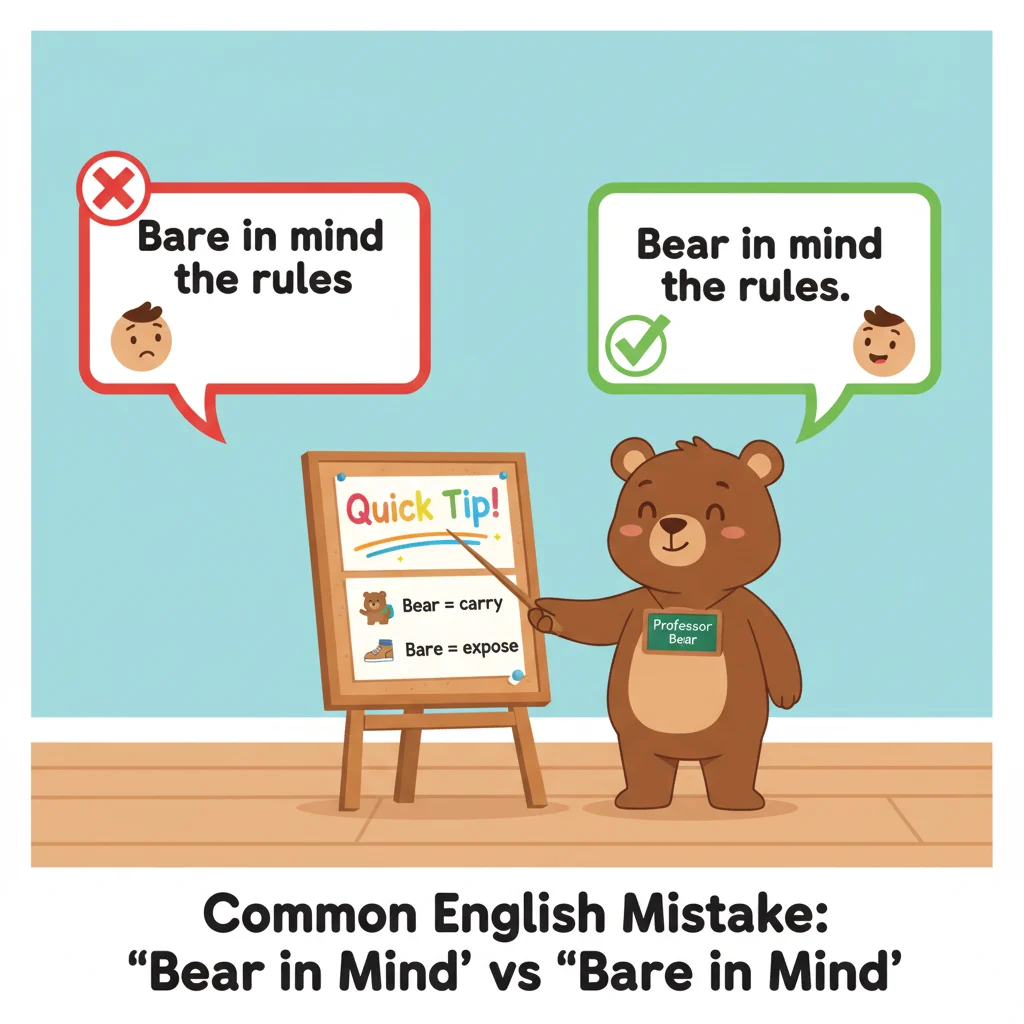
Quick Tip: Think of “bear” as carrying something in your mind, just like you carry a bag. This will help you remember the correct phrase.
Common Mistakes and How to Avoid Them
Incorrect Example 1:
❌ Bare in mind the rules of the game.
✅ Corrected: Bear in mind the rules of the game.
Incorrect Example 2:
❌ Please bare in mind the traffic delays.
✅ Corrected: Please bear in mind the traffic delays.
Why Mistakes Happen:
People confuse the spelling because bear and bare sound the same. Remember: “bear” carries meaning; “bare” exposes.
When to Use Bear in Mind
Use bear in mind when you want someone to remember or consider something important. It works in both spoken and written English.
Examples:
- Bear in mind that we need to submit the report by Monday.
- When planning the picnic, bear in mind the weather forecast.
- Bear in mind your audience when writing a speech.
- Bear in mind that mistakes are part of learning.
- Always bear in mind the rules of the game before starting.
Real-Life Tip: Teachers, parents, and friends often use this phrase to give advice.
When to Use Bare in Mind
As mentioned earlier, bare in mind is almost always incorrect.
Memory Hack: Imagine someone trying to “expose” your thoughts—it doesn’t make sense. Stick to bear in mind.
Quick Recap: Bear in Mind vs Bare in Mind
- Bear in mind: Remember or consider something ✅
- Bare in mind: Incorrect ❌
- Tip to remember: Bear = carry; Bare = expose
- Usage: Everyday conversations, writing, advice
- Common Mistake: Spelling confusion
Advanced Tips
- Origin: “Bear in mind” comes from the Old English word “beran,” meaning to carry. You’re literally “carrying” something in your mind.
- Formal Writing: Always use bear in mind in essays, reports, and professional emails.
- Online/Texts: Avoid “bare in mind,” even in casual messages, to appear grammatically correct.
Mini Quiz
Fill in the blanks with bear in mind or bare in mind:
- ________ that the store closes at 8 p.m.
- Please ________ your deadlines when planning.
- ❌ Don’t use ________ in emails.
- When cooking, always ________ food allergies.
- ________ that we have a meeting tomorrow.
Answer Key: 1. Bear in mind, 2. Bear in mind, 3. Bare in mind, 4. Bear in mind, 5. Bear in mind
FAQs
1. Is “bare in mind” ever correct?
No. “Bare in mind” is considered a spelling mistake in English.
2. Can I use “bear in mind” in emails?
Yes. It is perfectly suitable for both formal and informal writing.
3. How can I remember the difference?
Think: bear = carry in your mind, bare = expose.
4. Is “bear in mind” British or American English?
It is used in both British and American English.
5. Can children use “bear in mind”?
Yes. It’s simple and easy to understand for beginners.
Conclusion
Learning the difference between bear in mind and bare in mind is simple if you remember the main rule: bear = carry, bare = expose. “Bear in mind” is correct and means to remember or consider something. On the other hand, “bare in mind” is almost always wrong and should be avoided. By practicing the examples in this guide and using our memory tips, you can confidently use bear in mind in daily conversations, emails, essays, and advice. English becomes easier when you understand these little differences. Keep practicing, and soon, mixing up similar phrases will be a thing of the past. Every day is a chance to improve your English skills!

English novelist and poet Thomas Hardy (1840–1928) explored human struggles, social constraints, and tragic love with deep realism and vivid storytelling.