Many people get confused between “feening” and “feigning” because they sound almost the same. But their meanings are completely different. One word is used in slang, and the other is used in formal English. If you mix them up, your sentence can sound funny, incorrect, or even change its meaning.
In this easy guide, you will learn the meaning, correct usage, difference, and examples of both words. We’ll explain everything in a simple, friendly way so that even a 4th-grade student can understand. You’ll also see real-life examples, common mistakes, a comparison table, and a short quiz to test yourself.
By the end, you will confidently know when to use feening and when to use feigning, and you’ll never mix them up again.
What Does Each Word Mean?
1. What Does “Feening” Mean?
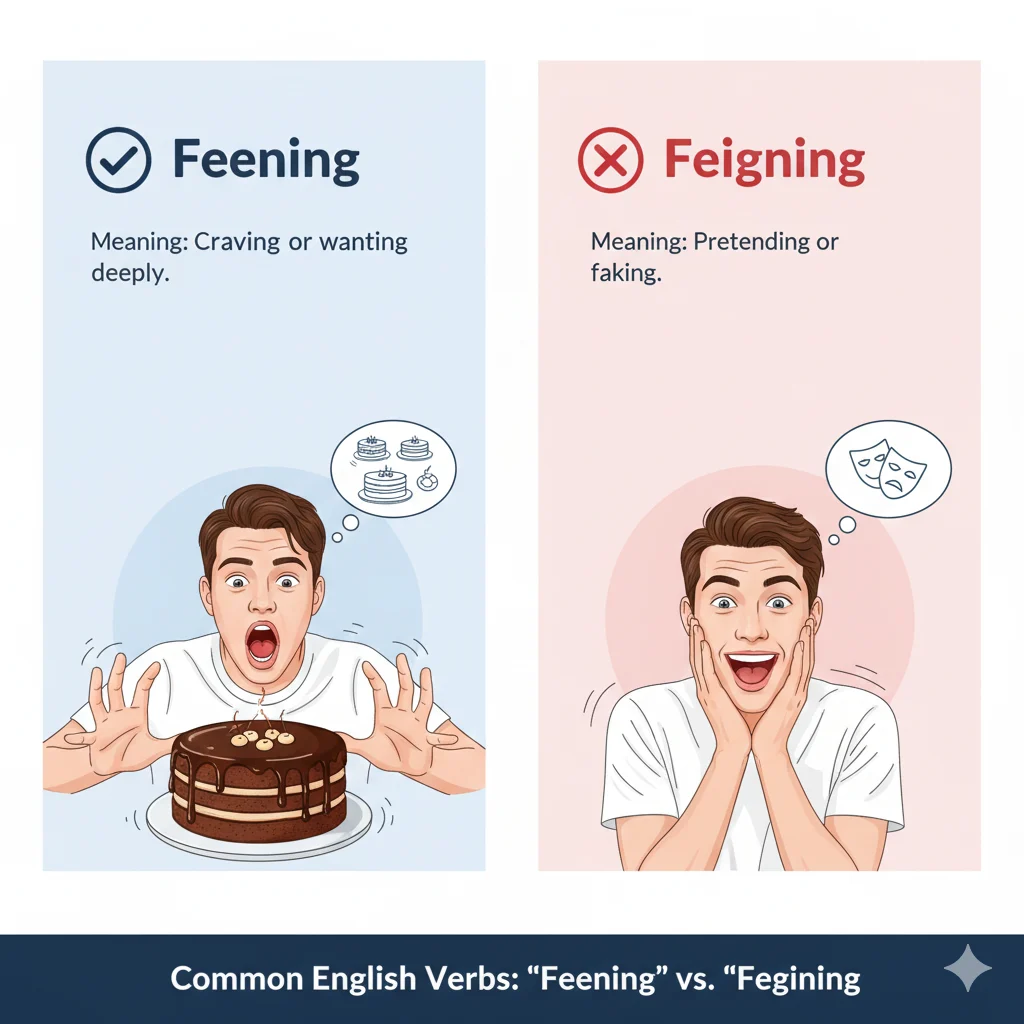
Feening (also spelled feenin’) is a slang word. It came from the word “fiending,” which means craving or wanting something very badly.
It is NOT used in formal school essays or exams. But it is common in songs, texting, and casual speech.
Simple Meaning:
To want something very badly.
To crave something strongly.
Part of Speech:
Verb (slang)
Examples of “Feening” in Sentences:
- I’m feening for some chocolate right now.
- She’s feening to watch the new movie.
- He was feening for attention after the game.
Mini Story:
Imagine you see your favorite ice cream, and you can’t stop thinking about it. You want it so much. That feeling is feening.

Is “Feening” a Real Word?
Many people ask, “Is feening a real word?”
The short answer is: yes and no, depending on the context.
“Feening” is considered slang, not a standard dictionary word used in formal English. It comes from the word “fiending,” which means craving or strongly wanting something.
You will often see feening used in:
- Song lyrics
- Social media posts
- Casual texting
- Informal conversations
Examples:
I’m feening for some ice cream right now.
She’s feening to watch the new movie tonight.
However, in school essays, professional writing, or exams, it is better to use more standard words like:
- craving
- wanting
- desiring
So, if someone asks “Is feening a real word?”, the best explanation is:
✔ It is real in slang and casual English
❌ It is not considered formal standard English
2. What Does “Feigning” Mean?
Feigning is a formal English word. It means pretending or faking something that is not true.
Simple Meaning:
To pretend.
To act like something is real when it is not.
Part of Speech:
Verb
Examples of “Feigning” in Sentences:
- He was feigning sleep to avoid doing homework.
- She was feigning surprise even though she already knew the secret.
- The student was feigning illness to skip class.
Mini Story:
Imagine your mom asks you to clean your room, and you instantly “fall asleep” on the couch. That is feigning.
The Key Difference Between Feening and Feigning
Here is the simplest explanation:
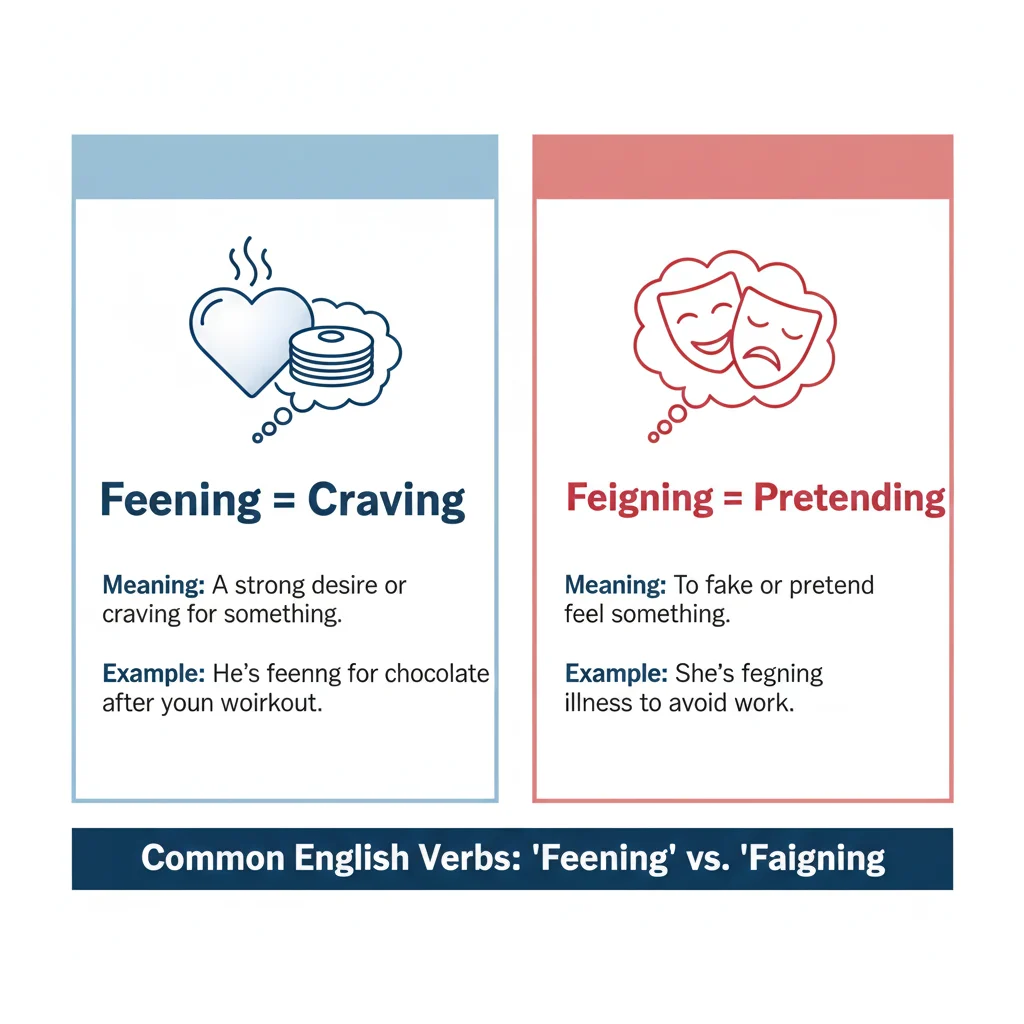
- Feening = craving or wanting something strongly (slang)
- Feigning = pretending or faking something (formal English)
Comparison Table
| Feature | Feening | Feigning |
|---|---|---|
| Meaning | Craving or wanting something a lot | Pretending or faking something |
| Type | Slang | Formal English |
| Used in | Casual speech, music, texting | Writing, schoolwork, serious conversations |
| Example | “I’m feening for pizza.” | “He was feigning happiness.” |
| Correct Spelling | Feening (slang from fiending) | Feigning |
Quick Tip to Remember
✔ Feening = Feeling a strong need. (Both start with FE-E)
✔ Feigning = Faking. (Both start with FE-I)
Common Mistakes and How to Avoid Them
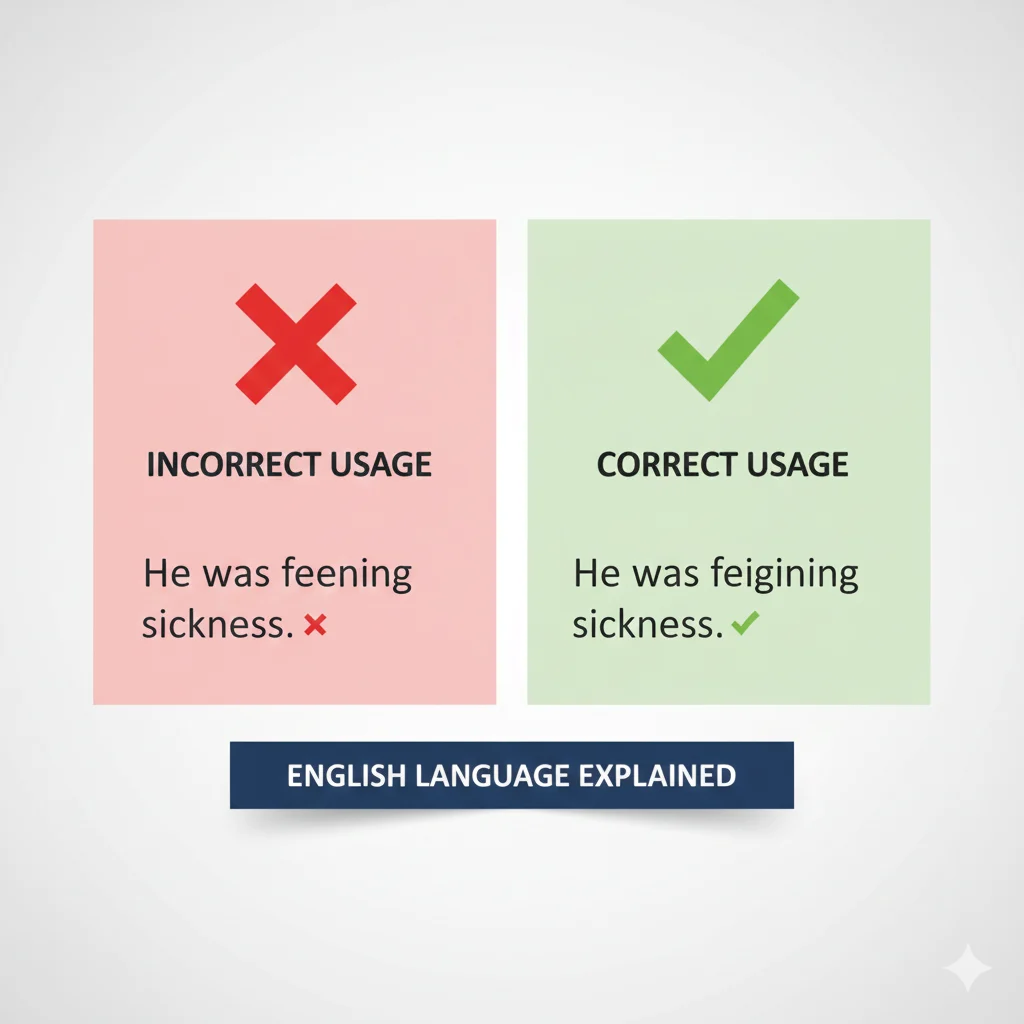
Mistake 1: Using “feening” instead of “feigning”
❌ He was feening sickness to skip school.
✔️ He was feigning sickness to skip school.
Why?
He’s pretending, not craving. So “feigning” is correct.
Mistake 2: Using “feigning” instead of “feening”
❌ I’m feigning for some fries.
✔️ I’m feening for some fries.
Why?
You WANT fries; you’re not pretending.
Mistake 3: Thinking both words mean the same
They sound similar but have completely different meanings.
Remember: craving vs pretending.
When to Use “Feening” (With Examples)
Use feening when you are talking about a strong want or craving. It is mostly used in casual English.
Use “Feening” when:
- You really want food
- You want a person’s attention
- You crave entertainment (movies, music, games)
- You strongly desire something
Examples:
- I’m feening for a cold drink on this hot day.
- She’s feening for some gossip.
- We were feening to play cricket after school.
- He’s feening for a new phone.
- I was feening to hear that song again.
Memory Hack:
Feening = Feeling a Need
(Just think of “FEELING → FEENING.”)
When to Use “Feigning” (With Examples)
Use feigning when someone is pretending, faking, acting, or not telling the truth through their behavior.
Use “Feigning” when:
- Someone is acting like they are sick
- Someone pretends not to know something
- Someone fakes emotion (happiness, fear, etc.)
- Someone avoids a task by pretending
Examples:
- He was feigning sadness even though he was happy inside.
- She kept feigning interest in the story.
- The kid was feigning injury during sports class.
- They were feigning surprise at the birthday party.
- I knew he was feigning anger just to scare me.
Memory Hack:
Feigning = Faking
(Both start with F-A sound.)
Quick Recap: Feening vs Feigning
- Feening
- Slang
- Means craving or wanting
- Used casually
- Example: “I’m feening for ice cream.”
- Feigning
- Formal English
- Means pretending
- Used in writing and serious talk
- Example: “She was feigning interest.”
Advanced Tips
1. Word Origins
- Feening comes from African-American slang, derived from “fiending.”
- Feigning comes from Old French “feindre,” meaning “to pretend.”
2. Use in Formal Writing
- Feening is not acceptable in essays, reports, exams, or academic writing.
- Feigning is acceptable and commonly used in literature.
3. Use in Texting & Social Media
- Feening is popular in songs, memes, and texting.
- Feigning is rare in casual chats unless someone is explaining a behavior.
4. Misuse Can Change Meaning
“Feening sickness” sounds funny because it means “craving sickness.”
“Feigning for food” sounds strange because pretending and craving are different actions.
Mini Quiz: Test Yourself!
Fill in the blanks with feening or feigning.
- He was ________ sleep to avoid answering the question.
- I’m ________ for some spicy noodles.
- She kept ________ excitement at the meeting.
- The kids were ________ to play outside after class.
- He is clearly ________ for attention today.
- She was ________ illness to skip the test.
- I’m ________ to watch the new episode tonight.
(Answers: feigning, feening, feigning, feening, feening, feigning, feening)
5 FAQs
1. What is the difference between feening and feigning?
Feening means craving something. Feigning means pretending something.
2. Is “feening” a real word?
Yes, it is a slang version of “fiending,” commonly used in songs and texting.
3. Can I use feening in formal writing?
No. Use “fiending” or rephrase the sentence. “Feening” is only for casual speech.
4. What does feigning mean in English?
Feigning means to pretend, act, or fake a feeling or situation.
5. Why do people mix up feening and feigning?
Because they sound similar, but their meanings are very different.
Conclusion
Understanding the difference between feening and feigning is simple once you know the meanings. One word is slang for craving something, and the other means pretending. When you use them correctly, your English becomes clearer and more confident. Remember the quick tips, review the examples, and try the mini quiz if you need practice. The more you use the words in real life, the easier they will feel. Keep learning a little every day—you’ll be surprised how quickly your English improves!

English playwright and novelist Patrick Hamilton (1904–1962) captured psychological tension, social decay, and dark humor in gripping, unforgettable stories.