Have you ever felt sick after a meal and wondered whether it was food poisoning or stomach flu? Many people mix these two terms because both involve upset stomachs, nausea, and vomiting. But even though they share some symptoms, they are not the same thing. Understanding the difference helps you explain your condition correctly, follow the right treatment, and use the terms accurately in English conversations or writing.
In this guide, you will learn the meaning of food poisoning and stomach flu, the key differences between them, and practical examples of how to use each term correctly. We will also cover common mistakes, quick memory hacks, and easy-to-remember tips. By the end, even beginners will feel confident using these terms in everyday situations.
What Does Each Word Mean?
Food Poisoning
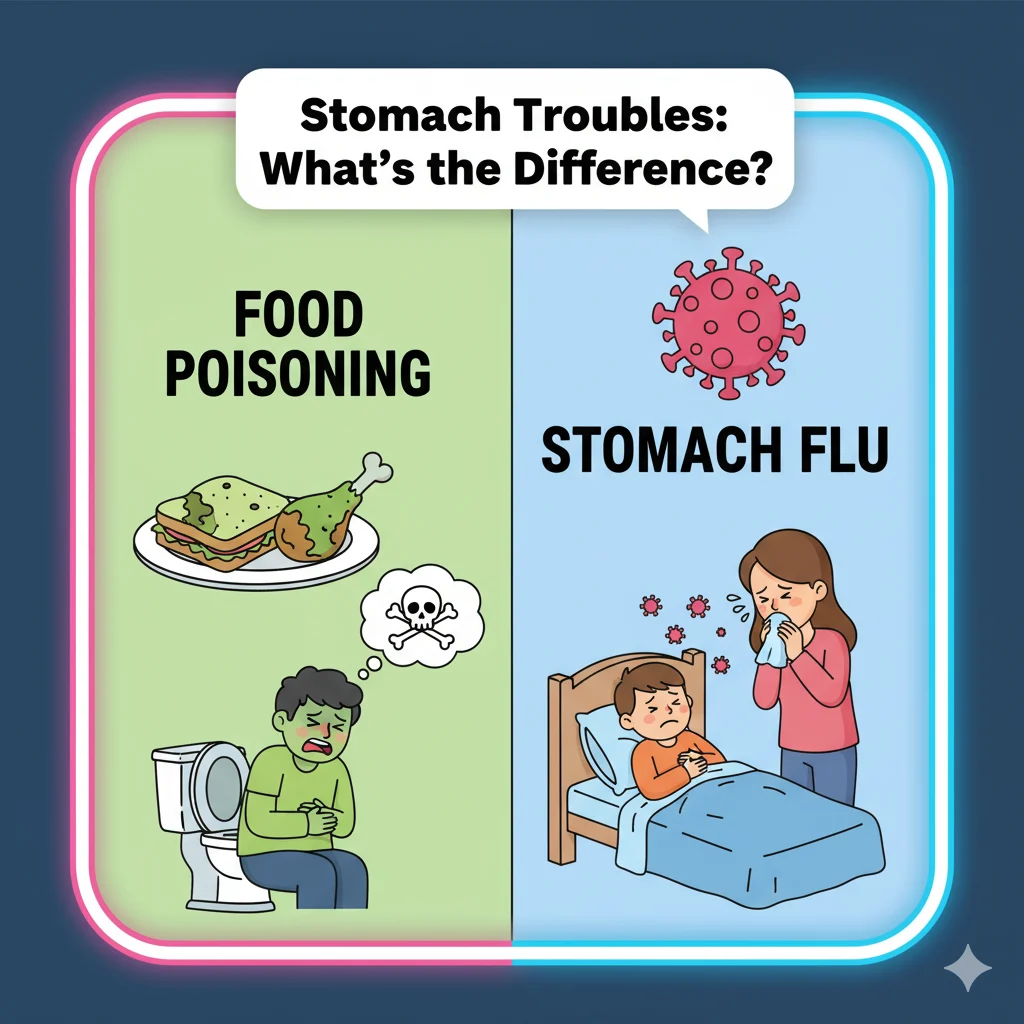
Definition: Food poisoning happens when you eat contaminated food or drinks. It’s caused by bacteria, viruses, or toxins.
Part of Speech: Noun
Simple Examples:
- I got food poisoning after eating leftover chicken.
- Food poisoning can cause vomiting and stomach cramps.
- Be careful with street food to avoid food poisoning.
Quick Story: Imagine you eat a sandwich that has gone bad. Within hours, you feel sick — that is food poisoning.
Stomach Flu
Definition: Stomach flu, also called gastroenteritis, is caused by a virus that infects the intestines. It spreads from person to person and is not usually caused by food.
Part of Speech: Noun
Simple Examples:
- My sister has the stomach flu, so she stayed home from school.
- Washing hands often helps prevent stomach flu.
- Children are more likely to catch stomach flu in school.
Quick Story: If someone in your family has been sick and you start feeling unwell after contact, that’s likely stomach flu, not food poisoning.
The Key Difference Between Food Poisoning and Stomach Flu
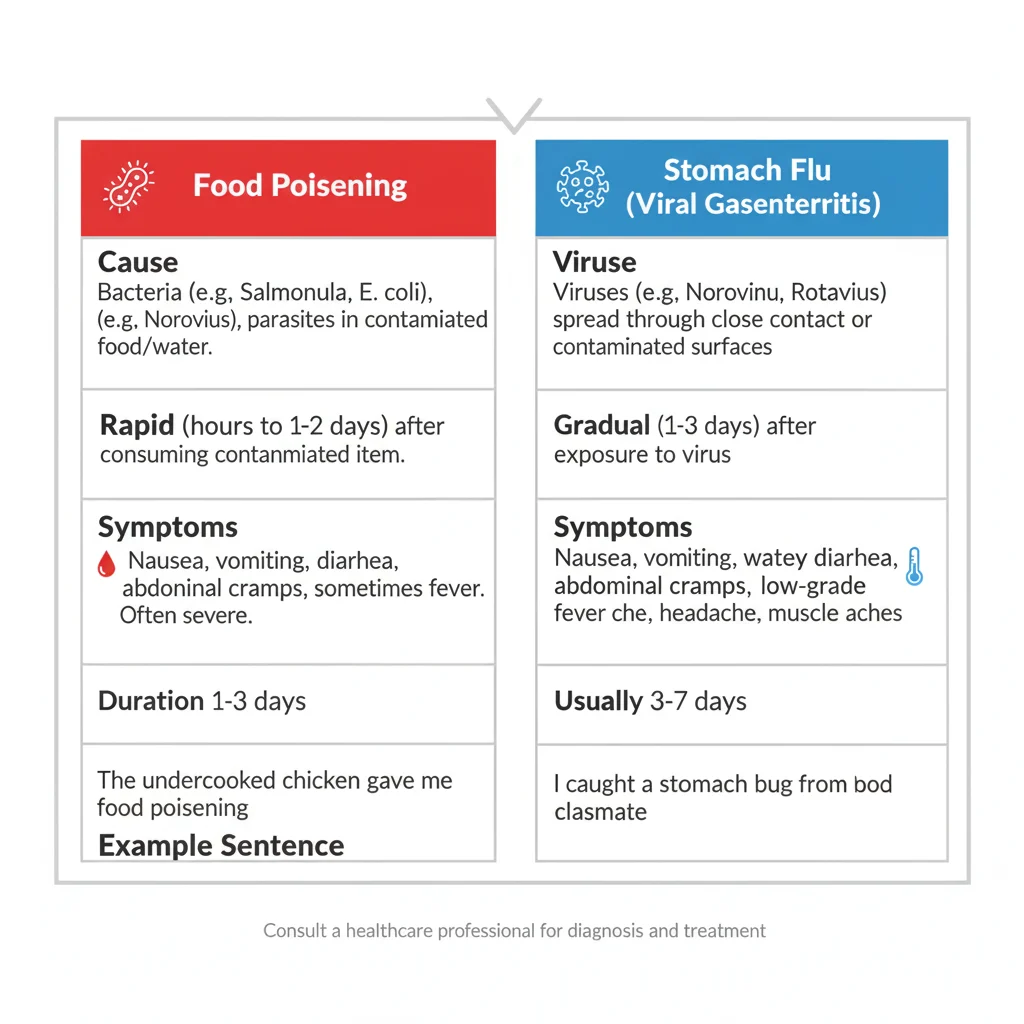
| Feature | Food Poisoning | Stomach Flu (Gastroenteritis) |
|---|---|---|
| Cause | Contaminated food or drinks | Viral infection (person-to-person) |
| Onset | Quickly, within hours of eating | Slower, usually 1–3 days after exposure |
| Symptoms | Vomiting, diarrhea, stomach cramps | Vomiting, diarrhea, fever, fatigue |
| Duration | Usually 1–2 days | 2–10 days |
| Example Sentence | “I have food poisoning from that pizza.” | “I caught the stomach flu at school.” |
Quick Tip: If your illness starts right after eating suspicious food, it’s food poisoning. If it spreads from someone else, it’s probably stomach flu.
Common Mistakes and How to Avoid Them
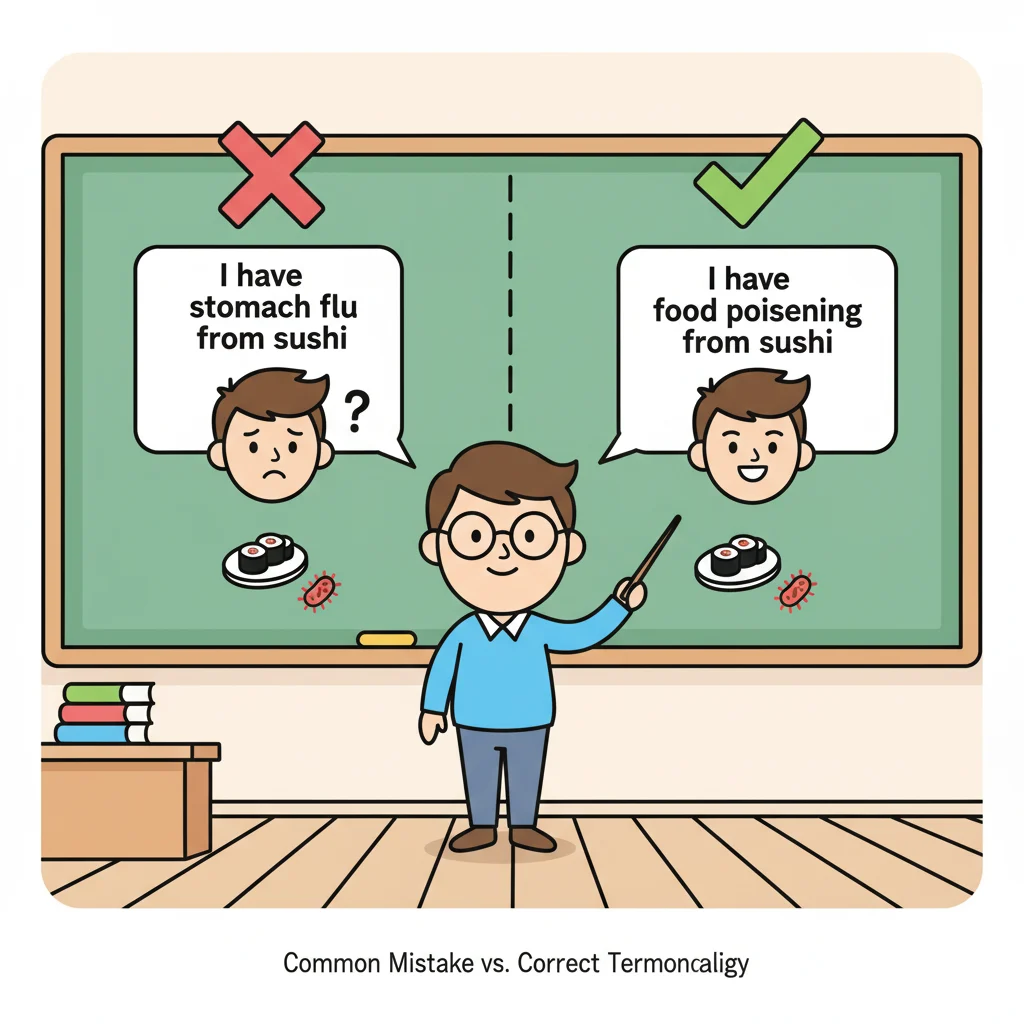
Mistake 1: Confusing the cause
Wrong: I have stomach flu from bad sushi.
Correct: I have food poisoning from bad sushi.
Why: Stomach flu is viral, not caused by food.
Mistake 2: Mixing up duration
Wrong: Food poisoning lasts a week.
Correct: Food poisoning usually lasts 1–2 days.
Why: Stomach flu generally lasts longer.
Mistake 3: Misusing in conversations
Wrong: Wash hands to avoid food poisoning from your friend.
Correct: Wash hands to avoid stomach flu from your friend.
Why: Viruses spread person-to-person, not food.
When to Use Food Poisoning
Use food poisoning when symptoms are caused by contaminated food or drinks.
Examples in daily life:
- “I think the salad gave me food poisoning.”
- “After the picnic, he got food poisoning.”
- “Street food can cause food poisoning if not prepared properly.”
- “She stayed home from work because of food poisoning.”
- “Avoid eating raw eggs to prevent food poisoning.”
Memory Hack: Think “food” + “poison” — you got sick because of something you ate.
When to Use Stomach Flu
Use stomach flu when sickness spreads from person to person or is caused by a virus.
Examples in daily life:
- “My brother has the stomach flu, so we avoid sharing drinks.”
- “She caught stomach flu after visiting her friend.”
- “Stomach flu can make you vomit and feel tired.”
- “Washing hands can prevent stomach flu.”
- “Kids often catch stomach flu in kindergarten.”
Memory Hack: Picture a virus “traveling” from one person to another — that’s stomach flu.
Quick Recap: Food Poisoning vs Stomach Flu
- Food Poisoning: Caused by bad food; quick onset; short duration.
- Stomach Flu: Caused by viruses; spreads person-to-person; lasts longer.
- Remember: Food = food poisoning; Virus = stomach flu.
- Symptoms can overlap, but cause and timing help you tell the difference.
Advanced Tips
- Origin: “Food poisoning” refers to contaminated food, first widely used in the 19th century. “Stomach flu” or gastroenteritis is from Greek “gastro” (stomach) + “enteritis” (intestine inflammation).
- Formal Writing: Use “foodborne illness” instead of food poisoning in medical papers; “gastroenteritis” instead of stomach flu.
- Texting & Online: Don’t confuse the terms online — it may cause panic or misinformation.
Mini Quiz
Fill in the blanks:
- I got ______ after eating the undercooked chicken.
- My cousin has ______ and can’t come to school.
- ______ spreads quickly in daycare centers.
- Be careful with street food to avoid ______.
- Fever and fatigue usually mean ______.
- Vomiting within hours of a meal indicates ______.
- Wash your hands to prevent catching ______ from friends.
(Answers: 1. food poisoning, 2. stomach flu, 3. stomach flu, 4. food poisoning, 5. stomach flu, 6. food poisoning, 7. stomach flu)
5 FAQs
1. Can food poisoning and stomach flu happen at the same time?
Yes, but it’s rare. Usually, one cause dominates.
2. How long does food poisoning last?
Usually 1–2 days, sometimes up to 3 days.
3. Is stomach flu contagious?
Yes, it spreads easily through contact with infected people.
4. Can antibiotics treat both conditions?
No, antibiotics treat bacterial food poisoning but not viral stomach flu.
5. What’s the main difference between food poisoning and stomach flu?
Food poisoning comes from contaminated food; stomach flu comes from viruses spreading person-to-person.
Conclusion
Now you know the difference between food poisoning or stomach flu. Food poisoning happens after eating bad food, comes on fast, and usually ends in a couple of days. Stomach flu is viral, spreads between people, and lasts longer. By understanding the cause, symptoms, and duration, you can use these terms correctly in conversations, writing, and even exams.
Practice these examples in your daily life. Notice whether the sickness comes from food or contact with someone sick, and soon you’ll never confuse the two. English becomes easier when you connect words with real situations. Keep practicing, stay curious, and enjoy improving your language skills every day!

Caribbean-born novelist Jean Rhys (1890–1979) explored alienation, identity, and female psychology with lyrical, haunting, and emotionally rich prose.