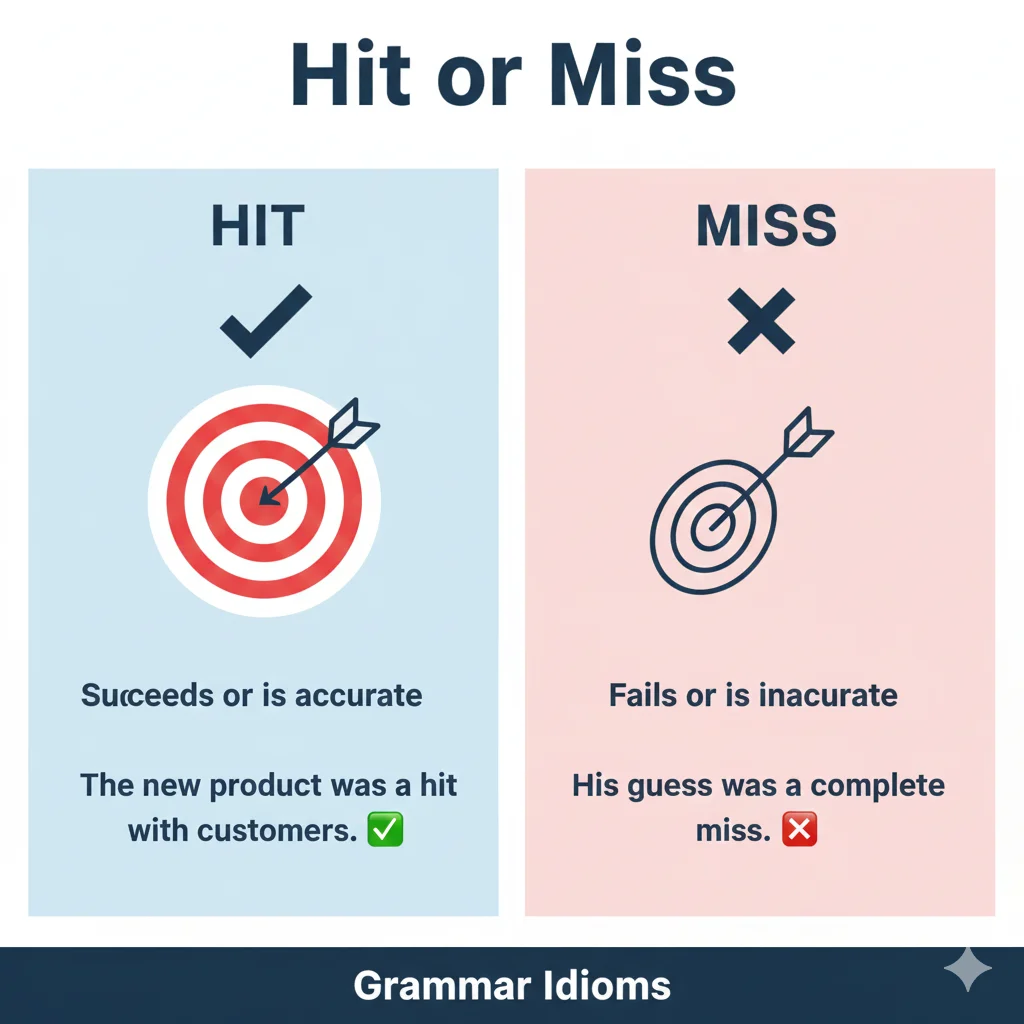
Many English learners get confused when they see the expression “hit or miss.” It sounds simple, but its meaning is not always clear. People often wonder whether it’s two separate words used in grammar or a special phrase with its own meaning. Because the words “hit” and “miss” are opposites, the expression can feel tricky at first.
In this friendly guide, you’ll learn the meaning of “hit,” meaning of “miss,” and what the combined phrase “hit or miss” really means. You’ll also learn the difference between hit or miss, hit, and miss, how to use them in sentences, and how to avoid common mistakes.
Everything is explained in simple, easy English so even a class 4 student can understand. By the end, you’ll know exactly when to use each word confidently in writing, speaking, and everyday conversation.
What Does Each Word Mean?
To understand the expression “hit or miss,” we must first understand the meaning of each word on its own.
Meaning of “Hit”
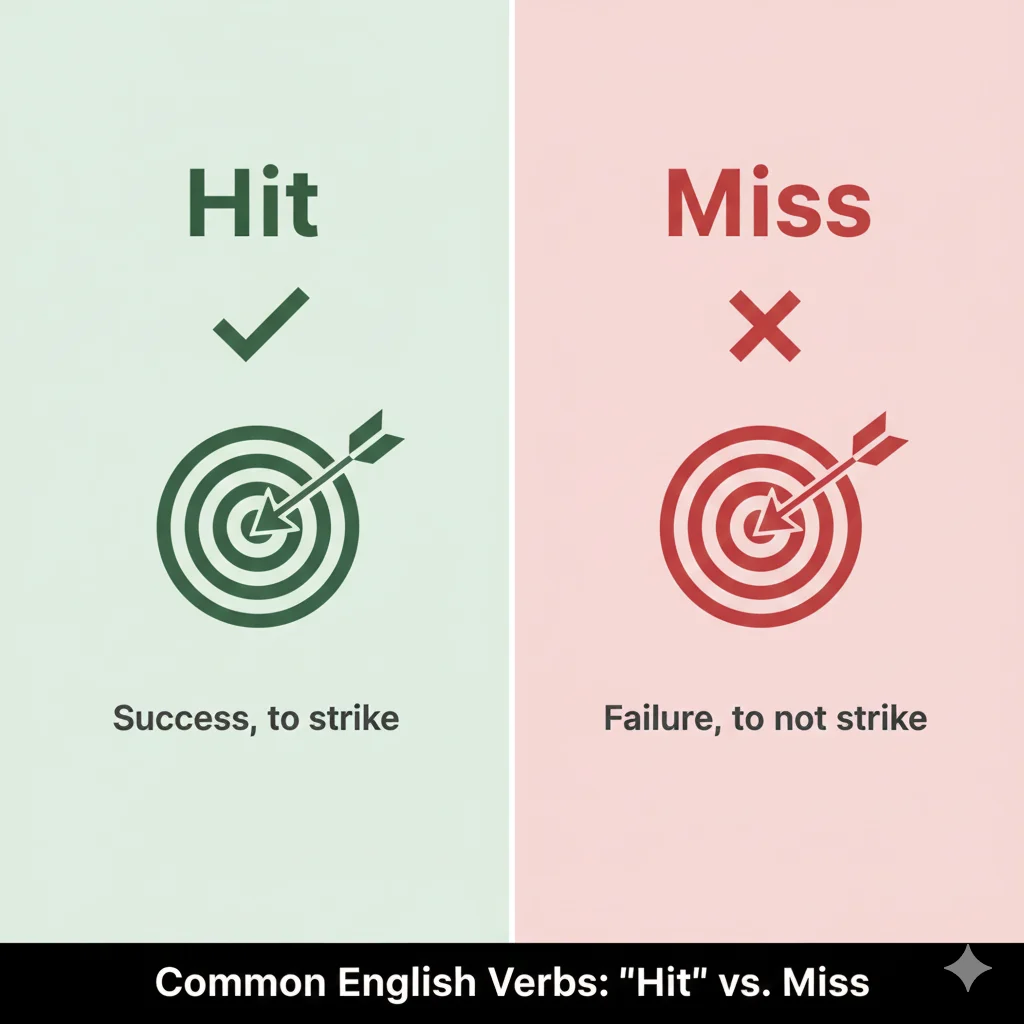
“Hit” is usually a verb, and it means to strike, touch, or reach something with force or success.
It can also be a noun, meaning a success or something that becomes very popular.
Easy Examples of “Hit”:
- He hit the ball with the bat.
- Her new song was a big hit.
- The arrow hit the target.
Memory Tip:
Think of “hit” = success, correct, or right on target.
Meaning of “Miss”
“Miss” is also a verb, and it means to fail to hit, catch, or reach something.
It can also mean to feel the absence of someone or something.
Easy Examples of “Miss”:
- She missed the bus today.
- I miss my best friend.
- He threw the ball but missed the target.
Memory Tip:
Think of “miss” = fail, skip, or not reach the target.
So What About “Hit or Miss”?
“Hit or miss” is an idiomatic expression.
It means: sometimes good, sometimes bad; sometimes successful, sometimes not; unpredictable.
Examples:
- The weather here is hit or miss. (Sometimes good, sometimes bad.)
- Her cooking is hit or miss. (Sometimes tasty, sometimes not.)
- The internet speed in this area is hit or miss. (Unpredictable.)
Quick Meaning:
👉 Hit or miss = uncertain quality.
The Key Difference Between “Hit,” “Miss,” and “Hit or Miss”
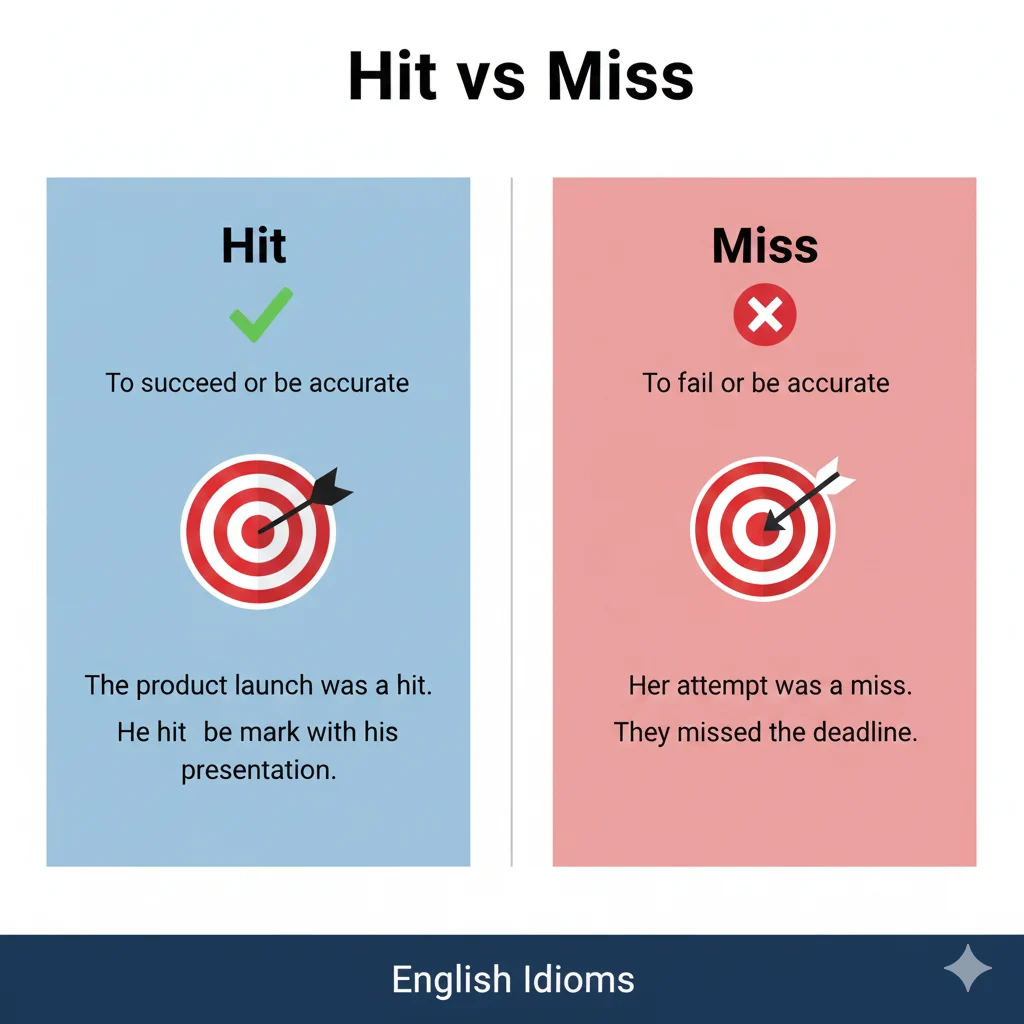
Here is a simple comparison table to help you remember the difference easily:
Comparison Table
| Word/Phrase | Meaning | Part of Speech | Example Sentence | Easy Explanation |
|---|---|---|---|---|
| Hit | To strike or be successful | Verb / Noun | I hit the target. | You reached the goal. |
| Miss | To fail to hit or to feel absence | Verb | I missed the target. | You did not reach the goal. |
| Hit or Miss | Uncertain, unpredictable, mixed results | Idiom | The food here is hit or miss. | Sometimes good, sometimes bad. |
Quick Tip to Remember
👉 Hit = success.
Miss = failure.
Hit or Miss = mix of both, no guarantee.
Common Mistakes and How to Avoid Them
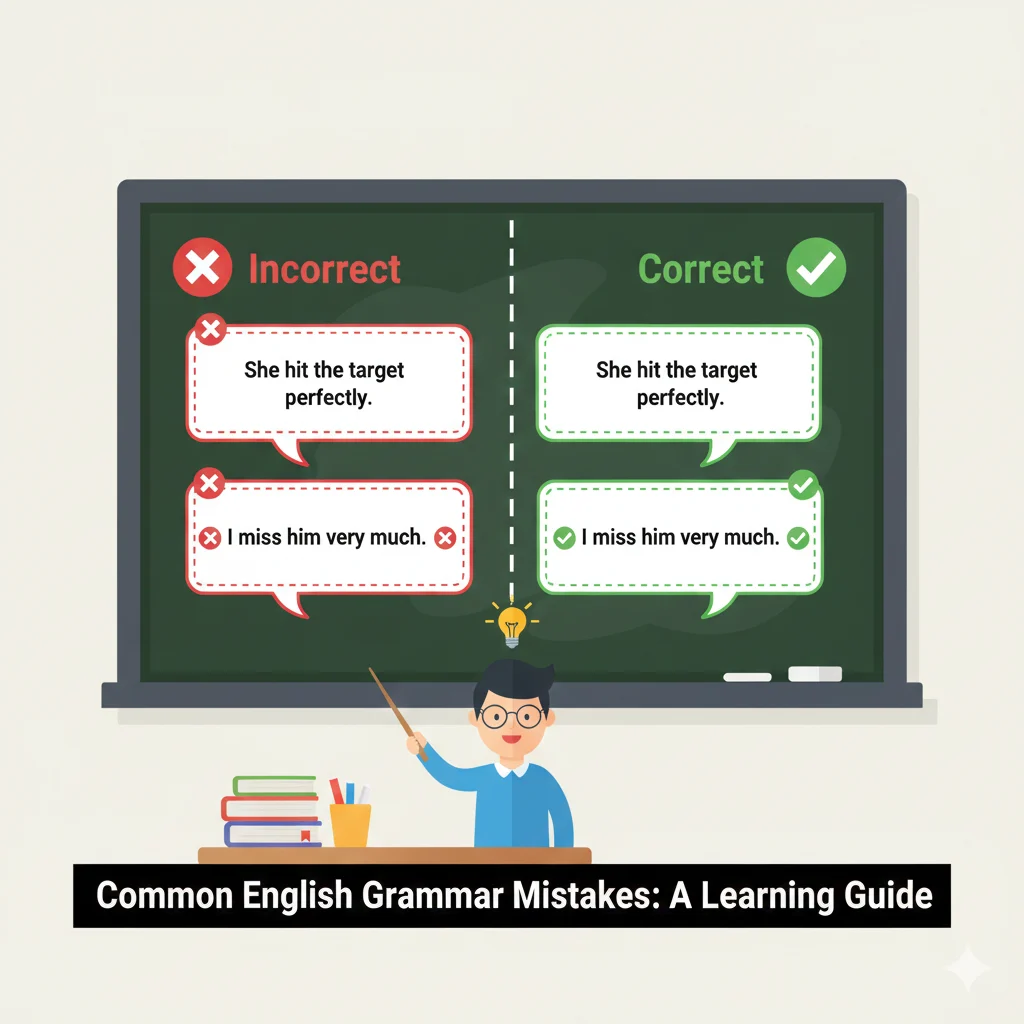
Many learners make mistakes when writing or using “hit,” “miss,” or “hit or miss.” Let’s fix them.
❌ Mistake 1: Using “hit or miss” as a verb
Incorrect:
I hit or miss the target.
Correct:
Sometimes I hit the target, sometimes I miss it.
Why?
Because “hit or miss” is an expression, not an action word.
❌ Mistake 2: Confusing “miss” meaning ‘fail’ with ‘miss’ meaning ‘feel absence’
Incorrect:
I hit my mother because I miss her.
(This sounds harmful and wrong.)
Correct:
I called my mother because I miss her.
Why?
The word “miss” has multiple meanings, so the sentence must be clear.
❌ Mistake 3: Writing “hit-or-miss” with hyphens
This is usually unnecessary unless used as an adjective before a noun.
Correct:
- The plan is hit or miss.
- It was a hit-or-miss method. (When used as an adjective)
When to Use “Hit”
Use “hit” when the action is successful, direct, or reaches the target.
Here are clear real-life situations:
1. Hitting a physical object
He hit the ball across the field.
2. Reaching or achieving something
The company hit its sales goals this month.
3. Emotional or dramatic impact
The news hit her hard.
4. Popularity or success
The movie was a huge hit.
5. To touch or get affected by something
The storm hit the city last night.
Example Sentences for “Hit”
- He hit the drum loudly.
- Her joke really hit me—it was so true.
- The song became a hit overnight.
- She finally hit her fitness goals.
- The ball hit the wall.
Memory Hack:
Think of the word “hit” like a bullseye.
🎯 If you hit it, you did it right!
When to Use “Miss”
Use “miss” when the action fails, skips, or does not reach the target, or when expressing feelings of absence.
1. Failure to reach a target
He missed the shot.
2. Missing a person or place
I miss you.
3. Missing an event
She missed the meeting.
4. Failing to notice something
Don’t miss the small details.
5. Being late / not catching transport
They missed the train.
Example Sentences for “Miss”
- I miss my sister when she travels.
- He missed the goal in the final match.
- Don’t miss your homework deadline.
- We missed the bus because we were slow.
- She missed her chance to win.
Memory Hack:
Think of “miss” as a big empty circle—you aimed, but didn’t hit it.
When to Use “Hit or Miss”
Use “hit or miss” when something is unpredictable.
Meaning: You don’t know if it will be good or bad.
Examples of “Hit or Miss”
- Street food can be hit or miss.
- The teacher’s mood is hit or miss.
- Online shopping reviews are often hit or miss.
- His jokes are hit or miss—sometimes funny, sometimes not.
- The weather here is hit or miss.
Memory Trick:
Imagine a spinner 🎡 — sometimes it lands on hit, sometimes on miss.
That’s the whole meaning.
Quick Recap: Hit vs Miss vs Hit or Miss
- Hit = success or strike
- Miss = fail or feel absence
- Hit or Miss = unpredictable
Super Simple Version:
🎯 Hit = good
🔘 Miss = not good
🎲 Hit or Miss = maybe good, maybe not
Advanced Tips
1. History of the Phrase
The expression “hit or miss” started in the 1500s. It originally described shooting arrows. Sometimes you hit the target, sometimes you miss.
2. Using in Essays
In formal writing, use “hit or miss” to describe the quality of something inconsistent.
Example:
The results of the experiment were hit or miss due to uncontrolled variables.
3. Online and Social Media Usage
People use “hit or miss” to review food, apps, movies, and gadgets.
Example:
This game is fun, but the graphics are hit or miss.
4. As an Adjective
Before a noun, you may add hyphens:
It was a hit-or-miss approach.
Mini Quiz: Test Yourself
Fill in the blanks:
- The arrow ______ the target. (hit/miss)
- I really ______ my old friends. (hit/miss)
- The food at this cafe is _________. (hit or miss)
- She ______ the ball because she was too slow. (hit/missed)
- Sometimes he tells great jokes, but other times they are ________.
- The movie was a huge ________. (hit/miss)
- You shouldn’t ______ your chance to learn. (miss/hit)
FAQs
1. What does “hit or miss” mean in English?
It means something is unpredictable—sometimes good, sometimes bad.
2. Is “hit or miss” formal or informal?
It is mostly informal but can be used in neutral writing.
3. Can I use “hit or miss” as a verb?
No. It’s a phrase, not a verb.
4. Is “hit” always about physical action?
No. It can also mean success, like a “hit song.”
5. Does “miss” always mean failure?
Not always. It also means feeling the absence of someone.
Conclusion
Understanding hit, miss, and hit or miss becomes easy once you break them down into simple meanings. You now know when to use each word, how their meanings differ, and how to avoid common mistakes. With the clear examples and memory tricks shared here, you can confidently use these words in daily conversations, schoolwork, and writing.
Keep practicing small phrases each day — improving your English is never “hit or miss” when you learn with the right steps!

Caribbean-born novelist Jean Rhys (1890–1979) explored alienation, identity, and female psychology with lyrical, haunting, and emotionally rich prose.