Many people struggle with similar-sounding words in English, and “lifes or lives” is one of the most common examples. At first glance, both words might seem correct when talking about people, animals, or even fictional characters. Choosing the wrong word can make a sentence confusing or grammatically incorrect.
In this article, we will explain the meaning of “life” and its plural form, the difference between lifes and lives, and show you how to use them correctly in everyday writing or speaking. You will also find easy examples, common mistakes, memory tips, and even a mini quiz to test your understanding. By the end, using these words confidently will feel simple — even if English is not your first language.
What Does Each Word Mean?
Life
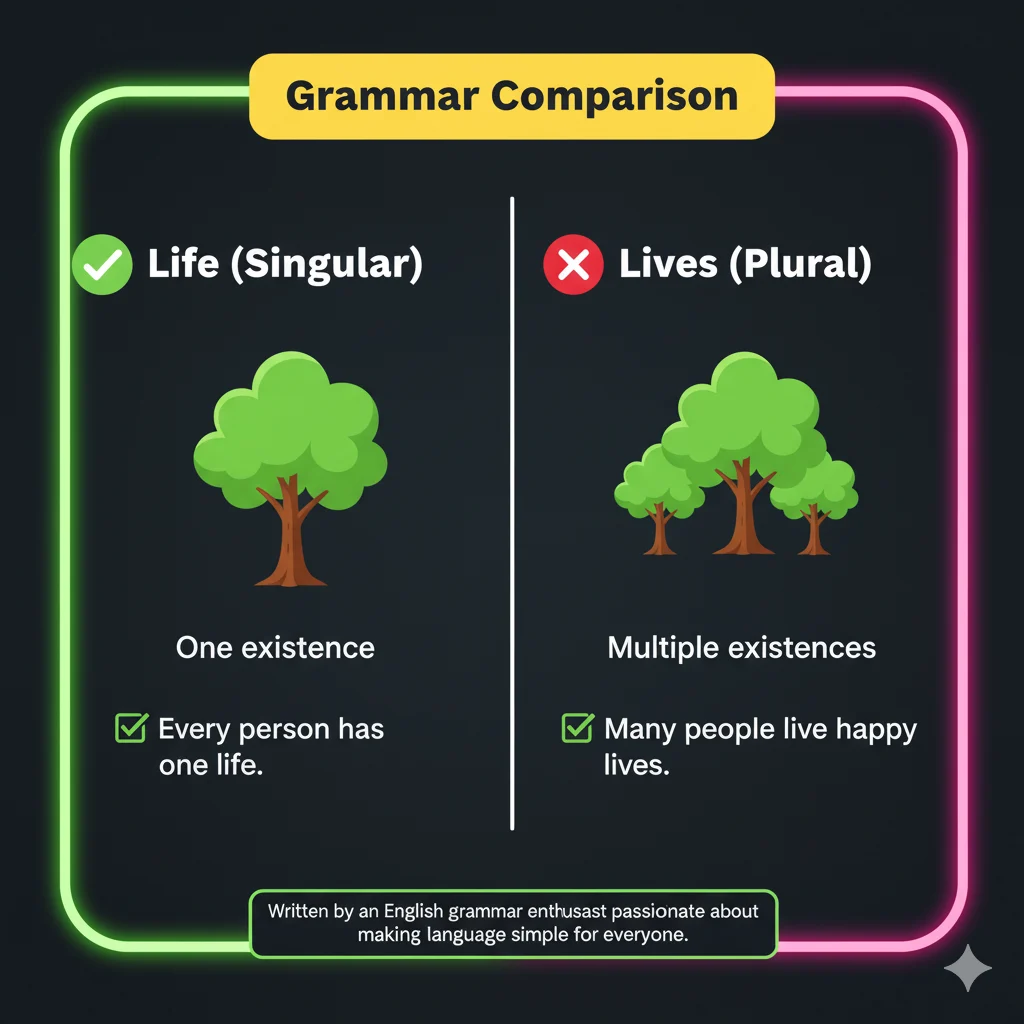
Meaning: “Life” refers to the existence of a person, animal, or even a plant. It can also describe experiences, time, or vitality.
Part of speech: Noun
Examples:
- She saved a life by helping the injured bird.
- Life is full of surprises and adventures.
- He dreamed of traveling around the world to enjoy life.
Think of life as the time or experience of being alive.
Lives
Meaning: “Lives” is the plural form of “life.” It refers to multiple people, animals, or beings and their existence.
Part of speech: Noun (plural)
Examples:
- Many firefighters risk their lives to save others.
- The story of five different lives inspired the whole town.
- We must protect the lives of endangered animals.
Lives is used whenever you talk about more than one life.
The Key Difference Between Lifes and Lives
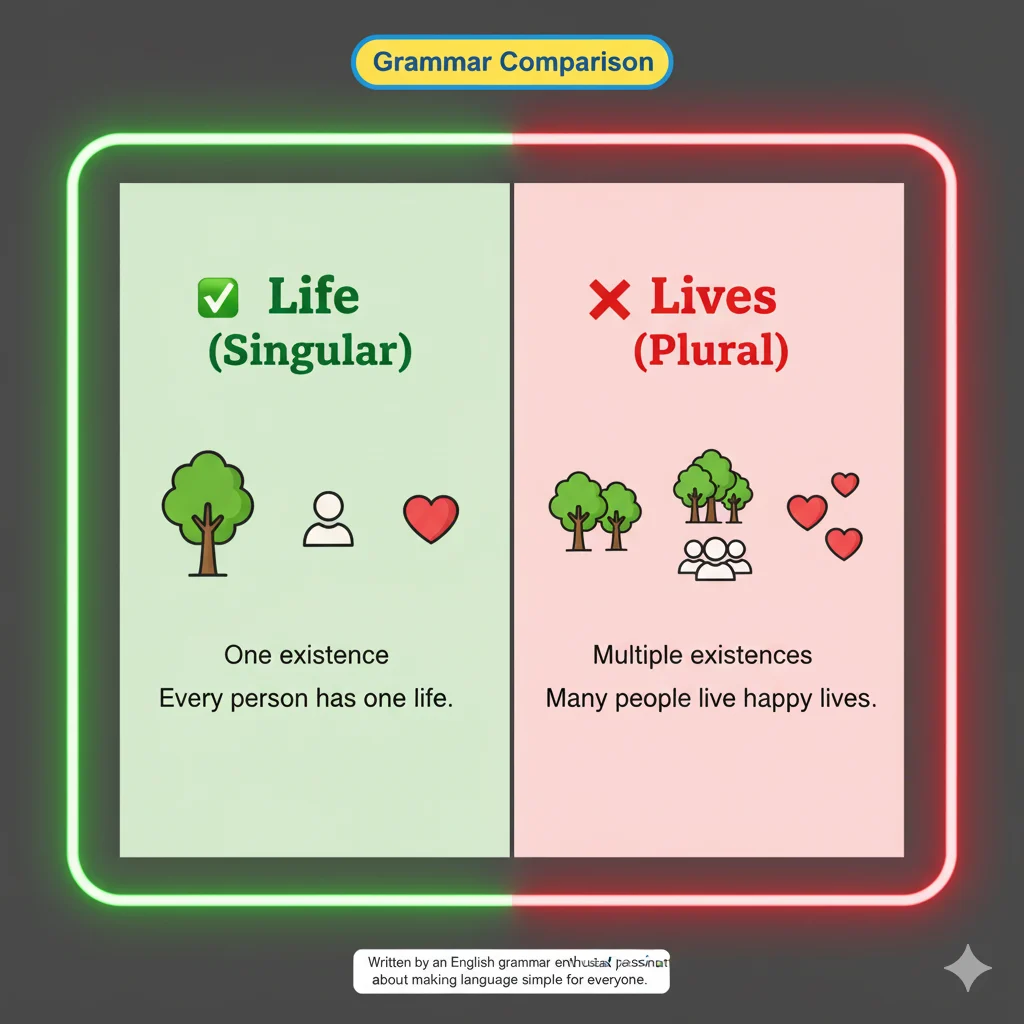
| Word | Meaning | Usage Example | Quick Tip |
|---|---|---|---|
| Life | Existence or experience of one person or being | Life is precious, so take care of it. | Use when talking about a single person or thing. |
| Lives | Existence or experiences of multiple beings | Doctors save many lives every year. | Use when talking about more than one person or being. |
Quick Tip: If you mean more than one person or being, always use lives, never “lifes.”
Common Mistakes and How to Avoid Them
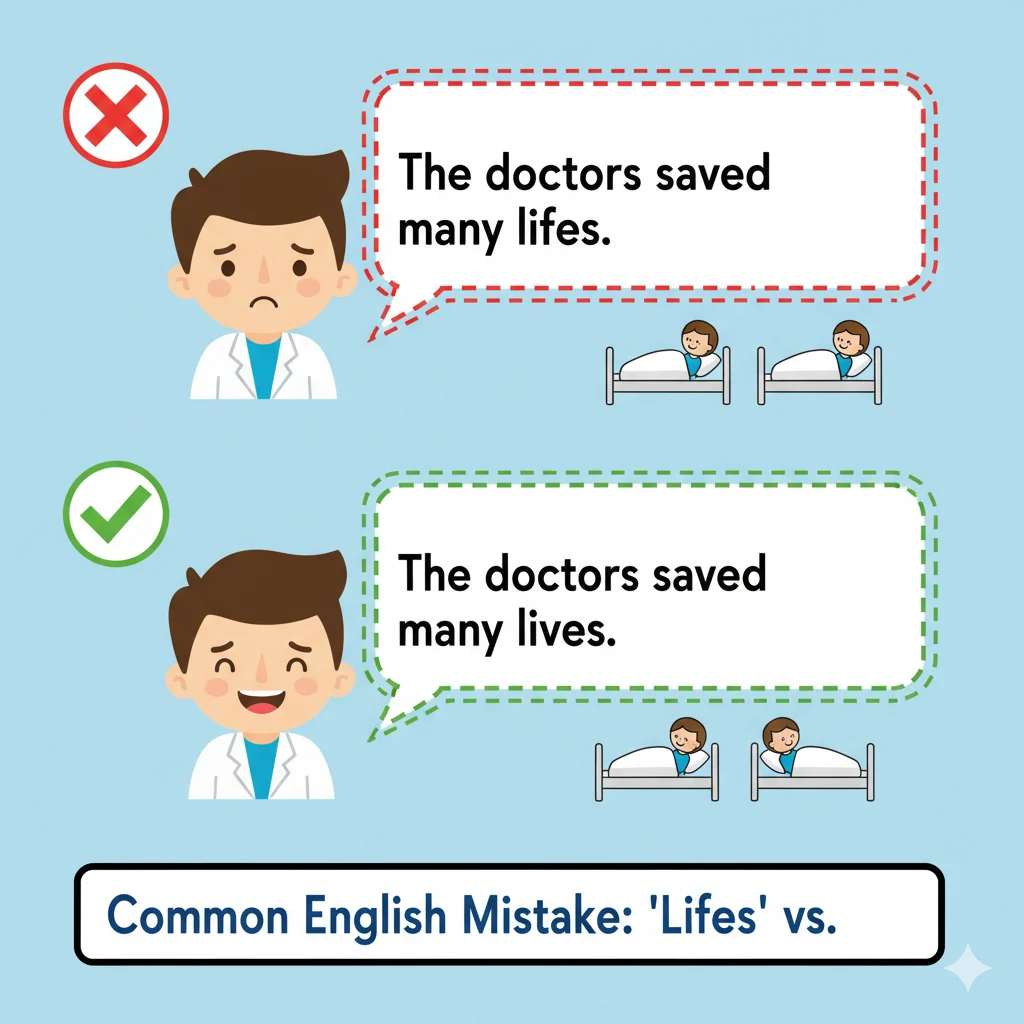
Mistake 1: Using “lifes” instead of “lives”
- ❌ “The doctors saved many lifes.”
- ✅ “The doctors saved many lives.”
Why: “Lifes” is not a correct plural. Always use “lives.”
Mistake 2: Confusing singular and plural in sentences
- ❌ “He changed the lives of his cat.”
- ✅ “He changed the life of his cat.”
Why: “Life” is singular because only one cat is involved.
Mistake 3: Misusing in idioms
- ❌ “She gave her lifes for the cause.”
- ✅ “She gave her life for the cause.”
Why: Idioms often require the singular form “life.”
When to Use Life
Use life in situations where you are talking about one person, animal, or existence. It can refer to actual living beings or figurative life experiences.
Examples:
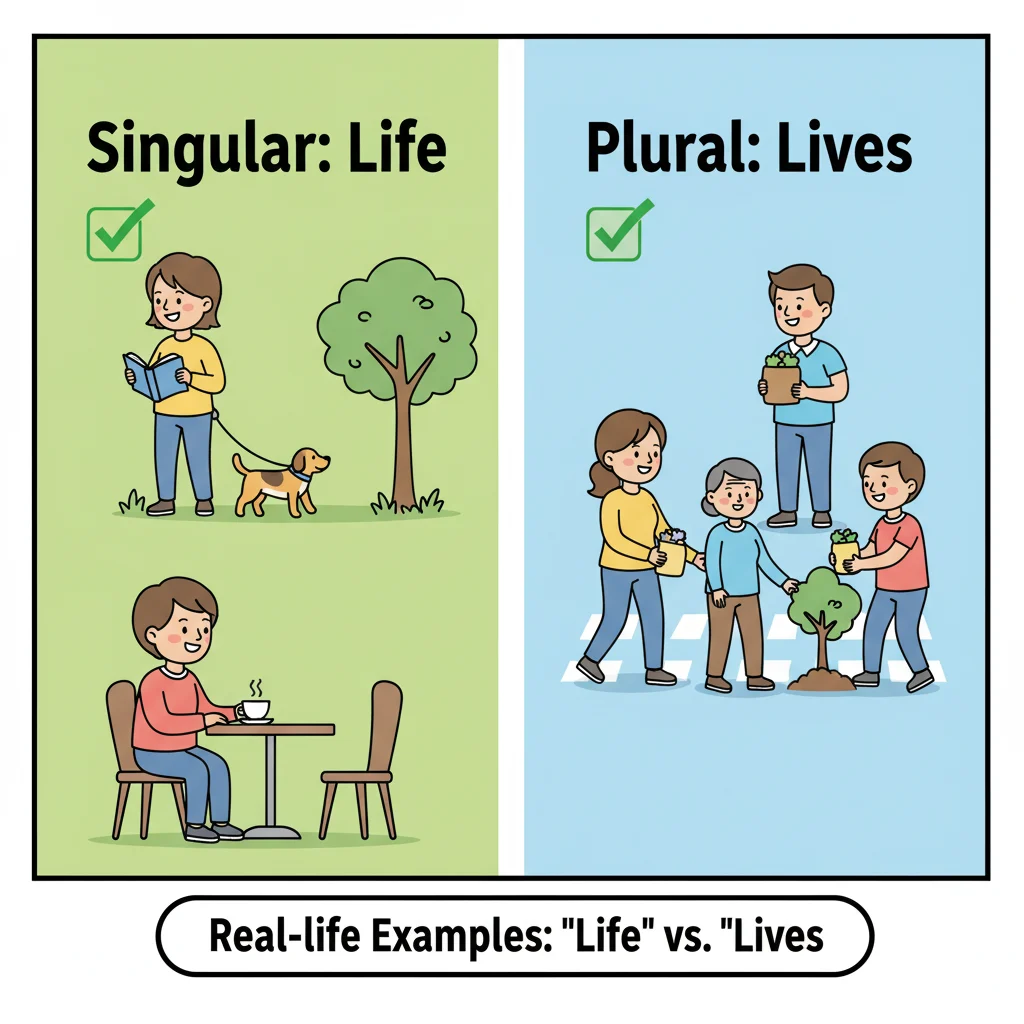
- The life of a tree can last hundreds of years.
- He enjoys a simple life in the countryside.
- My life changed after meeting my best friend.
- There’s beauty in every life if you look closely.
- She dedicated her life to helping others.
Memory hack: Think “life = 1” — one person, one experience, one existence.
When to Use Lives
Use lives when referring to more than one person, animal, or being. It also works for groups or multiple stories of existence.
Examples:
- Firefighters risk their lives every day.
- Many lives were affected by the flood.
- The book tells the lives of famous scientists.
- Saving lives should always be our priority.
- The movie showed the intertwined lives of five strangers.
Memory hack: Think “lives = multiple.” If you can count them (two or more), use lives.
Quick Recap: Life vs Lives
- Life → singular, one existence or experience.
- Lives → plural, more than one existence or experience.
- Tip: If you are unsure, ask: “Am I talking about one or many?”
- Remember: “Lifes” is always wrong in standard English.
Advanced Tips (Optional)
- Origin: “Life” comes from Old English “līf,” meaning existence. “Lives” evolved naturally as the plural form.
- Formal Writing: Always use correct singular or plural forms in essays, articles, and exams. Misusing it can make writing seem unprofessional.
- Online Writing: In casual texting, some people write “lifes,” but it’s grammatically incorrect and should be avoided.
Mini Quiz
Fill in the blanks with life or lives:
- The hero risked his ______ to save the children.
- Many ______ were changed after the community project.
- A cat’s ______ can last up to 15 years.
- She wanted to live a peaceful ______ in the mountains.
- Firefighters save countless ______ every year.
- My grandmother told stories of her younger ______.
- Every ______ is valuable and should be respected.
5 FAQs
- Is “lifes” ever correct?
❌ No. The correct plural of “life” is always lives. - Can “life” refer to animals?
✅ Yes. Any living being, including animals, can be described using life. - How do I remember which to use?
✅ Think “life = 1,” “lives = many.” - Can “lives” be used figuratively?
✅ Yes. For example, “Their decisions changed the lives of millions.” - Is it okay to use “lifes” in casual writing?
❌ It’s best to avoid it. Even online, “lifes” is considered incorrect.
Conclusion
Now that you understand lifes vs lives, using them correctly will be much easier. Remember: life is singular, referring to one being or existence, while lives is plural, referring to multiple beings or experiences. Avoid the common mistake of writing lifes, and pay attention to whether you mean one or many. Practice using these words in your daily conversations, writing, and stories. The more you use them, the more natural it will feel. English grammar can be tricky, but small tips and examples like these make learning fun and easy. Keep practicing, and soon you’ll confidently write and speak without mixing them up.

Scottish novelist Muriel Spark (1918–2006) crafted sharp, witty stories exploring human nature, morality, and society with dark humor and insight.