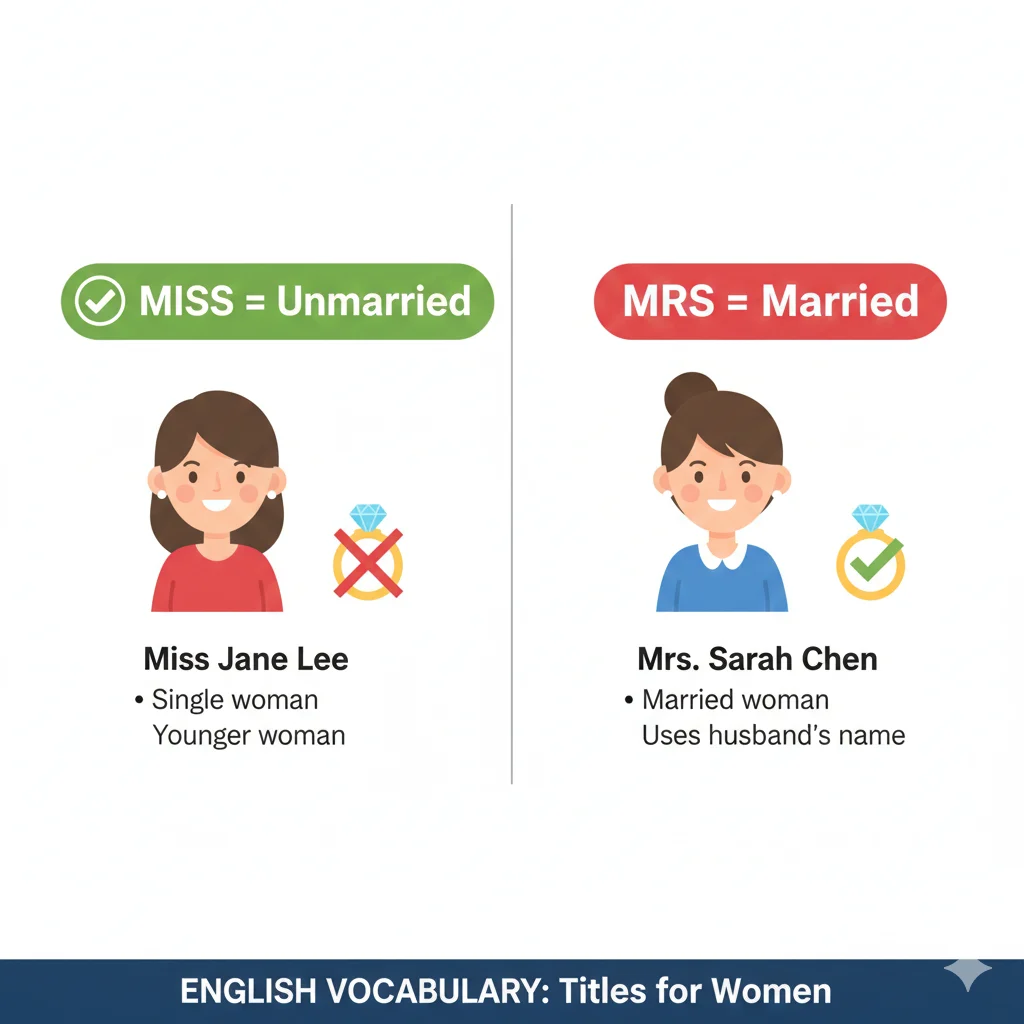
Many English learners feel confused when choosing Mrs or Miss. These two small words look easy, but they can cause big mistakes. People often wonder: Which one is correct? When should I use Mrs? Is Miss rude or polite?
The truth is simple. Mrs and Miss are titles used before a woman’s name. But they are used in different situations. Using the wrong one can sound strange, impolite, or incorrect—especially in school, letters, exams, or formal writing.
In this easy guide, you will learn the meaning of Mrs and Miss, the difference between Mrs and Miss, and the correct usage of each. We will use simple words, short sentences, and real-life examples so that even a beginner or a class-4 student can understand easily. By the end, you will feel confident using Mrs or Miss correctly every time.
What Does Each Word Mean?
Let’s understand both words one by one in a very simple way.
What Does Miss Mean?
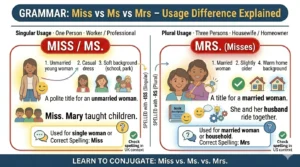
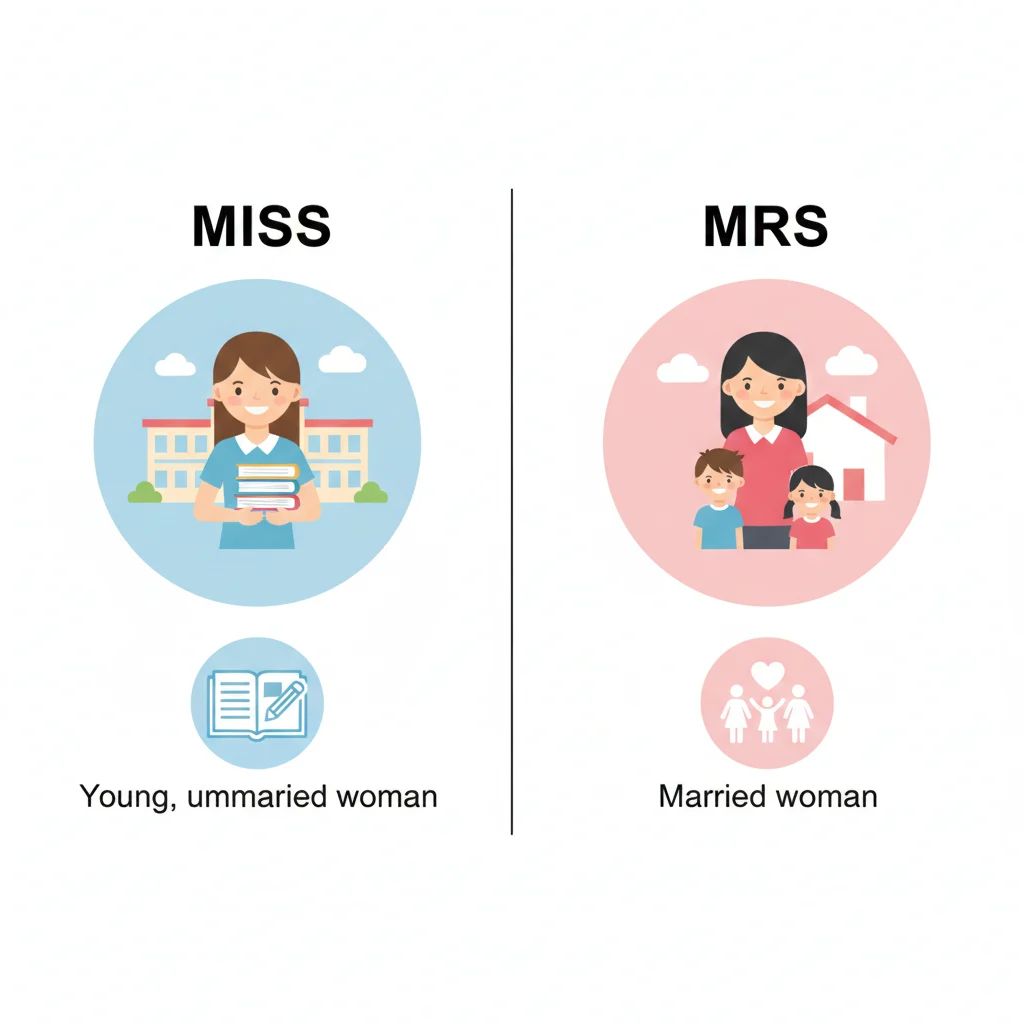
Miss is a title used for a girl or an unmarried woman.
It is used before the name.
👉 Miss = Not married
Part of Speech:
- Title (used before a name)
Easy Examples of Miss:
- Miss Sara is my English teacher.
- I met Miss Ali at school today.
- Miss Ayesha lives next door.
Simple Story to Remember:
Think of Miss as a young girl or a woman who is not married.
If someone is single, we often say Miss.
What Does Mrs Mean?
Mrs is a title used for a married woman.
It is also used before the name.
👉 Mrs = Married
Part of Speech:
- Title (used before a name)
Easy Examples of Mrs:
- Mrs Khan is my friend’s mother.
- Mrs Ahmed teaches math.
- I spoke to Mrs Smith on the phone.
Simple Story to Remember:
Think of Mrs as someone who has a husband.
If a woman is married, we use Mrs.
The Key Difference Between Mrs and Miss
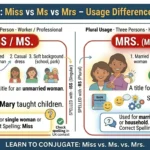
The main difference between Mrs and Miss is marital status.
Mrs vs Miss Comparison Table
| Feature | Miss | Mrs |
|---|---|---|
| Meaning | Unmarried woman | Married woman |
| Used for | Girls or single women | Women with a husband |
| Common place | Schools, formal talk | Family, letters, offices |
| Example | Miss Ali | Mrs Ali |
Quick Tip to Remember
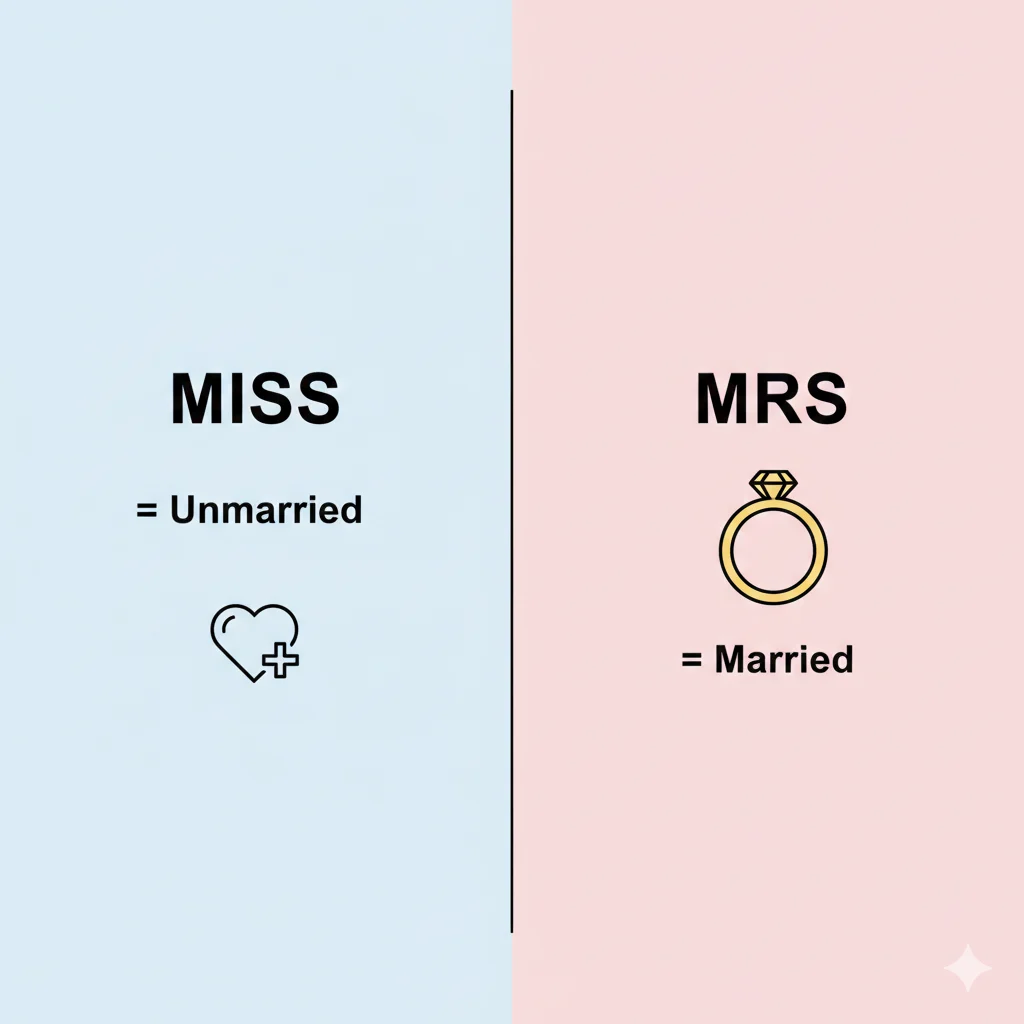
- Miss → M = Minus husband
- Mrs → R = Ring on finger 💍
This small trick helps you remember fast.
Common Mistakes and How to Avoid Them
Many people make mistakes when using Mrs or Miss. Let’s fix them.
❌ Mistake 1: Using Mrs for an Unmarried Woman
❌ Mrs Sara is my class teacher.
✅ Miss Sara is my class teacher.
Why this mistake happens:
People forget that Mrs is only for married women.
❌ Mistake 2: Using Miss for a Married Woman
❌ Miss Khan has two children.
✅ Mrs Khan has two children.
Why this mistake happens:
Some learners think Miss is polite for everyone. It is not.
❌ Mistake 3: Using Both Together
❌ Mrs Miss Ali
✅ Miss Ali or Mrs Ali
Rule:
Never use Mrs and Miss together.
When to Use Miss
Use Miss in these situations:
Situations Where Miss Is Correct
- For girls
- For unmarried women
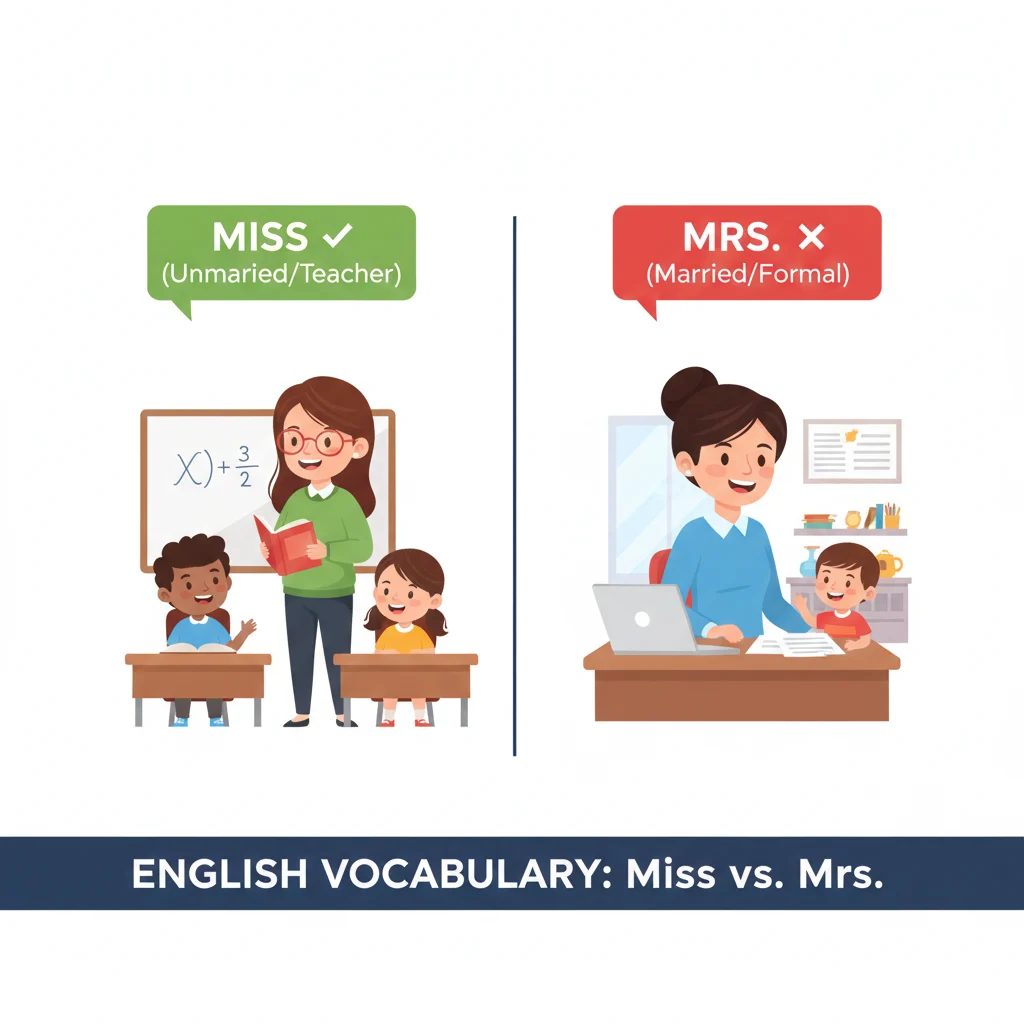
- For teachers in schools
- When you know the woman is not married
Easy Real-Life Examples
- Miss Aina is my class teacher.
- The letter is for Miss Fatima.
- I asked Miss Noor for help.
- Miss Sana won the prize.
- Please call Miss Hira to the office.
Simple Rule:
👉 If the woman is not married, use Miss.
When to Use Mrs
Use Mrs in these situations:
Situations Where Mrs Is Correct
- For married women
- For mothers
- In formal letters
- When you know the woman has a husband
Easy Real-Life Examples
- Mrs Ahmed is my mother.
- I met Mrs Khan at the meeting.
- The call is for Mrs Smith.
- Mrs Ali cooks very well.
- Please welcome Mrs Johnson.
Memory Hack 🧠
Think of Mrs as “Miss + marriage”.
Marriage changes Miss → Mrs.
Quick Recap: Mrs vs Miss
- Miss → Unmarried woman
- Mrs → Married woman
- Both are used before names
- Never mix them together
- Choose based on marriage status
Advanced Tips
Word Origin (Simple History)
- Miss comes from old English and meant “young girl.”
- Mrs comes from the word “Mistress,” used for married women.
Use in Exams and Formal Writing
- In letters, exams, and applications, correct usage matters.
- Using the wrong title can reduce marks or look unprofessional.
Online and Texting Usage
- In texting, people often misuse titles.
- In formal emails, always double-check Mrs or Miss.
Mini Quiz: Test Yourself ✏️
Fill in the blanks:
- ___ Ayesha is my English teacher.
- ___ Khan is a married woman.
- I spoke to ___ Ali yesterday. (She is unmarried)
- ___ Ahmed has two children.
- The letter is for ___ Sara. (She is single)
Answers:
- Miss
- Mrs
- Miss
- Mrs
- Miss
FAQs: Mrs or Miss
1. What is the main difference between Mrs and Miss?
Mrs is for married women. Miss is for unmarried women.
2. Can I use Miss for a married woman?
No. That is incorrect and can sound rude.
3. Is Mrs formal or informal?
Mrs is mostly formal but also used in daily life.
4. Is Miss polite?
Yes, Miss is polite when used correctly.
5. Should I use Mrs or Miss in exams?
Yes. Always use the correct title in exams and letters.
Conclusion
Understanding the difference between Mrs or Miss is easier than it looks. Miss is used for girls and unmarried women. Mrs is used for married women. These small titles carry important meaning, especially in school, exams, letters, and daily conversation. Using the correct word shows respect and good English skills.
With simple rules, clear examples, and quick memory tricks, you can now choose the right title without fear. Keep practicing in real life. The more you use correct English, the more confident you become. Remember—learning English is a journey, and every small step makes you better each day.

Caribbean-born novelist Jean Rhys (1890–1979) explored alienation, identity, and female psychology with lyrical, haunting, and emotionally rich prose.