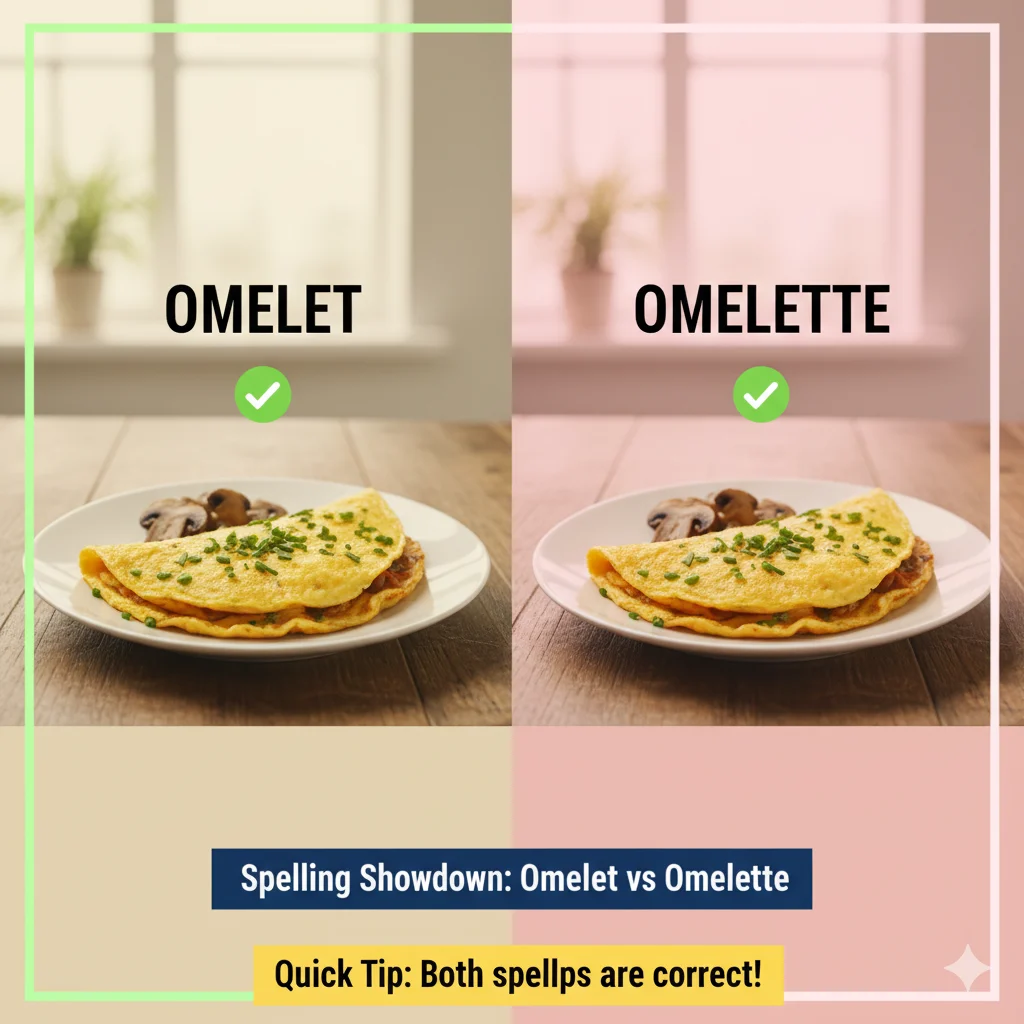
Have you ever wondered whether it’s correct to write omelet or omelette? Many English learners and even native speakers get confused between these two words. Both refer to the same delicious egg dish, but their spelling differs depending on where you are or which style of English you follow. Understanding the difference between omelet and omelette is not just about spelling—it’s also about using the right word in the right context.
In this guide, we’ll explain the meaning of each word, highlight their differences, and give simple, real-life examples. By the end of this article, you’ll confidently know which word to use when writing recipes, chatting with friends, or preparing a menu. Even beginners will find this guide easy and fun to follow.
What Does Each Word Mean?
Omelet
Definition: An omelet is a dish made by beating eggs and cooking them in a pan, often with fillings like cheese, vegetables, or meat.
Part of speech: Noun
Examples:
- I cooked a cheese omelet for breakfast.
- She ordered a spinach omelet at the café.
- Mom made a mushroom omelet for Sunday brunch.
Memory Tip: Think of omelet as the American English spelling.
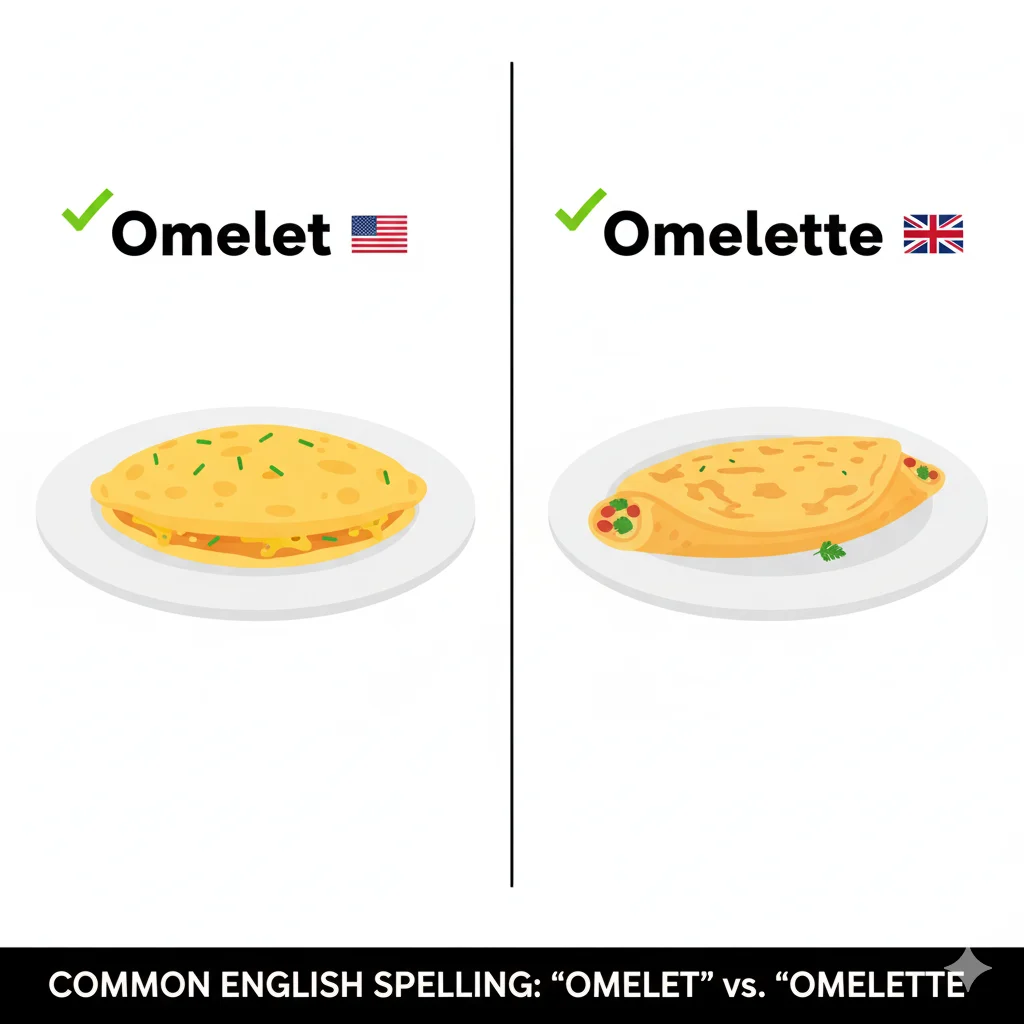
Omelette
Definition: Omelette is the British English spelling of the same egg dish.
Part of speech: Noun
Examples:
- He had a ham and cheese omelette for lunch.
- In London, a tomato omelette is a popular breakfast.
- She prefers a plain omelette with herbs.
Memory Tip: The extra “-te” at the end makes it look more French, like many words in British English.
The Key Difference Between Omelet and Omelette
| Feature | Omelet | Omelette |
|---|---|---|
| Meaning | Egg dish | Egg dish |
| Spelling | American English | British English |
| Usage | USA, Canada, Australia | UK, Ireland, France |
| Example Sentence | I love a cheese omelet. | I love a cheese omelette. |
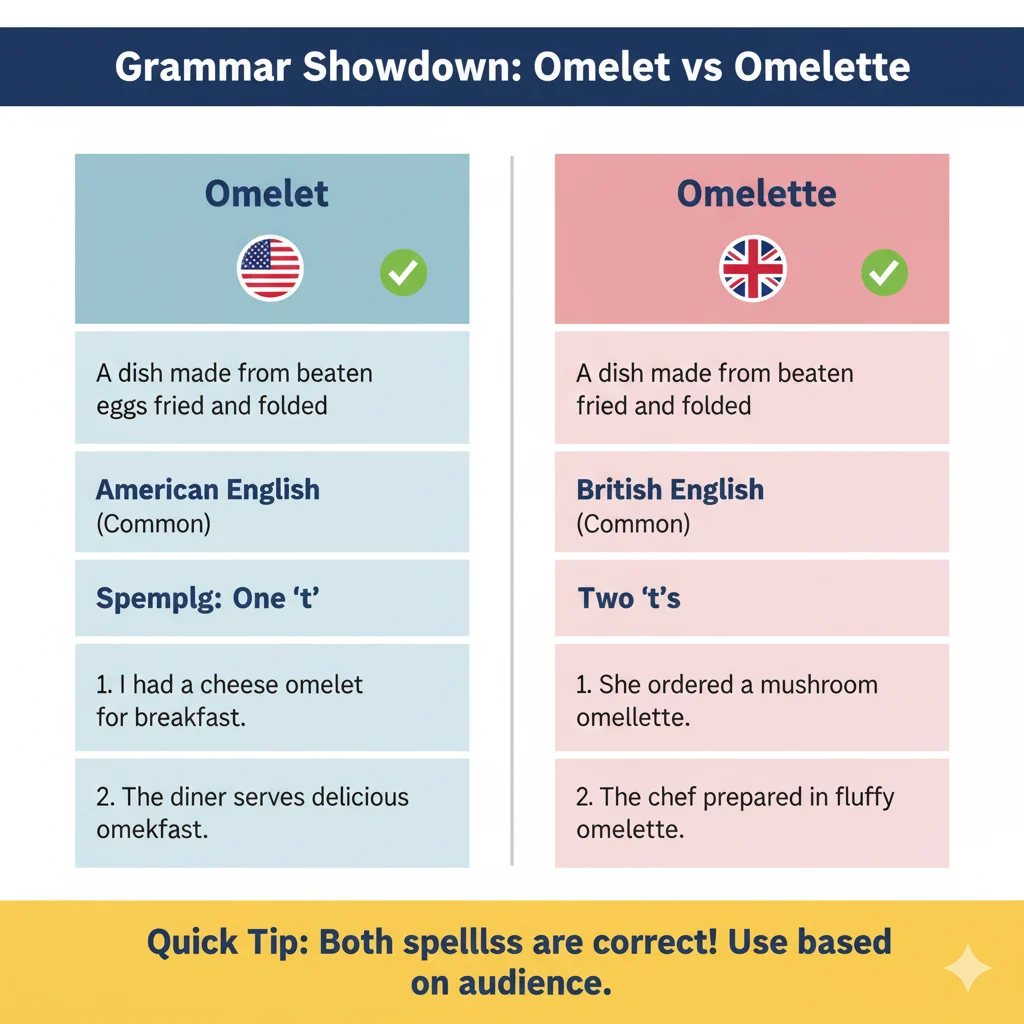
Quick Tip: If you’re in the USA, use omelet. If you’re in the UK, choose omelette.
Common Mistakes and How to Avoid Them
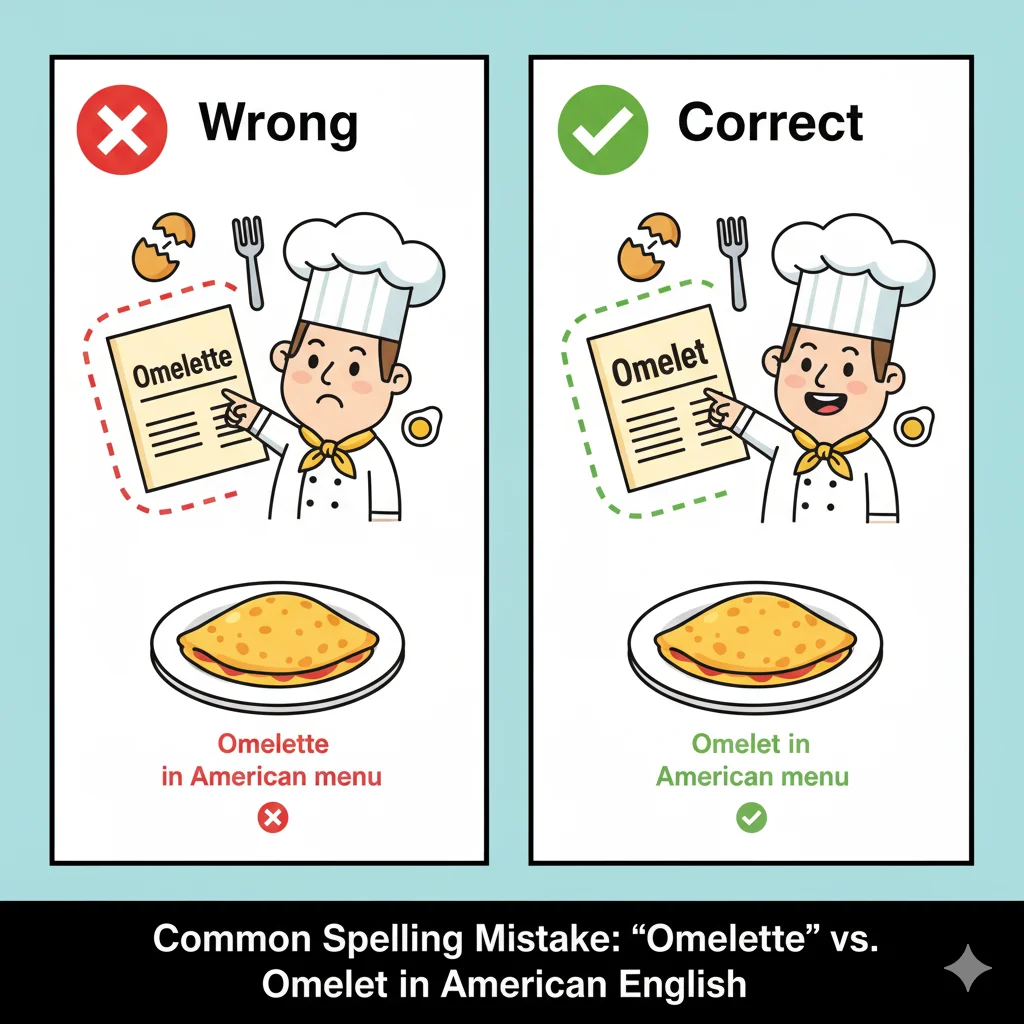
Mistake 1: Writing omelette in American recipes.
- ❌ Wrong: I made a vegetable omelette for breakfast.
- ✅ Correct: I made a vegetable omelet for breakfast.
Mistake 2: Using omelet in British contexts.
- ❌ Wrong: He ordered a bacon omelet in London.
- ✅ Correct: He ordered a bacon omelette in London.
Why these mistakes happen: People often learn one spelling and apply it everywhere. To fix it, remember your audience’s location and style of English.
When to Use Omelet
Use omelet in American English contexts, like USA-based menus, recipes, or writing.
Examples:
- I had a delicious cheese omelet for breakfast.
- Can you make a veggie omelet for the kids?
- The café serves a mushroom omelet every morning.
- My favorite lunch is a ham and cheese omelet.
- We tried a Spanish-style omelet with potatoes.
Real-life tip: Think omelet = American spelling. Easy to remember when reading USA cookbooks.
When to Use Omelette
Use omelette in British English contexts, menus in the UK, Ireland, or any formal British writing.
Examples:
- She had a plain cheese omelette at breakfast.
- The hotel served a tomato and basil omelette.
- I love a fluffy mushroom omelette in London.
- Try the smoked salmon omelette at the café.
Memory Hack: The extra “-te” makes it look fancy and British—like French words often used in UK English.
Quick Recap: Omelet vs Omelette
- Omelet: American English, simple spelling, used in USA and Canada.
- Omelette: British English, extra “-te,” used in UK, Ireland, and formal English.
- Both words mean the same egg dish.
- Always match your spelling to the audience or style of English.
- Quick tip: Omelet = America, Omelette = UK.
Advanced Tips
- Origin: The word comes from French “omelette”, which is why British English retains the original spelling.
- Formal Writing: In essays or cooking articles in British English, always use omelette. In American English publications, use omelet.
- Online Writing: Using the wrong version in your audience’s region can make your writing look unprofessional.
Mini Quiz
Fill in the blanks with the correct word: omelet or omelette.
- I had a cheese _______ for breakfast in New York.
- She ordered a mushroom _______ at the London café.
- My mom makes a delicious spinach _______ every Sunday.
- The French restaurant serves a ham and cheese _______.
- He tried a veggie _______ in his American cookbook.
- We enjoyed a plain _______ during our trip to Ireland.
- For brunch, I made a tomato _______ with herbs.
FAQs
1. Are omelet and omelette the same?
Yes, both refer to the same egg dish. The difference is only in spelling based on American or British English.
2. Which is correct in American English?
Omelet is correct in American English.
3. Which is correct in British English?
Omelette is preferred in British English.
4. Can I use omelette in an American recipe?
It’s better to stick to omelet for American recipes to match local spelling conventions.
5. Is there a difference in pronunciation?
The pronunciation is very similar, but British English may slightly emphasize the ending: “om-let-t.”
Conclusion
Now you know the simple yet important difference between omelet and omelette. Both words describe the same egg dish, but spelling changes depending on American or British English. Remember: omelet = USA, omelette = UK. Using the correct word makes your writing look professional and helps avoid confusion. Practice writing short sentences about your meals or recipes using both words. Over time, you’ll naturally choose the right spelling every time. Keep these examples and memory tips in mind, and soon you’ll feel confident using omelet and omelette correctly in daily life, school assignments, and even online posts. English can be simple when explained clearly!

Caribbean-born novelist Jean Rhys (1890–1979) explored alienation, identity, and female psychology with lyrical, haunting, and emotionally rich prose.