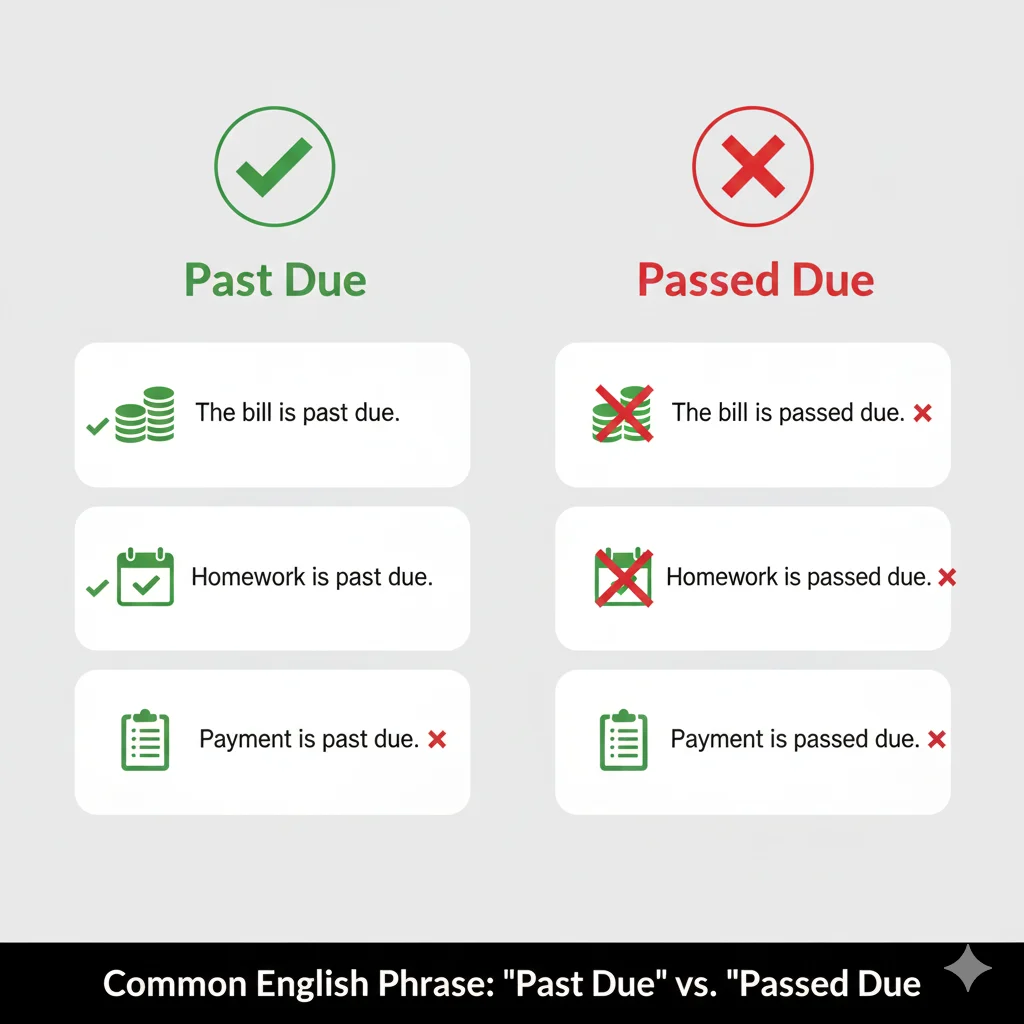
Many English learners and even native speakers often mix up past due and passed due. These two phrases may sound similar, but they have very different meanings and uses. Using the wrong one in a sentence can change your message entirely. For instance, writing “Your payment is passed due” instead of “past due” can sound confusing or incorrect.
In this guide, you will learn the simple definitions of both phrases, see clear examples, and discover easy tricks to remember which one to use. We’ll also cover common mistakes, real-life scenarios, and practical tips. By the end of this article, even beginners will confidently know the difference and use past due and passed due correctly in daily conversations, emails, and writing.
What Does Each Word Mean?
1. Past Due
Meaning: Something past due is overdue or late. Usually, it refers to payments, bills, or deadlines that have not been met on time.
Part of Speech: Adjective phrase
Examples:
- My electricity bill is past due, so I need to pay it today.
- The library books are past due, and I might get a fine.
- Your subscription is past due; please renew it soon.
Memory Tip: Think of “past” as time that has already gone by. If a payment is past due, the due date has already passed.

2. Passed Due
Meaning: Passed due is not grammatically correct in standard English. People often mistakenly write it when they mean past due. The word passed is the past tense of the verb “pass,” but it does not correctly describe something overdue.
Part of Speech: Verb (past tense of pass) — Not used in this context
Examples (Incorrect Usage):
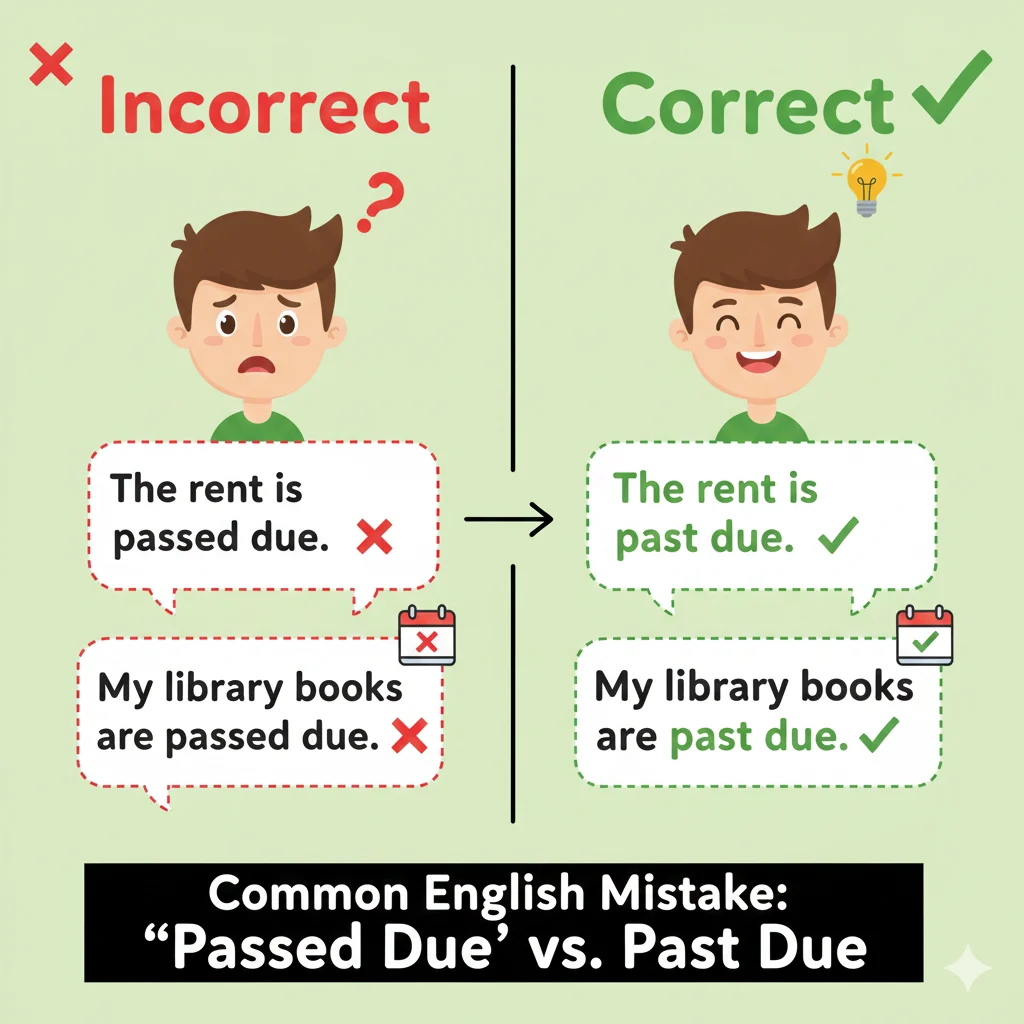
- ❌ Your rent is passed due.
- ❌ The homework is passed due.
Correct Version: Replace passed with past:
- ✔ Your rent is past due.
- ✔ The homework is past due.
Memory Tip: If you are describing a bill, task, or deadline, always use past due, not passed due.
The Key Difference Between Past Due and Passed Due
| Phrase | Meaning | Correct Usage | Example Sentence |
|---|---|---|---|
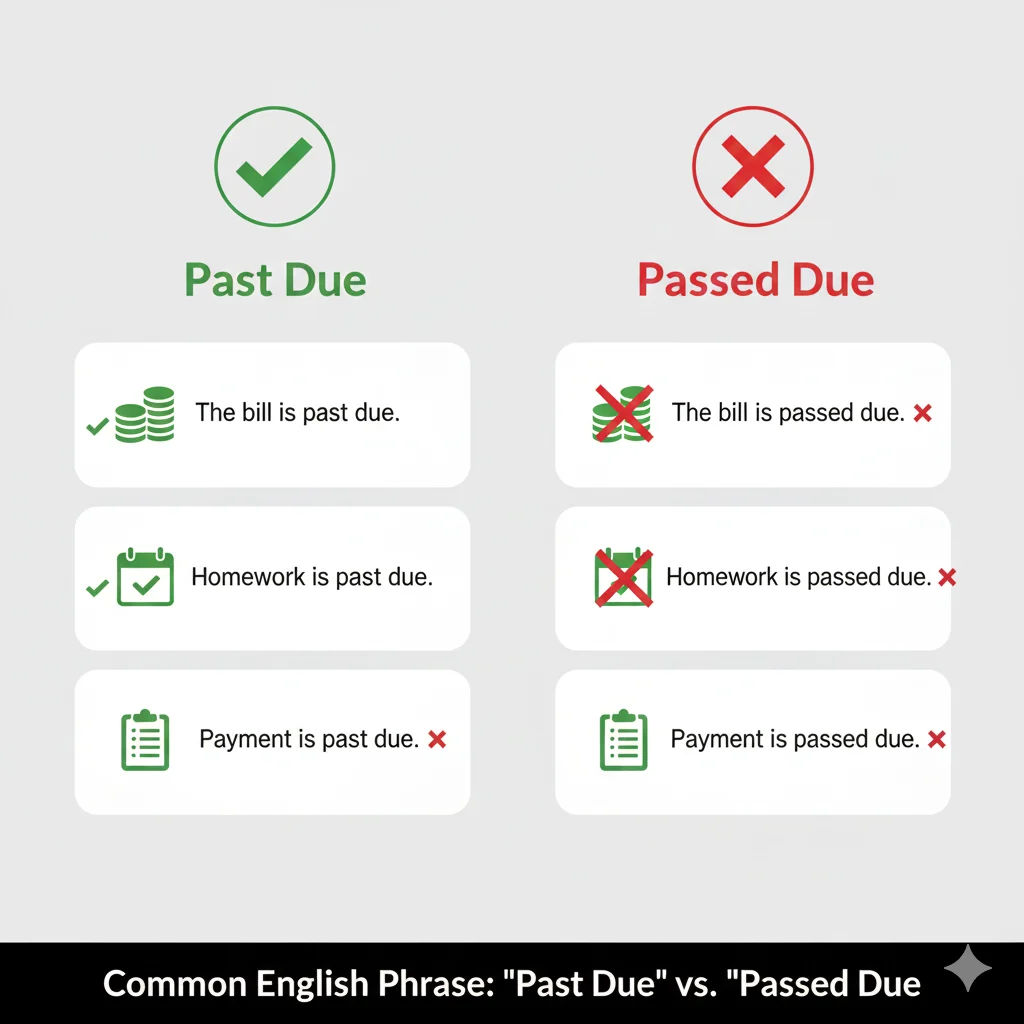
| Past Due | Overdue, late, not yet paid or completed | Adjective describing something overdue | Your electricity bill is past due. |
| Passed Due | Incorrect / common mistake | Do not use for overdue items | ❌ Your payment is passed due. |
Quick Tip:
- Past due → Think “time has passed, so it’s late.”
- Passed due → ❌ Avoid it; it’s not correct English.
Are Blueberries Blue or Purple? Understanding the True Color
Common Mistakes and How to Avoid Them
- Incorrect: Your invoice is passed due.
Correct: Your invoice is past due.
Why: “Passed” is a verb; you need an adjective phrase to describe the overdue status. - Incorrect: The project is passed due for submission.
Correct: The project is past due for submission.
Why: Deadlines are described with past due, not “passed due.
- Incorrect: Payment passed due yesterday.
Correct: Payment was past due yesterday.
Why: Always use past for overdue payments, bills, or deadlines.
When to Use Past Due
Use past due when talking about:
- Bills, invoices, or subscriptions
- Assignments or homework
- Deadlines at work or school
- Any overdue tasks
Examples:
- My credit card payment is past due, so I called the bank.
- The rent is past due; we need to pay immediately.
- Library books are past due; fines will apply.
- Your report is past due for submission.
- The project deadline is past due, so the team is rushing.
Memory Hack: Picture a calendar where the due date is crossed out — the task is now past due.
When to Use Passed Due
Short Answer: Do not use “passed due.” It is always a common mistake.
Memory Trick: Remember that “passed” is only used as the past tense of the verb pass, not to describe overdue items.
Correct Alternative: Always replace passed due with past due in emails, letters, and formal writing.
Quick Recap: Past Due vs Passed Due
- Past Due = Overdue, late, or not paid/completed on time. ✅
- Passed Due = Incorrect usage. ❌
- Tip: If it’s about a payment, assignment, or deadline, use past due.
- Remember: “Past” relates to time; “passed” is a verb.
Advanced Tips
- Origin: “Past” comes from Old English “paest,” meaning gone by.
- Formal Writing: Always use past due in invoices, financial documents, or professional emails.
- Online Writing: Misusing “passed due” can look unprofessional or confusing.
Mini Quiz
Fill in the blanks with past due or passed due:
- My water bill is _______; I need to pay it today.
- The library fines are _______ because I returned the books late.
- ❌ I realized my subscription is _______ (incorrect). Correct it.
- Your homework is _______; please submit it now.
- The rent is _______ since last week.
Answers:
- past due
- past due
- past due
- past due
- past due
5 FAQs About Past Due vs Passed Due
1. Can I write “passed due” in emails?
No. Always use past due for overdue payments or tasks.
2. Why do people say “passed due”?
Because they confuse the verb passed with the adjective phrase past due.
3. Is “past due” formal English?
Yes. It is correct in financial, academic, and professional writing.
4. Can “past due” describe anything besides bills?
Yes. Any task, assignment, or deadline can be described as past due.
5. How do I remember the difference?
Think of time that has gone by (past) versus the verb “pass” (passed).
Conclusion
Understanding the difference between past due and passed due is simple once you know the rule: past due describes something overdue, while passed due is always incorrect. Using the right phrase in emails, bills, or assignments makes your English sound professional and clear. Always check your writing for this common mistake, especially in formal or financial contexts.
By practicing these tips and examples, you’ll soon remember that anything overdue is past due, never passed due. Keep a mental calendar or a visual trick to help you. With a little practice, your English will improve, and you’ll confidently avoid this common error every time. Remember: mastering small grammar rules makes a big difference in daily communication!

English novelist and poet Thomas Hardy (1840–1928) explored human struggles, social constraints, and tragic love with deep realism and vivid storytelling.