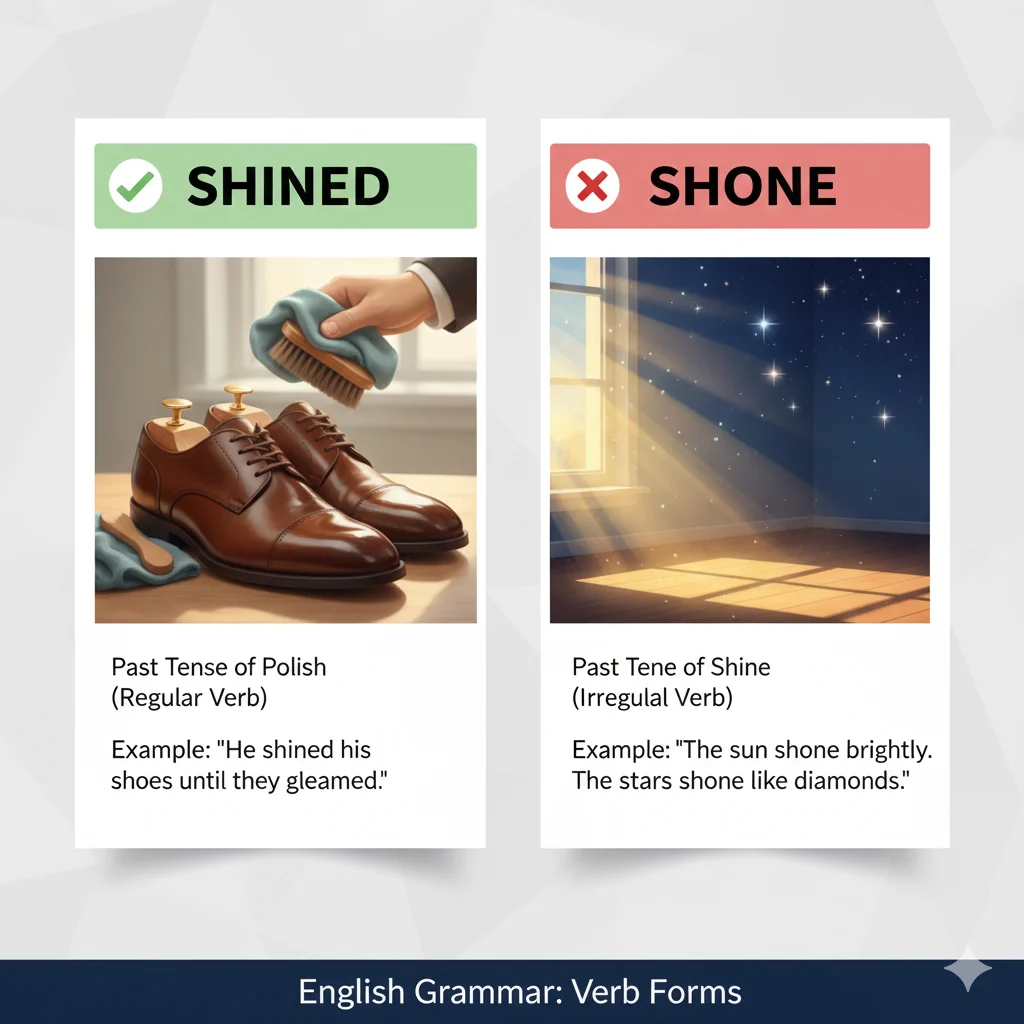
Both shined and shone are correct, but they are used differently. Shone is the past tense of “shine” when talking about light. Shined is used when “shine” means polishing or making something bright.
If you’re searching “shined or shone,” your intent is to understand the correct usage with simple examples. This is a common confusion in English, especially in writing, storytelling, and everyday communication.
Here’s the simple rule: Use shone when referring to light. Example: The sun shone brightly. Use shined when referring to an action. Example: He shined his shoes. Knowing this difference helps you write more clearly and correctly.
What Does Each Word Mean?
Some learners search for “shine shone shun” because these words look and sound similar, but they have very different meanings.
- Shine = present form (to give light or make something bright)
- Shone = past tense of shine (natural light or glow)
- Shun = a completely different verb meaning to avoid or stay away from something
Examples:
The sun shines every morning.
The stars shone brightly at night.
He decided to shun bad habits.
👉 Simple tip:
Shine/Shone = light
Shun = avoid
Shined
Meaning:
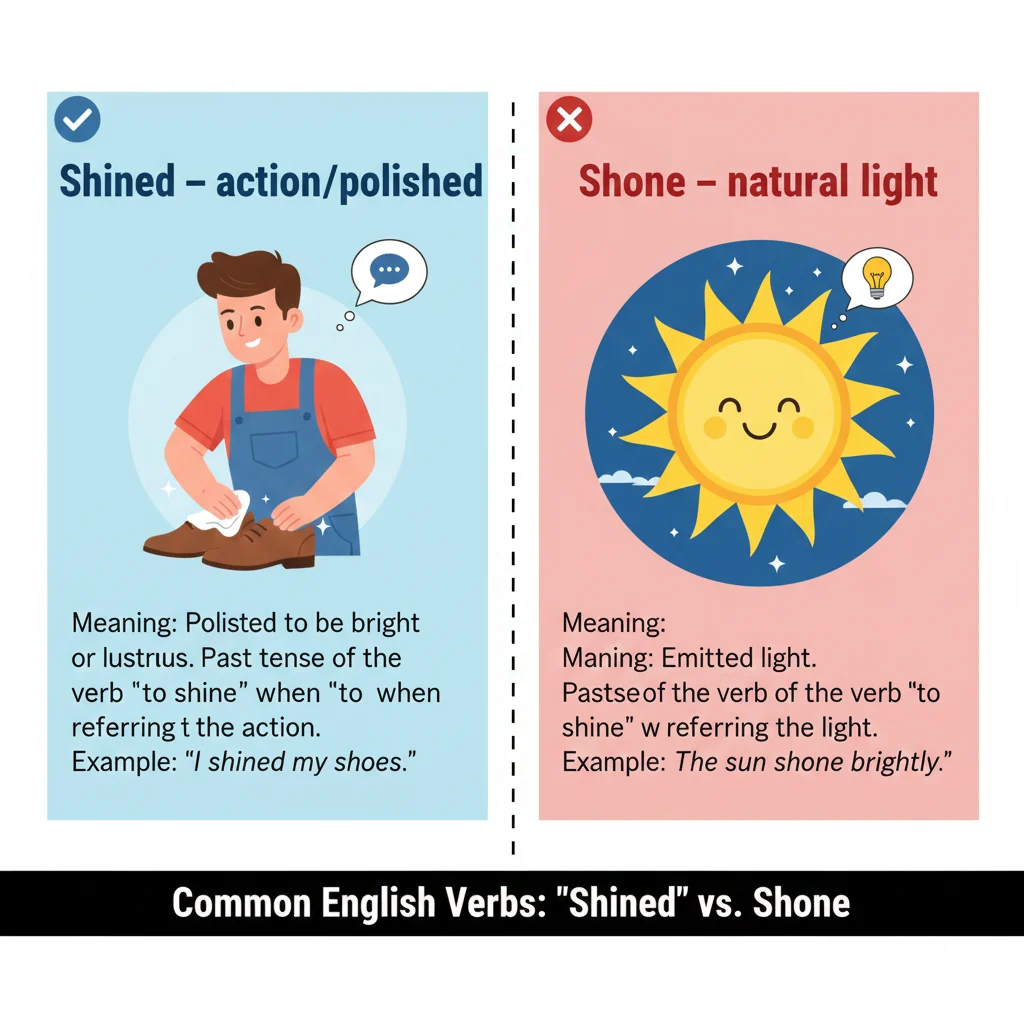
Shined is the regular past tense and past participle of shine. It is used when someone actively polishes or makes something shine. It emphasizes the action done by a person.
Part of Speech: Verb (past tense / past participle)
Examples:
- I shined my shoes before school to make them look perfect.
- She shined the silverware until it gleamed.
- He carefully shined the car before the party.
- We shined the windows until the sunlight reflected off them.
- Dad shined his watch to show it to his friends.
Mini Story: Imagine a child polishing a trophy for the school competition. The child is actively making it bright. That’s a classic use of shined.
Tip: Whenever someone is doing something to make an object bright, think shined.
Shone
Meaning:
Shone is the irregular past tense of shine, used when something naturally emits light or glows. No human action is involved; it’s about brightness or light that appears on its own.
Part of Speech: Verb (past tense / past participle)
Examples:
- The sun shone brightly in the morning, lighting up the entire garden.
- Her eyes shone with happiness when she received the gift.
- The stars shone in the clear night sky.
- A soft light shone through the window at dawn.
- His smile shone like a little spark of joy.
Mini Story: Imagine a night sky filled with twinkling stars. The stars are glowing naturally. This is the perfect situation for using shone.
Tip: Whenever brightness comes from natural light or emotions, think shone.
What Is the Part of Speech of “Shone”?
Many learners ask about the shone part of speech.
The word shone is a verb. It is the past tense and past participle of the verb “shine.”
In grammar, verbs show actions or states. In this case, shone describes something that gave off light or appeared bright in the past.
Examples:
The sun shone brightly.
Her eyes shone with excitement.
A soft light shone through the window.
So in grammar terms:
Shine = base verb
Shone = past tense verb
The Key Difference Between Shined and Shone
| Word | Meaning | Usage Example | Tip to Remember |
|---|---|---|---|
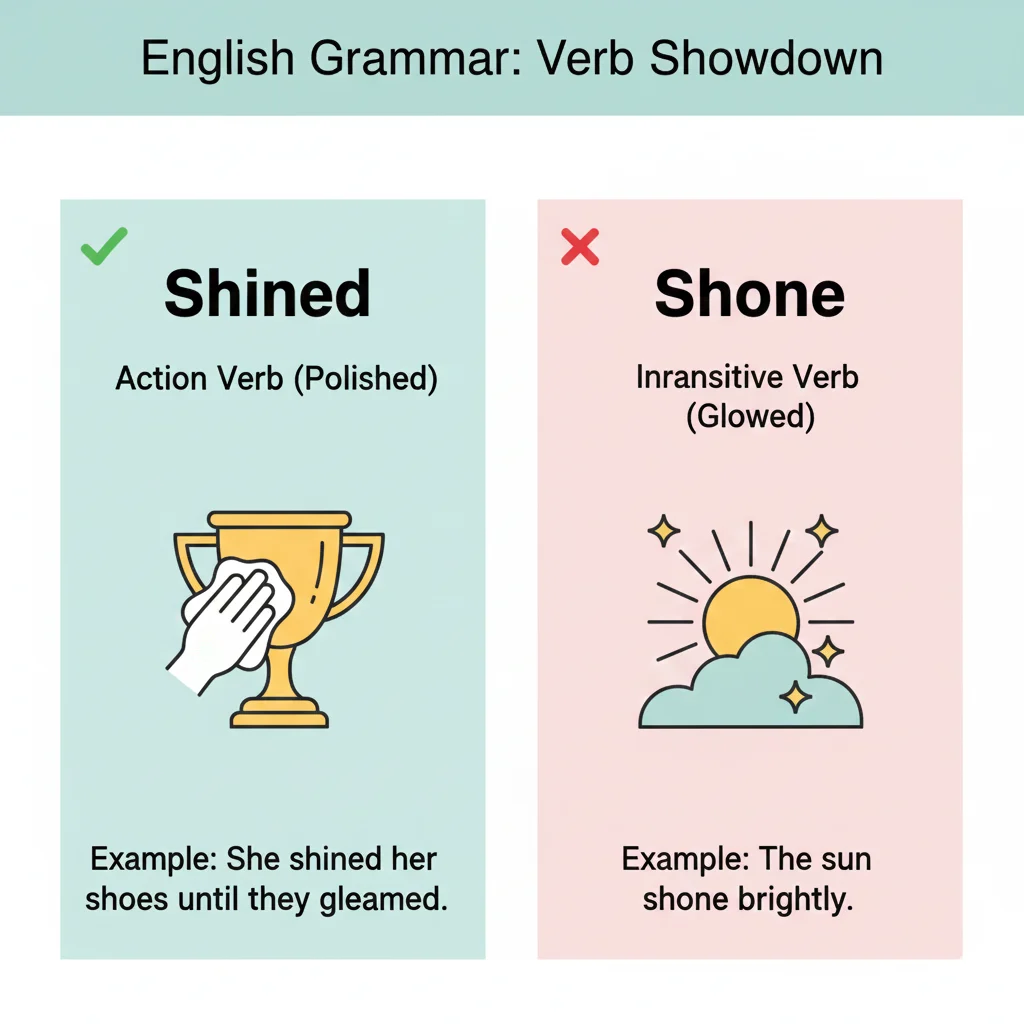
| Shined | Polished or made something shine | I shined my shoes this morning. | Action done to make it bright. |
| Shone | Naturally emitted light or glow | The moon shone through the clouds. | Light that appears on its own. |
Quick Tip:
- If someone is doing something to make it shine, use shined.
- If something naturally emits light, use shone.
Think of it like this:
- Shined = action (I shined my shoes)
- Shone = natural glow (The stars shone in the sky)
Common Mistakes and How to Avoid Them
Even advanced writers make mistakes with these words. Here are some common errors and corrections:
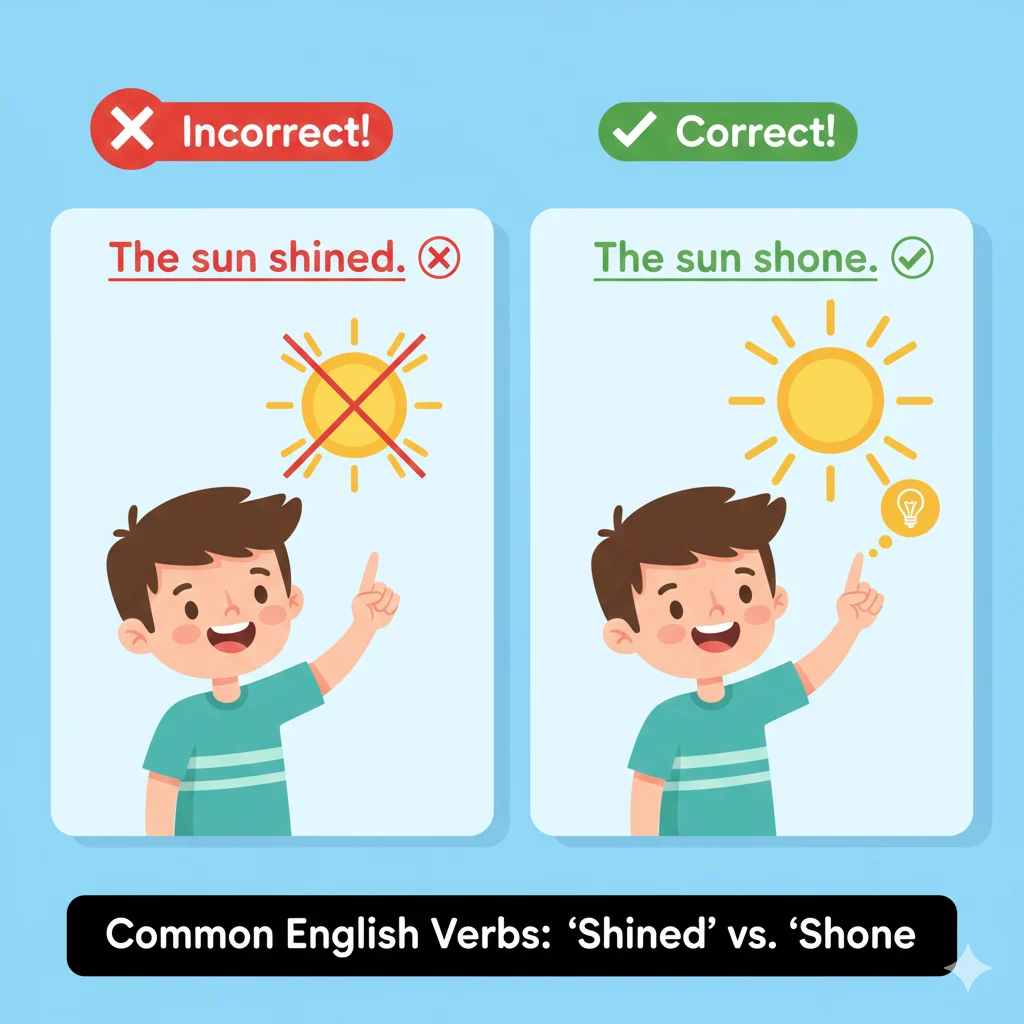
Mistake 1: The sun shined all day.
Correction: The sun shone all day.
Reason: The sun naturally emits light. No one polished it.
Mistake 2: I watched the stars shined last night.
Correction: I watched the stars shone last night.
Reason: Stars glow naturally.
Mistake 3: She shone her shoes until they sparkled.
Correction: She shined her shoes until they sparkled.
Reason: Polishing requires action, so use shined.
Tip to Avoid Mistakes: Ask yourself: “Am I doing something, or is it glowing naturally?”
- If you are doing it → shined
- If it glows naturally → shone
When to Use Shined
Shined is used when someone actively makes something bright or polished.
Examples in Daily Life:
- I shined my leather jacket before the party.
- Dad shined his boots for the school ceremony.
- She shined the dining table for the guests.
- He carefully shined the trophy before presenting it.
- We shined the mirrors until they reflected sunlight perfectly.
Visual Tip: Imagine a polishing cloth in your hand. That’s a shined situation.
Extra Tip: Even emails and reports sometimes use shined metaphorically:
- She shined her presentation skills before the meeting.
Here, it’s about actively improving or making something impressive.
When to Use Shone
Shone is used when something naturally emits light or glows.
Examples in Daily Life:
- The sun shone through the clouds after the rain.
- Her eyes shone with happiness when she saw her puppy.
- Stars shone brightly in the night sky.
- The lamp shone softly in the living room.
- His smile shone when he received a compliment.
Visual Tip: Imagine stars, moonlight, or sunlight—no action needed. That’s shone.
Memory Hack: Think of glow = shone and action = shined.
Extra Tip: Shone can also describe emotions or qualities that “shine through”:
- Her kindness shone in every gesture.
- His courage shone during the competition.
Here, shone refers to something noticeable naturally coming from within, not created manually.
Shined a Light or Shone a Light — Which Is Correct?
Many people ask: “shined a light or shone a light?”
Both can be correct, but they are used in different situations.
Use shined a light when someone actively uses a light source, like a torch or flashlight.
Example:
He shined a light into the dark room.
Use shone a light when describing light spreading naturally or figuratively.
Example:
The lamp shone a light across the hallway.
In modern English, “shone a light” is also commonly used in a figurative sense:
The report shone a light on an important issue.
👉 Simple rule:
Action with a light source → shined a light
Natural or figurative light → shone a light
Quick Recap: Shined vs Shone
- Shined: Action done to make something bright (polished, rubbed, cleaned).
- Shone: Light or glow that happens naturally (sun, stars, eyes, emotions).
- Memory Tip: Action = shined | Glow = shone.
- Common Mistake: Using shined for natural light.
- Check: Ask “Did I do it, or is it glowing on its own?”
Advanced Tips for Writers
- Origin:
- Shone comes from Old English scinan, meaning “to shine.”
- Shined is a regularized form used for polishing actions.
- Formal Writing:
- Use shone for natural light or metaphors in essays, literature, or exams.
- Example: “Hope shone brightly in the darkest times.”
- Online Communication:
- Incorrect use of shined can confuse readers.
- Example: “The stars shined last night” sounds like someone polished the stars!
- Metaphorical Use:
- Shined: actively performing or improving (skills, presentation).
- Shone: inherent brilliance or noticeable qualities (personality, talent).
Mini Quiz: Test Your Knowledge
Fill in the blanks with shined or shone:
- She ______ her shoes before the ceremony.
- The stars ______ brightly over the village.
- He ______ the silver trophy until it gleamed.
- The sun ______ through the morning mist.
- I ______ my bike until it looked new.
- Her eyes ______ with happiness when she saw her puppy.
- We ______ the windows until they sparkled.
- His courage ______ during the school competition.
- The lamp ______ softly in the dark room.
- Dad ______ his watch before showing it to his friends.
Answers: 1. shined | 2. shone | 3. shined | 4. shone | 5. shined | 6. shone | 7. shined | 8. shone | 9. shone | 10. shined
FAQs
1. Can I use “shined” and “shone” interchangeably?
No. Shined is for polished or made shiny. Shone is for natural light or inherent glow.
2. Which form is used more in British and American English?
Both forms are widely accepted, but shone is preferred for natural light.
3. Can “shone” be used for emotions?
Yes. For example: Her happiness shone in her smile.
4. Is it wrong to say “I shone my shoes”?
Yes, the correct form is I shined my shoes because polishing is an action.
5. Any trick to remember quickly?
Action → shined | Glow → shone. Think “I shined” vs “the sun shone.”
6. Are there other verbs like this?
Yes, similar irregular/regular forms exist:
- Learned vs Learnt
- Dreamed vs Dreamt
7. Can “shined” be used metaphorically?
Yes, especially in professional or creative contexts: She shined in her performance.
Conclusion
Now you know the difference between shined and shone. Shined is for actions, like polishing shoes or trophies. Shone is for natural light, glowing objects, or qualities that stand out. By practicing these simple rules, memory hacks, and examples, you can confidently use both words in daily life, school, or work.
Next time you see the sun, stars, or someone polishing an object, notice which word fits. Over time, choosing between shined and shone will become natural. Correct usage not only improves your grammar but also makes your writing and speech sound professional and polished. Remember, learning English is a gradual journey — every small step counts. Keep practicing and enjoy shining with your words!

Scottish novelist Muriel Spark (1918–2006) crafted sharp, witty stories exploring human nature, morality, and society with dark humor and insight.