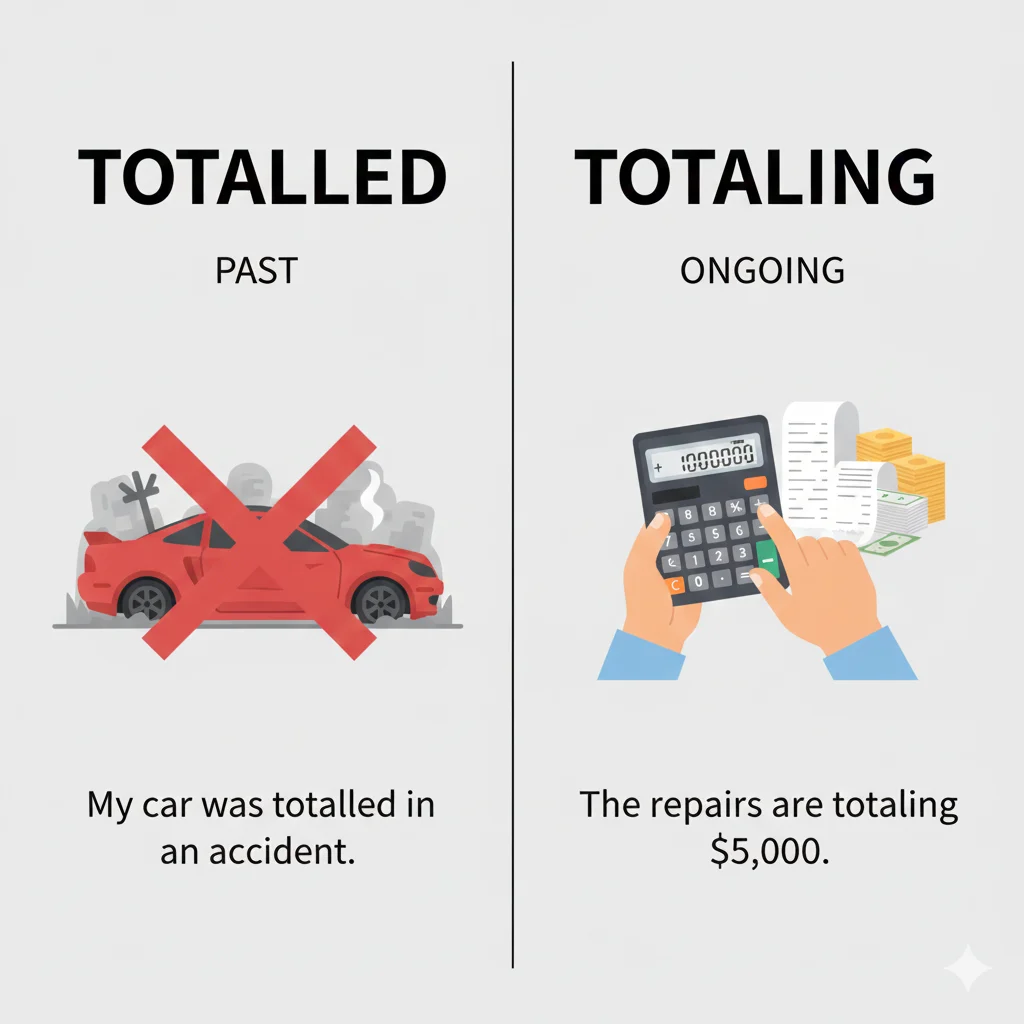
English spelling can feel confusing, especially when the same word looks different in different places. One common example is totalled or totaling. Many learners wonder: Are both correct? Which one should I use? The confusion often comes from British English and American English following slightly different spelling rules.
You might see totalled in a news article and totaling in a school essay. Both look right, but they follow different patterns. That’s why people mix them up so often.
In this easy guide, you’ll learn the meaning, difference, and correct usage of totalled and totaling. We’ll use simple words, short sentences, and real-life examples. Even a 4th-grade student can understand this. By the end, you’ll know exactly which spelling to choose and feel more confident using English every day.
What Does Each Word Mean?
Let’s start with the basics. Both totalled and totaling come from the same base word: total.
Meaning of Total
Total means the whole amount or the final number after adding everything.
Example:
- The total of 2 and 3 is 5.
Now let’s look at each form one by one.
What Does Totalled Mean?
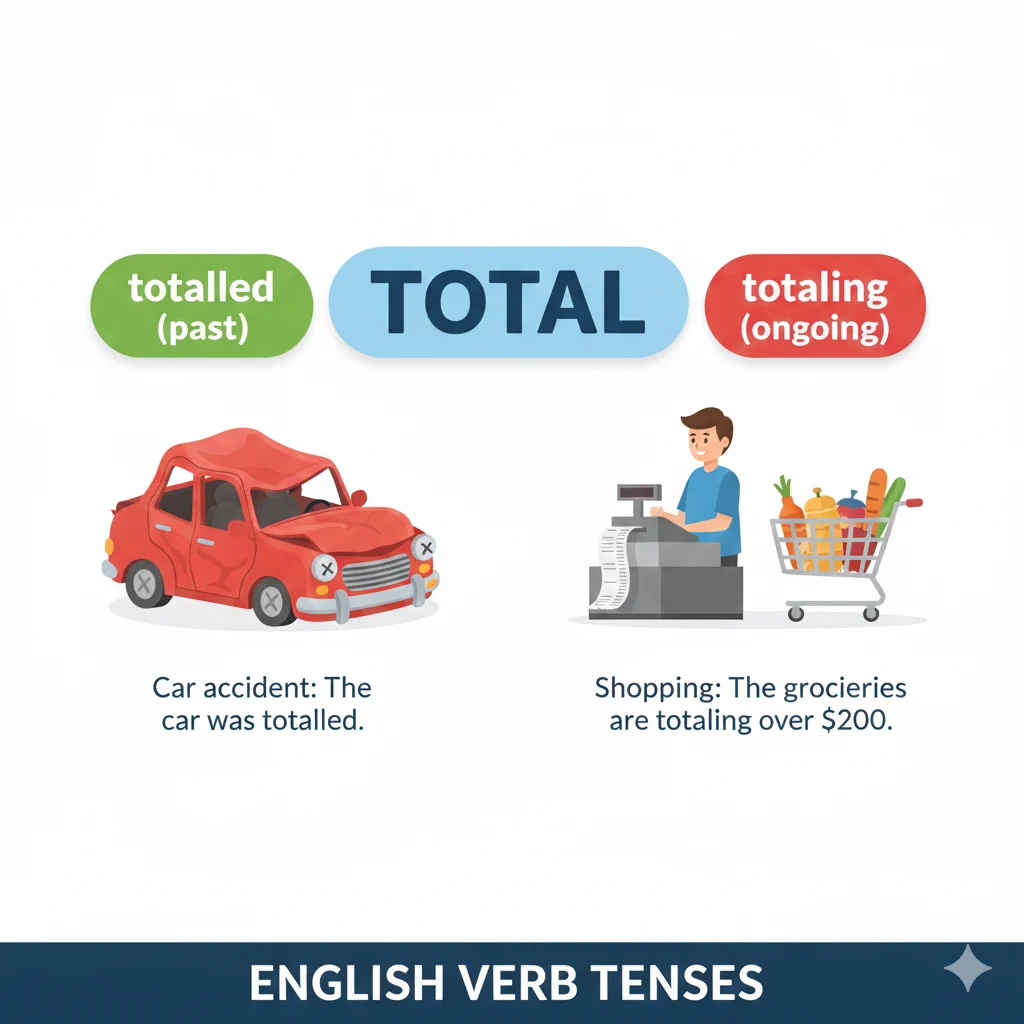
Totalled is the past tense and past participle form of the verb total in British English.
It means:
- Something was added up in the past
- Or something was completely destroyed (like a car in an accident)
Part of speech: Verb (past tense)
Easy examples:
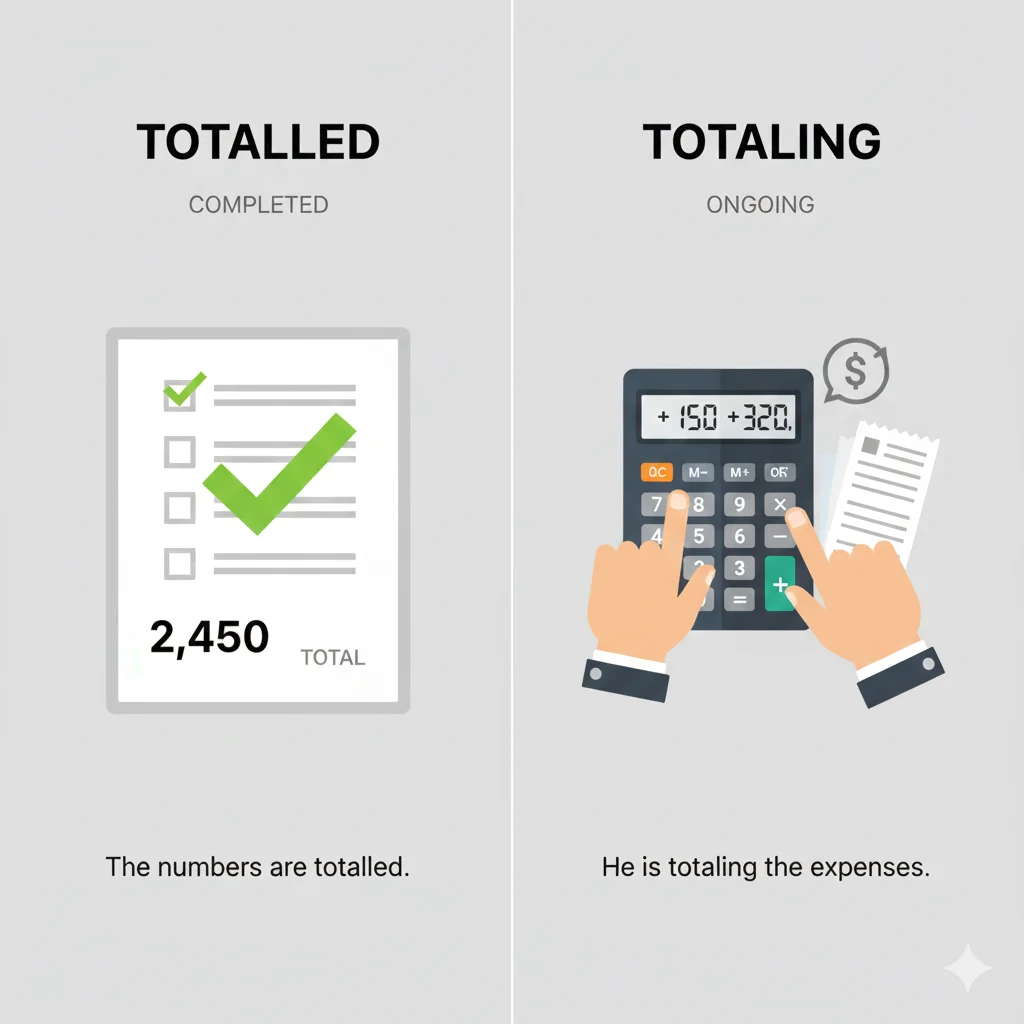
- The bill totalled fifty dollars.
- His car was totalled in the accident.
- The points totalled 100 at the end of the game.
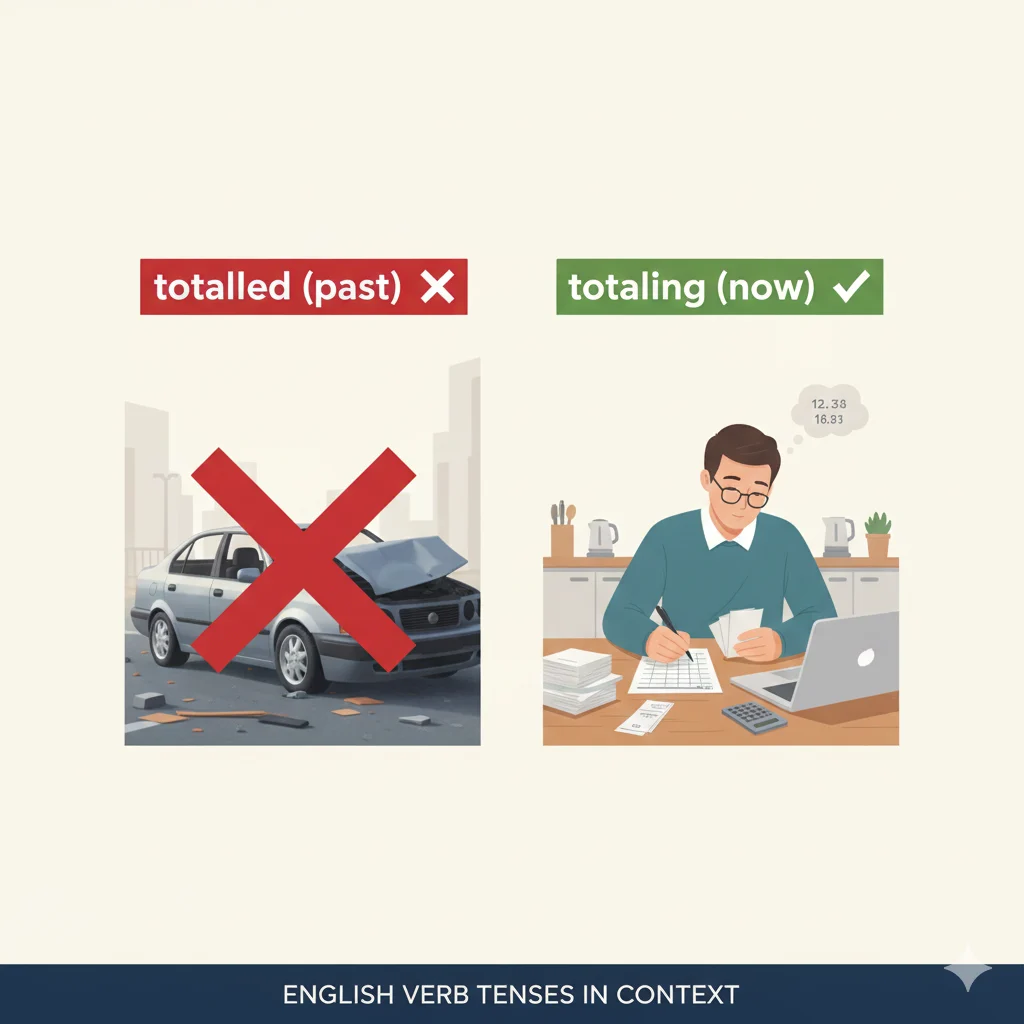
Think of totalled as talking about something already finished.
What Does Totaling Mean?
Totaling is the present participle form of the verb total. It is used in both American and British English, but the spelling without double “l” is more common in American English.
It means:
- Adding things right now
- Or describing an ongoing action
Part of speech: Verb (–ing form)
Easy examples:
- She is totaling the expenses.
- The damage is totaling thousands of dollars.
- He is totaling the scores after the match.
Think of totaling as something happening now or continuing.
The Key Difference Between Totalled and Totaling
The main difference between totalled or totaling is spelling style and verb form, not meaning.
Simple Comparison Table
| Feature | Totalled | Totaling |
|---|---|---|
| Meaning | Added up or destroyed (past) | Adding up now |
| Verb tense | Past tense | Present participle |
| English style | British English | American English |
| Example | The costs totalled $500. | She is totaling the costs. |
Quick Tip to Remember
👉 British English likes double “l” (totalled, travelled).
👉 American English prefers one “l” (totaled, totaling).
Common Mistakes and How to Avoid Them
Even good English speakers make mistakes with totalled vs totaling. Let’s fix the most common ones.
Mistake 1: Mixing tense and form
❌ The bills are totalled now.
✅ The bills are totaling now.
Why it’s wrong:
“Are” shows something is happening now. So you need totaling, not totalled.
Mistake 2: Using the wrong spelling style
❌ The car was totaling in the crash.
✅ The car was totalled in the crash. (British)
✅ The car was totaled in the crash. (American)
Why it’s wrong:
“Was” shows past tense. You should not use the –ing form here.
Mistake 3: Switching styles in one text
❌ The costs totalled $200 and are totaling more today.
✅ The costs totalled $200 and may increase today.
Why it’s wrong:
Try to stay consistent with one style in the same piece of writing.
When to Use Totalled
Use totalled when:
- You are talking about the past
- You are following British English
- The action is finished
Simple, Real-Life Examples
- The school fees totalled $300 last month.
- Her phone was totalled after falling in water.
- The final score totalled 90 points.
- All the expenses totalled more than expected.
- The damage totalled thousands of rupees.
Think:
If the action is over, totalled fits well.
When to Use Totaling
Use totaling when:
- The action is happening now
- You are describing an ongoing process
- You are using American English
Easy, Everyday Examples
- He is totaling the grocery bill.
- The repairs are totaling a lot of money.
- She is totaling the marks on her paper.
- The team is totaling their points.
- The shop is totaling today’s sales.
Memory Hack
🧠 “ING = In Going”
If the action is in progress, choose totaling.
Quick Recap: Totalled vs Totaling
- Totalled
- Past action
- British English
- Action is finished
- Totaling
- Ongoing action
- Common in American English
- Action is still happening
Fast tip:
Past = totalled
Present/ongoing = totaling
Advanced Tips (Optional but Helpful)
A Short History Note
In British English, verbs often double the final “l” before adding endings. That’s why you see totalled and travelling. American English simplified many spellings, so it prefers totaled and totaling.
In Exams and Formal Writing
- Follow the spelling style your school or country uses.
- Be consistent in essays and reports.
- Examiners care more about consistency than the version you choose.
In Texting and Online Writing
Using the wrong form can confuse meaning.
- “The bill is totalled” sounds finished.
- “The bill is totaling” sounds ongoing.
Mini Quiz: Test Your Understanding
Fill in the blanks with totalled or totaling.
- The costs have ________ more than expected.
- She is ________ the marks right now.
- The accident ________ the old car.
- He spent the evening ________ his expenses.
- The final amount ________ $1,000.
- The shop is ________ today’s sales.
(Answers: 1. totalled, 2. totaling, 3. totalled, 4. totaling, 5. totalled, 6. totaling)
FAQs
1. What is the difference between totalled and totaling?
Totalled is past tense (British English). Totaling shows an ongoing action.
2. Is totaling American English?
Yes, it is more common in American English.
3. Is totalled incorrect?
No. It is correct in British English.
4. Can I use both in one sentence?
Only if the tense and meaning are clear and consistent.
5. Which spelling should students use?
Use the style taught by your school or exam board.
Conclusion
Now you know the clear difference between totalled or totaling. Both come from the word total, but they are used in different ways. Totalled talks about something finished in the past, mostly in British English. Totaling shows an action happening right now and is common in American English.
By using simple clues like tense and spelling style, you can choose the correct word every time. Keep practicing with real-life examples, and soon it will feel natural. Learning small grammar rules like this makes your English stronger day by day. Keep going—you’re improving more than you think!

English playwright and novelist Patrick Hamilton (1904–1962) captured psychological tension, social decay, and dark humor in gripping, unforgettable stories.