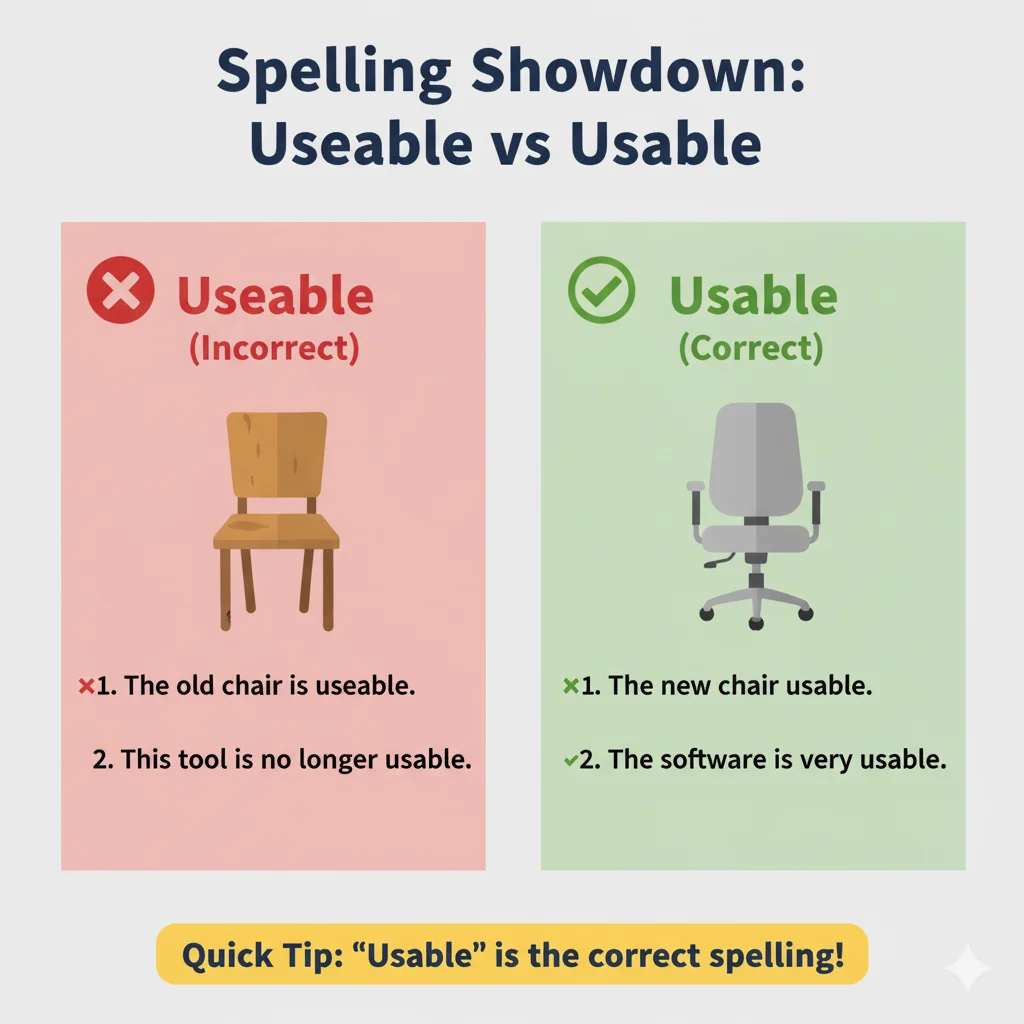
Many English learners often get confused between useable and usable. Both words seem similar, and it’s easy to mix them up. But understanding their correct usage can make your writing and speaking much clearer.
In this guide, we will explain the meanings of both words, their differences, and how to use them correctly in sentences. You will also find practical examples, common mistakes, and memory tips to remember which word fits best.
Whether you are writing an essay, sending an email, or chatting with friends, this guide will make it simple for you to choose between useable and usable. Even if you are a beginner, by the end of this article, you will feel confident using these words correctly.
What Does Each Word Mean?
Useable
Meaning: The word useable means something that can be used.
Part of Speech: Adjective
Examples:
- This old computer is still useable for simple tasks.
- The broken chair is barely useable.
- Make sure the data is useable before sharing it.
Tip: Think of useable as something that can be used, even if it’s not perfect.
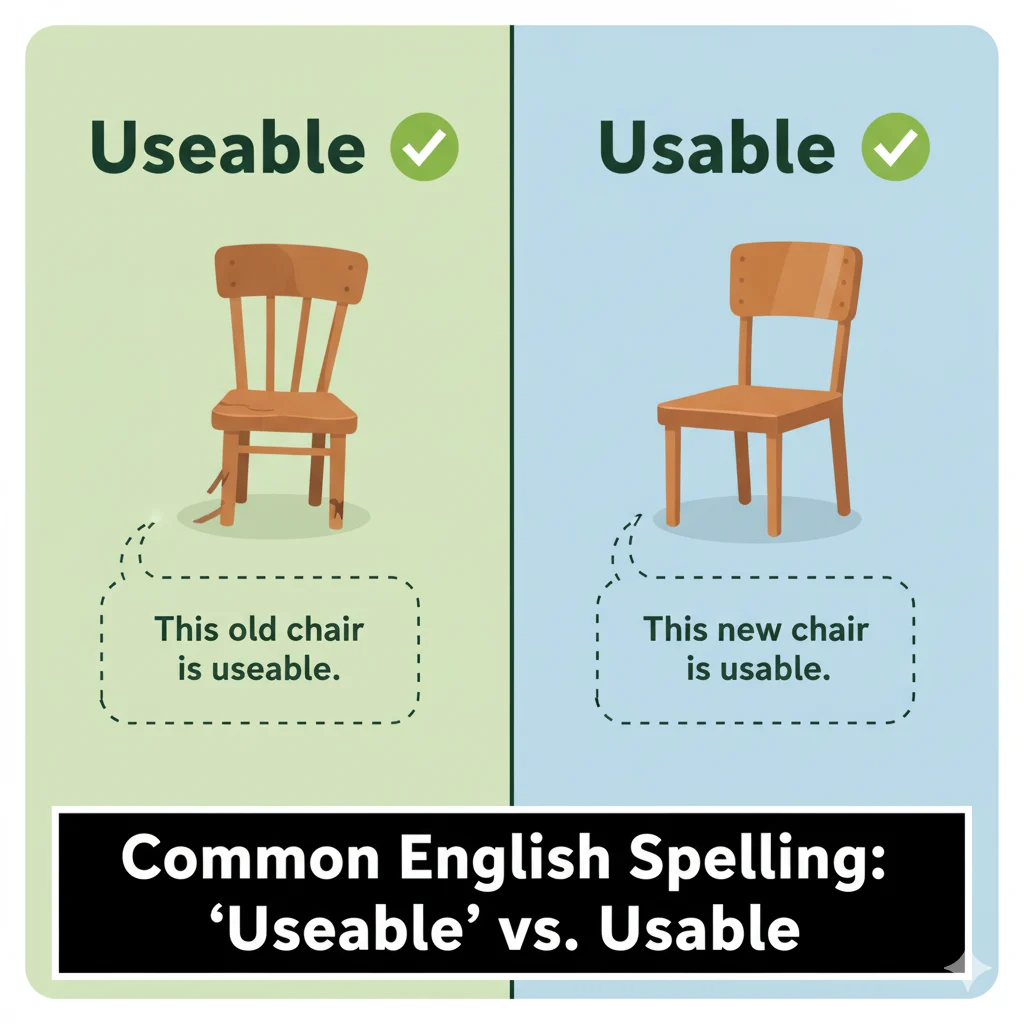
Usable
Meaning: Usable also means something that can be used.
Part of Speech: Adjective
Examples:
- The new software is very usable and easy to navigate.
- Only usable tools should be taken to the construction site.
- We need to make the website more usable for everyone.
Tip: Usable is the standard and more widely accepted spelling in modern English.
The Key Difference Between Useable and Usable
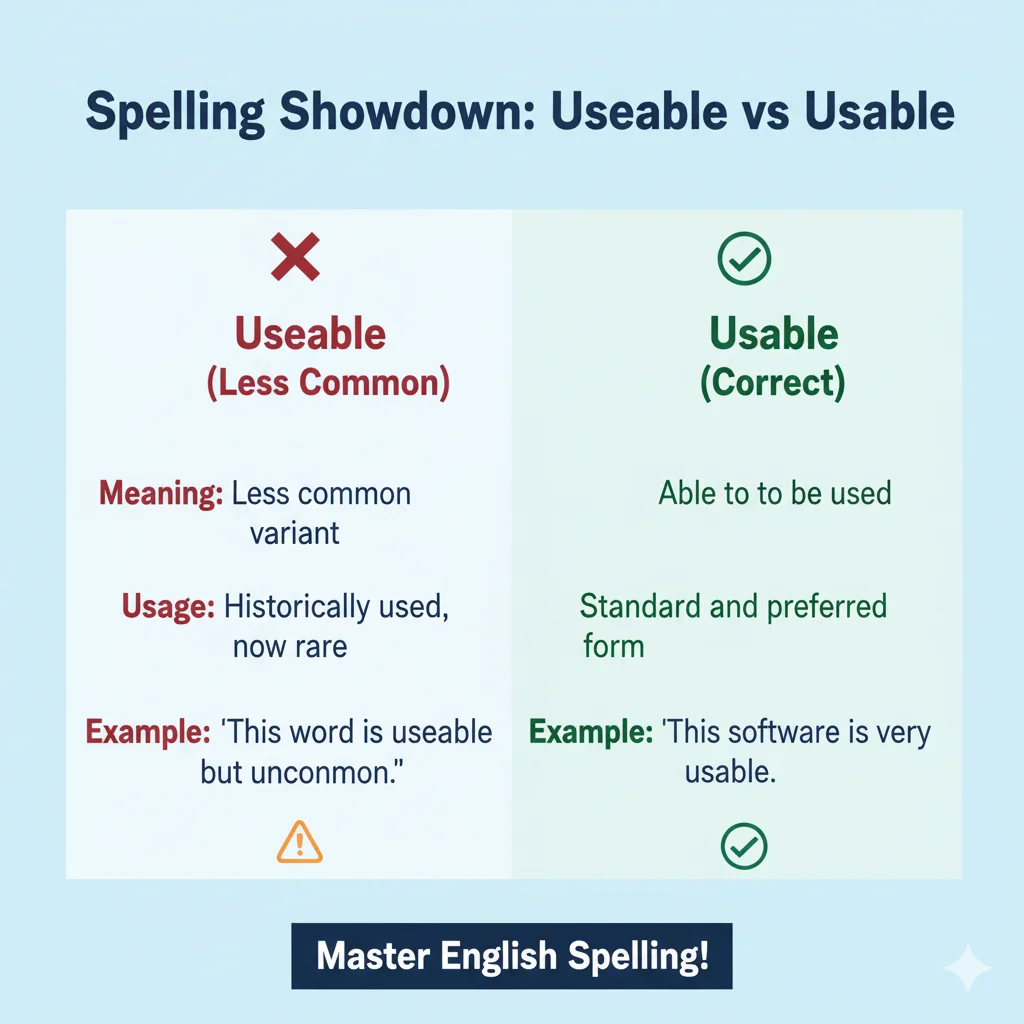
| Feature | Useable | Usable |
|---|---|---|
| Meaning | Can be used, often informal | Can be used, standard spelling |
| Spelling | Less common, sometimes considered outdated | More common, widely accepted in dictionaries |
| Usage Example | This old pen is useable. | This app is very usable for beginners. |
| Formality | Informal or rare | Standard English, formal and informal |
Quick Tip: If you’re unsure which to use, choose usable—it is correct and accepted everywhere.
Common Mistakes and How to Avoid Them
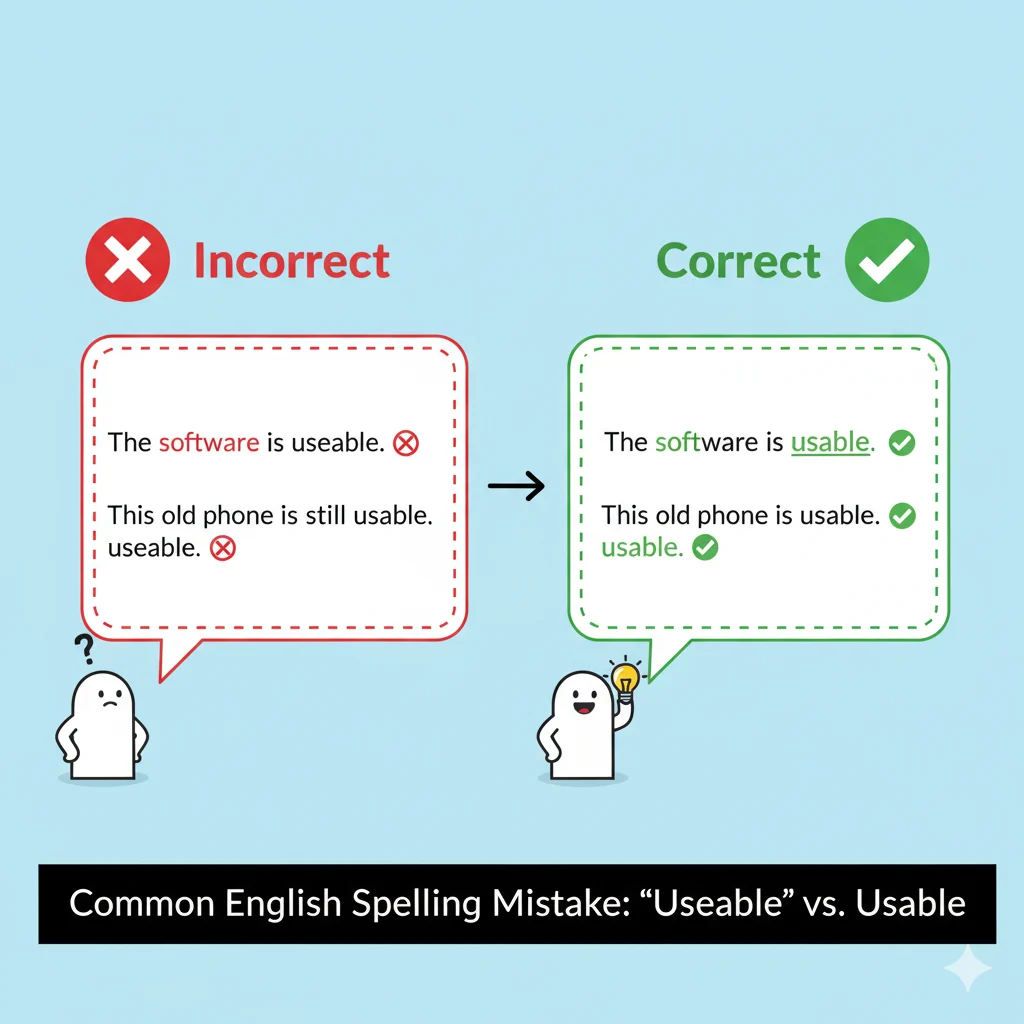
Incorrect: The software is useable.
Correct: The software is usable.
Why it happens: People often spell it like useable because it looks logical.
Incorrect: Is this old bike useable?
Correct: Is this old bike usable?
Incorrect: Make sure the information is useable.
Correct: Make sure the information is usable.
Tip: Always check a dictionary if you’re writing formally. Usable is the safe choice.
When to Use Useable
Although rare, useable can be used in casual writing or informal notes.
Examples:
- The notebook is old but still useable.
- Are these chairs useable for the event?
- This old phone is barely useable.
- Some old files are useable but messy.
- The broken tools are not very useable.
Memory Hack: Think of useable as “something that can still be used, even if it’s not perfect.”
When to Use Usable
Usable is preferred in modern English for all formal and informal writing. It fits professional, academic, and everyday contexts.
Examples:
- The new app is very usable and user-friendly.
- Only usable equipment should be shipped.
- We need a more usable website interface.
- Make sure the instructions are usable for students.
- The room was cleaned and now completely usable.
Visual Trick: Imagine a green checkmark ✅ next to usable—this is always correct.
Quick Recap: Useable vs Usable
- Usable: Standard, widely accepted, safe choice for formal and informal writing.
- Useable: Less common, sometimes outdated, mostly informal.
- Both mean “something that can be used,” but usable is always preferred.
- When in doubt, pick usable for essays, emails, and reports.
Advanced Tips
- Origin: Both words come from “use” + “able.”
- Formal Writing: Use usable in essays, business documents, and online articles.
- Online Writing: Misusing useable in blogs or professional content can appear outdated.
Mini Quiz
Fill in the blanks with usable or useable:
- This old map is still ________.
- The new software is very ________.
- Only ________ equipment should be packed.
- The chair is broken but ________ for now.
- Make sure the instructions are clear and ________.
- Are these old files still ________?
- The app must be easy to use and ________ for beginners.
Answers: 1. useable / 2. usable / 3. usable / 4. useable / 5. usable / 6. useable / 7. usable
FAQs
Q1. Can I use useable in formal writing?
A1. Technically yes, but it is uncommon. Stick to usable for formal writing.
Q2. Are useable and usable pronounced differently?
A2. No, they are pronounced the same way.
Q3. Which one is more correct, useable or usable?
A3. Usable is the standard and widely accepted spelling.
Q4. Can both words appear in dictionaries?
A4. Yes, but usable is more commonly listed and preferred.
Q5. Why do people still use useable?
A5. Because it looks logical and some older texts used it. Today, usable is safer.
Conclusion
Now you know the difference between useable and usable. Both words mean “something that can be used,” but usable is the modern, standard spelling accepted in all formal and informal contexts. Useable is rare, mostly informal, and can sometimes appear outdated.
By practicing these examples and remembering the simple tips from this guide, you can confidently choose the correct word every time. Start noticing usable in books, articles, and emails—you will see it is the safest choice. With regular practice, you’ll never mix these words up again. Keep writing, keep learning, and enjoy improving your English step by step!

English playwright and novelist Patrick Hamilton (1904–1962) captured psychological tension, social decay, and dark humor in gripping, unforgettable stories.