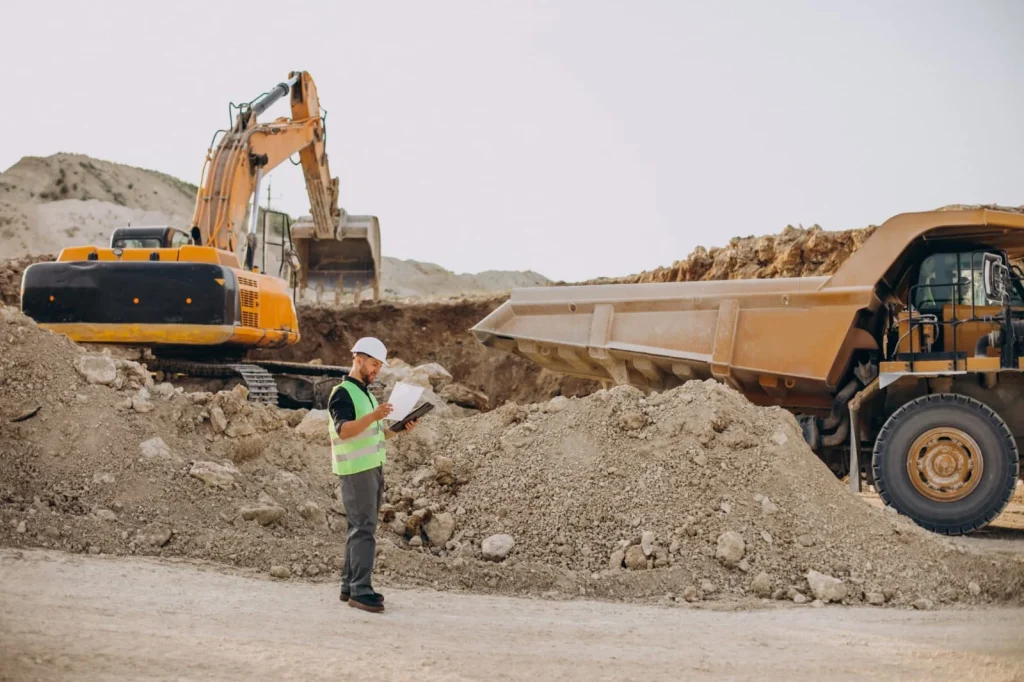
A stable foundation isn’t the guaranteed greeting awaiting every team heading out to a construction site. Reactive clays, moisture-sensitive silts and low-bearing fills are some of the most prevalent site conditions civil teams face in regional Australia’s growing development corridors before the first slab is poured or pavement layers are laid. How those conditions are managed during the earthworks phase determines whether the structure built on top performs over its design life or shows signs of distress long before it should. Soil stabilisation is the discipline that closes the gap between ‘what is’ and ‘what needs to be’.
Why reactive ground is such a persistent problem
Reactive soils, most often expansive clays, expand and contract with changes in moisture content. Reactive subgrades swell when they become wet, and shrink when they dry out. The movement associated with this change in volume causes differential settlement of any structure or pavement constructed above that subgrade. Reactive clay soil profiles are prevalent in areas of regional growth where development is expanding into what was once vacant or agricultural land.
Neglected reactive subgrades result in pavement underperformance, slab and structure cracking and maintenance liabilities that add up over the life of an asset. The cost of repair after a foundation has been deflected is significantly higher than the cost of properly treating the subgrade before construction, which is why good civil construction company teams include subgrade assessment as a mandatory step in project planning rather than an optional add-on.
How chemical stabilisation works
Reactive soils, most often expansive clays, expand and contract with changes in moisture content. Reactive subgrades swell when they become wet, and shrink when they dry out. The movement associated with this change in volume causes differential settlement of any structure or pavement constructed above that subgrade. Reactive clay soil profiles are prevalent in areas of regional growth where development is expanding into what was once vacant or agricultural land.
Neglected reactive subgrades result in pavement underperformance, slab and structure cracking and maintenance liabilities that add up over the life of an asset. The cost of repair after a foundation has been deflected is significantly higher than the cost of properly treating the subgrade before construction, which is why good civil construction company teams include subgrade assessment as a mandatory step in project planning, not an optional add-on.
Getting the plant on the ground faster
One of the practical advantages of chemical stabilisation on active construction sites is the speed with which ground conditions improve after treatment. Wet, plastic clay that is effectively impassable to heavy equipment can become workable within hours of lime application, as quicklime reacts with soil moisture. This improvement in trafficability allows construction programmes to keep moving through weather events or ground conditions that would otherwise cause significant delays.
For earthwork construction, managing tight programme schedules on large regional developments, that responsiveness has direct commercial value. Ground that can be stabilised and returned to productive use quickly reduces downtime and keeps earthworks sequences on track.
Protecting the pavement investment
The financial case for thorough subgrade stabilisation is straightforward. Roads, hardstands, and civil infrastructure represent substantial capital investment, and that investment is only protected if the ground beneath it performs consistently under load and across changing moisture conditions.
Pavement deflection caused by reactive or weak subgrade is not a surface problem. It is a foundation problem, and no amount of surface treatment resolves it once the underlying movement begins. The repair costs associated with failed pavement on a reactive subgrade, including traffic management, full-depth reconstruction, and programme disruption, routinely dwarf the cost of a properly specified stabilisation programme at the earthworks stage.
Precision at the foundation level
The quality of soil stabilisation work depends on the precision with which it is designed and executed. Stabiliser selection must be matched to the specific soil type. Lime performs differently on high-plasticity clays than on silts, and cement treatment requires careful moisture management to achieve the specified outcome. Mix design, application rates, mixing depth, and compaction standards should be calibrated to site-specific geotechnical data rather than generic specifications.
This is where the difference between a thorough civil contractor and an average one becomes most visible. The foundation work on a development site is invisible once the project is complete, but its quality determines how everything built above it performs for decades. Getting it right the first time is not just best practice. In reactive ground conditions, it is the only approach that holds up.

