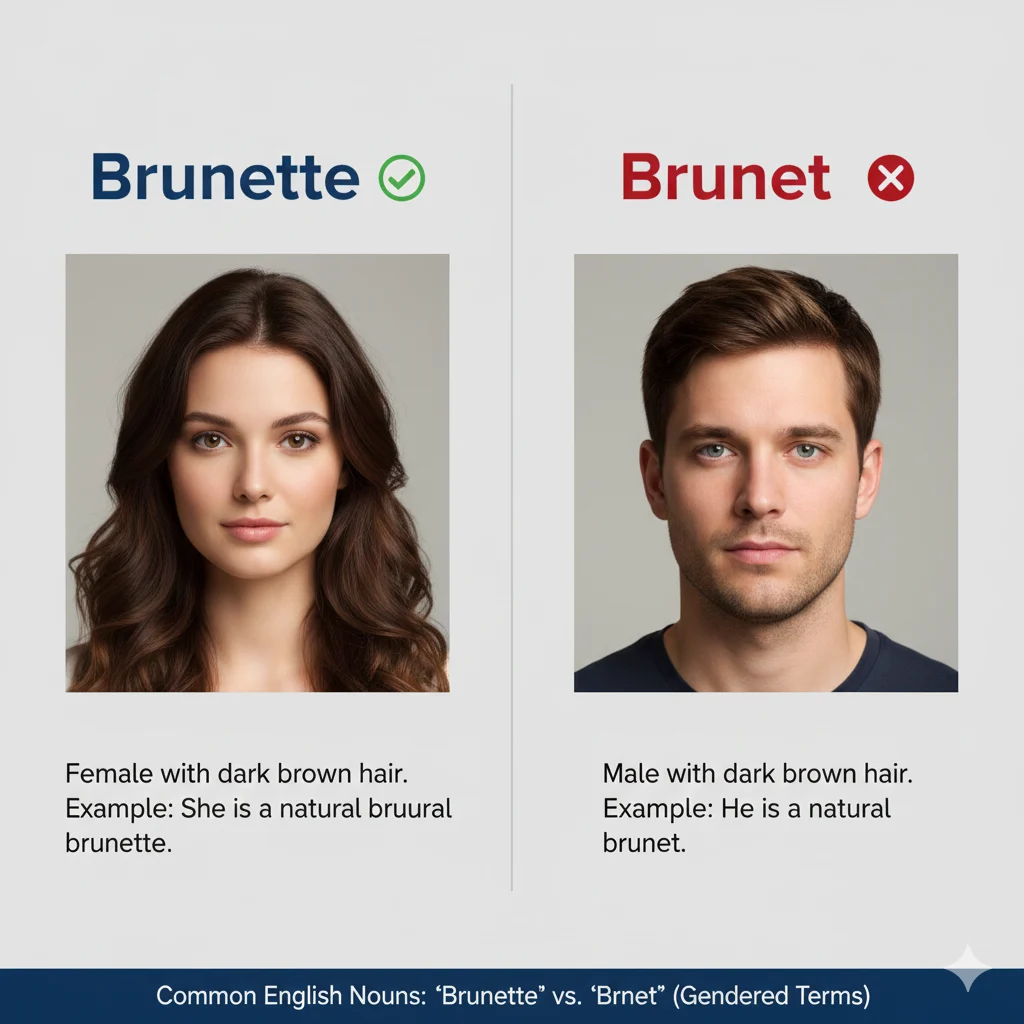
Many people get confused about the words brunette and brunet. They look almost the same, they sound similar, and both relate to brown-haired people. Because of this, many learners — even adults — often wonder which one is correct and when to use it. The good news? The difference between brunet and brunette is very simple once someone explains it in clear, everyday English.
In this guide, you will learn the meaning, the difference, and the correct usage of each word with easy examples. You will also see common mistakes, quick memory tricks, and a helpful comparison table. Every explanation is written in a friendly, simple way so even a 4th-grade learner can understand. By the end, you’ll know exactly which word to use and why.
What Does Each Word Mean?
Meaning of “Brunette”
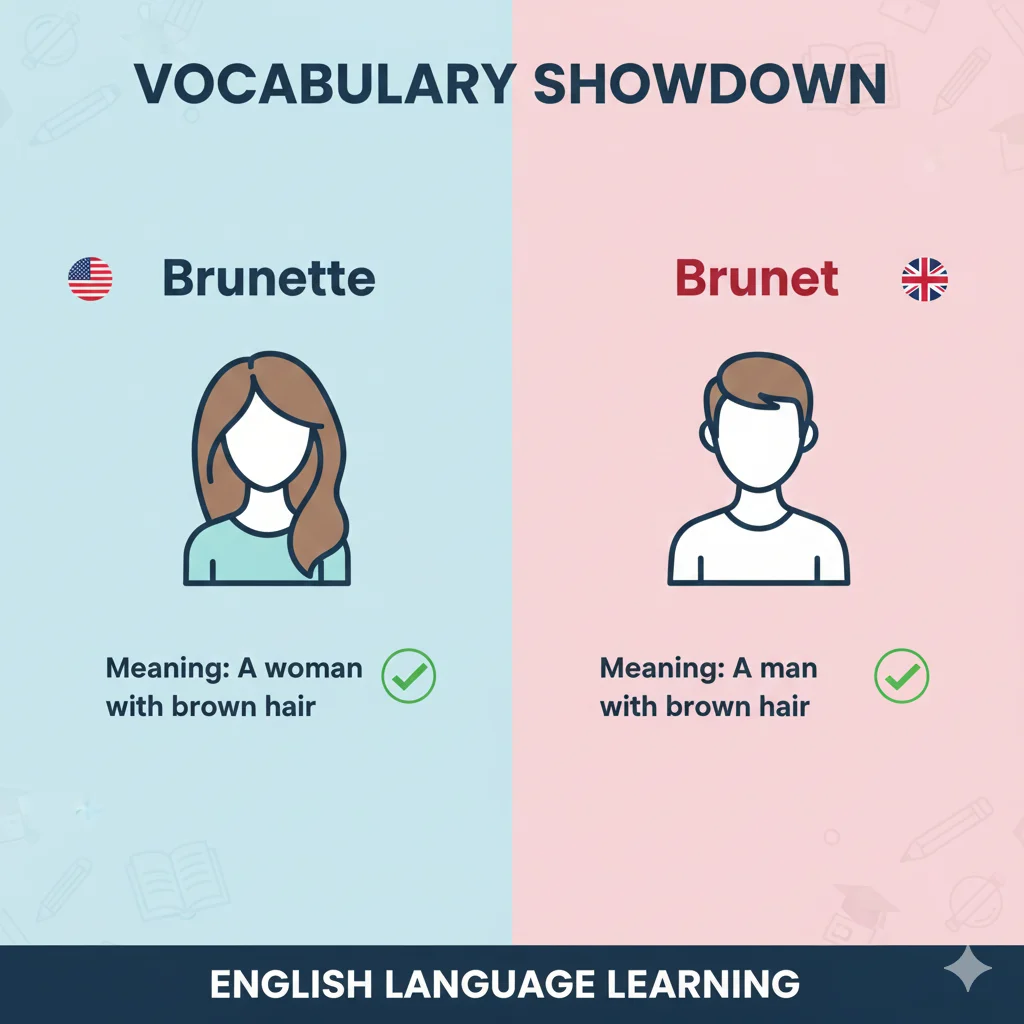
Brunette is a noun or adjective used to describe a girl or woman who has brown hair.
It comes from the French word brune, meaning “brown.”
Simple Examples:
- The brunette girl won the art competition.
- Maria is a brunette with long curly hair.
- The movie features two brunettes as the main characters.
Meaning of “Brunet”
Brunet is a noun or adjective used to describe a boy or man who has brown hair.
It is the masculine form of the French word brun.
Simple Examples:
- Sam is a brunet with short, wavy brown hair.
- The story is about a tall brunet who loves adventure.
- I saw a brunet boy reading a book in the park.
The Key Difference Between Brunette and Brunet
The main difference is very simple:
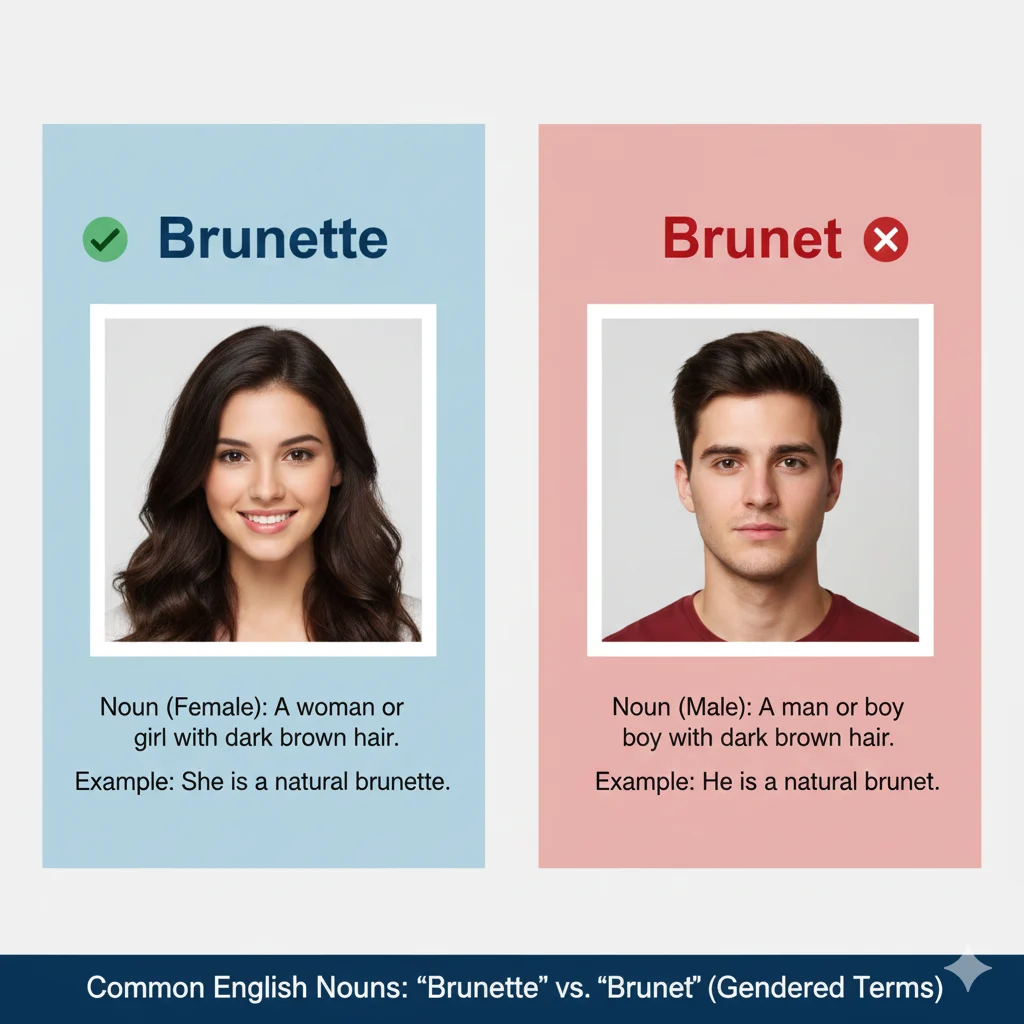
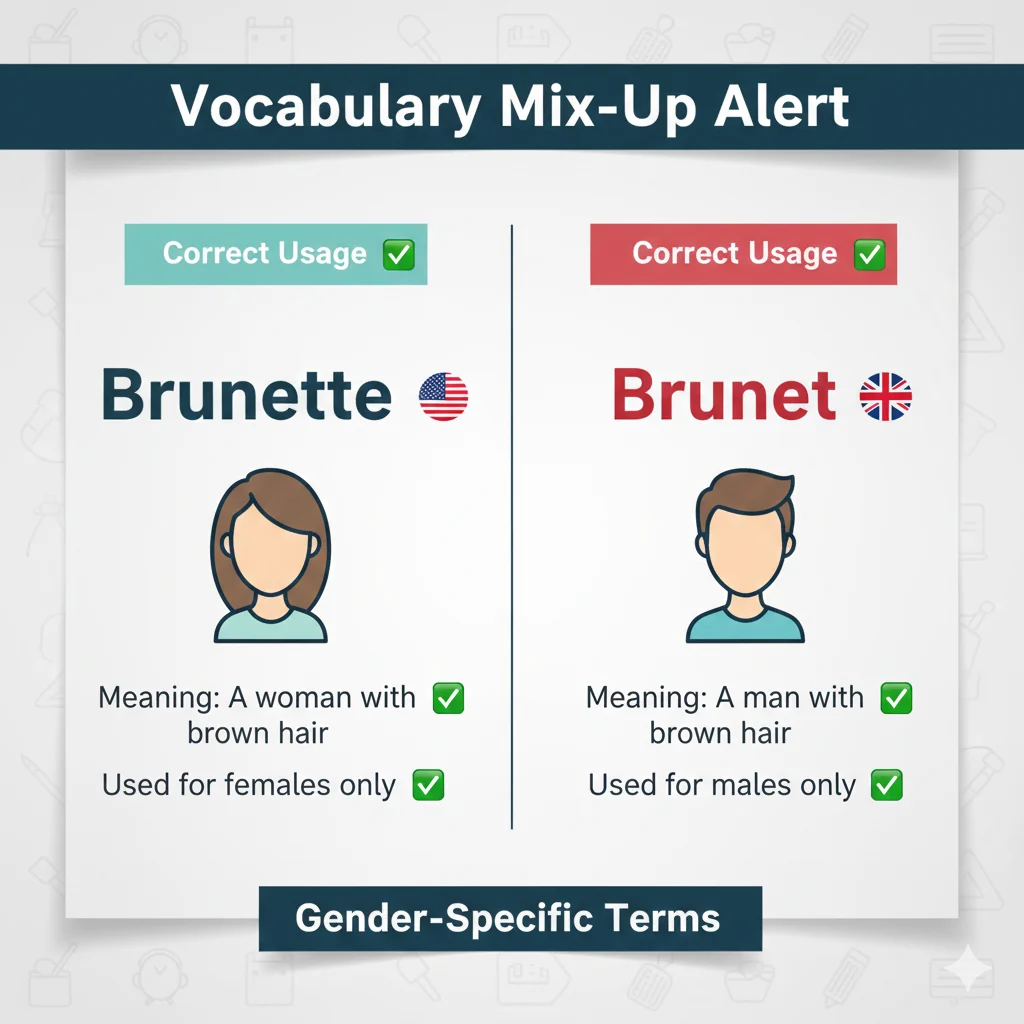
- Brunette = female with brown hair
- Brunet = male with brown hair
Today, many English speakers use brunette for both genders, but traditionally, “brunet” is the correct word for boys and men.
Comparison Table
| Feature | Brunette | Brunet |
|---|---|---|
| Gender | Female | Male |
| Meaning | A girl/woman with brown hair | A boy/man with brown hair |
| Part of Speech | Noun/Adjective | Noun/Adjective |
| Example Sentence | “The brunette woman smiled.” | “The brunet man walked in.” |
Quick Tip to Remember
Think of the “ette” ending.
Words ending in -ette in English often refer to feminine forms (like cigarette → feminine style ending).
So brunette = female.
Common Mistakes and How to Avoid Them
❌ Mistake 1: Using “brunette” for a boy
Incorrect: The brunette boy is in my class.
Correct: The brunet boy is in my class.
Why? Brunette is traditionally used for females.
❌ Mistake 2: Thinking brunet and brunette mean different shades
Some people think one word means dark brown and the other means light brown.
This is wrong.
Both words simply refer to brown-haired people, not separate colors.
❌ Mistake 3: Using both forms in the same sentence by accident
Incorrect: She is a brunet girl.
Correct: She is a brunette girl.
When to Use “Brunette”
Use brunette when you are talking about a girl or woman with brown hair.
Easy Examples:
- My teacher is a brunette with kind eyes.
- The brunette singer has a beautiful voice.
- I saw two brunette women at the store.
- Sara became a brunette after dyeing her hair.
- The brunette actress won the award.
Real-Life Situations:
- Describing a friend
- Talking about a teacher
- Writing a story
- Explaining someone’s looks
What Do You Call a Male Brunette?
The correct word for a male with brown hair is brunet.
While many people use the word brunette for both men and women today, traditional English grammar uses brunet to describe a boy or a man with brown hair.
This word comes from French, where brun means brown. The masculine form is brunet, and the feminine form is brunette.
Examples:
The tall brunet man walked into the room.
My friend is a brunet with dark brown hair.
The story describes a brave brunet hero.
So if someone asks, “What do you call a male brunette?” the correct answer is brunet.
However, in everyday English conversation, many people still say brunette for both genders, even though brunet is technically the correct form.
When to Use “Brunet”
Use brunet when you talk about a boy or man with brown hair.
Easy Examples:
- The brunet man is my cousin.
- A brunet boy won the race.
- My brother is a brunet with straight hair.
- The story hero is a tall brunet.
- I saw a brunet guy at the library today.
Memory Hack:
Brunet ends with “et”, which is shorter — like short hair on many boys.
Quick Recap: Brunette vs Brunet
- Brunette = female with brown hair
- Brunet = male with brown hair
- Both come from French.
- Both can be nouns or adjectives.
- Many English speakers today use brunette for everyone, but the traditional difference still exists.
Advanced Tips
1. Word History (Etymology)
Both words come from French:
- Brun → brown (masculine)
- Brune / Brunette → brown (feminine)
English borrowed both forms.
2. Formal Writing
If you’re writing a story, essay, or description, using the correct form (brunet for males) shows precision and care with language.
3. Everyday English
In daily conversation or social media, people mostly use brunette for both genders, and it’s socially acceptable.
But in grammar and writing, the distinction matters.
4. Texting & Online Usage
Online, the male form “brunet” is rare.
If you want to sound more correct or more descriptive, choose the right form.
Mini Quiz: Test Your Understanding
Fill in the blanks with brunet or brunette:
- The ______ girl won the spelling bee.
- My brother is a tall ______.
- A smiling ______ woman helped us find our seats.
- The story is about a brave ______ boy.
- She dyed her hair and is now a ______.
- I saw a ______ man walking his dog.
- The two ______ friends visited the museum.
(Answers: 1. brunette, 2. brunet, 3. brunette, 4. brunet, 5. brunette, 6. brunet, 7. brunette)
FAQs
1. What is the difference between brunet and brunette?
Brunette refers to females with brown hair; brunet refers to males with brown hair.
2. Can I use “brunette” for a boy or man?
Many people do, but the traditional and grammatically correct form for males is brunet.
3. Are brunet and brunette different hair colors?
No. Both describe brown hair, not different shades.
4. Is brunet common in everyday English?
Not very. “Brunette” is more common, but “brunet” is correct for males.
5. Are these words nouns or adjectives?
They can be both. You can say “a brunette” or “a brunette woman.
Conclusion
Understanding the difference between brunette and brunet is simple once you know the basic rule: brunette is for females, and brunet is for males. Both words describe people with brown hair, and both come from French. Whether you are writing a school essay, a story, or describing someone in real life, choosing the correct word makes your English clearer and more confident. Keep practicing with examples, review the comparison table, and try the mini quiz again later. With small steps like this, your English will keep improving every single day.

English novelist and poet Thomas Hardy (1840–1928) explored human struggles, social constraints, and tragic love with deep realism and vivid storytelling.