Many English learners — and even native speakers — get confused about comma before or after “so.” You might pause while writing and think, Should I put a comma before so, or after so? Or do I need a comma at all? This confusion happens because “so” can be used in different ways, and punctuation changes based on how it works in a sentence.
This simple guide will clear everything up. You will learn what “so” means, when to use a comma before “so,” when not to use one, and why a comma after “so” is usually wrong. We’ll use short sentences, everyday examples, and easy explanations. No hard grammar terms. Even a 4th-grade student can follow along. By the end, you’ll feel confident using commas with “so” in schoolwork, emails, and daily writing.
What Does “So” Mean?
The word “so” is small, but it has more than one job in English. That’s why people make mistakes with commas around it.
Meaning of “So” (Simple Explanation)
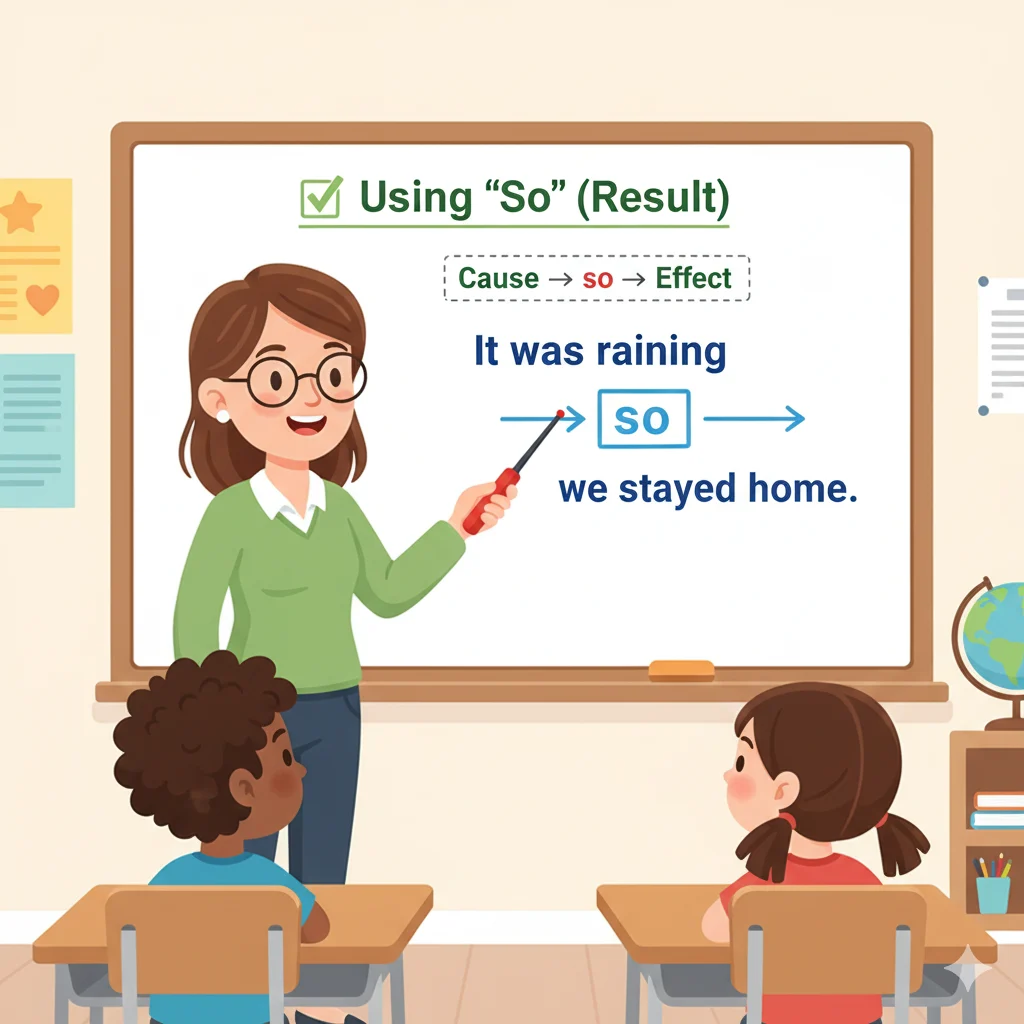
“So” usually shows a result or reason.
It connects one idea to what happens because of it.
Think of it like this:
This happened → so → that happened
Part of Speech (Don’t Worry — Keep It Simple)
- Most of the time, “so” acts like a connector (joining two ideas).
- Sometimes, “so” adds emphasis, like “very” or “really.”
Easy Examples of “So” (Result Meaning)
- I was tired, so I went to bed early.
- It was raining, so we stayed inside.
- She studied hard, so she passed the test.
Easy Examples of “So” (Emphasis Meaning)
- The movie was so funny.
- He is so kind to everyone.
- This game is so easy.
👉 Important idea:
Commas depend on how “so” is used, not just the word itself.
Comma Before or After “So”: What’s the Real Difference?
Let’s answer the big question directly.
Quick Answer
- ✅ Comma usually comes BEFORE “so”
- ❌ Comma almost never comes AFTER “so”
But why? Let’s break it down in the easiest way possible.
The Key Difference: Comma Before “So” vs Comma After “So”
Simple Rule to Remember
👉 If “so” connects two full ideas, use a comma BEFORE “so.”
👉 Do NOT put a comma right after “so.”
Comparison Table: Comma Before or After “So”
| Point | Comma Before “So” | Comma After “So” |
|---|---|---|
| Is it correct? | ✅ Yes (often) | ❌ No (almost never) |
| Purpose | Connects cause and result | Breaks sentence wrongly |
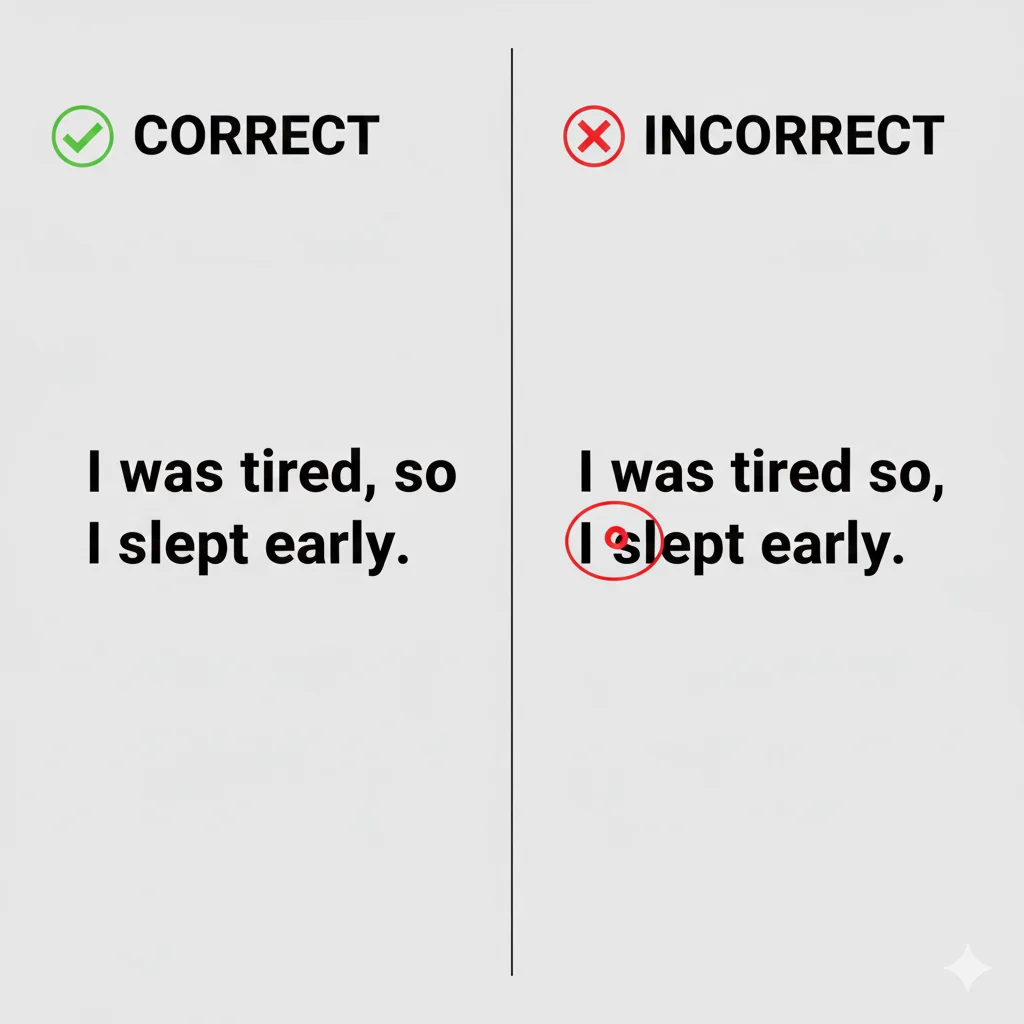
| Example | I was late, so I ran. | ❌ I was late so, I ran. |
| Used in school writing? | Yes | No |
| Easy tip | Comma goes before the bridge | Never after the bridge |
Quick Memory Tip ⭐
Think of “so” as a bridge between two ideas.
The comma comes before the bridge, not after it.
When Should You Use a Comma Before “So”?
You should use a comma before “so” when both sides of the sentence can stand alone.
Simple Test (Very Easy)
Ask yourself:
- Can I split the sentence into two full sentences?
If yes → use a comma before “so.”
Correct Examples (Comma Before “So”)
- I missed the bus, so I walked to school.
- She was hungry, so she made a sandwich.
- The shop was closed, so we went home.
- He forgot his homework, so the teacher was upset.
- It was very hot, so we drank cold water.
Each sentence has:
- A reason
- A result
That’s why the comma fits.
When You Should NOT Use a Comma with “So”
Sometimes, no comma is needed at all.
Case 1: “So” Means “Very”
When “so” is used for emphasis, do not use a comma.
❌ Wrong:
- She is so, smart.
✅ Correct:
- She is so smart.
More examples:
- This book is so interesting.
- I am so happy today.
- That dog is so cute.
Case 2: Short or Simple Sentences
If the sentence is very short and smooth, a comma is often skipped (especially in informal writing).
Example:
- I was tired so I slept.
(Comma is optional here, but adding one is still okay in formal writing.)
Common Mistakes with Comma Before or After “So” (And How to Fix Them)
Let’s look at mistakes people often make.
Mistake 1: Putting a Comma After “So”
❌ Incorrect:
- I was sick so, I stayed home.
✅ Correct:
- I was sick, so I stayed home.
Why this happens:
People pause when speaking and add a comma where they pause. Writing rules are different.
Mistake 2: Using No Comma When One Is Needed
❌ Incorrect:
- It was raining so we canceled the trip.
✅ Correct:
- It was raining, so we canceled the trip.
Why this happens:
Writers forget that both sides are full ideas.
Mistake 3: Using a Comma with “So” Meaning “Very”
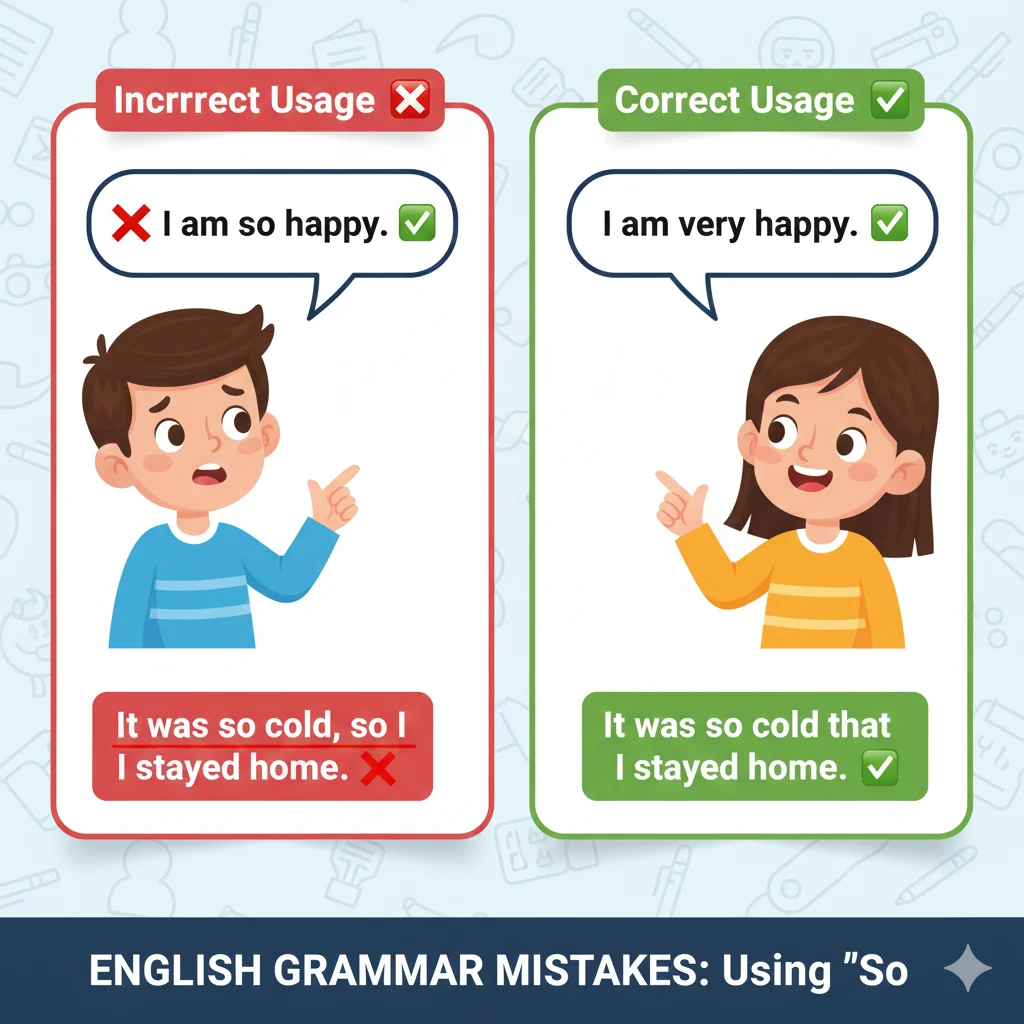
❌ Incorrect:
- The test was so, hard.
✅ Correct:
- The test was so hard.
Fix:
If “so” means “very,” no comma.
When to Use Comma Before “So” (Clear Situations)
Use a comma before “so” when:
- You explain a result
- You show a cause-and-effect
- You connect two complete thoughts
Everyday Examples
- I finished my homework, so I watched TV.
- Mom was busy, so Dad cooked dinner.
- The baby was crying, so she picked him up.
- The phone battery died, so I charged it.
- We were early, so we waited outside.
When NOT to Use a Comma Before or After “So”
Do NOT use a comma when:
- “So” means very
- “So” is part of a short phrase
- The sentence sounds smooth without a pause
Examples
- She is so kind.
- This puzzle is so easy.
- He ran so fast.
Quick Recap: Comma Before or After “So”
- ✔ Use a comma before “so” when it joins two full ideas
- ❌ Never use a comma after “so”
- ✔ No comma when “so” means very
- ✔ Think of “so” as a bridge — comma comes before it
Advanced Tips (Optional but Helpful)
A Little History (Simple Version)
In older English writing, commas were used more freely. Today, rules are clearer. Comma before “so” is standard in modern English.
“So” in Exams and Formal Writing
Teachers and examiners expect:
- Correct comma placement
- No comma after “so”
Wrong punctuation can reduce marks, even if spelling is right.
“So” in Texting and Online Writing
In casual messages:
- People often skip commas
- But in blogs, essays, and articles, correct usage matters
Mini Quiz: Test Yourself 📝
Fill in the blanks. Decide if a comma is needed.
- I was cold ___ so I wore a jacket.
- The movie was so ___ funny.
- She missed the train ___ so she was late.
- This math problem is so ___ easy.
- It was dark ___ so we turned on the lights.
Answers
- I was cold, so I wore a jacket.
- The movie was so funny.
- She missed the train, so she was late.
- This math problem is so easy.
- It was dark, so we turned on the lights.
FAQs: Comma Before or After “So”
1. Is it correct to put a comma after “so”?
No. A comma after “so” is almost always wrong.
2. Do I always need a comma before “so”?
No. Only when “so” connects two full ideas.
3. Can “so” start a sentence?
Yes. Example: So, we decided to leave early.
4. Is comma usage with “so” different in British and American English?
No. The rule is the same in both.
5. Does speaking affect comma placement?
No. Writing rules matter more than speaking pauses.
Conclusion
Understanding comma before or after “so” is easier than it seems. The key is to look at how “so” is used in the sentence. When it connects a reason and a result, use a comma before it. When it means “very,” don’t use a comma at all. And remember — a comma after “so” is almost always incorrect. With a little practice and attention, your writing will look cleaner, clearer, and more professional. Keep learning one small rule at a time, and your English will improve every day. You’re doing great — keep going! 🌟

Scottish novelist Muriel Spark (1918–2006) crafted sharp, witty stories exploring human nature, morality, and society with dark humor and insight.