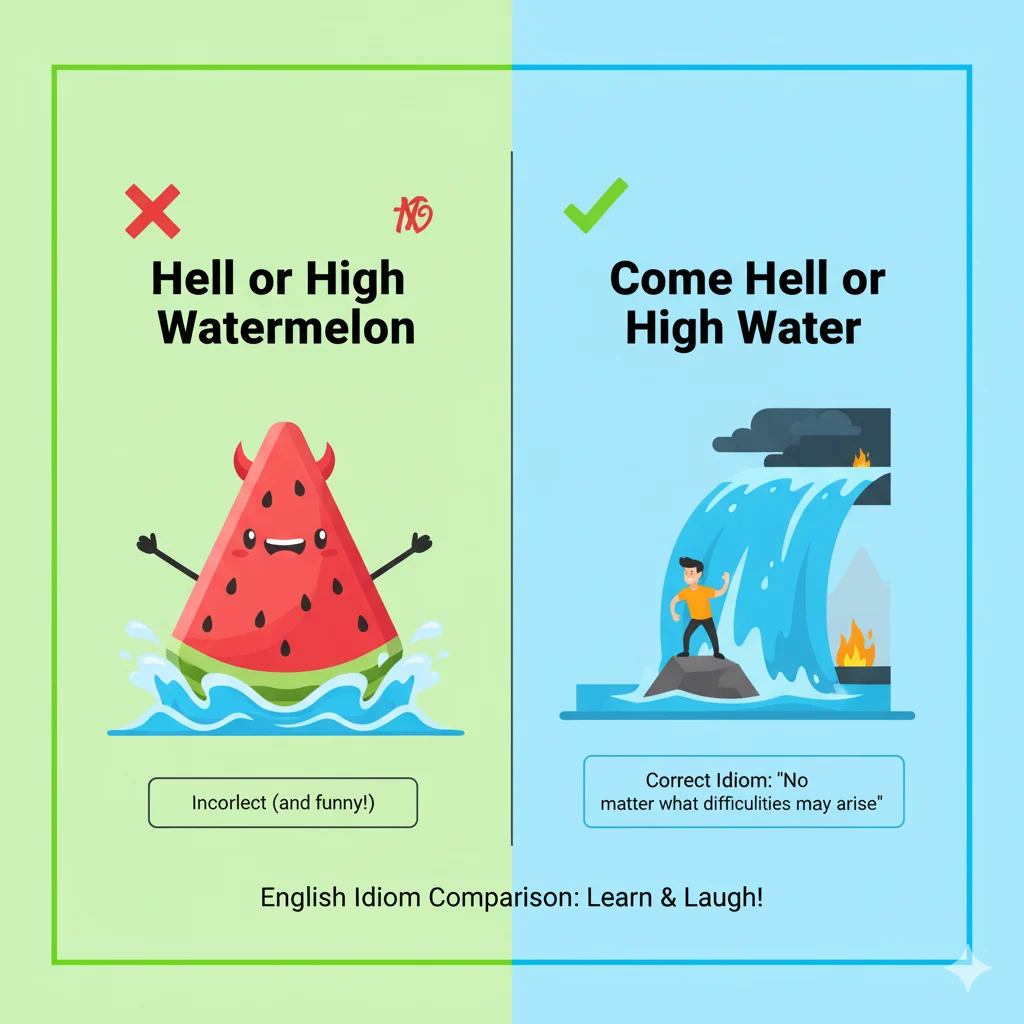
English can be confusing, especially when people hear phrases that sound almost the same. One funny example is “hell or high watermelon.” Many learners see it online and think it’s a real phrase. Others even use it in captions, jokes, or comments without knowing where it came from. The truth is simple: “hell or high watermelon” is NOT the correct phrase.
The real phrase is “come hell or high water.”
In this guide, you will learn the meaning, difference, correct usage, and easy examples of both the incorrect and correct expression. We’ll explain everything in simple English so even a 4th-grade student can understand. By the end, you’ll know exactly which phrase to use, what it means, and how to remember it without confusion.
What Does Each Phrase Mean?
1. “Hell or High Watermelon” — Meaning
This phrase does not exist in formal English. It is a humorous or mistaken version of the real idiom. People usually say it jokingly or because they misheard the original phrase.
Part of speech:
A playful phrase / incorrect idiom.
Simple meaning:
Used as a joke. It has no real meaning in grammar or English usage.
Examples:
- “I’ll finish this project, hell or high watermelon!” (Joking)
- “He typed hell or high watermelon by mistake.”
- “Kids repeat phrases like hell or high watermelon without knowing the real words.”
2. “Come Hell or High Water” — Meaning
This is the correct English idiom. It has been used for many years.
Part of speech:
Idiomatic expression.
Simple meaning:
It means “I will do this no matter what happens.”
It shows strong determination.
Examples:
- “I will pass my exam, come hell or high water.”
- “She will help her friend, come hell or high water.”
- “Dad said we’re going to the picnic, come hell or high water.”
Mini Story to Remember
Imagine you want to reach your goal. Even if things get hard, like trouble (“hell”) or floods (“high water”), you won’t stop. That is the real meaning of come hell or high water.
But a big watermelon has nothing to do with it — so hell or high watermelon is just a funny mistake.
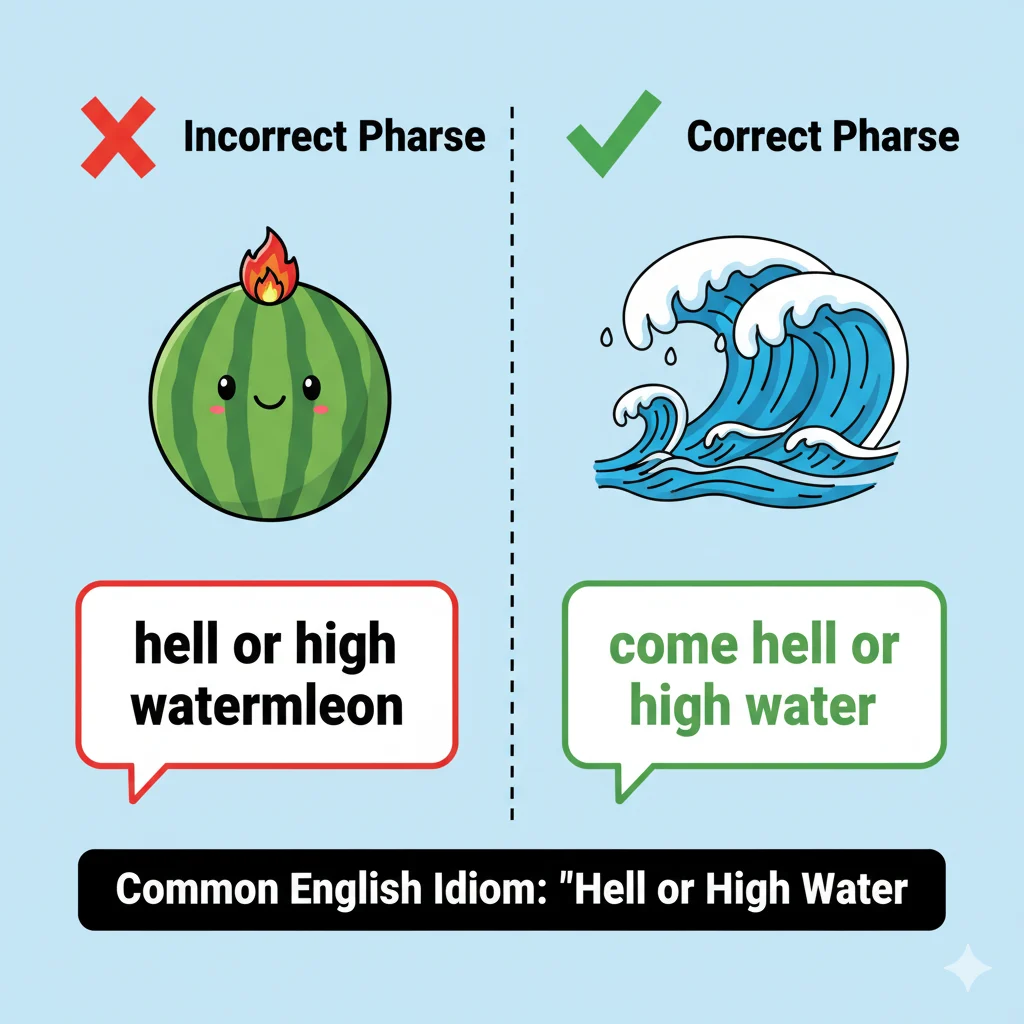
The Key Difference Between “Hell or High Watermelon” and “Come Hell or High Water”
Here is the difference in one simple view:
| Phrase | Meaning | Usage | Example |
|---|---|---|---|
| Hell or High Watermelon | Incorrect phrase; used jokingly | Informal jokes, memes, typing mistakes | “I’ll clean my room, hell or high watermelon!” |
| Come Hell or High Water | Correct English idiom meaning “no matter what happens” | Spoken & written English | “I’ll finish my homework, come hell or high water.” |
Quick Tip to Remember
Water is real. Watermelons are fruit. Idioms rarely use fruit!
So the correct phrase must be come hell OR high WATER, not watermelon.
Common Mistakes and How to Avoid Them
Mistake 1: Mixing up the words
❌ He will attend the match, hell or high watermelon.
✔️ He will attend the match, come hell or high water.

Why it happens:
“Water” and “watermelon” sound similar.
How to fix:
Remember: It’s about floods, not fruit.
Mistake 2: Thinking it is a slang phrase
Some people believe “hell or high watermelon” is a modern slang term.
❌ Incorrect: This is a trending English slang.
✔️ Correct: It is a joke or misheard phrase.
Mistake 3: Using the wrong phrase in writing
❌ Our team will win, hell or high watermelon.
✔️ Our team will win, come hell or high water.
Why it happens:
People copy things from social media without checking the real meaning.
How to avoid:
Search the correct idiom before using it in serious writing.
When to Use “Come Hell or High Water”
Use this idiom when you want to show strong determination. It fits in daily life, conversations, writing, and motivation.
Correct Situations & Examples
- School/Studies:
- “I will learn English, come hell or high water.”
- Family/Promises:
- “Mom said she will attend the meeting, come hell or high water.”
- Sports:
- “The team will train daily, come hell or high water.”
- Work:
- “We will finish the project, come hell or high water.”
- Personal Goals:
- “I am going to improve my writing, come hell or high water.”
When to Use “Hell or High Watermelon”
Only use it for fun, memes, or jokes, not in real grammar or formal writing.
Playful Examples
- “I’ll finish this cake, hell or high watermelon!”
- “Kids misheard the phrase and now say hell or high watermelon!”
- “My friend typed hell or high watermelon and I couldn’t stop laughing.”
Memory Hack
Think of a giant watermelon blocking the way — funny, but meaningless.
This helps you remember it’s not the real idiom.
Quick Recap: Hell or High Watermelon vs Come Hell or High Water
- Hell or high watermelon
- ❌ Incorrect
- ❌ Not a real idiom
- ✔️ Only for jokes
- ✔️ Has no formal meaning
- Come hell or high water
- ✔️ Correct idiom
- ✔️ Means “no matter what happens”
- ✔️ Used in real English writing and speaking
Advanced Tips
1. Origin of “Come Hell or High Water”
The phrase comes from old American English. Farmers and travelers used it to show determination even during storms, floods, or hard times.
2. Use in Formal Writing
You can use it in essays or speeches to show strong commitment.
Example:
“In our school project, we will complete our tasks on time, come hell or high water.”
3. Use in Modern English
People use the idiom in motivational quotes, speeches, team meetings, and even movies.
4. Why Misusing It Matters
If you use “hell or high watermelon” in formal writing, readers may think you don’t know the real phrase. Always choose the correct idiom when writing professionally.
Mini Quiz (Test Yourself!)
Fill in the blanks:
- I will reach my goal, come ________ or ________.
- “Hell or high watermelon” is a ________ phrase.
- The correct idiom means “no ________ what happens.”
- You should not use “hell or high watermelon” in ________ writing.
- The idiom uses water, not ________.
(Answers: 1. hell, high water 2. joking/incorrect 3. matter 4. formal 5. watermelon)
5 FAQs (Featured Snippet Friendly)
1. Is “hell or high watermelon” a real English phrase?
No. It is a playful mistake. The real phrase is “come hell or high water.”
2. What does “come hell or high water” mean?
It means no matter what happens or I will do it even in difficult situations.
3. Why do people say “hell or high watermelon”?
Because they mishear the phrase or use it jokingly online.
4. Can I use “hell or high watermelon” in school essays?
No. It is incorrect. Use come hell or high water instead.
5. Is “come hell or high water” still used today?
Yes. It is common in daily speech, writing, movies, and motivation.
Conclusion
Phrases can be confusing, especially when people hear or type them wrongly. That’s what happens with “hell or high watermelon.” It may sound funny, but it is not an actual English idiom. The correct phrase is “come hell or high water,” which shows strong will and determination. Now you know what each phrase means, how they are used, and how to avoid mixing them up in writing or speaking.
Keep practicing the correct idiom, and soon it will feel natural and easy for you. Learning small differences like this makes your English clearer, stronger, and more confident every day.

English novelist and poet Thomas Hardy (1840–1928) explored human struggles, social constraints, and tragic love with deep realism and vivid storytelling.