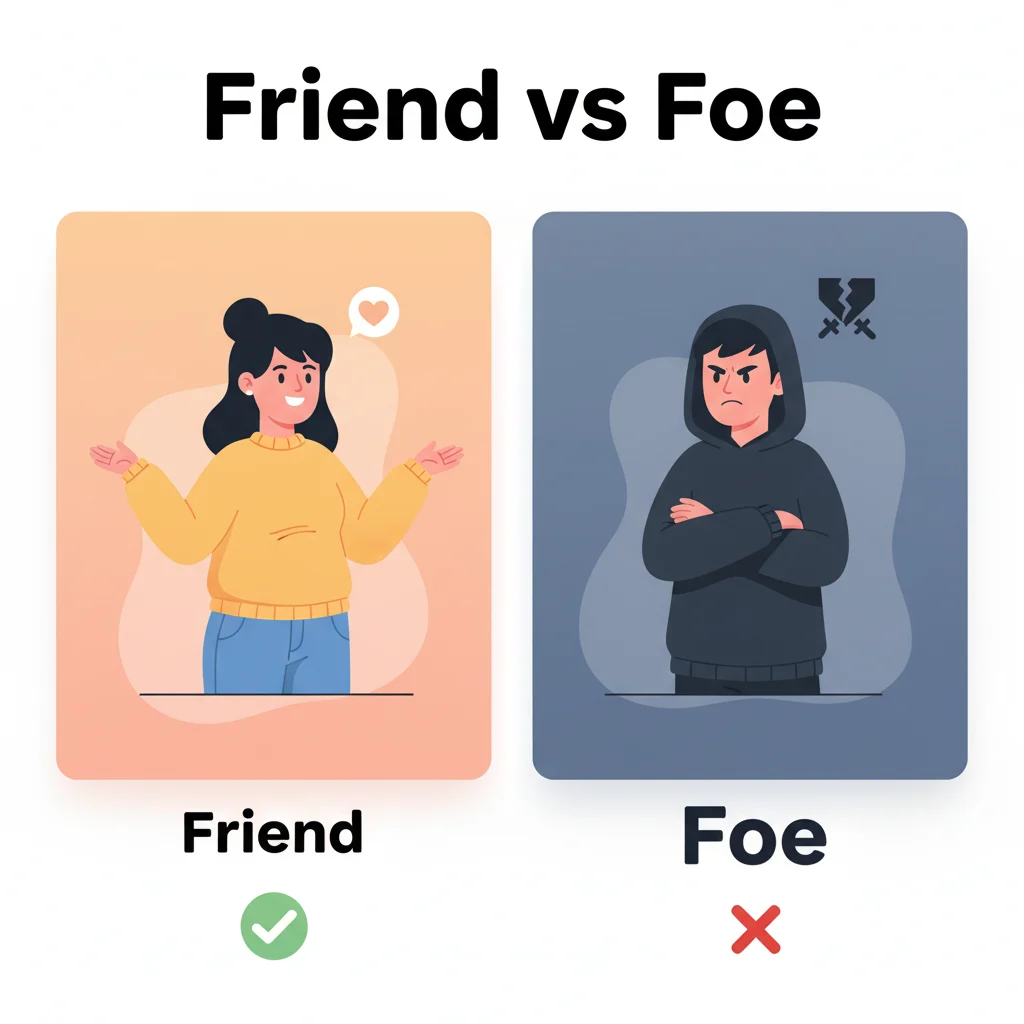
Friend means someone you trust or support. Foe means an enemy or someone against you. These words are opposites and are often used together to show contrast.
If you’re searching “friend or foe,” your intent is to understand the meaning and difference between these two words. This phrase is common in conversations, stories, and writing where relationships, trust, or conflict are being described.
Here’s the simple rule: Use friend for someone on your side. Example: He is a loyal friend. Use foe for an enemy or opponent. Example: They faced a powerful foe. The phrase “friend or foe” is often used to question whether someone is an ally or an enemy.
What Does Each Word Mean?
1. Meaning of “Friend” (Simple Definition)
A friend is someone who supports you, cares about you, and wishes good for you.
A friend can be a classmate, neighbor, teammate, or anyone who stands by your side.
Part of speech: Noun
Easy Examples of “Friend”:
- Ali is my best friend because he always helps me.
- My dog feels like a friend to me.
- She sat beside her friend in class.
Mini Story Example:
Imagine you fall down while playing. A friend comes to you, helps you stand up, and asks, “Are you okay?” That’s a friend.
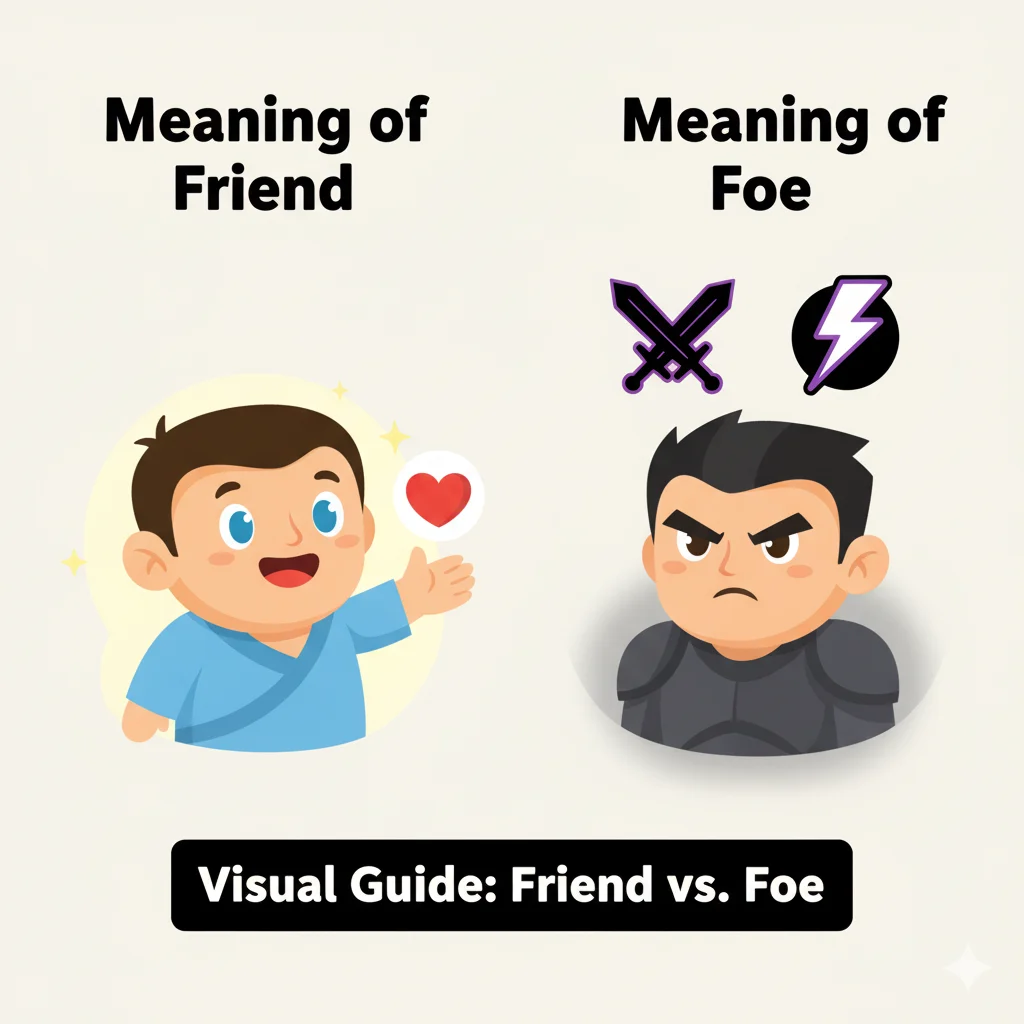
2. Meaning of “Foe” (Simple Definition)
A foe means an enemy—someone who is against you, harms you, or doesn’t wish good for you.
The word “foe” is older, often used in stories, movies, and history lessons.
Part of speech: Noun
Easy Examples of “Foe”:
- The superhero fought his strongest foe.
- Jealousy can become your biggest foe.
- In the game, we had to defeat all the foes.
Mini Story Example:
Imagine a villain in a movie who wants to stop the hero. That villain is a foe.
The Key Difference Between Friend and Foe
The phrase “friend or foe” is used when we want to know if someone is good or bad toward us. It clearly separates the two types of people or forces.
Below is an easy comparison:
Friend vs Foe: Quick Comparison Table
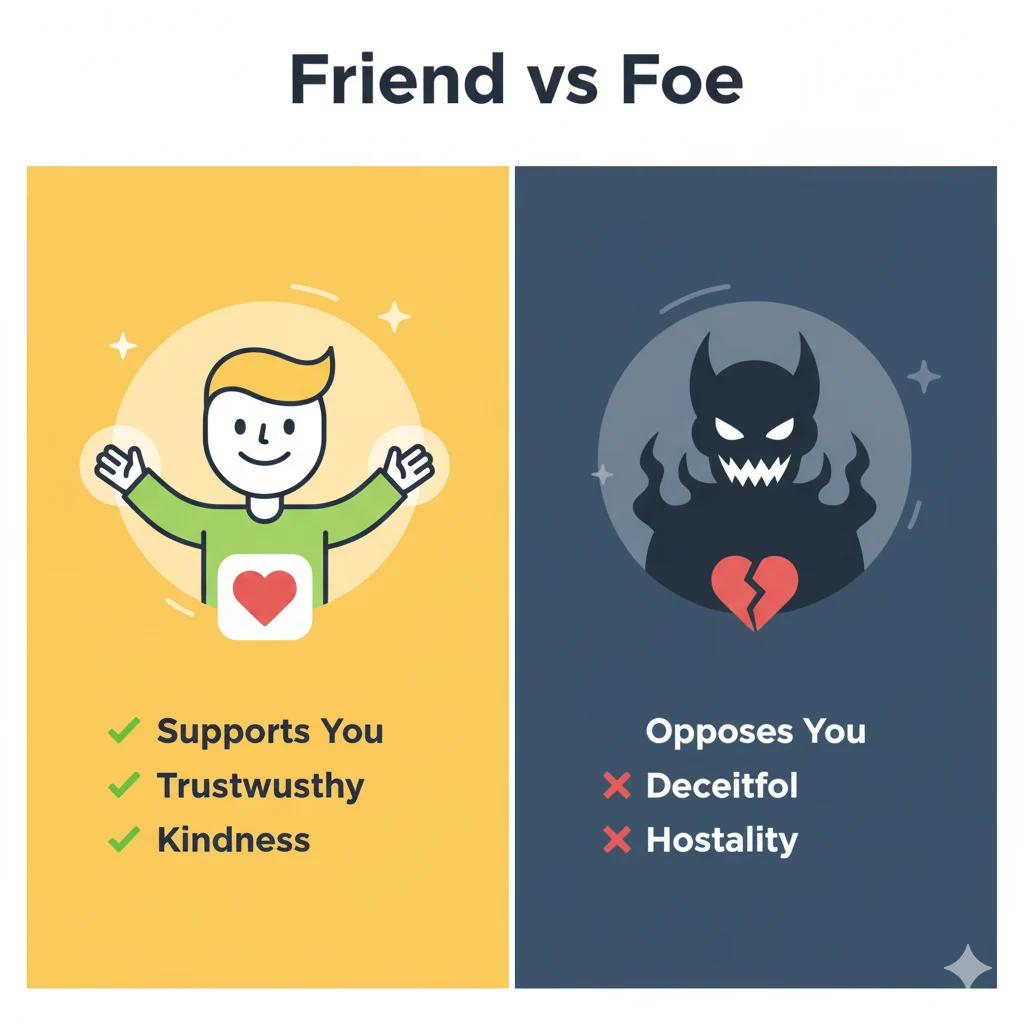
| Feature | Friend | Foe |
|---|---|---|
| Meaning | Someone who supports you and cares for you | Someone who is against you; enemy |
| Emotion | Positive | Negative |
| Usage in sentences | “I trust my friend completely.” | “The knight fought his foe bravely.” |
| Common in | Daily life, school, relationships | Stories, conflicts, battles, enemies |
| Simple memory | Friend = Helpful | Foe = Harmful |
Quick Tip to Remember:
Friend = starts with “fri” → like Friday → happy day
Foe = sounds like “fo” → like “foe in a fight”
This quick trick helps young learners remember the difference easily.
Common Mistakes and How to Avoid Them
Even simple words like these can be used wrongly. Here are some common mistakes:
❌ Mistake 1:
“He is my foe friend.”
✔ Correct: “He is my foe.”
👉 Don’t mix both words. A person cannot be a friend and foe at the same time in one sentence.
❌ Mistake 2:
“I met a new foe in my class.”
✔ Correct: “I met a new friend in my class.”
👉 “Foe” is rarely used for real people around you unless you mean an actual enemy.
❌ Mistake 3:
“Friend or foe means the same.”
✔ Correct: “Friend and foe are opposites.”
👉 They are completely different and opposite in meaning.
When to Use “Friend”
You should use friend when talking about someone who supports you, stays beside you, and has a positive relationship with you.
Use “Friend” When:
- Talking about helpful people
- Describing positive relationships
- Writing about teamwork or kindness
- Talking about someone you trust
Examples:
- Sara is a loyal friend.
- I made a new friend at school today.
- You can always count on a true friend.
- My friends celebrated my birthday.
- A friend shares both happy and sad moments.
Memory Trick:
Friend has the word “end” at the end → A real friend stays with you till the end.
When to Use “Foe”
Use foe when describing someone who is against you or when talking about enemies in stories, games, or battles.
Use “Foe” When:
- Talking about villains or enemies
- Writing stories, history lessons, or adventures
- Describing conflicts or battles
- Talking about challenges in life
Examples:
- The hero finally defeated his foe.
- In chess, your opponent is your foe.
- Fear can be your worst foe.
- The soldiers faced their strongest foe.
- Every hero has a powerful foe.
Memory Hack:
“Foe” rhymes with “no.”
A foe is someone who says “no” to your success, plans, and happiness.
Quick Recap: Friend vs Foe
- Friend means someone who supports you.
- Foe means someone who is against you.
- They are opposites, not similar.
- Use friend in daily life.
- Use foe mostly in stories, games, and battles.
- If the person helps = friend
- If the person harms = foe
Advanced Tips
1. Origin of the Words
- Friend comes from an old English word meaning “to love” or “to be kind.”
- Foe comes from a historic word meaning “enemy” or “warrior.”
This is why “friend” sounds warm, and “foe” sounds strong and harsh.
2. How They’re Used in Formal Writing
Teachers, writers, and authors often use “friend or foe” to describe:
- Good vs bad situations
- Allies vs enemies in stories
- Characters with conflict
- Moral lessons
3. Usage in Exams or Essays
You may see questions like:
- “Identify whether the character is a friend or foe.”
- “Explain how the hero treats his foe.”
Students who know the difference score higher.
4. How Misuse Can Change Meaning
If you mix “friend” and “foe,” you may completely change the meaning of a sentence.
Example:
- “He treated me like a friend.” → Positive
- “He treated me like a foe.” → Negative, harmful
A single word can change the whole message.
Mini Quiz: Test Yourself!
Fill in the blanks with friend or foe:
- The hero faced his biggest ______.
- A true ______ stands with you in hard times.
- Is the new character a ______ or a ______?
- In the game, you must defeat every ______.
- She met a new ______ on the first day of school.
- Fear can become your greatest ______.
- I trust my best ______ the most.
(Answers: foe, friend, friend/foe, foe, friend, foe, friend)
Frequently Asked Questions
1. What does “friend or foe” mean?
It means asking whether someone is helpful (friend) or harmful (foe).
2. Is “foe” a modern word?
No, it’s an old word, but it’s still used in stories, movies, and games.
3. Can I call someone a foe in real life?
You can, but it sounds strong. People usually say “enemy” instead.
4. Are friend and foe opposites?
Yes. A friend wants good for you. A foe wants the opposite.
5. Is “foe” only for people?
No. It can also describe problems, fears, or bad habits.
Example: “Laziness is your foe.”
Conclusion
Understanding the difference between friend and foe helps you speak and write clear English. A friend stands by your side, supports your dreams, and makes your life better. A foe does the opposite and may cause trouble or stand in your way. With the simple definitions, examples, and tips in this guide, you can now use both words correctly without confusion.
Keep practicing with real-life sentences and stories. The more you use these words, the more natural they will feel. Remember: learning small differences makes your English stronger every day.

