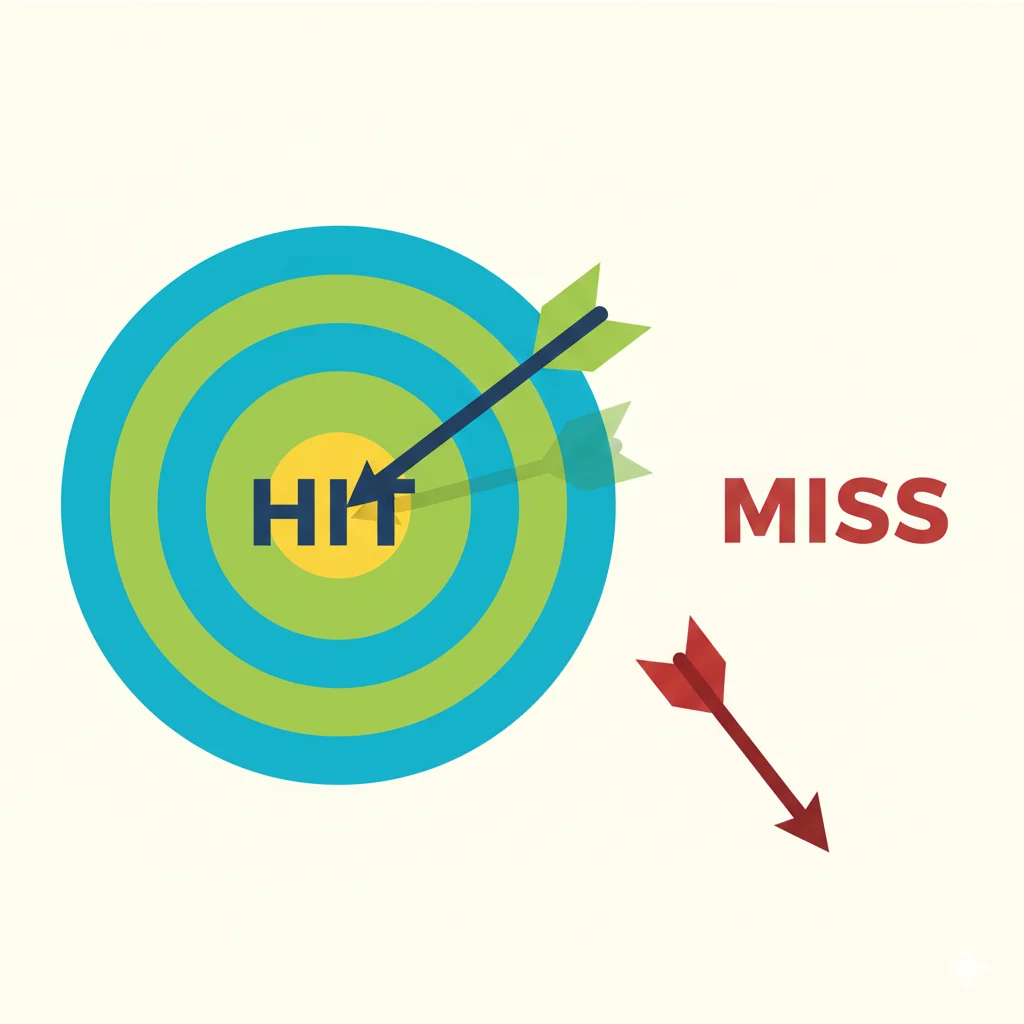
Have you ever heard someone say, “This movie is hit or miss,” or “My internet connection is hit or miss” and felt a little confused? You might wonder, is it good or bad? Does it mean something worked or failed? The truth is, the phrase hit or miss has a special meaning in English, and many learners mix it up with the words hit and miss when they are used alone.
This is why people often search for the difference between hit and miss and how to use hit or miss correctly. These small words may look simple, but they can change the meaning of a whole sentence. When you use them in the wrong way, your message can sound unclear or wrong.
In this easy guide, you will learn the hit or miss meaning, how it is different from hit and miss, and the correct usage in daily English. We will use short sentences, simple examples, and real-life situations so even a 4th-grade student can understand it easily. By the end, you will feel confident using these words when speaking or writing.
What Does “Hit” Mean in English?
The word hit is very common in English. It is usually a verb, which means it shows an action.
Hit means to touch something or reach something successfully. It can also mean that something became very popular or successful.
When you throw a ball and it touches the target, you hit it. When a movie becomes very popular, people say it is a hit.
Here are some easy examples of hit:
- He hit the ball with his bat.
- She hit the target in the game.
- The new song was a big hit.
- His joke really hit the audience.
- The teacher’s lesson hit the students’ hearts.
In all these examples, hit shows success. Something worked the way it should.
You can think of hit like winning a game. You tried, and you succeeded.
What Does “Miss” Mean in English?
The word miss is also a verb, and it is the opposite of hit.
Miss means to fail to touch something, to not reach something, or to lose a chance. It can also mean to feel sad because someone or something is not with you.
If you throw a ball and it does not touch the target, you miss it. If you arrive late and the bus is gone, you miss the bus.
Here are some easy examples of miss:
- He missed the goal.
- I missed the bus today.
- She missed her chance to win.
- The movie was a miss.
- I miss my old friends.
In these examples, miss shows failure or loss. Something did not happen the way you wanted.
You can think of miss like losing a game. You tried, but it did not work.
What Does “Hit or Miss” Mean?
Now let’s look at the phrase hit or miss.
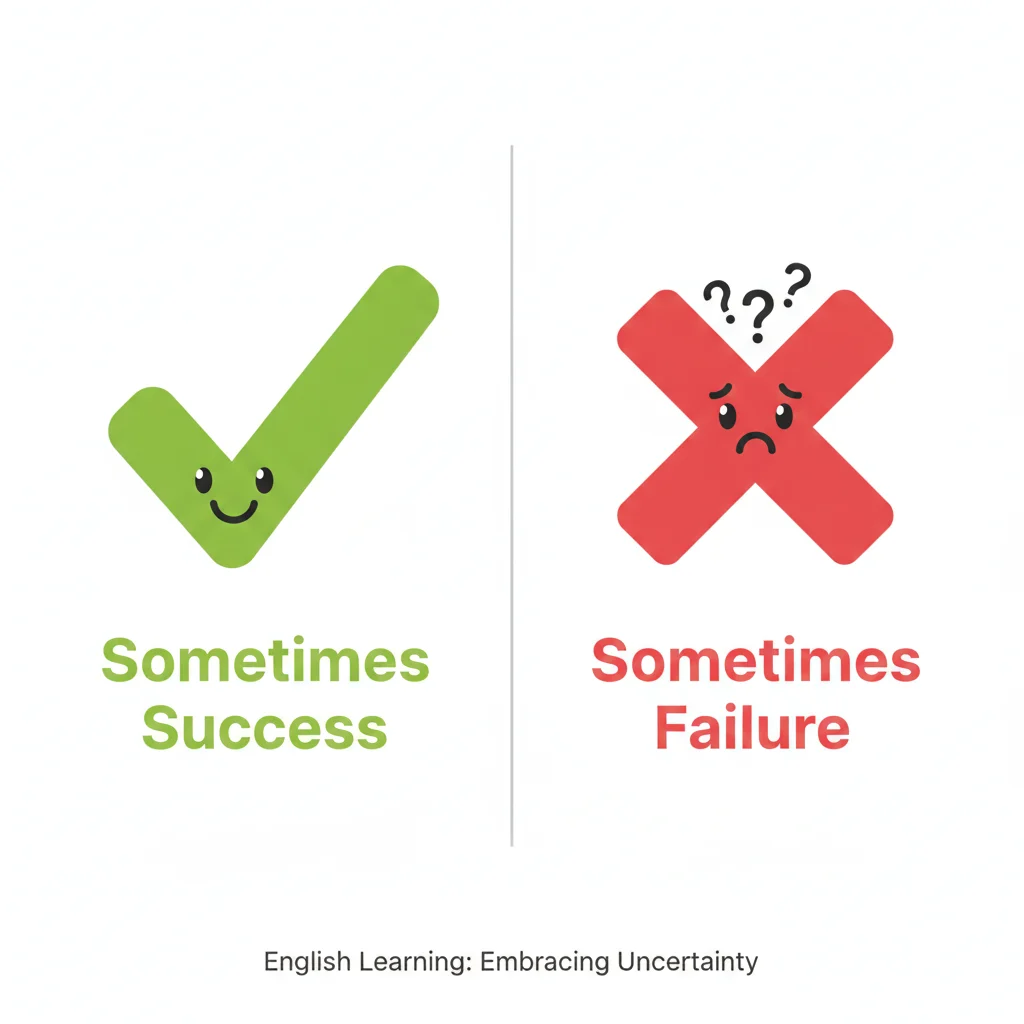
When hit and miss come together, they make a special phrase. It does not mean you hit something or you miss something. Instead, hit or miss means something is not sure. Sometimes it works, and sometimes it does not.
This is why people often search for the hit or miss meaning. It is not about hitting or missing a target. It is about something that is not always the same.
For example:
- My internet connection is hit or miss.
- This restaurant is hit or miss.
- His jokes are hit or miss.
- Online shopping can be hit or miss.
- The weather here is hit or miss.
In all these sentences, hit or miss means that the result changes. Sometimes it is good. Sometimes it is bad.
If you do not know what will happen, or if the result is not reliable, you can say it is hit or miss.
The Real Difference Between Hit and Miss
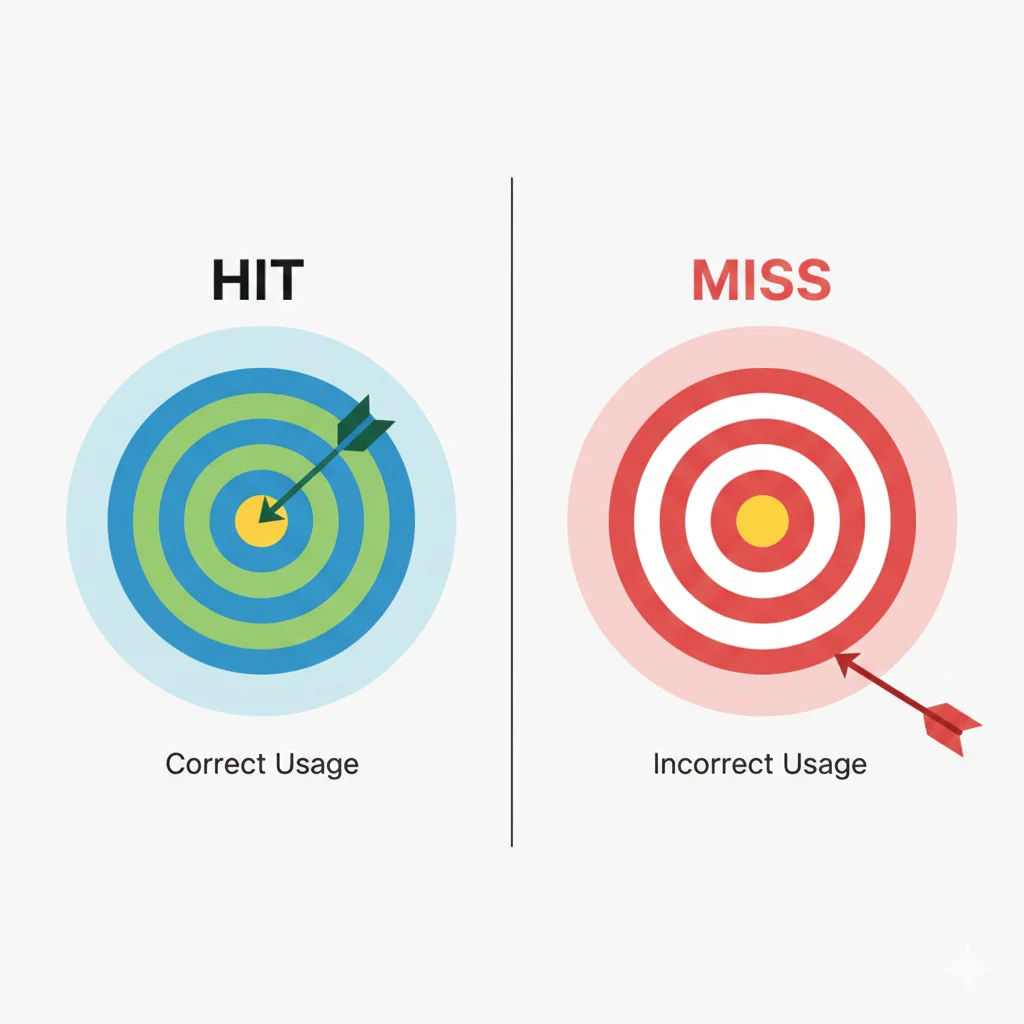
To understand the difference between hit and miss, think about a target game.
If you throw a ball and it touches the target, that is a hit.
If you throw a ball and it does not touch the target, that is a miss.
If you throw a ball many times and sometimes it hits and sometimes it misses, that is hit or miss.
Here is a simple table to make it clear:
| Word | Meaning | What it shows | Example |
|---|---|---|---|
| Hit | Success | It worked | The joke was a hit |
| Miss | Failure | It did not work | The plan was a miss |
| Hit or miss | Not sure | Sometimes works, sometimes fails | The app is hit or miss |
A simple way to remember this is:
- Hit = good
- Miss = bad
- Hit or miss = sometimes good, sometimes bad
Why People Get Confused
Many learners make mistakes with these words because they are short and look easy. People also hear them often in movies, on social media, and in daily talk. When they hear “hit or miss,” they may think it means only “hit” or only “miss,” but it does not.
For example, some people say:
❌ This movie is hit.
But the correct sentence is:
✅ This movie is a hit.
Some people also say:
❌ This plan is hit and miss.
But the correct phrase is:
✅ This plan is hit or miss.
Using and instead of or is a common mistake. The phrase only works with or.
When to Use “Hit”
You should use hit when something is clearly successful or liked.
Use it when something works well or people enjoy it.
Here are some simple examples:
- The new cartoon is a hit with kids.
- Her video became a big hit.
- The party was a hit.
- His idea was a hit in class.
- The book hit the bestseller list.
In all these sentences, hit means success.
When to Use “Miss”
Use miss when something does not work or fails.
Here are some simple examples:
- The show was a miss.
- He missed the bus.
- Her joke was a miss.
- The team missed the goal.
- I missed my chance.
Here, miss shows that something went wrong or did not happen as planned.
When to Use “Hit or Miss”
Use hit or miss when something does not give the same result every time.
Here are some easy examples from daily life:
- My internet is hit or miss.
- The food at this café is hit or miss.
- Online shopping can be hit or miss.
- His homework quality is hit or miss.
- The weather this week is hit or miss.
These sentences show that sometimes the thing is good and sometimes it is bad.
A small memory trick:
If you cannot guess what will happen, it is probably hit or miss.
Common Mistakes and How to Fix Them
Let’s look at some mistakes people make and how to correct them.
❌ This game is hit.
✅ This game is a hit.
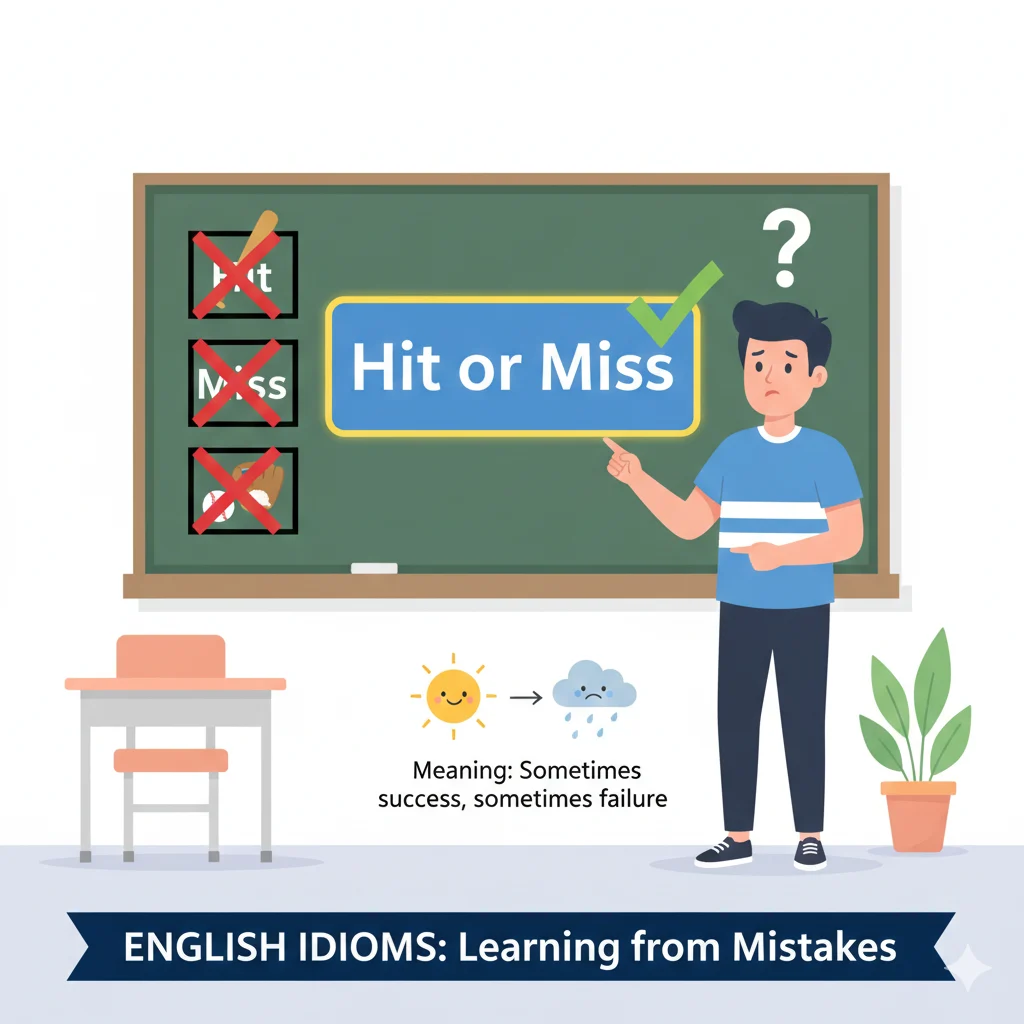
❌ His idea was miss.
✅ His idea was a miss.
❌ This website is hit and miss.
✅ This website is hit or miss.
❌ My grades are hit.
✅ My grades are hit or miss.
These mistakes happen because people forget that hit and miss need small words like a, and the phrase hit or miss must stay in the same form.
Using Hit, Miss, and Hit or Miss in Real Life
You can use these words when talking about school, family, games, movies, food, or even the weather.
- A test can be a hit if you do well.
- A joke can be a miss if no one laughs.
- A new restaurant can be hit or miss if sometimes the food is good and sometimes it is not.
This makes your English sound more natural and clear.
A Little History
The phrase hit or miss comes from old times when people used bows and arrows. When they shot at a target, they could either hit it or miss it. Over time, this idea became a way to talk about anything that is not sure.
Now, we use it for many things, not just shooting.
Mini Quiz
Fill in the blanks:
- The movie was a big _____.
- I _____ the bus today.
- This shop is hit ___ miss.
- His joke was a _____.
- My internet is hit or _____.
(Answers: hit, missed, or, miss, miss)
FAQs
What does hit or miss mean?
It means something is not sure. Sometimes it works, sometimes it does not.
What is the difference between hit and miss?
Hit means success. Miss means failure.
Can I say hit and miss?
No, the correct phrase is hit or miss.
Is hit or miss formal?
It is more common in spoken and casual English.
Can I use hit or miss in writing?
Yes, but it is best in informal writing.
Conclusion
Now you clearly understand the meaning of hit or miss and the difference between hit and miss. A hit is when something works or is liked. A miss is when something fails. And hit or miss is when something is not sure and gives different results each time. These simple words can help you speak and write better English. Try using them when you talk about movies, school, food, or daily life. With practice, you will feel more confident every day.

English playwright and novelist Patrick Hamilton (1904–1962) captured psychological tension, social decay, and dark humor in gripping, unforgettable stories.