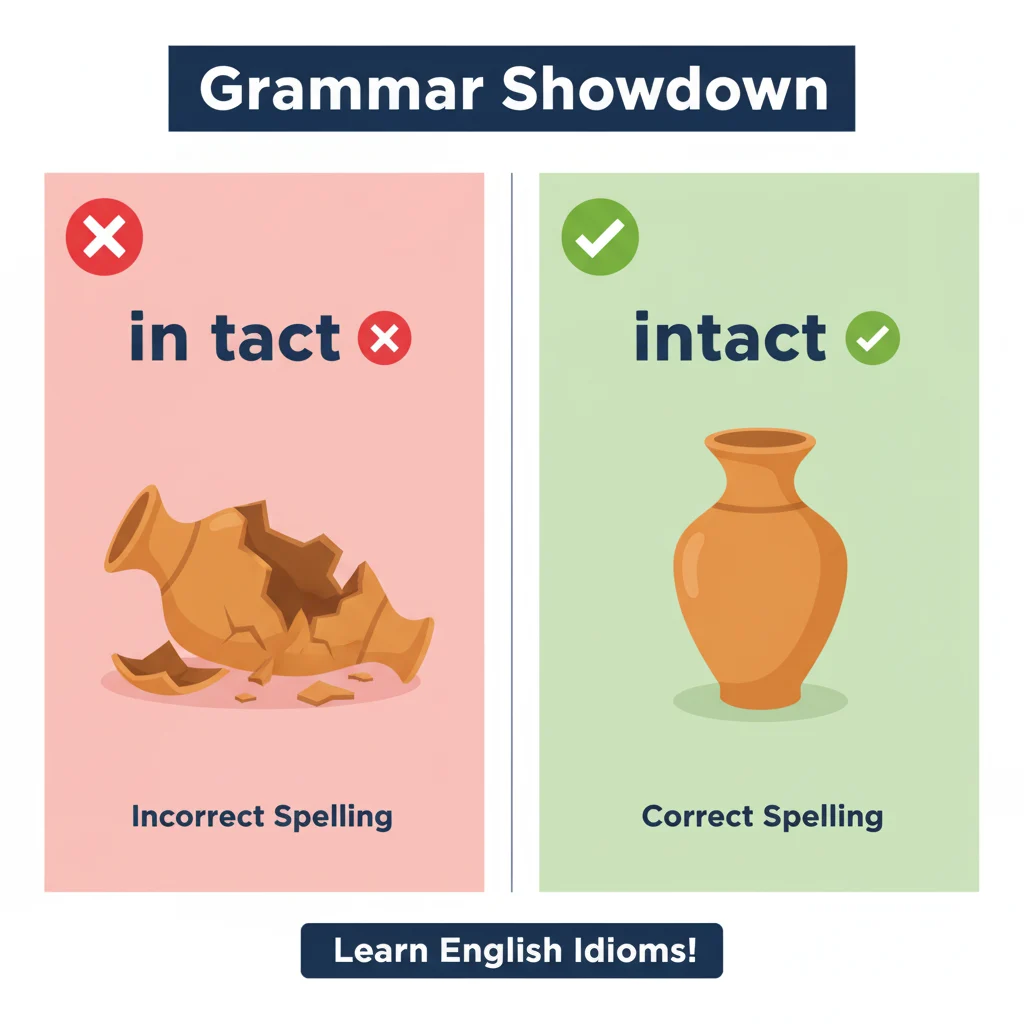
Have you ever been unsure whether to write in tact or intact? Don’t worry—you are not alone. Many people confuse these two because they sound almost identical. Using the wrong form, however, can make your writing appear unprofessional or confusing.
In this complete guide, you’ll learn what each term means, why in tact is actually incorrect, and how to use intact properly in everyday English. We’ll give you simple definitions, real-life examples, comparison tables, memory hacks, and common mistakes to avoid.
Whether you are writing an essay, sending a work email, or chatting with friends, this article will help you understand the correct usage clearly. Even beginners will find it easy to follow and remember. By the end, you’ll never mix up in tact and intact again.
What Does Each Word Mean?
1. In Tact
Technically, in tact is not a correct phrase in English. People often write it because they mishear or misremember intact. Sometimes, writers think it is “in” + “tact,” but this combination does not exist in standard English grammar.
Part of Speech: None (incorrect usage)
Common Incorrect Examples:
- My phone survived the drop and is still in tact.
- Please keep the vase in tact.
- The contract remained in tact after the revisions.
- The cake decorations stayed in tact.
Whenever you see in tact, it’s almost always a spelling mistake or misunderstanding.
2. Intact
Intact is the correct word. It is an adjective that means “complete, unbroken, or undamaged.” You use it when something remains whole and unharmed.
Part of Speech: Adjective
Simple Examples:
- The package arrived intact.
- Despite the storm, the roof remained intact.
- She kept all her old letters intact.
- The ancient painting stayed intact through years of neglect.
- His confidence was intact even after losing the game.
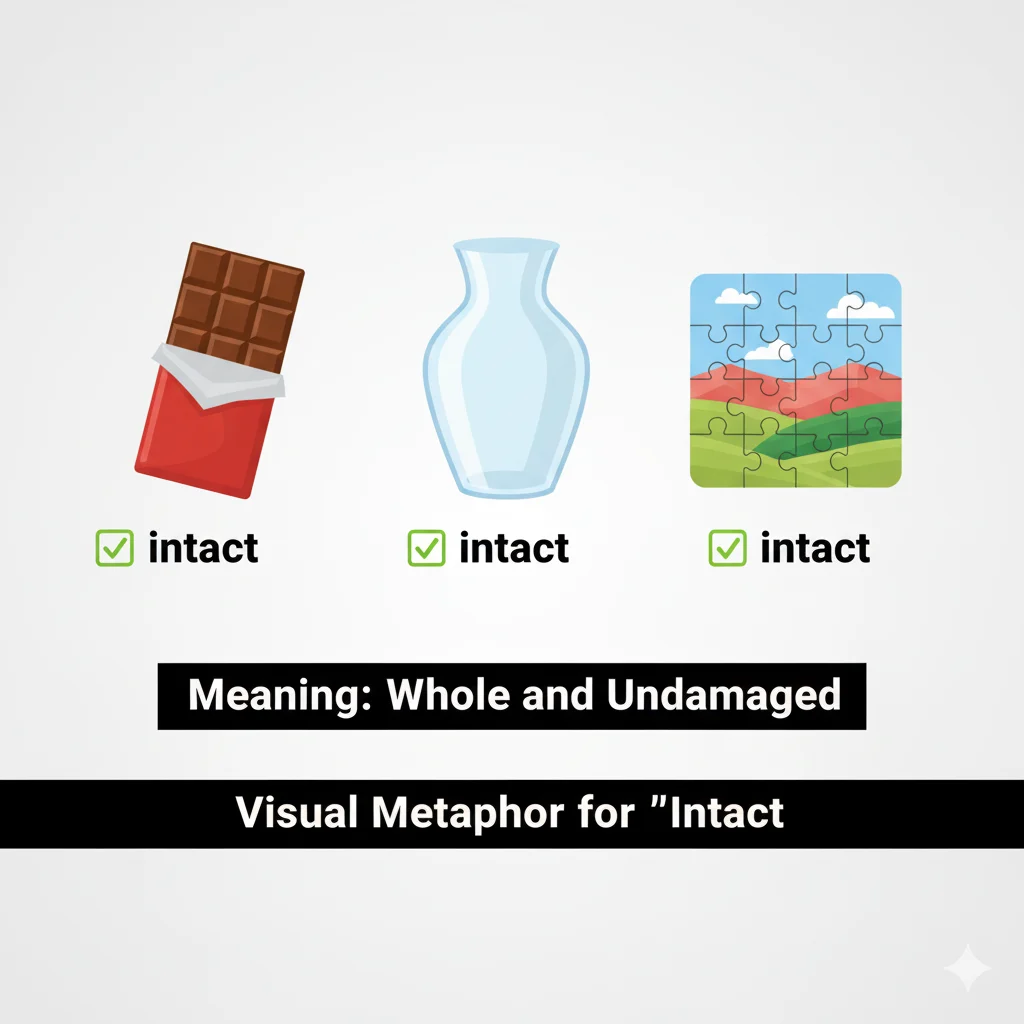
Mini Story to Remember: Imagine a chocolate bar that doesn’t break—even after being dropped. That chocolate bar is intact.
The Key Difference Between In Tact and Intact
| Word | Meaning | Correct Usage Example |
|---|---|---|
| In Tact | ❌ Not a real phrase | ❌ The vase stayed in tact. |
| Intact | Complete, unbroken, whole | ✅ The vase stayed intact after the move. |
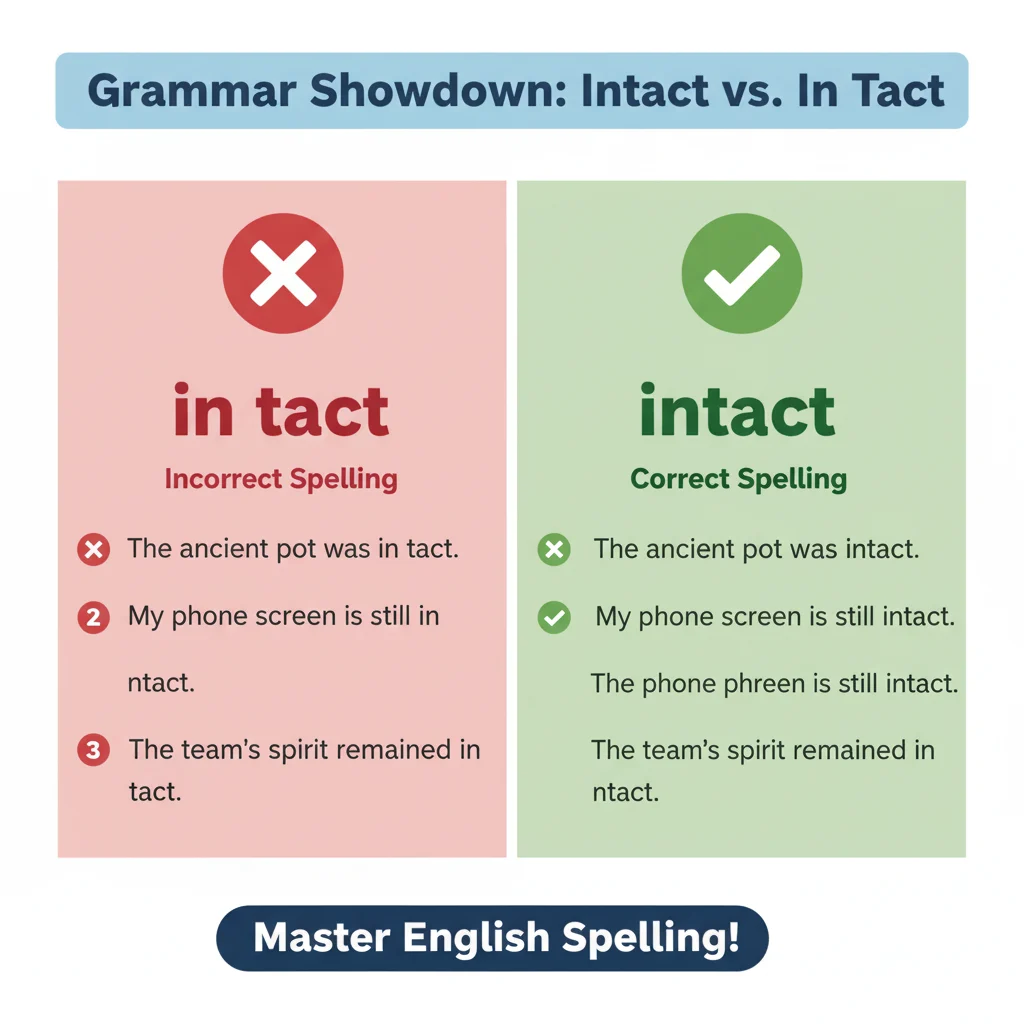
Quick Tip: If you are thinking of something being unbroken, whole, or undamaged, always use intact. Forget in tact—it’s incorrect.
Common Mistakes and How to Avoid Them
1. Writing in tact Instead of intact
- Incorrect: My phone is still in tact.
- Correct: My phone is still intact.
- Why: In tact is not a word; intact is the only correct form.
2. Forgetting the One-Word Rule
- Incorrect: Please keep the documents in tact.
- Correct: Please keep the documents intact.
- Tip: Always remember: intact is one word.
3. Using in Casual Online Writing
- Incorrect: Cake decorations stayed in tact 😅
- Correct: Cake decorations stayed intact.
- Tip: Even in texting or social media, using intact shows correct English.
Memory Trick: Imagine everything staying in one piece. That “whole piece” = intact.
When to Use Intact
Intact can be used in many situations, especially to describe objects, ideas, or relationships that remain unbroken or complete.
Examples in Daily Life:
- The antique table survived the move intact.
- Despite the argument, their friendship remained intact.
- He kept the original files intact on his computer.
- The monument has remained intact for centuries.
- Her confidence was intact even after failing the exam.
- The package was delivered intact, without any scratches.
- The puzzle pieces stayed intact inside the box.
Memory Hack: Think of “in-tact” as “tightly in one piece.” Visualize something wrapped or protected—this is intact.
Real-Life Situation Example: Imagine a student dropping a school project accidentally. If the project isn’t damaged, it’s intact.
PleadED or Pled: What’s the Difference & Which One Is Correct?
Quick Comparison: In Tact vs Intact
- ✅ Intact = correct word, adjective, means “unbroken or complete.”
- ❌ In Tact = incorrect; never use.
- Tip: Only one word is correct: intact.
- Examples: package intact, vase intact, friendship intact, file intact.
Advanced Tips
- Origin: Intact comes from the Latin intactus, meaning “untouched.”
- Formal Writing: Common in essays, research papers, and official reports.
- Common Mistake Online: Many people type in tact in texts, social media, or emails. Always correct it to intact.
- Exams: Using intact correctly can boost grammar scores.
Mini Quiz: Test Yourself
Fill in the blanks with the correct word:
- The documents arrived ______ without any damage.
- Her antique necklace remained ______ after the trip.
- The castle has stood ______ for over 500 years.
- ❌ My phone is still ______. (Find the mistake)
- All files should stay ______ during transfer.
- The cake decorations were still ______ after the party.
- Despite the storm, the roof stayed ______.
- (all answers ,intact,)
Real-Life Examples for Practice
- School: The homework sheet survived the rain intact.
- Family: The old family photo album is still intact.
- Office: All the reports were intact after printing.
- Travel: The souvenirs reached home intact.
- Sports: Even after the match, his spirit remained intact.
- Hobbies: The puzzle pieces were intact inside the box.
- Nature: The tree remained intact during the strong wind.
Quick Recap
- Intact = unbroken, complete, undamaged ✅
- In Tact = incorrect, avoid using ❌
- Use intact for objects, relationships, ideas, or feelings that remain whole.
- Remember the one-word rule: intact, no spaces.
- Visual trick: imagine chocolate, a vase, or a puzzle piece staying whole—this is intact.
FAQs
1. Can I ever use in tact?
No. In tact is always incorrect. Always write intact.
2. Can intact describe feelings?
Yes. Confidence, relationships, and memories can all be intact.
3. How do I remember which one is correct?
Think “one word, whole or unbroken”—that’s intact.
4. Is intact formal or informal?
It is appropriate in both formal and informal writing.
5. Can I say intact in spoken English?
Yes. You can say, “The documents arrived intact” in conversation or presentations.
6. Can I use intact with abstract ideas?
Yes. For example: “Her reputation remained intact despite the rumors.”
7. How do I correct in tact mistakes?
Simply replace in tact with intact wherever it occurs.
Conclusion
Now you fully understand the difference between in tact and intact. Remember: intact is the correct word, meaning “whole, unbroken, or undamaged,” while in tact is a common mistake. Using intact correctly improves your writing, makes your sentences clear, and helps you appear confident in English.
Next time you describe something unbroken, visualize a chocolate bar, a vase, a puzzle, or even a friendship—if it’s whole, it’s intact. Practice using it in emails, essays, texts, and conversations. With a little attention, you will master this word quickly. Every correct use strengthens your English skills, making communication simpler, clearer, and more professional.

Scottish novelist Muriel Spark (1918–2006) crafted sharp, witty stories exploring human nature, morality, and society with dark humor and insight.