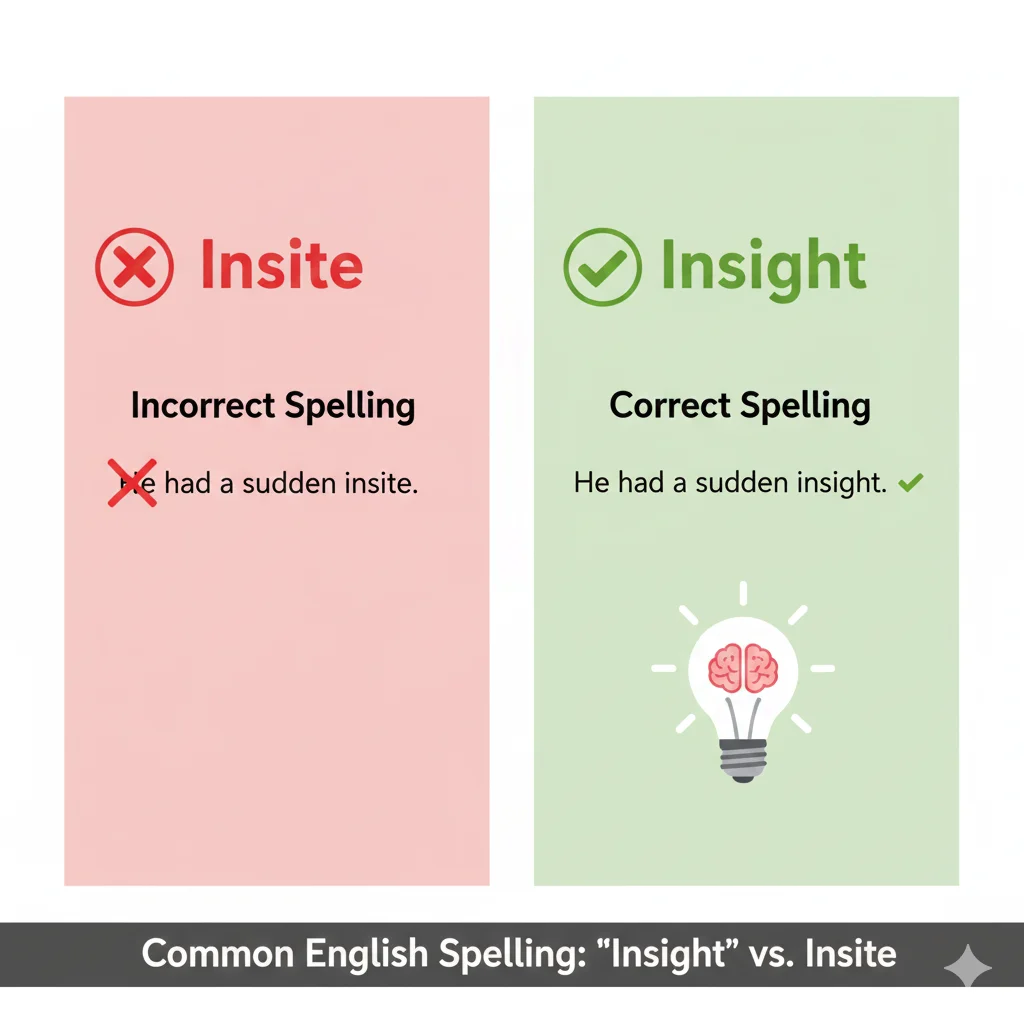
English can be tricky, especially when two words look or sound similar but mean very different things. One such confusing pair is insite and insight. Many learners — and even fluent speakers — often mix them up. You might see both words online and wonder, “Are they the same?” or “Which one is correct?”
This easy guide will help you understand the difference between insite and insight, their meanings, and how to use them correctly in real life. We will explain everything step by step, using simple words, short sentences, and everyday examples.
By the end, you will know which word to use, when to use it, and why. Let’s make English easier — one word at a time.
What Does Each Word Mean?
Before comparing the two words, let’s understand what each one means on its own.
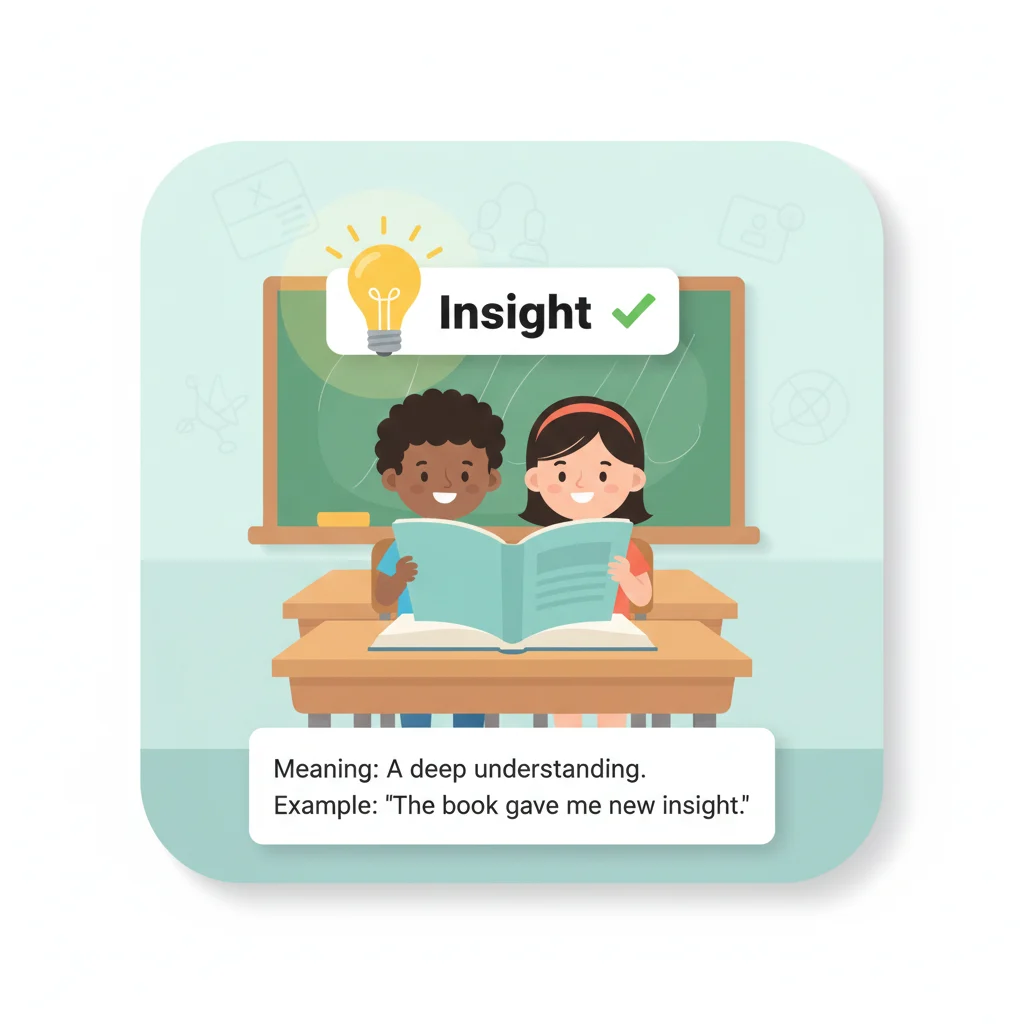
Meaning of Insight
Insight is a real English word.
It means a clear or deep understanding of something.
When you have insight, you see things clearly. You understand ideas, problems, or feelings better than before.
Part of speech:
Insight is a noun.
Simple examples of insight:
- The teacher gave me insight into the story’s meaning.
- She has great insight about people’s feelings.
- The book helped me gain insight into history.
Easy way to remember:
Insight = understanding from inside your mind
Think of it like a light turning on in your head 💡.
Meaning of Insite
Here is where confusion begins.
Insite is NOT a standard English word.
In most cases, insite is a spelling mistake of insight.
However, in rare cases, Insite may appear as:
- A brand name
- A company name
- A website or software name
But in normal writing, school work, emails, essays, and exams, insite is incorrect.
Important note:
If you mean understanding, learning, or clear thinking, the correct word is insight, not insite.
The Key Difference Between Insite and Insight
Let’s make the difference very clear.
Comparison Table: Insite vs Insight
| Feature | Insite | Insight |
|---|---|---|
| Is it a real English word? | ❌ No (mostly a mistake) | ✅ Yes |
| Correct spelling | ❌ Incorrect | ✅ Correct |
| Meaning | None (unless a brand) | Clear understanding |
| Used in writing? | ❌ Avoid using | ✅ Use confidently |
| Example | ❌ I got insite from the book | ✅ I got insight from the book |
Quick Tip to Remember
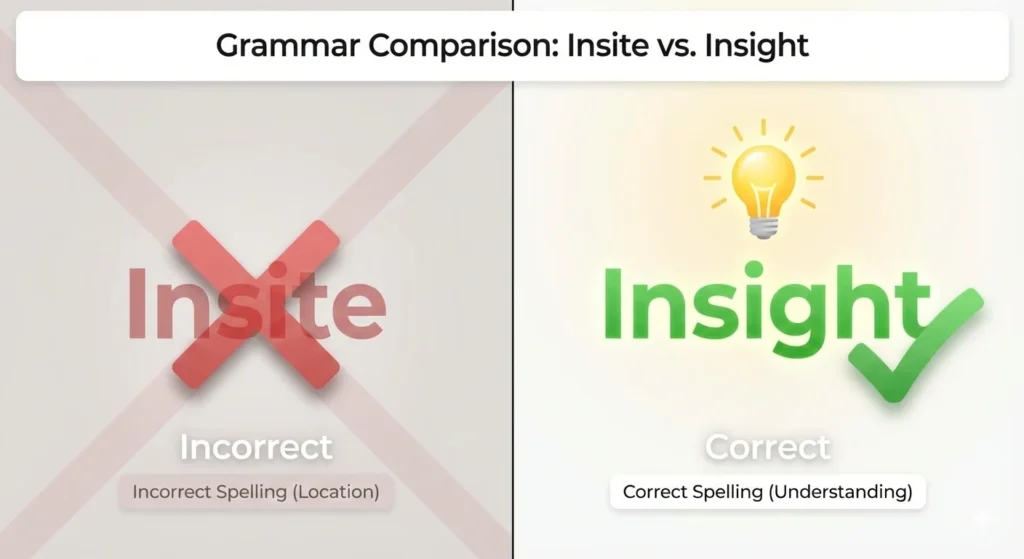
If you are talking about understanding or learning, always choose INSIGHT.
👉 No “gh” = wrong
👉 With “gh” = right
Common Mistakes and How to Avoid Them
Many people make mistakes with insight because it sounds like “in-site.”
Let’s look at common errors and how to fix them.
Mistake 1
❌ The lesson gave me insite.
✅ The lesson gave me insight.
Why it happens:
People spell the word how it sounds.
Fix:
Remember: insight has gh at the end.
Mistake 2
❌ She has good insite about people.
✅ She has good insight about people.
Why it happens:
Auto-correct sometimes misses this mistake.
Fix:
Double-check spelling when writing.

Mistake 3
❌ This article provides deep insite.
✅ This article provides deep insight.
Fix:
Think: insight = deep understanding.
When to Use Insight
Use insight when you talk about:
- Understanding
- Learning
- Clear thinking
- Knowledge
- Awareness
Real-life examples of insight
- The movie gave me insight into family life.
- Reading helps children develop insight.
- His advice showed great insight.
- The teacher explained the topic with insight.
- Life experiences give us insight.
Everyday situations
- School: Insight into a subject
- Work: Insight into a problem
- Life: Insight into emotions
If you can replace the word with “understanding”, then insight is correct.
When to Use Insite
In most situations, you should NOT use insite.
Only use Insite if:
- It is part of a company name
- It is a brand
- It is a product or software name
Example:
- Insite Solutions launched a new app.
Outside of names, avoid this word completely.
Memory Hack 🧠
If you are not sure, don’t use insite.
Choose insight instead — it is almost always correct.
Quick Recap: Insite vs Insight
Let’s review quickly:
- Insight ✅
- Correct English word
- Means understanding
- Used in writing, speaking, exams
- Insite ❌
- Not standard English
- Usually a spelling error
- Only used as a brand name
👉 When in doubt, use insight.
Advanced Tips (For Curious Learners)
Word History
The word insight comes from old English words meaning “inner sight.”
It literally means seeing inside your mind.
Formal Writing and Exams
In essays, exams, and professional writing:
- Always use insight
- Never use insite
Wrong spelling can:
- Lower your marks
- Make writing look unprofessional
Online Writing and Texting
Many people type fast and misspell insight as insite.
But one small spelling mistake can change meaning or confuse readers.
Mini Quiz: Test Your Understanding
Fill in the blanks with insight or insite.
- The book gave me deep ______ into human nature.
- Teachers help students gain ______.
- She showed great ______ in solving the problem.
- This article provides useful ______.
- I developed better ______ after practice.
Answers:
- insight
- insight
- insight
- insight
- insight
(If you chose insight for all — great job! 🎉)
Frequently Asked Questions (FAQs)
1. Is insite a real word?
No. Insite is not a standard English word. It is usually a spelling mistake.
2. What is the difference between insite and insight?
Insight means understanding. Insite is incorrect in normal English.
3. Can I use insite in exams?
No. Always use insight in exams and formal writing.
4. Why do people confuse insite and insight?
Because they sound similar when spoken.
5. How can I remember the correct spelling?
Remember: Insight has “gh” and means understanding.
Conclusion
Understanding the difference between insite and insight is much easier than it seems. The key point to remember is simple: insight is the correct word, and insite is usually a mistake. Insight means clear understanding, learning, or awareness, and it is used in school, work, writing, and daily life.
By learning small differences like this, you can improve your English step by step. Practice using insight in sentences, read more, and don’t be afraid to learn from mistakes. Every new word you master brings you closer to confident English communication.
Keep learning. Keep growing. English gets easier every day.

English playwright and novelist Patrick Hamilton (1904–1962) captured psychological tension, social decay, and dark humor in gripping, unforgettable stories.