Many English learners get confused between “leaped” and “leapt.” Both words come from the verb “leap,” which means to jump. But because these two past tense forms look and sound different, people often wonder which one is correct.
The good news? Both are correct. The difference mainly depends on the style of English you follow—American or British—and the kind of writing you are doing.
In this simple guide, you’ll learn the meaning, usage, examples, grammar difference, and easy memory tricks for both words. Everything is written in clear, friendly language so even a young student can understand quickly.
By the end, you’ll know exactly when to use leaped and when to use leapt—without any confusion ever again.
What Does Each Word Mean?
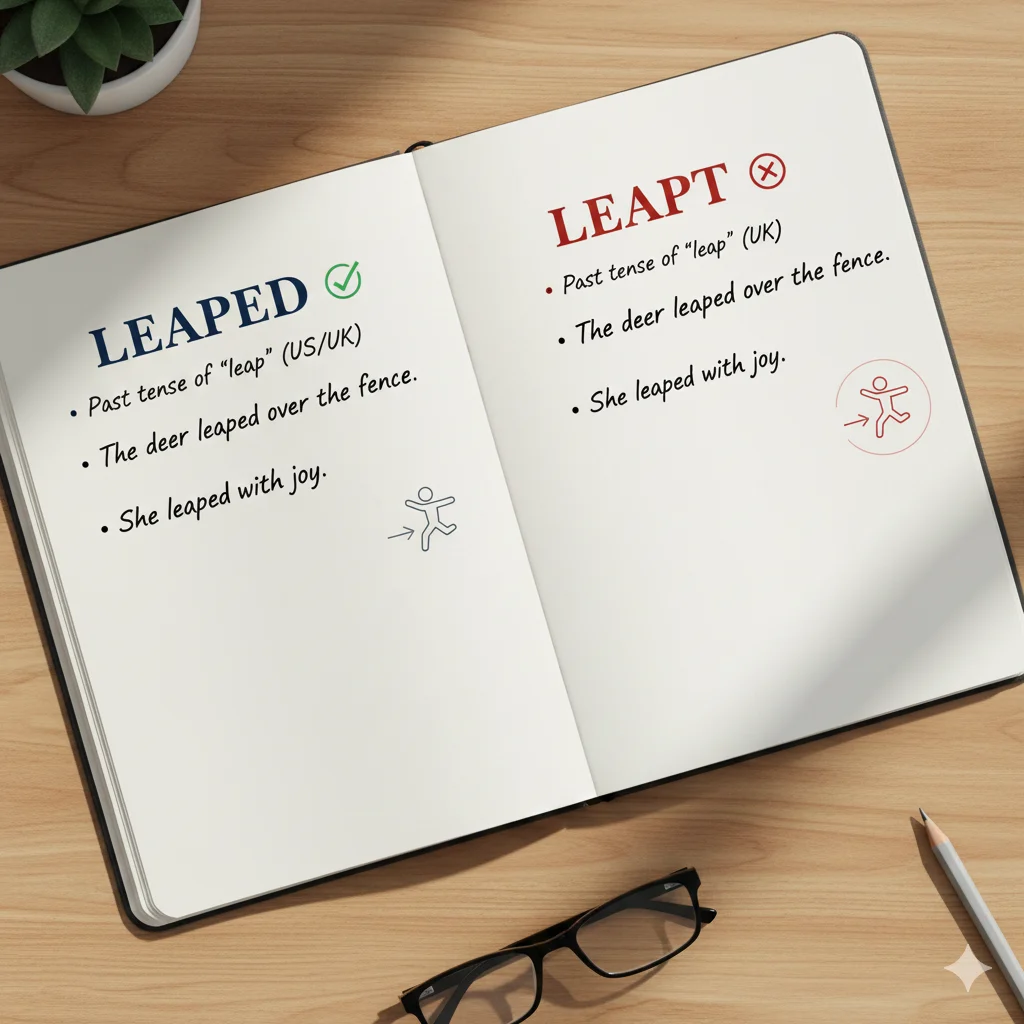
1. Meaning of “Leaped”
Leaped is the past tense and past participle of the verb leap.
It means jumped.
This form is more common in American English.
Simple Examples:
- The cat leaped over the fence.
- She leaped with joy when she heard the news.
- The boy leaped across the puddle.
Mini Story:
Imagine you jump from one stone to another to cross a small stream. You just leaped across it!
2. Meaning of “Leapt”
Leapt also means jumped, and it is simply another past tense form of leap.
It is more common in British English and is often used in stories or literature because it sounds shorter and more dramatic.
Simple Examples:
- The deer leapt gracefully through the forest.
- She leapt in fear when the balloon popped.
- The knight leapt from his horse.
Mini Story:
Imagine a superhero jumping from one rooftop to another. You could say he leapt across the buildings!
The Key Difference Between Leaped and Leapt
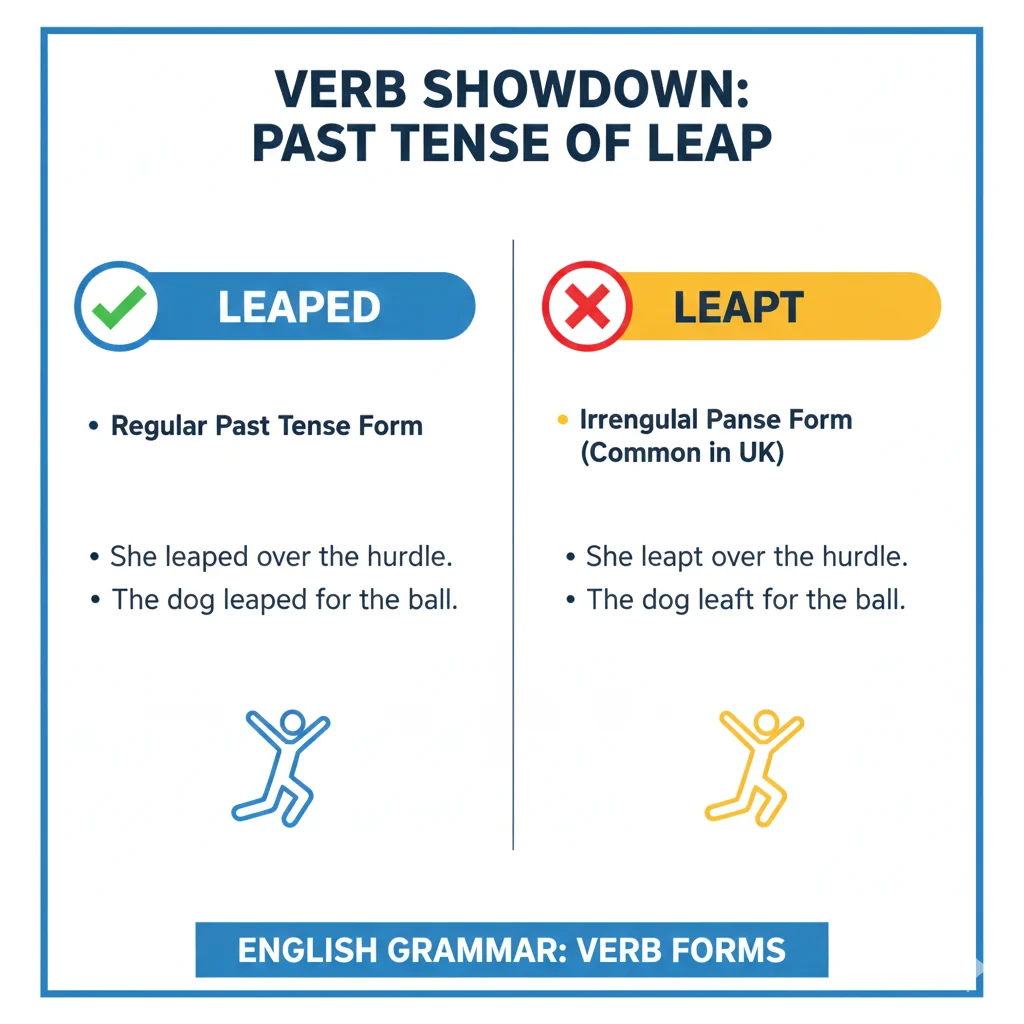
Both words mean the same thing: “jumped.”
The difference lies in style and region.
- Leaped = American English
- Leapt = British English
Comparison Table — Leaped vs Leapt
| Feature | Leaped | Leapt |
|---|---|---|
| Meaning | Jumped | Jumped |
| Usage | Mostly American English | Mostly British English |
| Sounds Like | Leeped | Lept |
| Type | Regular verb form | Irregular verb form |
| Example | She leaped over the bench. | She leapt over the bench. |
Quick Tip to Remember
- If you use color, center, organize, you likely follow American English → use leaped.
- If you use colour, centre, organise, you follow British English → use leapt.
Common Mistakes and How to Avoid Them
❌ Mistake 1: Thinking one form is wrong
Many learners believe that one of the words is incorrect.
✔ Correction: Both are correct; the choice depends on the style of English.
❌ Mistake 2: Mixing styles in the same text
Example:
- “She leapt forward, then she colorfully leaped again.” (mixed English styles)
✔ Correction:
Choose one form for consistency.
- American: She leaped forward.
- British: She leapt forward.

❌ Mistake 3: Confusing pronunciation rules
Some people pronounce leaped as “lept.”
But actually:
- Leaped → “leeped”
- Leapt → “lept”
✔ Tip:
If it has -ea-, it usually sounds long: leap → leep.
When to Use “Leaped” (With Examples)
Use leaped when:
- You follow American English
- You want a regular verb form
- You prefer simpler, modern spelling
- You are writing essays, emails, or school work in the US
Clear Example Sentences:
- The frog leaped into the water.
- She leaped higher than everyone during the game.
- The dancer leaped across the stage.
- My dog leaped onto the sofa the moment I sat down.
- The little boy leaped in excitement when he saw the gift.
Real-Life Situation:
At school, if you are writing a story in American English, you will most likely use leaped.
When to Use “Leapt” (With Examples)
Use leapt when:
- You follow British English
- You write stories, novels, or descriptive texts
- You want a more traditional or classic tone
Clear Example Sentences:
- The rabbit leapt across the garden.
- She leapt backward when she saw the spider.
- The hero leapt onto the moving train.
- The bird leapt into the sky as if it were dancing.
- The child leapt from one rock to another by the river.
Memory Hack:
Leapt = Lept (one-syllable, short, British-style sound)
Shorter sound → British spelling.
Quick Recap: Leaped vs Leapt
- Both mean the same thing → “jumped.”
- Leaped = American English
- Leapt = British English
- Leaped sounds like “leeped.”
- Leapt sounds like “lept.”
- Both are correct—choose based on your writing style or country.
Advanced Tips (Optional)
1. Word Origin
“Leap” is an old English word.
Originally, “leapt” was the main form.
Over time, American English created “leaped” for simpler spelling.
2. Formal Writing
In exams or academic writing:
- American English prefers leaped
- British English prefers leapt
3. Literature vs. Modern Writing
Writers of fantasy, poetry, or classic novels often choose leapt because it feels dramatic and stylish.
4. Texting and Online Writing
People tend to use leaped more often because it is easier to type and looks more modern.
Mini Quiz — Test Yourself!
Fill in the blanks with leaped or leapt:
- The kitten ______ onto the bed.
- The athlete ______ over the hurdle.
- She ______ in fear when the balloon burst.
- The fox ______ across the snowy field.
- The little girl ______ with joy after winning the prize.
- He ______ from one stone to the next.
- The superhero ______ across the rooftop.
(Answers: Both are correct; choose one style and keep using it consistently.)
5 FAQs
1. Is leaped or leapt correct?
Both are correct. Leaped is common in American English; leapt is common in British English.
2. Which one should I use in school essays?
Use the form that matches your English style—American or British.
3. Is there any difference in meaning between leaped and leapt?
No. Both mean “jumped.”
4. Why does British English prefer “leapt”?
Because it follows older English spelling patterns and sounds more traditional.
5. How do I remember the difference easily?
Think: Leapt = British = Shorter sound (“lept”).
Leaped = American = Regular verb (“leeped”).
Conclusion
Understanding the difference between leaped and leapt is simple once you know the basic idea: both mean “jumped,” but the spelling depends on the English style. American English prefers leaped, while British English prefers leapt.
With the clear meanings, examples, grammar tips, and memory tricks in this guide, you can now use both words confidently in any sentence. Practice them while reading, writing stories, or even messaging your friends. The more you use them, the easier they become.
Keep learning small English differences like this every day. They make your writing stronger, clearer, and more natural.

English novelist and poet Thomas Hardy (1840–1928) explored human struggles, social constraints, and tragic love with deep realism and vivid storytelling.