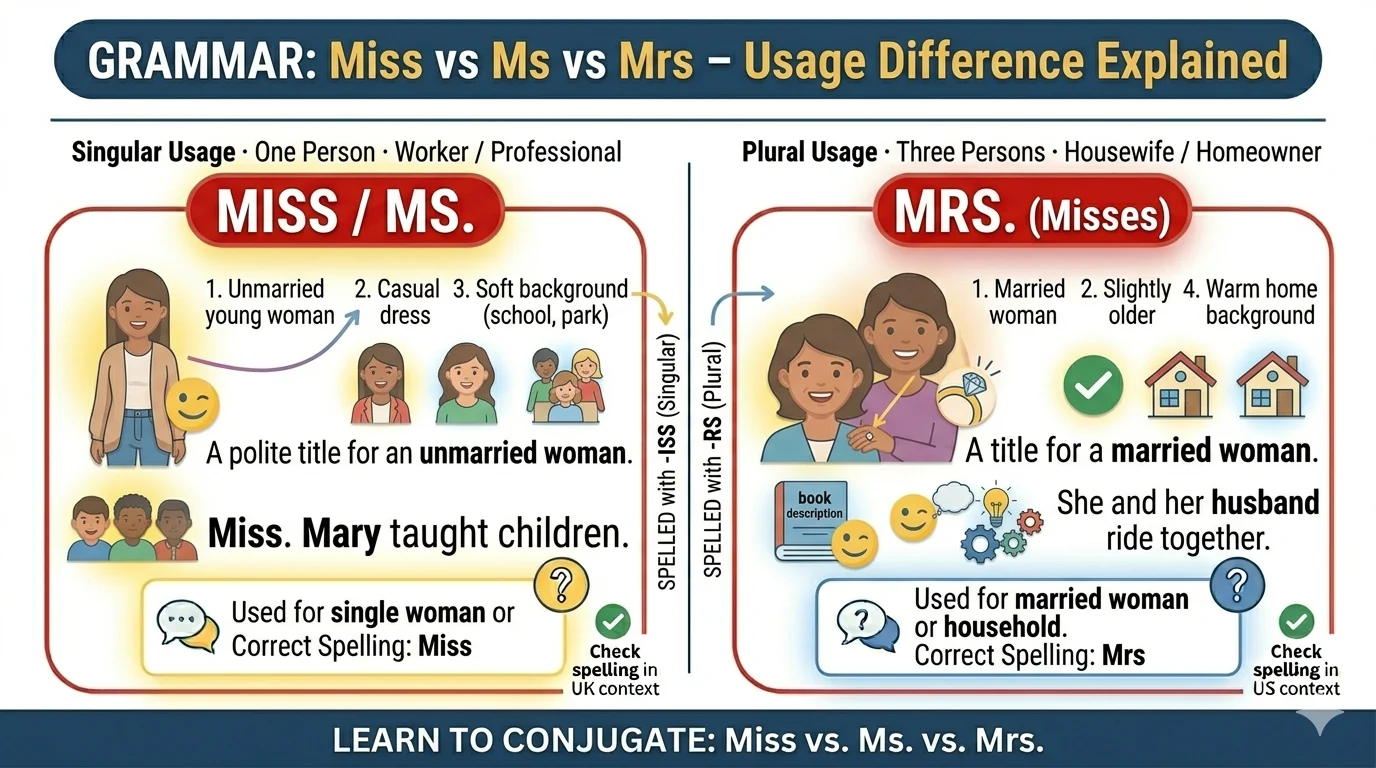
Many English learners get confused about “miss or misses.” These two words look very similar, but they are used in different ways. That’s why people often ask questions like “is it miss or misses?”, “he miss or misses?”, or “she never miss or misses?”
The confusion becomes even bigger when we talk about titles like Miss, Mrs., and Ms. People wonder: “Is Miss or Misses married?”, “Is misses the same as Mrs.?”, or “Miss or misses for married women?”
Don’t worry—this guide will make everything simple. You will learn the miss or misses meaning, the difference between miss and misses, and how to use them correctly in real life.
By the end of this article, you will feel confident using these words in speaking, writing, emails, and even exams. Everything is explained in easy, simple English, so even beginners can understand.
What Does “Miss” Mean?
The word “Miss” has two main meanings. It can be a title or a verb.
1. “Miss” as a Title (Miss meaning woman)
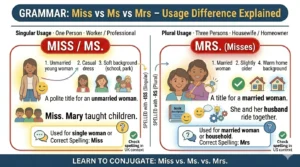
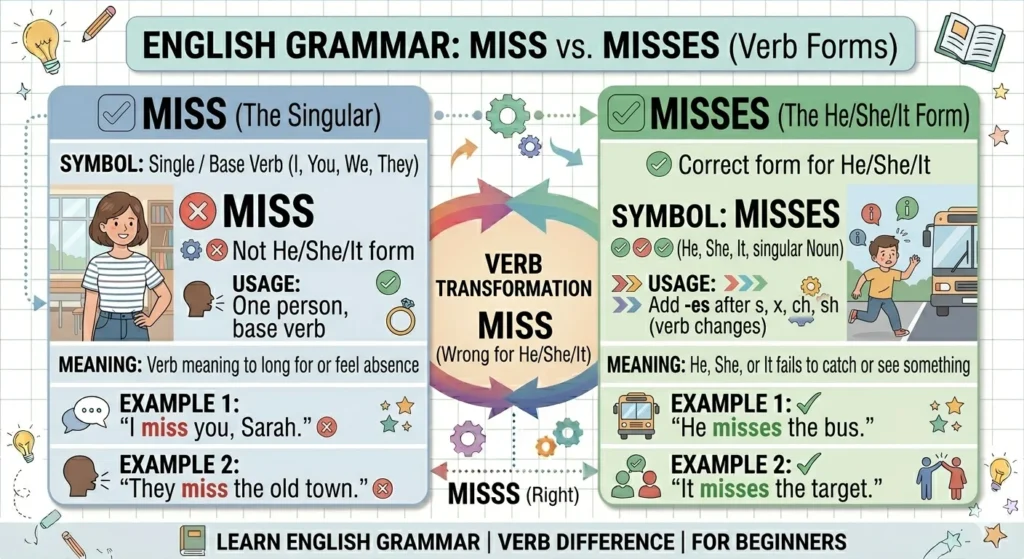
“Miss” is used before the name of a girl or an unmarried woman.
👉 Examples:
- Miss Ayesha is my teacher.
- I met Miss Fatima at the party.
- Miss Sana is very kind.
📌 Important:
Many people ask, “Is Miss or Misses married?”
👉 The answer is simple:
- Miss = unmarried woman
2. “Miss” as a Verb
“Miss” can also be an action word (verb). It has a few meanings:
a) To feel sad because someone is not there
- I miss my mother.
- We miss our friends.
- They miss their teacher.
b) To fail to catch or reach something
- I miss the bus.
- Don’t miss your class.
- He tried but missed the ball.
What Does “Misses” Mean?
The word “misses” is mostly used as a verb form. It is the third-person singular form of “miss.”
1. “Misses” as a Verb (Grammar Rule)
Use misses with:
- He
- She
- It
- One person
👉 Examples:
- He misses his family.
- She misses you a lot.
- The baby misses her mother.
📌 Common questions:
- He miss or misses? → ✔️ He misses
- She miss or misses you? → ✔️ She misses you
- She never miss or misses? → ✔️ She never misses
2. “Misses” and “Mrs.” Confusion
Many learners think “misses” is used for married women.
👉 But this is incorrect in writing.
- Mrs. = married woman
- Misses = how we pronounce “Mrs.”
📌 Example:
- Mrs. Khan (spoken as “misses Khan”)
👉 So if you ask:
- Is misses the same as Mrs.?
✔️ Yes in sound
❌ No in spelling
The Key Difference Between Miss and Misses
| Feature | Miss | Misses |
|---|---|---|
| Type | Title or base verb | Verb form |
| Meaning | Unmarried woman / action | Action (he/she/it) |
| Usage | Name or general verb | With he/she/it |
| Example | Miss Ali is here | He misses his mom |
👉 Quick Tip:
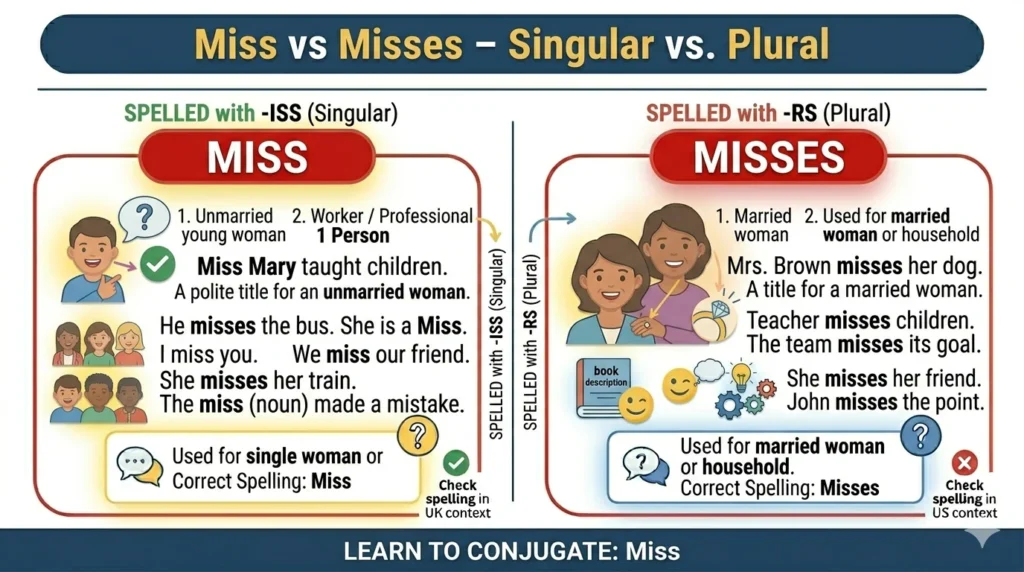
- I / You / They → miss
- He / She / It → misses
Miss vs Mrs vs Ms (Very Important)
This is where many learners get confused.
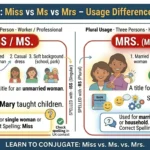
Mr, Mrs, Ms Meaning
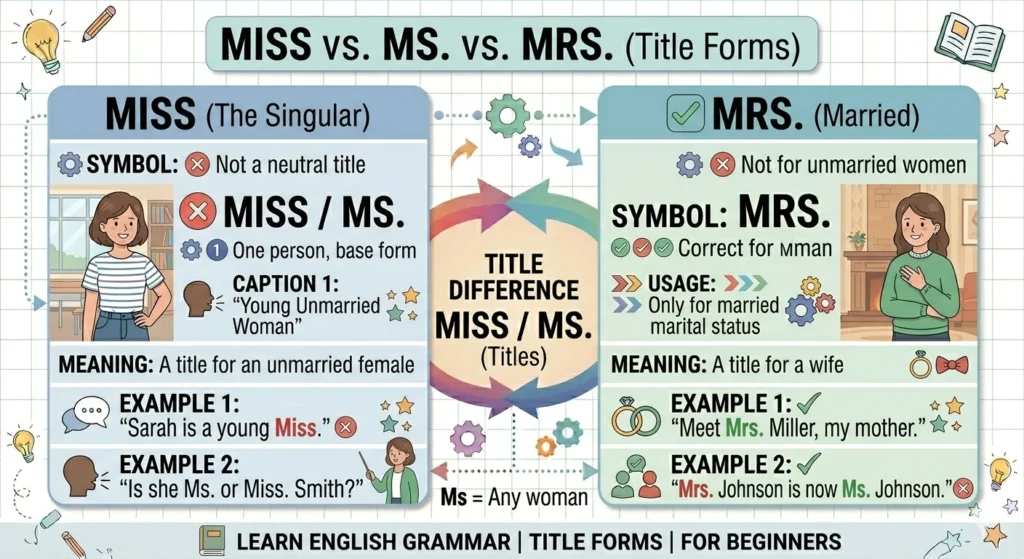
| Title | Meaning | Marital Status |
|---|---|---|
| Mr. | Man | Any |
| Miss | Unmarried woman | Not married |
| Mrs. | Married woman | Married |
| Ms. | Woman | Unknown/any |
Common Questions Answered
👉 Is Ms miss or misses?
→ No. Ms is different.
👉 Is it miss or misses for married?
→ Neither. Use Mrs.
👉 Married miss or misses?
→ ❌ Wrong
→ ✔️ Correct: Mrs.
👉 Is my daughter a Ms or Miss?
→ Usually Miss
Miss, Mrs, Ms Pronunciation
- Miss → /mis/
- Mrs. → /ˈmɪsɪz/
- Ms. → /miz/
👉 This is why “Mrs.” sounds like “misses.”
Miss Full Form
Many people search for miss full form, but:
👉 Miss has no full form
It is already a complete English word.
Common Mistakes and How to Avoid Them
Mistake 1
❌ He miss his mother
✔️ He misses his mother
Mistake 2
❌ She never miss you
✔️ She never misses you
Mistake 3
❌ Misses Ali is my teacher
✔️ Miss Ali is my teacher
Mistake 4
❌ Is it miss or misses married?
✔️ Use “Miss” (unmarried) or “Mrs.” (married)
When to Use “Miss”
Use Miss in these situations:
1. For an unmarried woman
- Miss Hina is my teacher.
2. As a verb with I/You/They
- I miss you.
- They miss school.
3. In questions
- Do you miss your home?
4. In emails
👉 Example:
- Dear Miss Sara,
📌 This answers: miss or misses email
When to Use “Misses”
Use Misses in these situations:
1. With he/she/it
- He misses his class.
- She misses you.
2. In daily life
- My father misses his village.
- The child misses her mother.
3. With words like “anyone”
👉 Many people ask: anyone miss or misses?
✔️ Correct: Anyone misses (formal)
✔️ Better: Anyone can miss
4. Question Examples
- Who misses you the most?
- Why does he miss the bus?
Real-Life Examples (Easy to Understand)
School
- I miss my class.
- He misses the teacher.
Family
- She misses her mother.
- We miss our cousins.
Daily Life
- Don’t miss the bus.
- He misses his chance.
How to Abbreviate Miss or Misses
- Miss → no abbreviation
- Mrs. → abbreviation (spoken as misses)
- Ms. → modern short form
📌 So:
- Miss or misses abbreviation?
👉 “Mrs.” is the abbreviation (spoken as misses)
Quick Recap: Miss or Misses
- Miss = unmarried woman or base verb
- Misses = used with he/she/it
- Use Mrs. for married women
- Use Ms. for neutral use
👉 Easy rule:
I miss → He misses
Advanced Tips
1. History of the Words
- “Miss” comes from old English titles
- “Mrs.” comes from “Mistress”
2. Formal Writing
In essays or exams:
- Use correct grammar forms
- Avoid mixing Miss and Misses
3. Online Mistakes
People often write:
- he miss or misses
- she never miss
👉 Always check grammar rules.
Mini Quiz (Test Yourself)
Fill in the blanks:
- He ______ his mother.
- I ______ my school.
- ______ Ali is our teacher.
- She never ______ you.
- Who ______ you the most?
- The boy ______ the bus.
- ______ Khan is a married woman.
👉 Answers:
- misses
- miss
- Miss
- misses
- misses
- misses
- Mrs.
FAQs
1. Is Miss or Misses married?
Miss is for unmarried women. Mrs. is for married women.
2. Is Misses the same as Mrs.?
They sound the same, but Mrs. is correct in writing.
3. Where do we use Misses?
Use it with he/she/it as a verb. Example: He misses you.
4. Is it miss or misses when married?
Neither. Use Mrs. for married women.
5. Is Ms miss or misses?
No. Ms is a separate title.
Conclusion
Now you fully understand the difference between miss or misses. “Miss” is used for an unmarried woman or as a base verb, while “misses” is used with he, she, or it. You also learned the difference between Miss, Mrs, and Ms, which helps avoid common mistakes in English.
Keep practicing simple sentences like “I miss” and “he misses” every day. With practice, these rules will become natural.
Learning English step by step is the best way to improve—so keep going and stay confident!

English novelist and poet Thomas Hardy (1840–1928) explored human struggles, social constraints, and tragic love with deep realism and vivid storytelling.