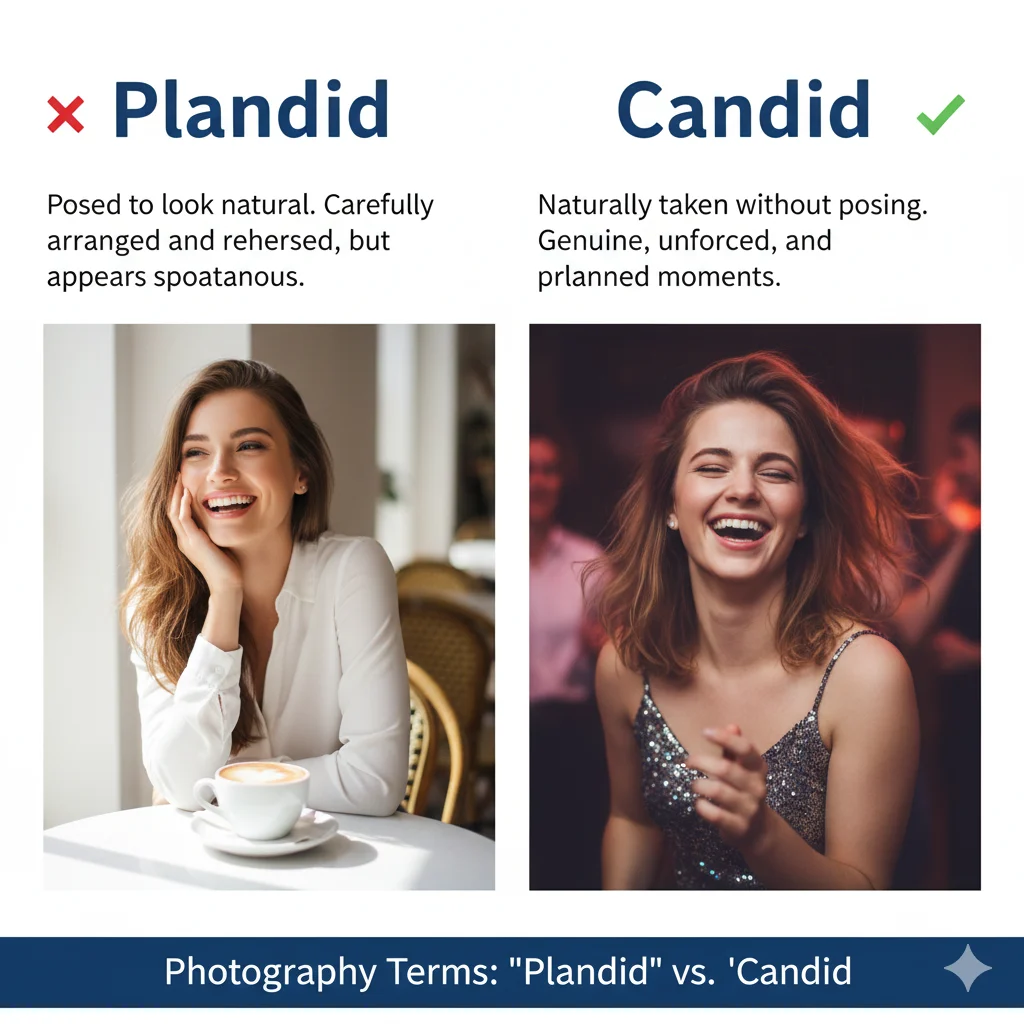
The correct word is candid. Plandid is not a standard English word. Candid means honest, open, or natural without being posed or planned.
If you’re searching “plandid or candid,” your intent is clear: you want to know the correct word and its meaning. This confusion often comes from social media, where plandid is sometimes used informally to describe something that looks natural but is actually planned.
Here’s the simple rule: Use candid in formal and correct English. Example: She gave a candid interview. The word plandid may appear online, but it is slang and not suitable for professional writing. Using candid keeps your writing clear and correct.
What Does Each Word Mean?
What Does “Candid” Mean?
Candid is a real English word. It describes a photo taken naturally, without the person posing. The person doesn’t know the picture is being taken. The moment is real and unplanned.
Part of speech: Adjective (a describing word)
Easy meaning:
A candid photo is a picture taken naturally — no fake smile, no posing, no planning.
3 Easy Examples of “Candid”
- I took a candid photo of my friend laughing during lunch.
- She loves candid moments because they look real.
- This candid shot shows how happy the kids were.
Mini Story:
Imagine your friend is eating an ice cream and laughing. You quickly take a photo without telling them. That is a candid photo.
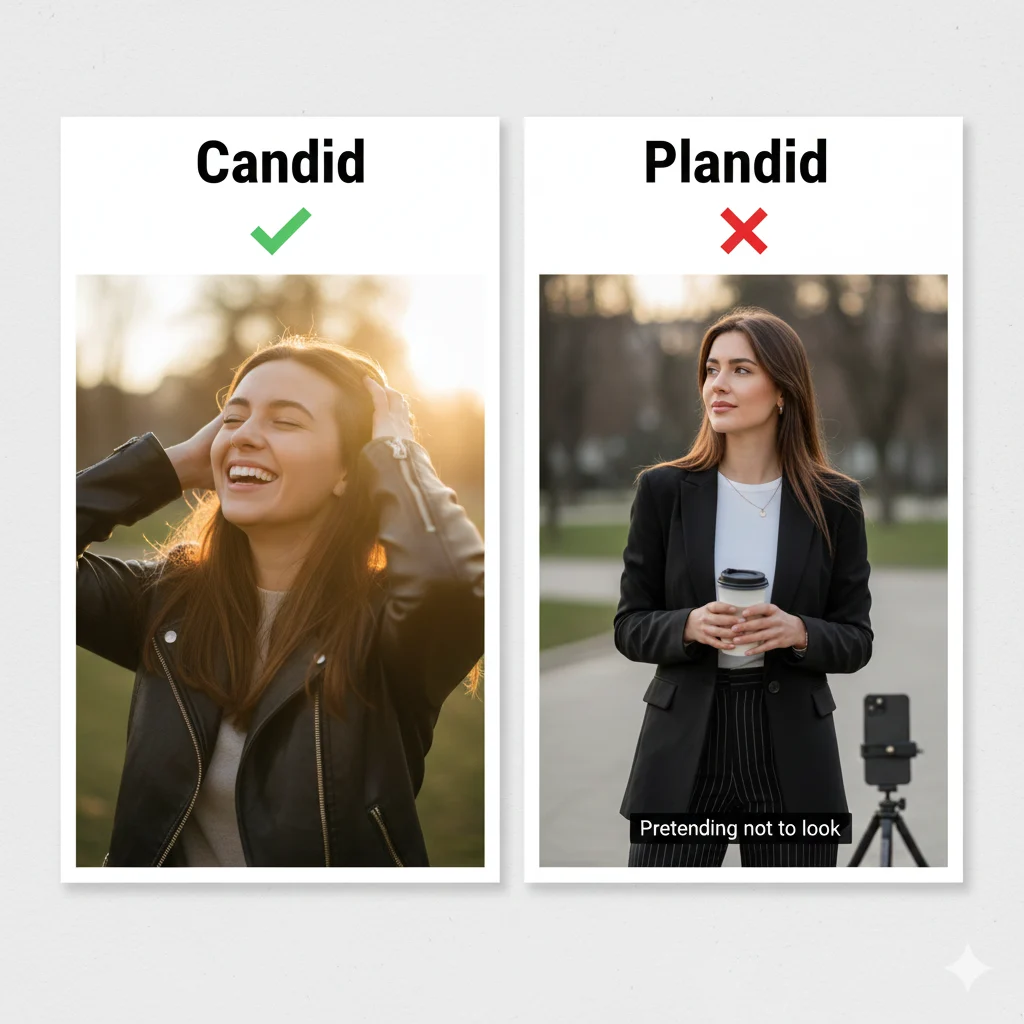
What Does “Plandid” Mean?
Plandid is a modern internet slang word, not a traditional dictionary word. It combines:
- Plan
- Candid
A plandid is a photo that looks natural and unplanned, but in reality, it was planned. The person poses as if the moment just happened.
Part of speech: Slang adjective/noun used in social media
Easy meaning:
A plandid photo is a picture that pretends to be candid but is secretly planned.
3 Easy Examples of “Plandid”
- She practiced her “looking away” face for the perfect plandid.
- The photo looks natural, but trust me — it’s a plandid.
- Influencers often post plandid pictures to look effortless.
Mini Story:
You tell your friend, “Take a photo when I pretend to look at the sky.” You act natural, but you are posing. That is a plandid.
Fake Candid Meaning
Many people search for “fake candid meaning” when they see photos that look natural but are actually planned.
A fake candid is a photo that looks real and unposed, but in reality, it is carefully planned. The person may act like they are not aware of the camera, but they are actually posing.
In simple words:
Fake candid = a planned photo that pretends to be natural
This is exactly what the word plandid means.
Examples:
She looked away to create a fake candid photo.
The influencer’s picture seems natural, but it is a fake candid.
He practiced his smile to get the perfect fake candid shot.
👉 Easy rule:
If the photo looks natural but was planned → it is a fake candid (plandid)
If the photo is truly natural → it is a real candid
The Key Difference Between Plandid and Candid
People often mix these two because the photos look similar. But their meanings are very different.
Here is a clear and simple comparison:
| Feature | Candid | Plandid |
|---|---|---|
| Meaning | Natural, real, unposed | Planned to look natural |
| Awareness | Person does not know | Person knows and poses |
| Real or Fake? | 100% real moment | Made to look real |
| Common Use | Photography, journalism, real-life moments | Instagram, influencers, travel posts |
| Sentence Example | “This candid picture shows her true smile.” | “This plandid looks like I wasn’t posing!” |
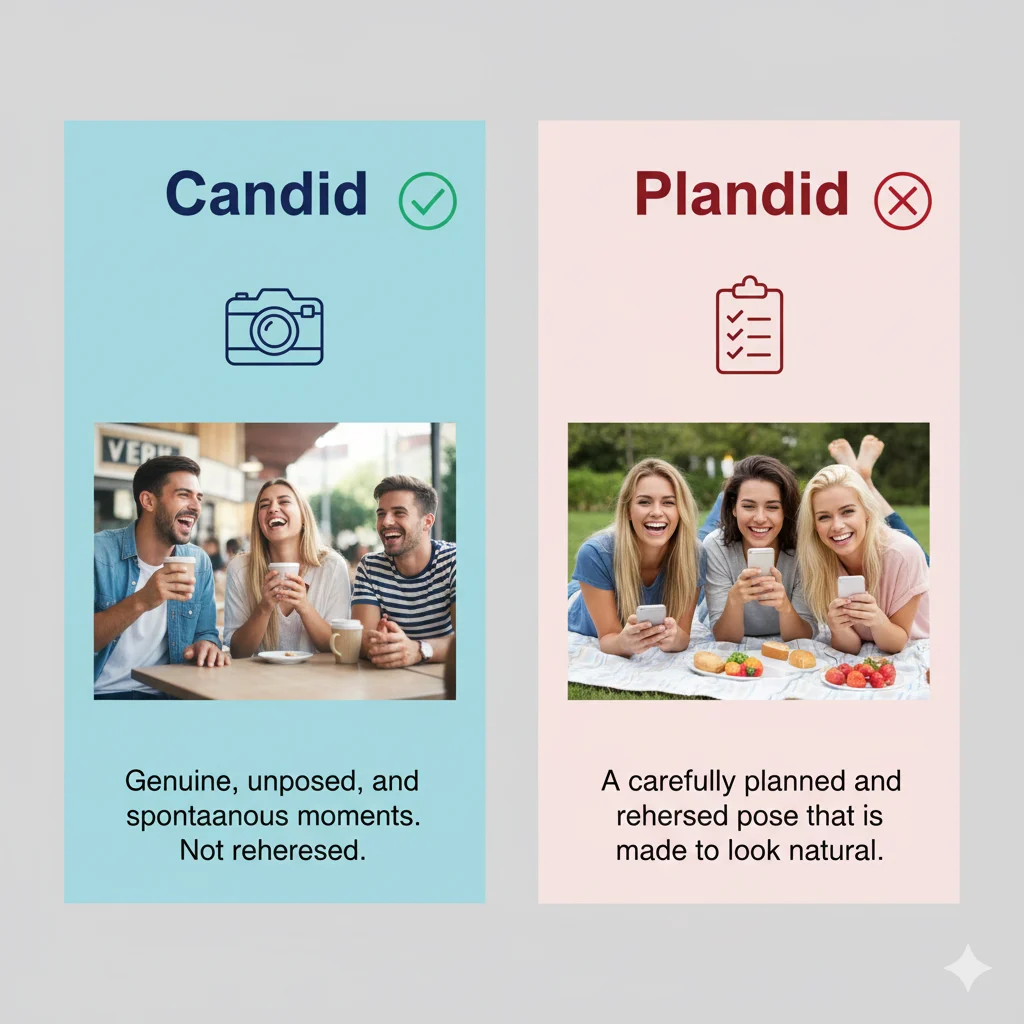
Quick Tip to Remember
- Candid = Real
- Plandid = Fake-but-cute
Or think of it like this:
Candid = caught naturally.
Plandid = posed naturally.
Plandid or Candid — Which One Should You Use?
Many people ask “plandid or candid hinge?” when they want to know which word is correct for a photo.
The answer depends on the situation.
Use candid when the photo is truly natural and the person did not know the picture was being taken. The moment happens naturally without planning.
Use plandid when the photo is planned but made to look natural. The person might pretend to laugh, look away, or walk casually so the photo appears spontaneous.
For example:
If a photographer captures someone laughing during a real conversation, that is a candid photo.
If someone says, “Wait, take my picture while I pretend to look at the sunset,” that is a plandid photo.
So when people ask “plandid or candid hinge?”, the correct choice depends on whether the moment was real or planned.
Simple rule:
Real moment → candid
Planned moment → plandid
Common Mistakes and How to Avoid Them
❌ Mistake 1: Calling a posed photo “candid.”
Incorrect:
“This is my candid selfie.”
Correct:
“This is my plandid selfie.”
Why:
Selfies are almost always planned. So they are plandid, not candid.
❌ Mistake 2: Calling a random unplanned moment “plandid.”
Incorrect:
“I took a plandid of my sister running.”
Correct:
“I took a candid of my sister running.”
Why:
Your sister didn’t pose. The moment was natural.
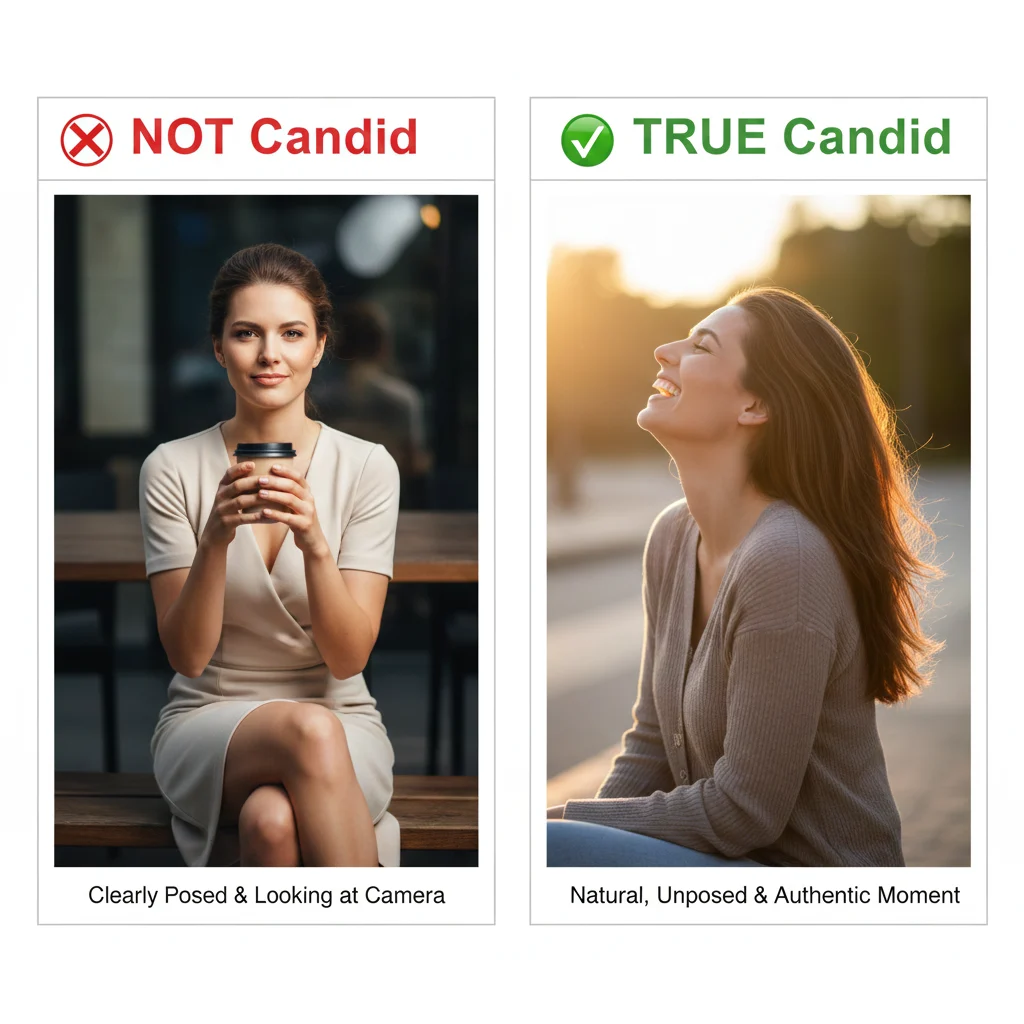
❌ Mistake 3: Thinking both words mean “natural-looking photo.”
Fact:
- Candid = natural
- Plandid = pretending to be natural
Learning this one difference solves 90% of confusion!
When to Use “Candid”
Use candid when the photo is natural, unplanned, and the person is not posing.
You should use “candid” when:
- Someone is laughing naturally
- Kids are playing freely
- A friend is busy doing something
- A moment happens on its own
- The person doesn’t know the camera is on
Example Sentences
- I love this candid moment from our family lunch.
- The photographer captured beautiful candids at the wedding.
- This candid shot shows her true personality.
- He took a candid picture of me reading a book.
- These candid photos look more real than my posed ones.
Simple Rule:
If the moment is real, it’s candid.
When to Use “Plandid”
Use plandid when the person acts natural on purpose, trying to create a “casual” look.
You should use “plandid” when:
- You pretend to look away
- You fix your hair or clothes before the shot
- You ask someone, “Take my photo when I laugh.”
- You practice a pose that looks natural
- The photo is planned to look unplanned
Example Sentences
- She posted a cute plandid while pretending to walk.
- My travel pictures are mostly plandid shots.
- This looks natural, but it’s a total plandid.
- He set up a plandid for Instagram.
- We took a plandid while acting surprised.
Memory Hack
Plandid = PLAN + CANDID
If the photo is planned → plandid.
Quick Recap: Plandid vs Candid
- Candid:
- Natural
- Unposed
- Real moment
- Plandid:
- Planned
- Posed to look natural
- Fake-but-stylish moment
- If it just happened, use candid.
- If you planned it, use plandid.
Advanced Tips
1. Word Origin
- Candid comes from Latin “candidus,” meaning “pure” or “truthful.”
- Plandid is a modern social-media slang made by combining “plan” and “candid.”
2. Formal Writing Usage
- “Candid” is acceptable in essays and professional writing.
- “Plandid” is casual slang; avoid it in academic or office writing.
3. Usage in Social Media
Candid photos feel more real and emotional, but plandids are popular among influencers who want a stylish “effortless” look.
4. Misuse in Texting
Typing “candid” instead of “plandid” can change the meaning completely, so choose carefully.
Mini Quiz: Test Yourself!
Fill in the blanks with candid or plandid:
- She didn’t know I was taking the photo, so it’s a ____________.
- He practiced the pose to look natural — a perfect ____________.
- This ____________ shot shows her real smile.
- The influencer posted a travel ____________.
- Kids make the best ____________ pictures.
- I asked my friend to take a ____________ of me looking away.
- The photographer captured beautiful ____________ moments.
(Answers: candid, plandid, candid, plandid, candid, plandid, candid)
FAQs
1. What is the main difference between plandid and candid?
A candid photo is natural and unposed. A plandid photo is planned to look natural.
2. Is “plandid” a real English word?
It’s modern slang used on social media, not a traditional dictionary word.
3. Which one is better — plandid or candid?
Both are fine. Candid is real; plandid is stylish. It depends on your purpose.
4. Can you use “plandid” in formal writing?
No. Use it only in casual or social media contexts.
5. Are selfies candid or plandid?
Most selfies are plandid because you plan, pose, and prepare them.
Conclusion
Now you clearly understand the difference between plandid and candid. One shows real, natural moments, while the other is planned to look natural. Both are fun styles of photography — you just need to use the right word at the right time.
Keep practicing these words in your captions, school writing, and daily English. The more you use them correctly, the more confident you’ll become.
You’re already improving your English — keep going!

English novelist and poet Thomas Hardy (1840–1928) explored human struggles, social constraints, and tragic love with deep realism and vivid storytelling.