Have you ever heard someone say, “There’s no rhyme or reason” and wondered what it really means? Many English learners get confused about the phrase “rhyme or reason”, mixing it up with similar-sounding words or using it incorrectly in sentences. Understanding the correct usage can make your English sound more natural and fluent.
In this article, you will learn what “rhyme or reason” truly means, how it is used in everyday English, and the common mistakes people make. We’ll explain the difference between its parts, give simple examples, and provide practical tips to remember it easily. By the end, even beginners or young learners will confidently use this phrase in writing, conversation, and exams.
What Does “Rhyme or Reason” Mean?
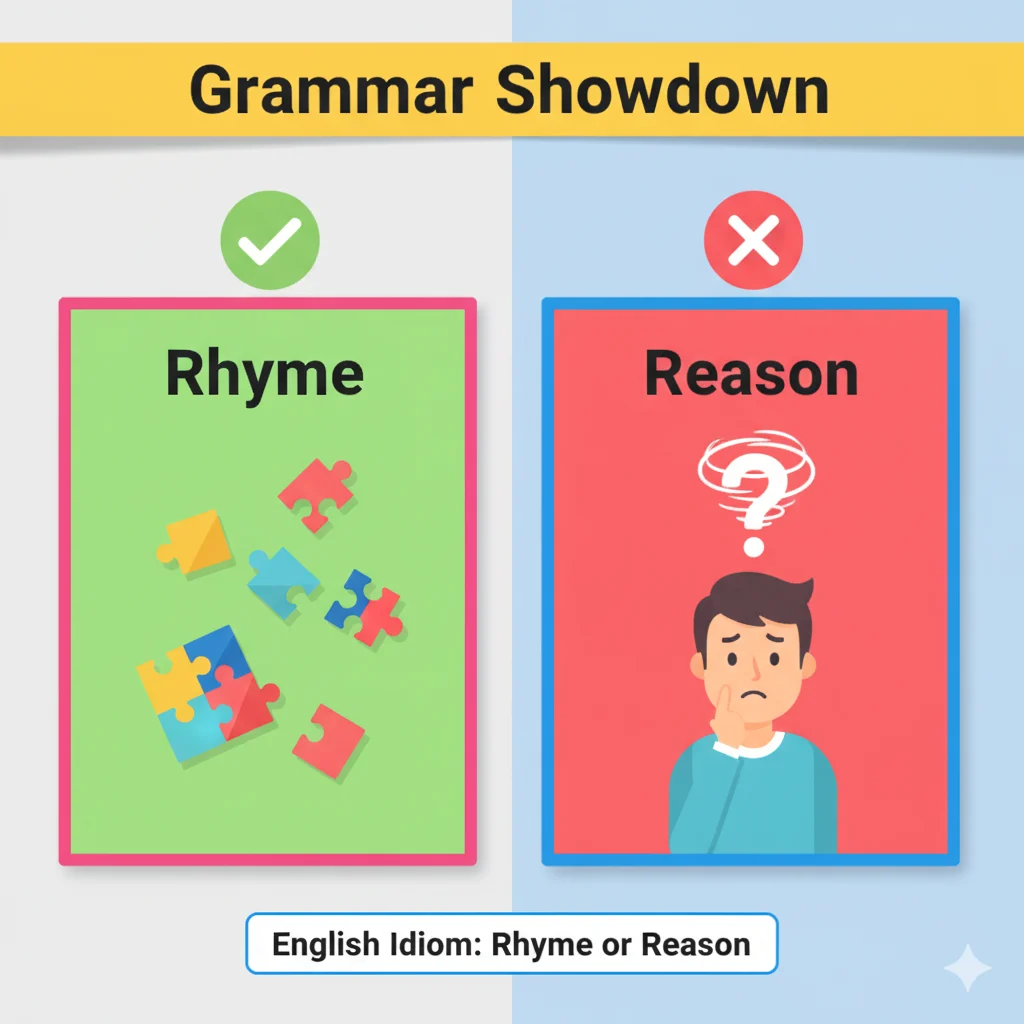
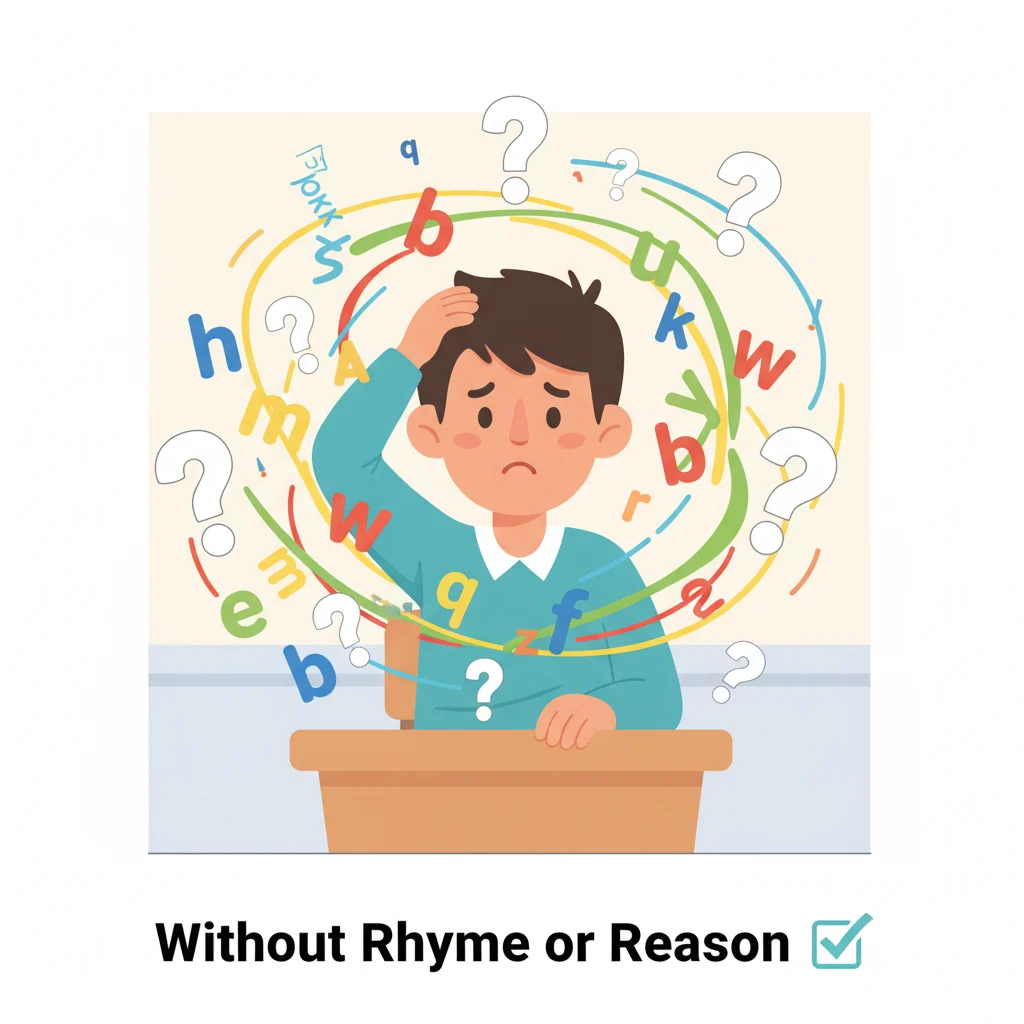
Rhyme or reason is an idiomatic phrase used to describe something that has no logical explanation or does not make sense.
- Part of Speech: Noun phrase / Idiom
- Meaning: Something that cannot be explained or justified; lacking sense or logic.
Examples of “Rhyme or Reason”
- There’s no rhyme or reason to the way he arranges his books.
- I can’t find any rhyme or reason for her sudden anger.
- The colors in this painting seem random, without rhyme or reason.
Tip: Think of it as saying something is illogical or without pattern.
The Key Difference Between “Rhyme” and “Reason”
While the phrase is used together, it’s helpful to know what each word contributes.
| Word | Meaning | Usage Example | Quick Tip |
|---|---|---|---|
| Rhyme | A similarity in sound | “The words cat and hat rhyme.” | Focuses on sound pattern, not logic. |
| Reason | A cause, explanation, or logic | “There’s a reason she is late.” | Focuses on logic or cause. |
| Rhyme or Reason | Idiom meaning: no logic or pattern | “The instructions make no rhyme or reason.” | Use it when something seems random or senseless. |
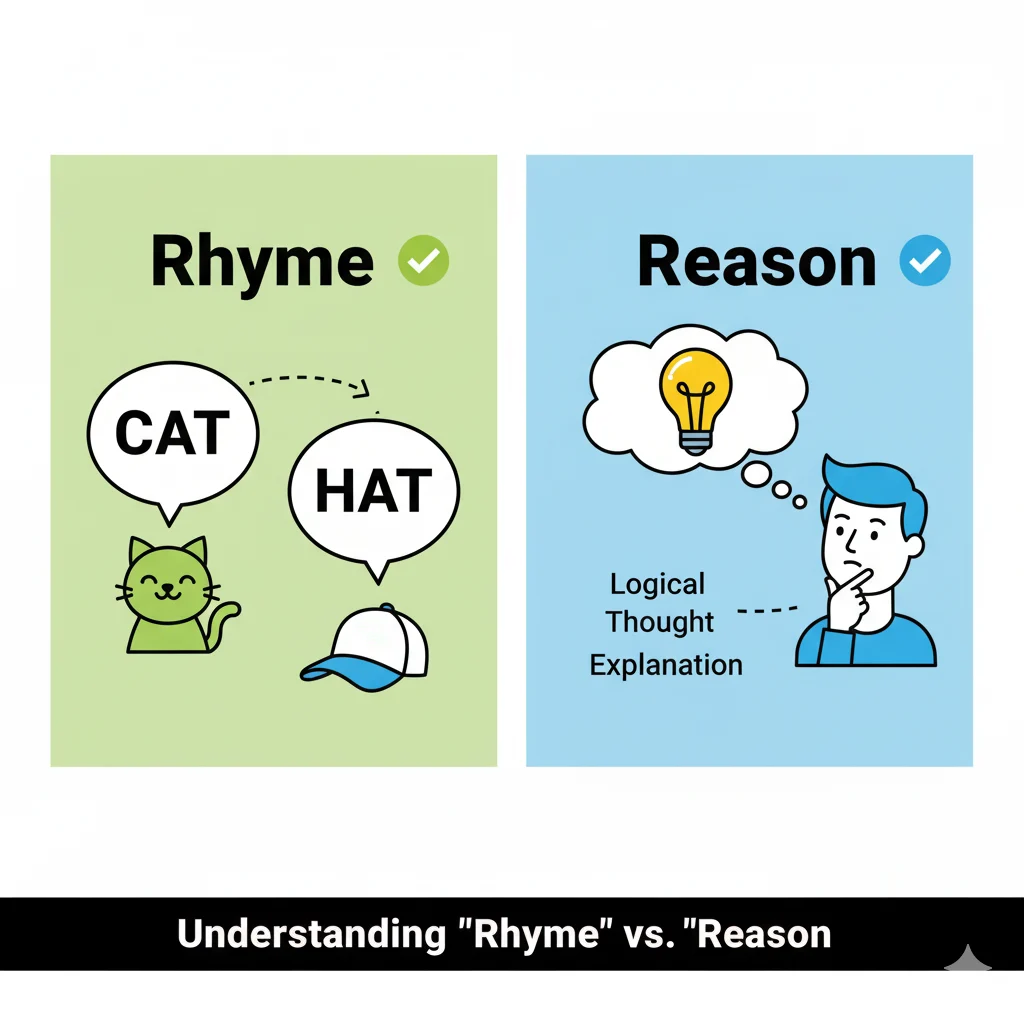
Quick Tip: If something seems random or confusing, say “no rhyme or reason.”
Common Mistakes and How to Avoid Them
Many people confuse the phrase or use it incorrectly in sentences.
Incorrect Examples
- “There’s no rhyme or reason to the rules.” ✅ Correct
- “There’s no rhyme or reasoning in this story.” ❌ Incorrect – reasoning changes the meaning.
- “The teacher explained without rhyme or reason.” ❌ Incorrect – should be “with no rhyme or reason.”
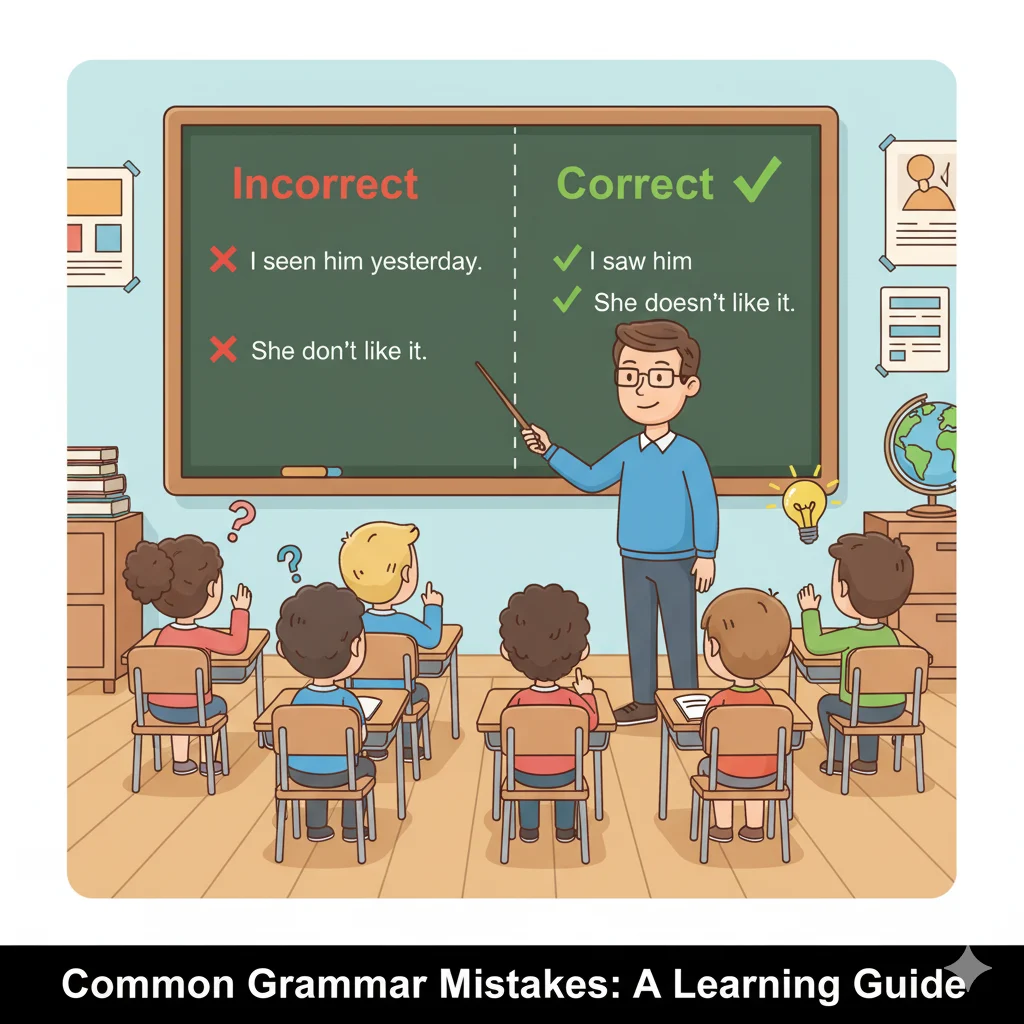
Why it happens: People try to change idioms to sound formal or logical. Idioms must stay fixed.
How to fix: Always use the phrase exactly as “rhyme or reason.”
When to Use “Rhyme or Reason”
This phrase is versatile and can be used in daily life, school, or writing when something:
- Seems random
- Lacks logic
- Cannot be explained
Example Sentences
- His sudden decision had no rhyme or reason.
- The plot of the movie has no rhyme or reason.
- Why the cat knocked over the vase has no rhyme or reason.
- The new schedule is confusing and has no rhyme or reason.
- Their selection of teams seemed random, without rhyme or reason.
Memory Hack: Imagine trying to make a poem that makes no sense—no rhyme, no reason!
Quick Recap: Rhyme or Reason
- Rhyme or reason = something that does not make sense.
- Always use the phrase together; do not change the words.
- Use it for random, confusing, or illogical situations.
- Examples: “No rhyme or reason to the seating plan,” “Her behavior has no rhyme or reason.”
Advanced Tips
- Origin: The phrase dates back to the 14th century and was originally spelled as “ryme or reason.”
- Formal Writing: Use in essays or articles to point out something without clear logic.
- Online Writing: Avoid using it incorrectly in social media posts; idioms don’t change.
Mini Quiz: Test Your Knowledge
Fill in the blanks:
- The teacher’s explanation made no ______ or ______.
- There seems to be no ______ or ______ in the way they parked the cars.
- His answer had no ______ or ______.
- Why she left early has no ______ or ______.
- The design of this website has no ______ or ______.
5 FAQs About “Rhyme or Reason”
1. What does “rhyme or reason” mean in simple words?
It means something has no logic or explanation.
2. Is “rhyme or reason” a noun or verb?
It is a noun phrase and an idiom, not a verb.
3. Can I use “rhyme or reason” in formal writing?
Yes, especially when describing something random or illogical.
4. How do I remember “rhyme or reason”?
Think: no rhyme = no pattern in sound, no reason = no logic.
5. Common mistakes to avoid?
Do not change the phrase to “reasoning” or drop a word. Always say “rhyme or reason.”
Conclusion
Understanding “rhyme or reason” is simple once you know that it describes things without logic or explanation. By remembering that it’s an idiom and using it in everyday situations like school, work, or casual conversation, you can avoid common mistakes. Practicing with real-life examples will make it natural to say and write.
English becomes easier when you understand idioms like this one. The next time something seems random, confusing, or illogical, confidently say there’s no rhyme or reason. Keep practicing, and over time, your English will sound fluent, natural, and clear.

Scottish novelist Muriel Spark (1918–2006) crafted sharp, witty stories exploring human nature, morality, and society with dark humor and insight.