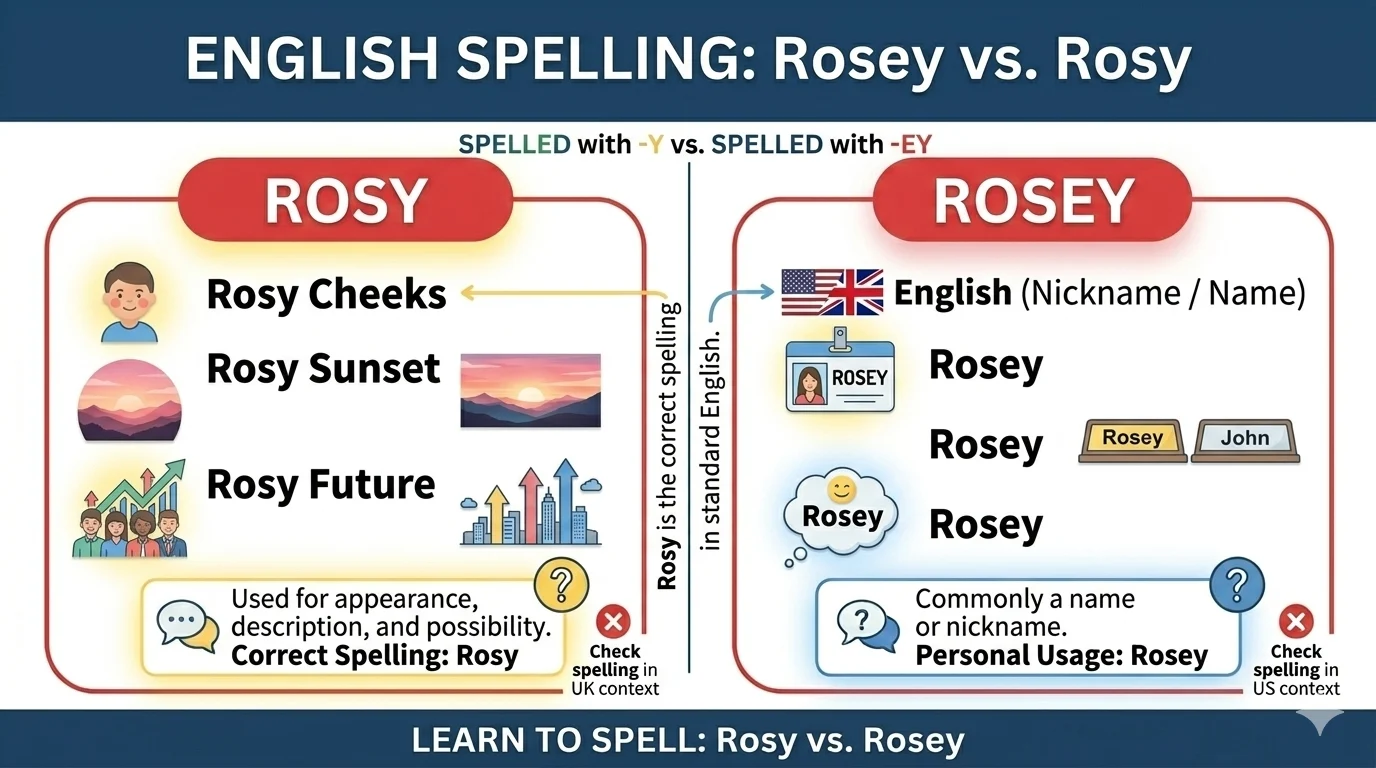
Many English learners and writers often get confused between rosey or rosy. At first glance, both spellings look correct because they sound the same when spoken. You might see both versions on social media, blogs, or even in casual conversations. Because of this, people frequently ask questions like is it rosey or rosy, rosey or rosy spelling, or rosey or rosy meaning.
The truth is that English has a clear rule about this word. One spelling is standard and widely accepted in dictionaries, while the other is usually considered informal or incorrect in normal writing. Understanding the difference between rosey and rosy will help you write more clearly and confidently.
In this easy guide, we will explain the rosey or rosy meaning, pronunciation, spelling, and correct usage. You will also see real examples like rosey or rosy cheeks, the rosey or rosy color, and questions such as Is it spelled Rosie or Rosy? or Is Rosey a girl’s name? By the end of this article, even beginners will understand which word to use and why.
Rosey or Rosy Meaning: What Does Each Word Mean?
To understand the difference, let’s first look at the meaning of each spelling.
What Does “Rosy” Mean?
The word rosy is the correct and standard spelling used in English. It is an adjective, which means it describes something.
Rosy meaning
The word rosy usually means:
- Pink in color
- Healthy-looking
- Bright and cheerful
- Positive or hopeful
The word comes from rose, the flower known for its pink and red colors. Because roses are often associated with beauty and warmth, the word rosy started being used to describe things that look pink or pleasant.
Examples of Rosy
Here are simple examples showing how rosy is used in everyday English:
- The baby had rosy cheeks after playing outside.
- The sky looked rosy during the sunset.
- She always has a rosy smile in the morning.
In these sentences, rosy describes color, health, or a cheerful appearance.
People also use rosy to describe positive situations or hopeful ideas.
Example:
- He has a rosy view of the future.
Another common phrase is life is rosy.
Life is rosy meaning
The phrase life is rosy means life feels happy, comfortable, and hopeful.
Example:
- After starting a new job, she felt life is rosy again.
However, sometimes the word is used to describe too much optimism.
What does “too rosy” mean?
If something sounds too rosy, it means it seems unrealistically positive or overly optimistic.
Example:
- The advertisement paints a too rosy picture of the product.
What Does “Rosey” Mean?
Now let’s talk about rosey.
The spelling rosey sometimes appears in writing, but it is not the standard spelling in modern English. Most dictionaries recommend using rosy instead.
So when people ask rosey or rosy in English, the correct form is usually rosy.
However, Rosey can appear in a few situations.
When Rosey is Used
- As a personal name or nickname
- As a spelling variation in informal writing
Example sentences:
- My neighbor’s nickname is Rosey.
- Some people search online for rosey or rosy spelling to check which one is correct.
- A forum discussion about rosey or rosy reddit often explains that rosy is the correct spelling.
Because both spellings sound identical, many people accidentally write rosey instead of rosy.
Rosey or Rosy Pronunciation
One big reason for confusion is pronunciation.
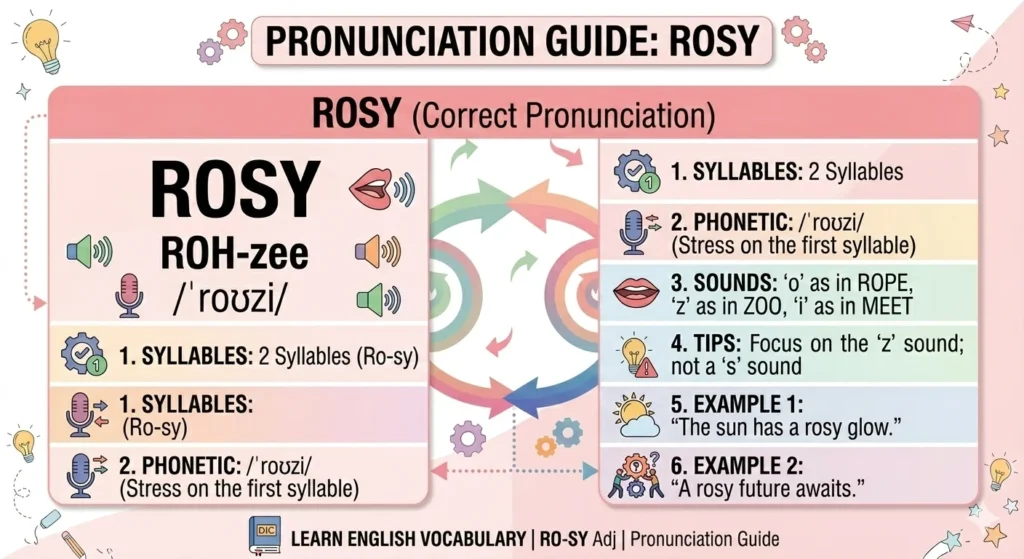
Both rosey and rosy sound exactly the same when spoken.
Rosey or Rosy pronunciation
Pronunciation:
ROH-zee
/ˈroʊzi/
Examples:
- Her rosy cheeks looked bright in the cold weather.
- The sky had a rosy color at sunrise.
Since both spellings have the same rosey or rosy pronunciation, many people mistakenly think both are equally correct.
But in proper English writing, rosy is the preferred spelling.
Difference Between Rosey and Rosy
Understanding the difference between rosey and rosy is actually very simple.
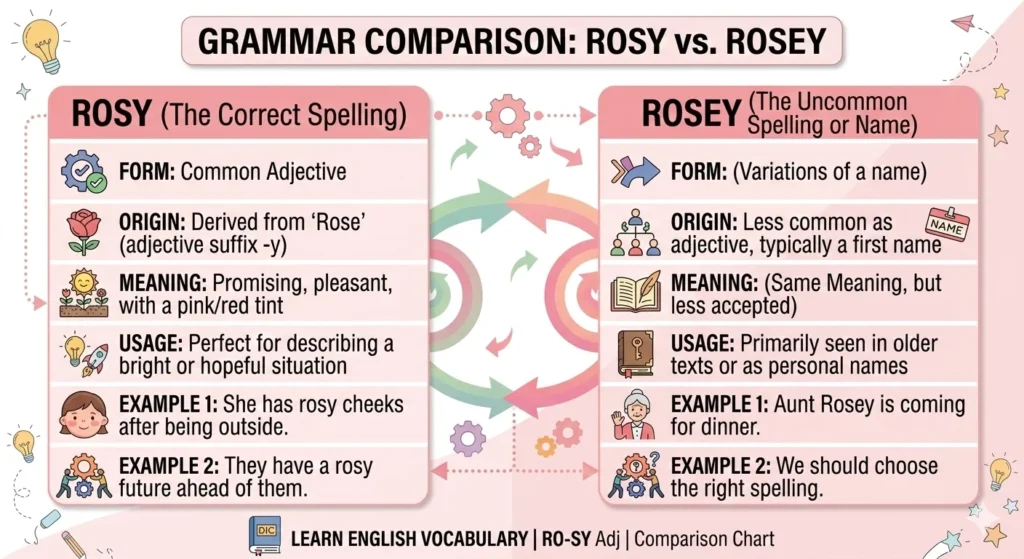
| Feature | Rosy | Rosey |
|---|---|---|
| Standard English spelling | Yes | Usually no |
| Part of speech | Adjective | Rarely used |
| Meaning | Pink, healthy, optimistic | Usually a variant or name |
| Example | Rosy cheeks | Rosey (nickname) |
| Used in formal writing | Yes | No |
Quick Tip to Remember
If the word describes color, cheeks, mood, or a hopeful future, always choose rosy.
Think of it like this:
Rose → Rosy
The word comes from the flower rose, so the correct spelling becomes rosy.
Common Mistakes When Using Rosey or Rosy
Because these words sound the same, people often make spelling mistakes.
Let’s look at some common errors and how to fix them.
Mistake 1
Incorrect:
She has rosey cheeks.
Correct:
She has rosy cheeks.
Explanation:
The correct adjective used to describe pink or healthy cheeks is rosy.
This is why many people search rosey or rosy cheeks to confirm the correct spelling.
Mistake 2
Incorrect:
The sunset had a rosey color.
Correct:
The sunset had a rosy color.
Explanation:
When describing color, English uses rosy.
That is why people often ask Is it rosey or rosy color?
The correct form is rosy color.
Mistake 3
Incorrect:
The future looks rosey.
Correct:
The future looks rosy.
Explanation:
When describing hopeful or positive situations, the correct word is rosy.
When to Use Rosy (Correct Usage)
The word rosy is commonly used in many everyday situations. It describes color, health, or positive feelings.
Here are some common ways to use rosy correctly.
1. Describing Healthy Skin
One of the most common uses of rosy is describing a healthy pink color in someone’s face.
Example sentences:
- The child had rosy cheeks after running outside.
- Winter weather gave her rosy cheeks.
- After exercise, his face looked rosy.
Because of this usage, people often search rosey or rosy cheeks online.
The correct phrase is always rosy cheeks.

2. Describing Color
The word rosy can also describe a pink or warm color.
Examples:
- The sky turned rosy at sunset.
- The room had rosy lighting.
- The flowers had a rosy shade.
If you wonder is it rosey or rosy color, the correct phrase is rosy color.
3. Describing Positive Situations
Sometimes rosy describes a hopeful or optimistic situation.
Examples:
- She has a rosy view of the future.
- The report paints a rosy picture of the company.
- Things are not always as rosy as they seem.
In these examples, rosy means positive or optimistic.
4. Describing Mood or Attitude
The word rosy can also describe someone’s mood.
Examples:
- She felt rosy and cheerful after hearing the good news.
- His rosy attitude helped the team stay motivated.
When to Use Rosey
Although rosy is the correct spelling for most situations, the spelling Rosey may appear in a few specific cases.
1. As a Personal Name
Some people use Rosey as a nickname or name.
Example:
- My aunt calls her dog Rosey.
However, the more common spelling for a name is Rosie.
This leads to another common question.
Is it spelled Rosie or Rosy?
Both exist but have different uses.
Rosie
- Usually a girl’s name
Example:
- Rosie is my sister’s name.
Rosy
- An adjective describing color or mood
Example:
- She has rosy cheeks.
Rosey or Rosy for Girl
Some people search rosey or rosy for girl when choosing a name.
In most cases, the popular girl’s name is:
Rosie
Example:
- Rosie is a cheerful and classic name.
So while Rosey might appear occasionally, Rosie is the preferred spelling for a girl’s name.
Quick Recap: Rosey or Rosy
Here is a quick summary you can remember easily.
Rosy
- Correct spelling in English
- Means pink, healthy, or hopeful
- Used to describe color, cheeks, or mood
- Example: She has rosy cheeks.
Rosey
- Rare spelling variation
- Sometimes used as a nickname or name
- Not common in standard writing
Easy Memory Trick
If you are describing something, always choose rosy.
Advanced Tips About the Word Rosy
The word rosy has been used in English for many centuries. It comes from the word rose, the famous flower that represents beauty and love.
Over time, the meaning expanded.
Originally, it described pink color. Later, people began using it to describe positive situations or hopeful feelings.
That is why modern English includes phrases like:
- rosy future
- rosy outlook
- rosy cheeks
- rosy picture
These expressions appear in books, news articles, and everyday conversations.
Rosy in Writing and Communication
In formal writing such as essays or reports, rosy often describes optimistic opinions.
Example:
- The article presents a rosy outlook for the economy.
But writers sometimes warn readers when something sounds too rosy.
Example:
- The company’s forecast seems too rosy to be realistic.
Using the word correctly can help your writing sound clearer and more professional.
Online Discussions About Rosey or Rosy
Many people discuss rosey or rosy spelling online.
For example, on language forums or rosey or rosy reddit discussions, users often ask which spelling is correct.
Most grammar experts agree that rosy is the proper spelling in modern English.
Mini Quiz: Test Your Understanding
Fill in the blanks with rosy or Rosey.
- The baby had ______ cheeks after playing outside.
- The sky looked ______ during sunset.
- My neighbor named her dog ______.
- The future seems very ______.
- She had a ______ smile in the morning.
- His plan sounds ______ optimistic.
Answers
- rosy
- rosy
- Rosey
- rosy
- rosy
- too rosy
FAQs
Is it rosey or rosy?
The correct spelling in standard English is rosy. The spelling rosey is usually considered a mistake or a personal name.
What does rosy mean?
The rosy meaning refers to something pink, healthy, cheerful, or optimistic.
Is it rosey or rosy color?
The correct phrase is rosy color.
Is Rosey a girl’s name?
Yes, Rosey can be used as a nickname or name, but Rosie is more common.
What does “life is rosy” mean?
The phrase life is rosy meaning life is happy, easy, and hopeful.
Conclusion
The difference between rosey or rosy is simple once you understand the rule. The standard and correct spelling in English is rosy, which describes pink color, healthy cheeks, or positive feelings. The spelling rosey sometimes appears as a name or informal variation, but it is not normally used in proper writing.
Whenever you talk about a rosy sunset, rosy cheeks, or a rosy future, remember to use the correct spelling. Learning small grammar differences like this can greatly improve your English writing.
Keep practicing, pay attention to spelling, and over time your English will become clearer and more confident every day.

Caribbean-born novelist Jean Rhys (1890–1979) explored alienation, identity, and female psychology with lyrical, haunting, and emotionally rich prose.