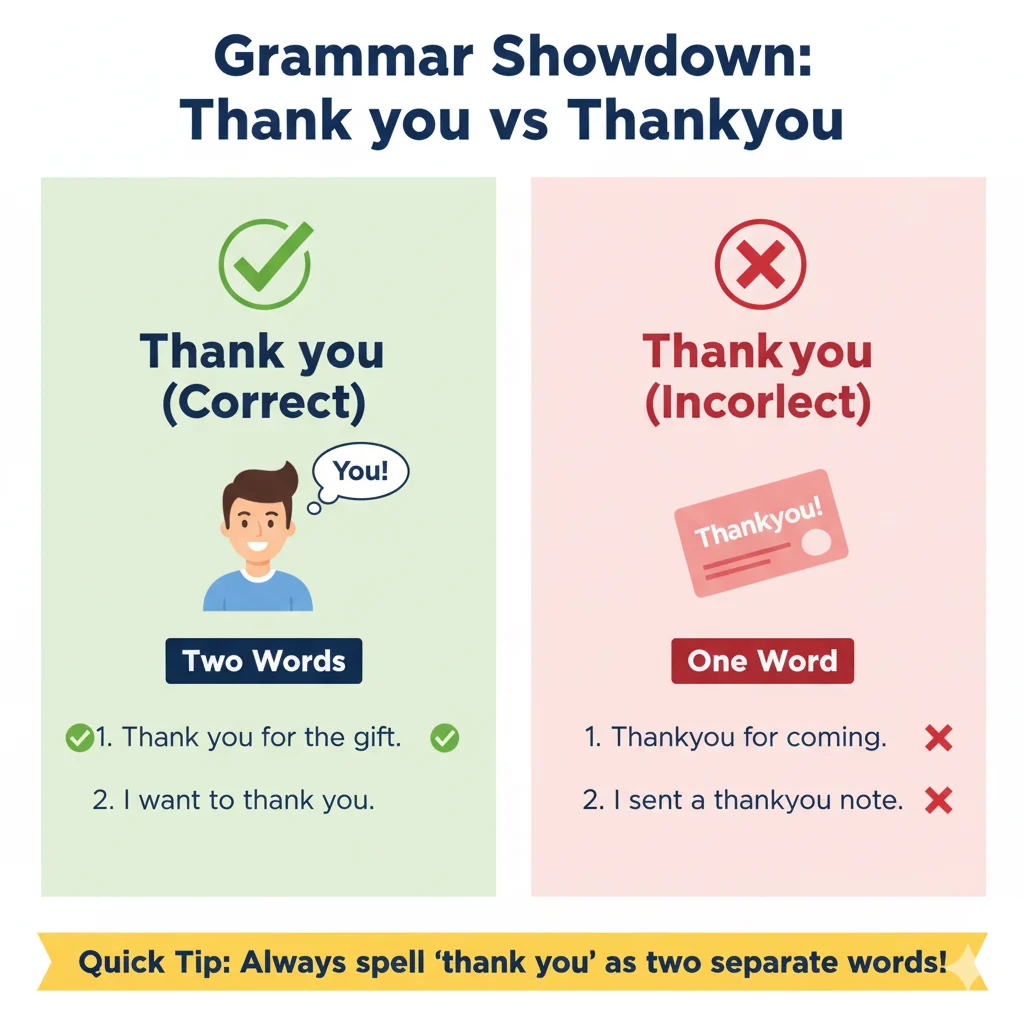
English learners and even native speakers often get confused between “thankyou” and “thank you.” You may have seen people writing “thankyou” as one word in texts, emails, or social media posts, and wondered if it’s correct. Is it one word? Two words? Does it change the meaning?
In this guide, we will explain both terms in a simple way. You’ll learn the difference between thankyou and thank you, their correct usage, and see plenty of examples to make it stick. By the end of this article, even beginners will know exactly when to use each word confidently.
We will also cover common mistakes, give easy memory tricks, and provide a mini quiz so you can practice. Writing polite and grammatically correct English has never been easier!
What Does Each Word Mean?
Thank You
Definition: “Thank you” is a polite expression used to show gratitude.
Part of speech: Phrase (verb + pronoun)
Examples:
- Thank you for helping me with my homework.
- I just wanted to say thank you for the gift.
- Thank you, Mom, for cooking my favorite meal.
Think of it as two words working together to express thanks directly.
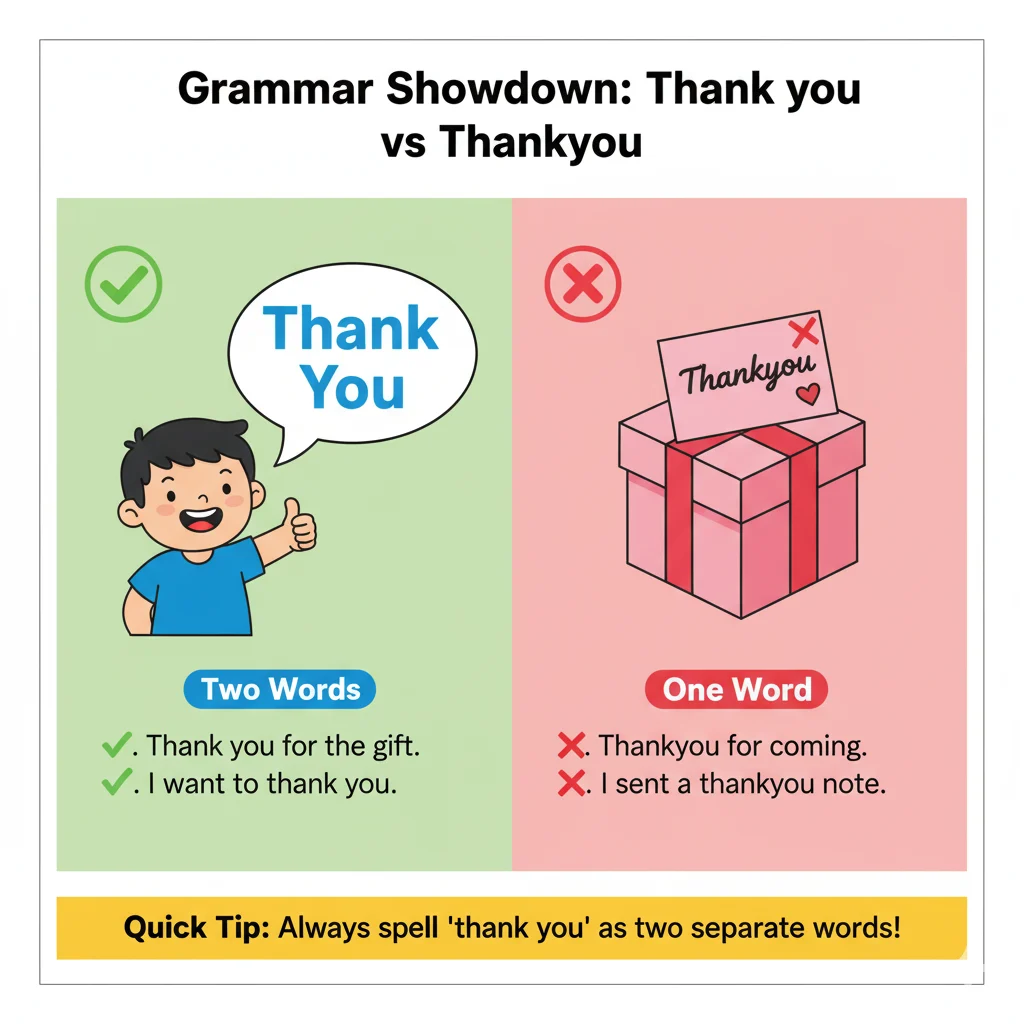
Thankyou
Definition: “Thankyou” as one word is not standard in formal English, but it sometimes appears in branding, creative writing, or casual online use. Strictly speaking, it is considered incorrect in standard grammar.
Part of speech: Not officially recognized; sometimes used as a noun in informal contexts.
Examples (informal/branding only):
- Thankyou cards are available at the store.
- I bought a Thankyou mug for my friend.
- The website’s name is ThankyouGift.com.
Remember, “thankyou” is rarely correct in regular sentences. Use “thank you” almost always.
The Key Difference Between Thankyou and Thank You
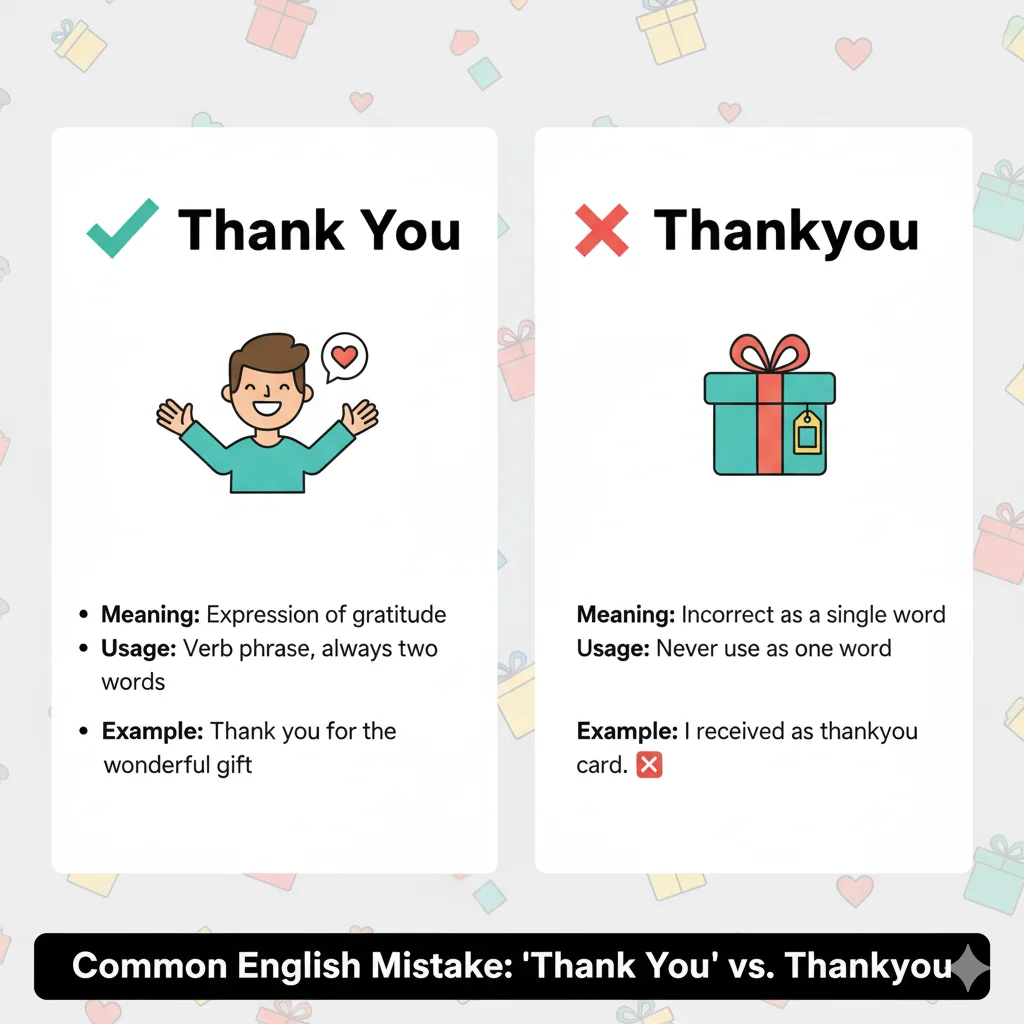
| Feature | Thank You | Thankyou |
|---|---|---|
| Meaning | Polite expression to show gratitude | Often used as a brand, product name, or informal word |
| Correct usage | Everyday conversation, emails, letters, speeches | Informal writing, creative names, product titles |
| Part of speech | Phrase | N/A (noun in branding only) |
| Example sentence | Thank you for helping me. | I bought a Thankyou card for my teacher. |
Quick Tip: If you are writing a normal sentence, always use “thank you”. Treat “thankyou” like a brand name, not grammar.
Common Mistakes and How to Avoid Them
Mistake 1: “I want to say thankyou for your help.”
Correction: “I want to say thank you for your help.”
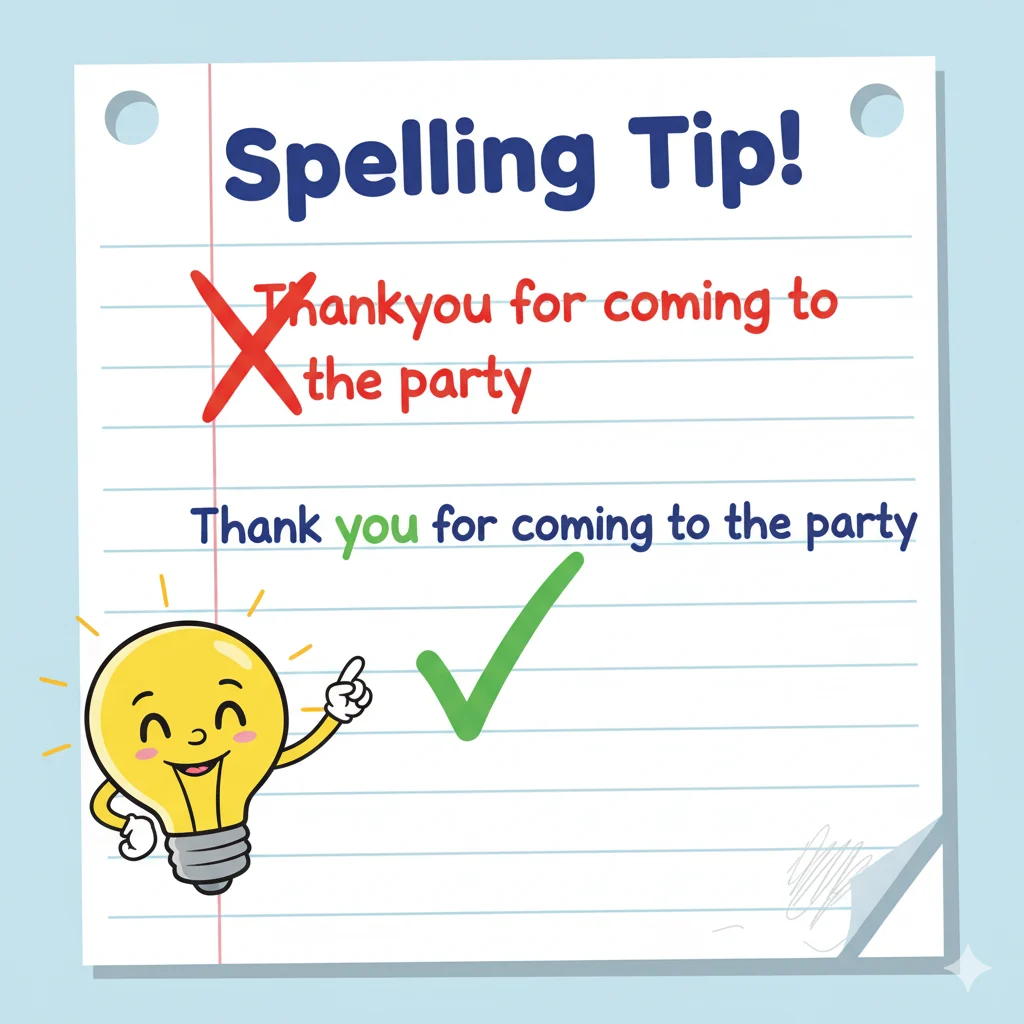
Mistake 2: “Thankyou for your time.”
Correction: “Thank you for your time.”
Why it happens: People often see “thankyou” online and think it is acceptable. The rule is simple: two words in standard writing.
Fix: Remember: anytime you are expressing thanks in a normal sentence, split the words: thank + you.
When to Use Thank You
Use “thank you” in any situation where you are showing gratitude. This includes:
- School: “Thank you for helping me with the project.”
- Daily talk: “Thank you for the ride.”
- Emails: “Thank you for your quick response.”
- Formal writing: “We would like to thank you for your attention.”
- Social media captions: “Thank you all for the birthday wishes!”
Memory hack: Imagine two people talking: you say thank, the other replies you. Two words, two people, easy to remember!
When to Use Thankyou
Use “thankyou” rarely and mostly in creative or brand contexts:
- Product names: “Thankyou Water” (a real brand).
- Cards or gifts: “Thankyou Card”
- Casual online store names or banners
Visual trick: Think of “thankyou” as one item, like a gift box. It’s not part of normal sentences—just a single object or name.
Quick Recap: Thank You vs Thankyou
- Thank you = always use for expressing gratitude in sentences
- Thankyou = only for names, brands, or creative titles
- Part of speech: “thank you” = phrase; “thankyou” = noun (informal)
- Easy memory tip: Two words = two people speaking; one word = one brand/item
Advanced Tips
- Origin: “Thank you” comes from Middle English “I thank you” meaning “I give thanks to you.”
- Formal writing: Always use thank you in essays, letters, and exams.
- Online writing: Some people combine it as “thankyou” in chats or texts, but it can look unprofessional.
Mini Quiz
Fill in the blanks:
- _____ for helping me with my homework.
- I bought a _____ card for my teacher.
- _____ for your quick reply.
- The shop sells beautiful _____ gifts.
- We would like to say _____ for your support.
(Answers: 1. Thank you, 2. Thankyou, 3. Thank you, 4. Thankyou, 5. Thank you)
FAQs
1. Is “thankyou” ever correct?
Yes, but only in brand names or creative writing, not in normal sentences.
2. Can I write “thank you” in one word in texts?
Technically, no. It’s informal but often accepted online.
3. Which is more formal?
“Thank you” is always formal and correct in professional writing.
4. How do I remember the difference?
Two words = normal gratitude. One word = brand or object.
5. Can “thankyou” be plural?
Yes, in branding or nouns: “Thankyou cards” is correct.
Conclusion
Learning the difference between thankyou and thank you is easier than it seems. Remember: two words are correct for normal sentences, while one word is mainly for brands, cards, or creative titles. With the tips and examples above, you can confidently write polite, grammatically correct English every time.
Practice using thank you in your emails, messages, and conversations. Notice when brands or creative names use thankyou. Little by little, your writing will become more professional and clear. Gratitude is a simple but powerful tool—express it correctly, and your English will shine. Keep practicing, and every day your grammar will improve!

Scottish novelist Muriel Spark (1918–2006) crafted sharp, witty stories exploring human nature, morality, and society with dark humor and insight.