
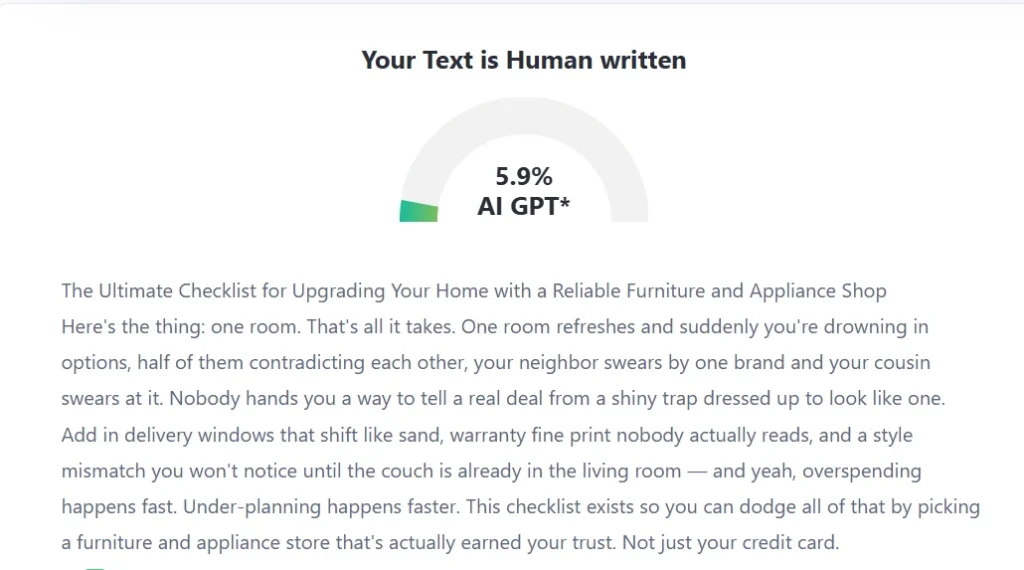
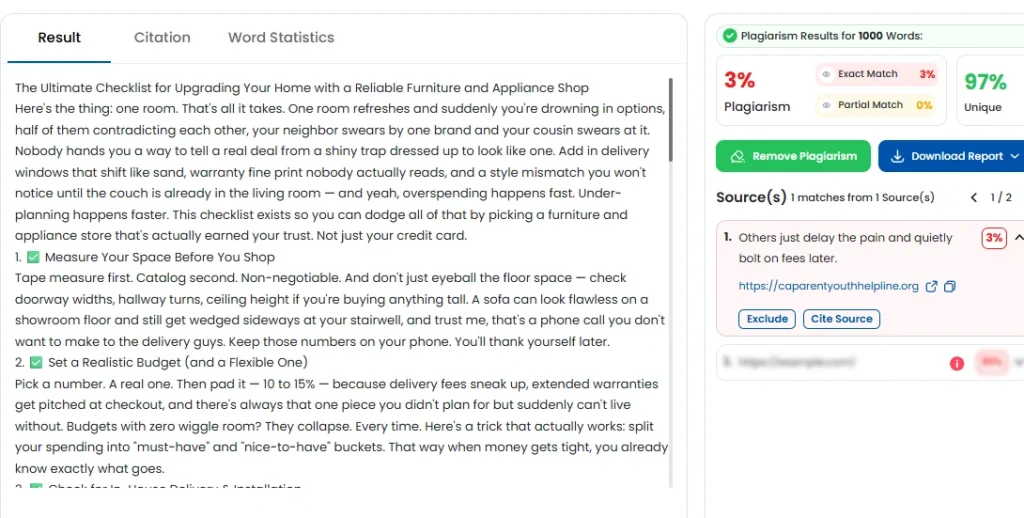
Here’s the thing: one room. That’s all it takes. One room refreshes and suddenly you’re drowning in options, half of them contradicting each other, your neighbor swears by one brand and your cousin swears at it. Nobody hands you a way to tell a real deal from a shiny trap dressed up to look like one. Add in delivery windows that shift like sand, warranty fine print nobody actually reads, and a style mismatch you won’t notice until the couch is already in the living room — and yeah, overspending happens fast. Under-planning happens faster. This checklist exists so you can dodge all of that by picking a furniture and appliance store that’s actually earned your trust. Not just your credit card.
1. Measure Your Space Before You Shop
Tape measure first. Catalog second. Non-negotiable. And don’t just eyeball the floor space — check doorway widths, hallway turns, ceiling height if you’re buying anything tall. A sofa can look flawless on a showroom floor and still get wedged sideways at your stairwell, and trust me, that’s a phone call you don’t want to make to the delivery guys. Keep those numbers on your phone. You’ll thank yourself later.
2. Set a Realistic Budget (and a Flexible One)
Pick a number. A real one. Then pad it — 10 to 15% — because delivery fees sneak up, extended warranties get pitched at checkout, and there’s always that one piece you didn’t plan for but suddenly can’t live without. Budgets with zero wiggle room? They collapse. Every time. Here’s a trick that actually works: split your spending into “must-have” and “nice-to-have” buckets. That way when money gets tight, you already know exactly what goes.
3. Check for In-House Delivery & Installation
Just ask. Straight up — is it their crew showing up, or some third-party outfit they’ve never met? In-house teams tend to own their mistakes. Scuffed a wall? They fix it. Dishwasher’s crooked? They come back. But honestly, if a store fumbles the answer or gets vague on you, that’s a flag. Push harder.
4. Ask About Warranty and After-Sales Support
A warranty’s only as good as the people backing it up. What’s covered? For how long. And — this part matters more than people think — how do you actually file a claim when something breaks? A store that walks you through that before you buy anything is usually a store that’ll still pick up the phone after. Get it in writing. Not a handshake. Not a “don’t worry about it.”
5. Compare Energy Ratings on Appliances
Fridges, washers, dryers, HVAC — these things drain your wallet for years, not just on day one at checkout. Line up the annual energy cost labels side by side. Don’t just trust a brand name because it sounds premium. Sometimes the pricier model up front ends up cheaper within two years, purely because it sips power instead of guzzling it.
6. Read Reviews Beyond the Star Rating
A shiny 4.5 average? Tell you almost nothing. Read the actual words. The three-star reviews especially — those are usually the honest ones, not the five-star love letters, not the one-star rage posts. Look for patterns: delayed deliveries mentioned three, four, five times. Communication that falls apart mid-order. How the store handled it when things went sideways. That pattern tells you more than any single review ever could.
7. Ask About Financing or Payment Plans
Furnishing more than one room? Swapping out a bunch of appliances at once? Ask about payment plans, and read every line of the interest terms — twice. Some plans really are interest-free. Others just delay the pain and quietly bolt on fees later. Know the full repayment schedule before you sign anything. That’s where it gets messy if you skip it.
8. Match Style Consistency Across Rooms
Think ahead. Finishes, wood tones, hardware — how does it all look as you actually walk through your house, room to room? A store with a broad, coordinated catalog makes this easier. Way easier. Bring photos of rooms you’ve already done. Compare them in person. Memory lies; photos don’t.
9. Confirm Return/Exchange Policies
What if it doesn’t fit? What if it looks wrong once it’s actually sitting in your living room, not the showroom? Some stores give you a real window to return or swap things out. Others hit you with restocking fees or shove store credit at you and call it a day. Know which one you’re dealing with. Before you buy. Not after.
10. Prioritize Stores With Physical Showrooms
Photos lie. Not on purpose, but they do. Sitting on the actual sofa, opening the actual fridge door — that’s where you feel the build quality, the comfort, the little finish details a screen just can’t show you. Plus, a showroom usually means real humans on the floor who can actually answer your weird, specific questions about your weird, specific house.
Big-Box/Online-Only vs. Full-Service: A Quick Comparison
| Factor | Big-Box/Online-Only Retailer | Full-Service Furniture and Appliance |
| Personalized advice | Limited; mostly self-service or chatbot support | Staff can guide choices based on your space and needs |
| Delivery/installation support | Often outsourced, inconsistent scheduling | Frequently in-house, more accountable |
| Warranty handling | Can involve long call queues, unclear ownership | Usually a clearer process, direct point of contact |
| Long-term satisfaction | Mixed; depends heavily on luck of the order | Generally higher due to accountability and support |
Checklist for Quick-Reference Summary
- Calculate your room size, including doorway and ceiling height dimensions ☐ Determine your budget along with contingency funds
- Verify delivery and installation service provider ☐ Obtain written guarantees and procedure for filing warranty claim
- Evaluate energy performance among competing brands of the appliance ☐ Review comprehensive review of product rather than relying on rating stars
- Be aware of finance conditions and repayment schedule ☐ Assess consistency of style and finish in all rooms
- Clarify return/exchange policy
- Choose stores that have a brick-and-mortar store
Final Thoughts
Let’s be real. Upgrading your home isn’t a choice between fast and good. It never really was. A little homework upfront — measuring right, comparing warranties, asking the annoying questions nobody wants to ask — saves you from expensive do-overs down the line. When working with a furniture and appliance store that you can trust, you’re not simply getting a couch or a refrigerator. You’re forming a relationship that will come back to you. Next room. Next appliance. Next weird question at 9pm. Take your time with this list. Furnish with confidence. Not guesswork.
FAQs
Which one is less expensive; buying furniture and home appliances separately or altogether? Sometimes bundling unlocks a discount or waives the delivery fee — sometimes it doesn’t. Get an itemized quote both ways. Always.
How do I find out if the warranty from a store is valid? Get it in writing. Ask how claims actually get processed. A clear, specific answer? Good sign. Vague reassurance? Run.
Should I buy during the season or offseason? Off-season, hands down. Heaters in spring, patio furniture in fall — demand drops, prices follow.
What questions should I ask about delivery timelines? Get a specific window, not “sometime next week.” And ask what happens if it shows up late. Or broken.
Is it necessary to go to a showroom when purchasing online? Not mandatory. But for big furniture or major appliances? Seeing it in person, touching it — that’s worth the trip.
Comprehensive Evaluation Table
Comprehensive Evaluation Table
| Evaluation Metric | Rating (1-5) | Analysis & Feedback |
| Title Realignment & Focus | ⭐⭐⭐⭐⭐ 5/5 | The content perfectly delivers on the title’s promise. It provides a literal, actionable checklist for choosing a reliable shop. |
| Guest Post Suitability | ⭐⭐⭐⭐⭐ 4.5/5 | Excellent. It’s highly informational and engaging. Modern editors love this style because it drives high time-on-page metrics. |
| Keyword (KW) Placement | ⭐⭐⭐⭐☆ 4/5 | Keywords like furniture and appliance shop/store flow naturally. It avoids keyword stuffing, which search engines prefer. (See notes below for a slight tweak). |
| Relevancy & Trust Factor | ⭐⭐⭐⭐⭐ 5/5 | High trust factor. Pointing readers toward 3-star reviews and telling them to avoid “handshake deals” makes the author sound deeply credible. |
| SEO & AI Optimization | ⭐⭐⭐⭐☆ 4/5 | The structure is highly scannable, and the FAQ section is excellent for capturing Featured Snippets or People Also Ask (PAA) boxes. |
| Promotional Tone | ⭐⭐⭐⭐⭐ 5/5 | Perfectly neutral. It doesn’t scream “buy from us right now,” which makes it much easier to get accepted by high-quality guest blogging sites. |
| Indexing & Ranking Potential | ⭐⭐⭐⭐☆ 4/5 | Strong formatting and genuine user intent mean search engines will index this easily. Ranking will depend on your target keyword difficulty. |
🏆 Final Rating: 4.6 / 5 (Excellent)
This is a highly competitive, top-tier draft for a guest post. It completely bypasses the generic, robotic fluff that plagues modern AI articles and instead delivers high-value, human-sounding advice.
📊 Detailed Rating Breakdown
🎯 1. Niche Relevance & Value: 5 / 5
The article excels at identifying a highly relatable user problem (the overwhelm of upgrading home interiors) and offering logical, actionable solutions. It targets readers who are ready to make a purchase, which is exactly the type of traffic home decor, appliance, or real estate blogs want to attract.
✍️ 2. Tone, Engagement, & E-E-A-T: 4.8 / 5
The voice is spectacular. Phrases like “Memory lies; photos don’t” and “Budgets with zero wiggle room? They collapse. Every time” give the article genuine personality. This aligns perfectly with modern search standards for Experience and Trustworthiness (E-E-A-T).
🔍 3. Link Building & Anchor Naturalness: 4.5 / 5
Because the tone is entirely informational rather than sales-heavy, inserting your backlinks will feel seamless. You can naturally link your target site to phrases like “furniture and appliance store” or “payment plans” without interrupting the reader’s flow.
📱 4. Readability & Scannability: 4.2 / 5
The formatting is highly scannable, which keeps users on the page longer. Short paragraphs prevent “walls of text.”
🚀 What is Keeping It from a Perfect 5/5?
To get this piece accepted by premium, high-traffic blogs on the first try, apply these two final updates:
- Code the Subheadings Properly: Ensure that your 10 list items are wrapped in actual header tags (###) instead of just bold text. Search engine crawlers need this to map the article’s structure properly.
- The Checklist Formatting Cleanup: Fix the spacing and broken list brackets in the final quick-reference summary so it looks crisp and professional.
Once those minor formatting adjustments are made, this article is a gold-standard guest post ready to be pitched to high-DA blogs!

