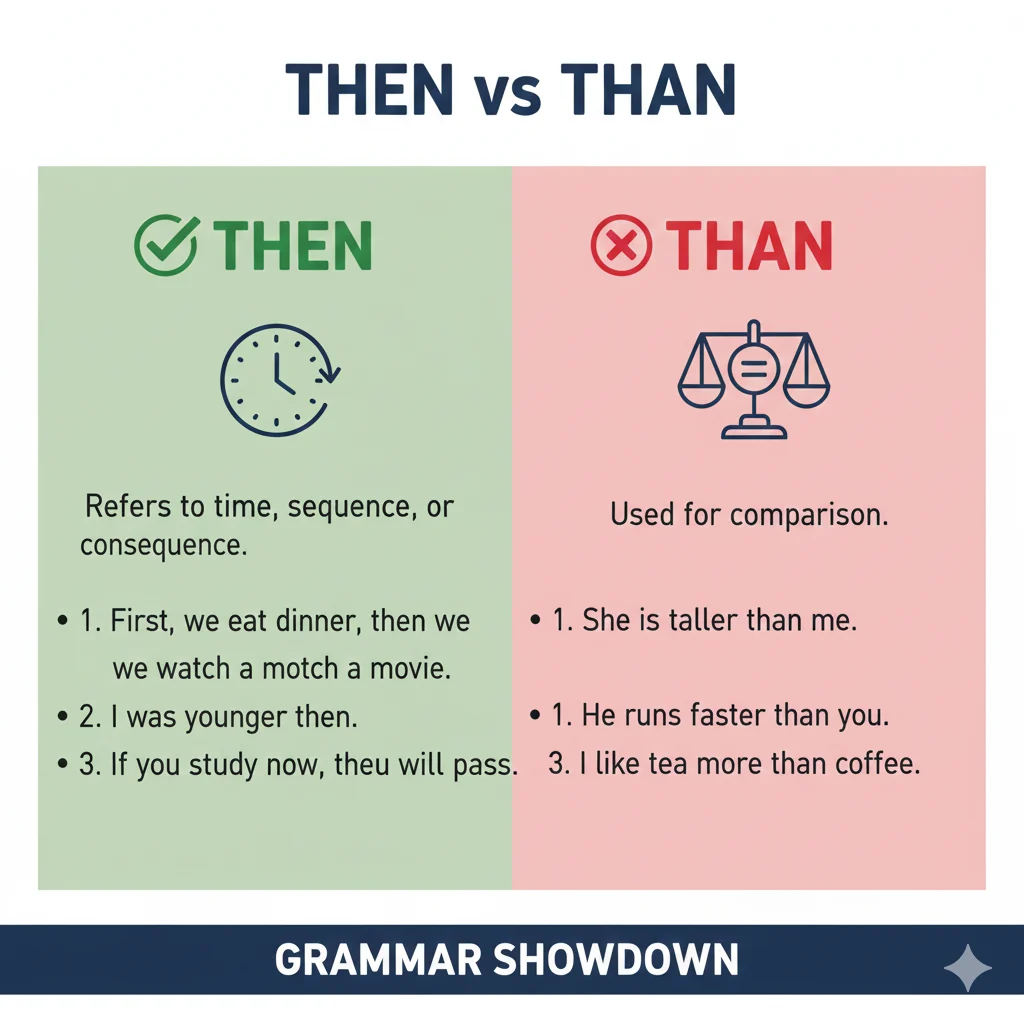
Many people often mix up “then” and “than” in English. Even native speakers sometimes make this mistake! While they sound a little similar, their meanings and uses are completely different. Using the wrong word can make a sentence confusing or grammatically incorrect.
In this simple guide, we will explain what then and than mean, how they differ, and how to use them correctly in everyday sentences. You’ll also get easy-to-remember tips, clear examples, and practical tricks to avoid mistakes.
Whether you are writing an essay, texting a friend, or doing school homework, this guide will make it easy to know when to use then and when to use than. By the end, you’ll feel confident using both words correctly in any situation.
What Does Each Word Mean?
Then
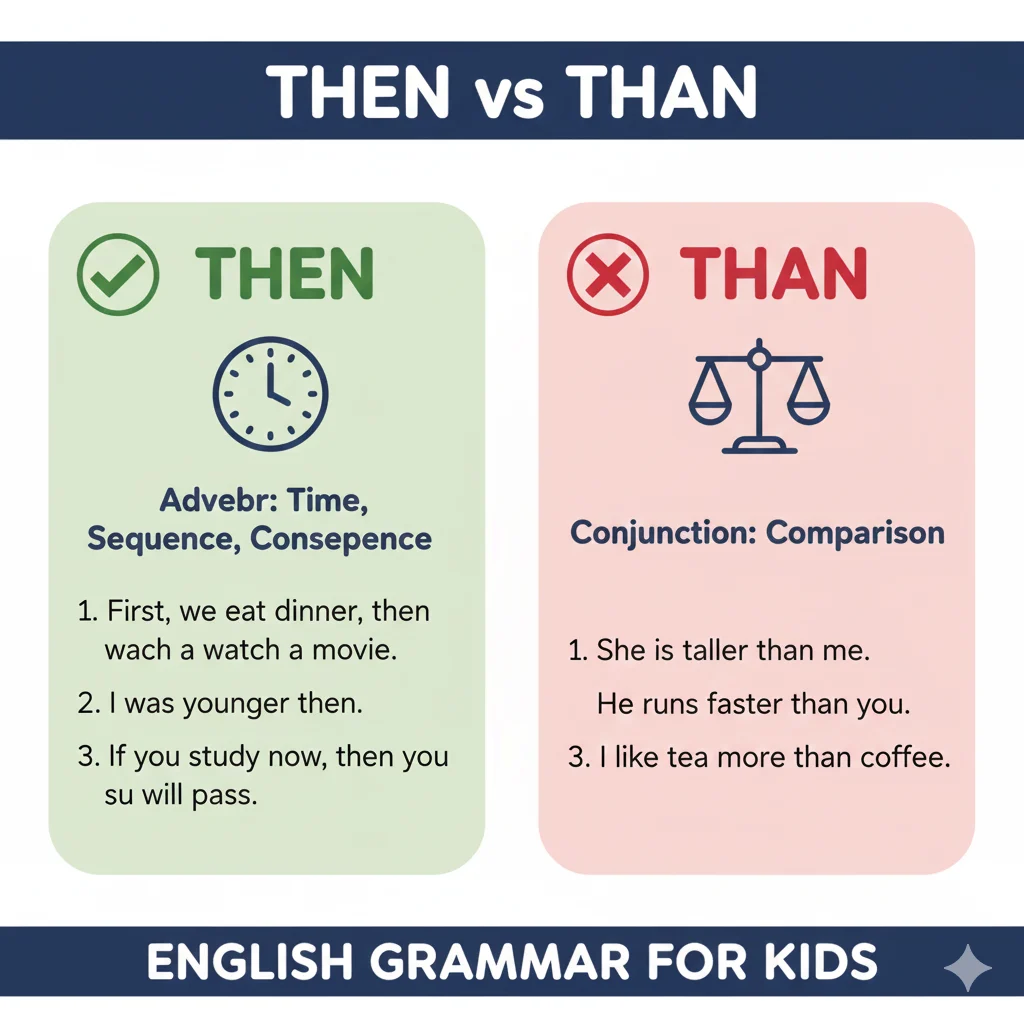
Meaning: “Then” usually refers to time, a sequence of events, or a result. It tells when something happens.
Part of Speech: Adverb, sometimes adjective or noun.
Examples:
- I finished my homework, then I went to play outside.
- If it rains, then we will stay indoors.
- Back then, I didn’t know how to ride a bike.
Memory Tip: Think of “then” as time-related or a sequence word. It often answers the question: “What happens next?”
Than
Meaning: “Than” is used for comparisons. It shows that one thing is different from or better/worse than another.
Part of Speech: Conjunction.
Examples:
- My bag is bigger than yours.
- She runs faster than her brother.
- This pizza tastes better than the one we had yesterday.
Memory Tip: Remember “than” is for comparisons — it answers the question: “Which one?”
The Key Difference Between Then and Than
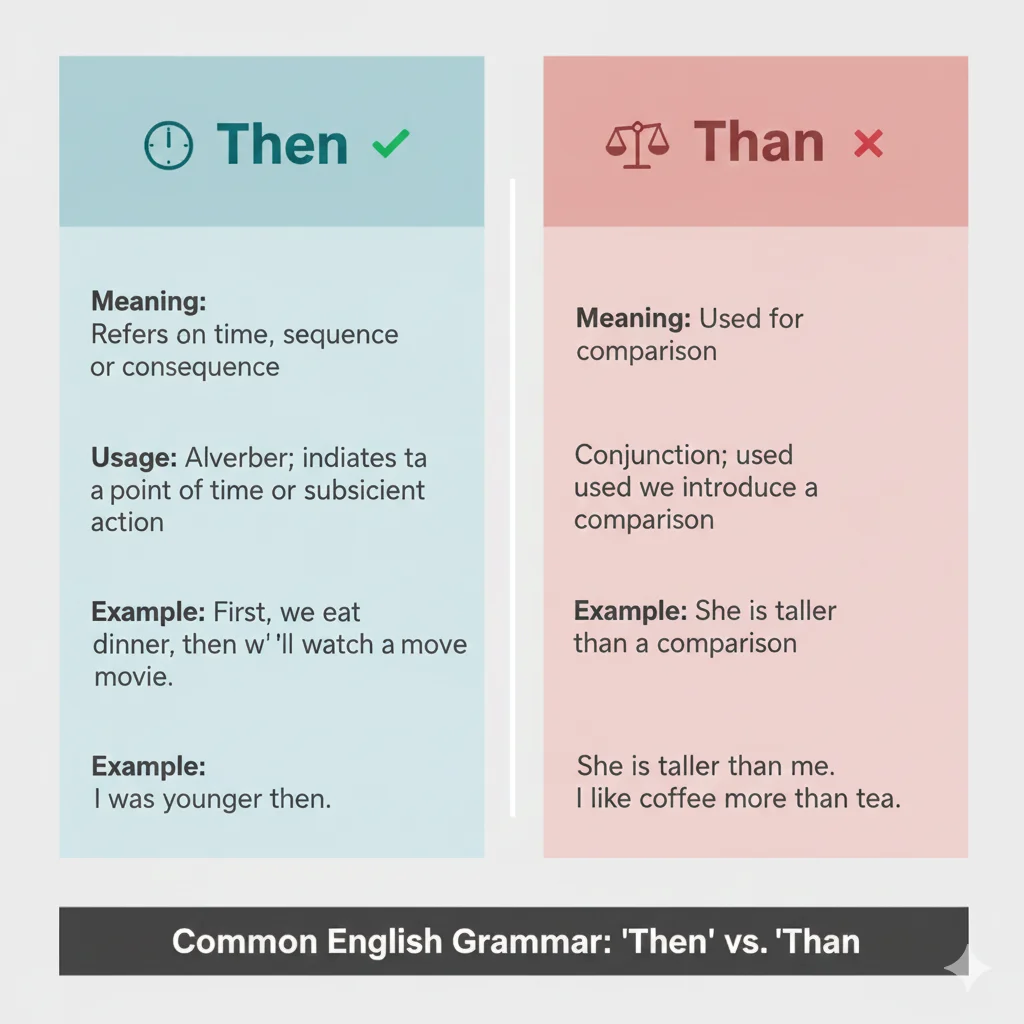
| Word | Meaning | Usage | Example Sentence |
|---|---|---|---|
| Then | Refers to time or sequence | After, next, therefore | I ate breakfast, then went to school. |
| Than | Shows comparison between things | Comparing two items | She is taller than her sister. |
Quick Tip: If you’re talking about time, use then. If you’re making a comparison, use than.
Common Mistakes and How to Avoid Them
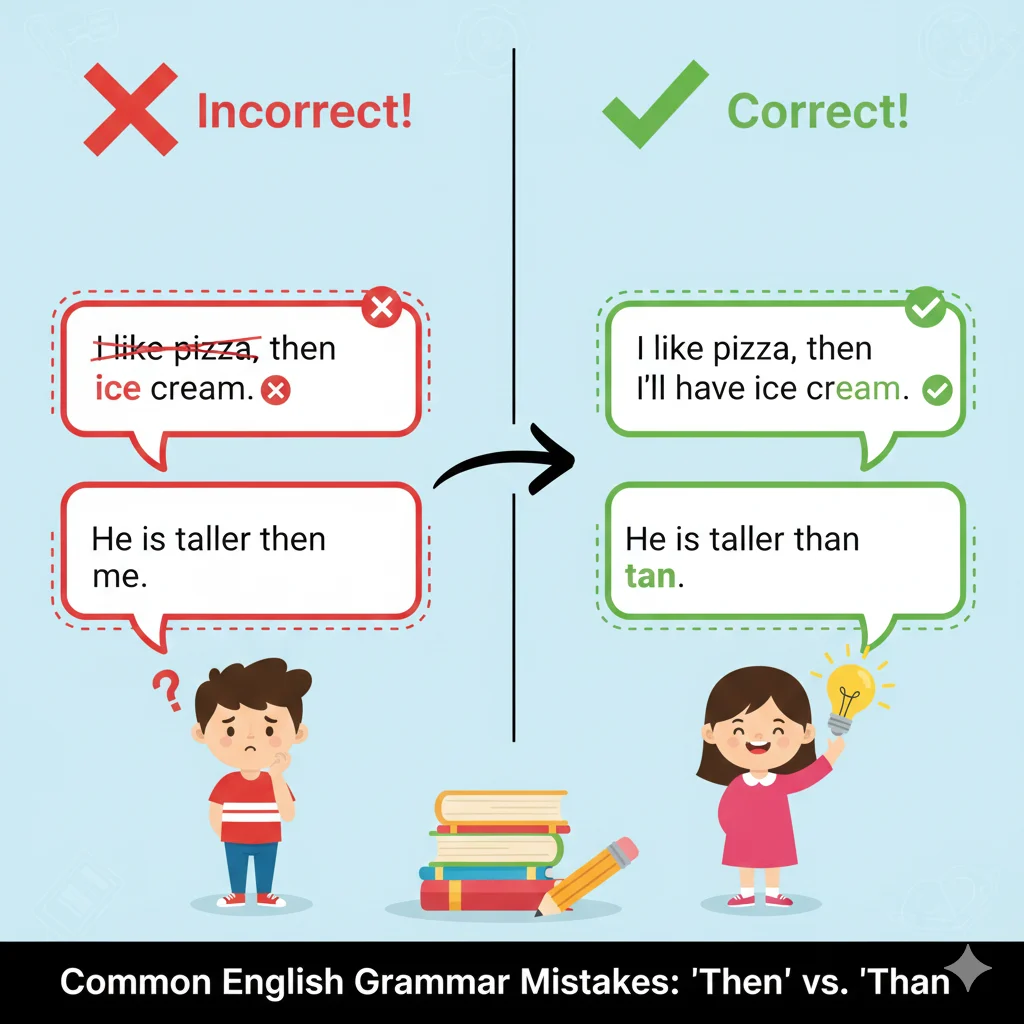
- Incorrect: I am taller then my brother.
Correct: I am taller than my brother.
Why: Comparison needs than, not a time-related word. - Incorrect: We went to the park, than played football.
Correct: We went to the park, then played football.
Why: Sequence of events needs then, not comparison. - Incorrect: She is more beautiful then her friend.
Correct: She is more beautiful than her friend.
Why: Comparing beauty — use than.
Tip to Avoid Mistakes: Always ask yourself: Is this about time/sequence or comparison?
When to Use Then
Use then in situations involving:
- Time or sequence
- Cause and effect
- Conditional statements
Examples:
- Finish your homework, then you can watch TV.
- If it’s sunny, then we will have a picnic.
- I was nervous back then, but now I feel confident.
- First, we went shopping, then we had lunch.
- She studied hard, and then she passed the exam.
Real-life Tip: Think of “then” as “what happens next?” in your story or day.
When to Use Than
Use than when you are:
- Comparing two things
- Highlighting differences
- Talking about preferences
Examples:
- My phone is more expensive than yours.
- He is stronger than his teammate.
- Summer is hotter than winter.
- I would rather read a book than watch TV.
- She sings better than anyone in the class.
Memory Hack: Imagine a scale: if you are weighing two things, you need than.
Quick Recap: Then vs Than
- Then = Time, sequence, or result. Think: what happens next?
- Than = Comparison between two items. Think: which one?
- Quick Tip: Sequence = then | Comparison = than
- Common mistake: Mixing the two in writing. Always check the meaning.
Advanced Tips
- Origin: “Then” comes from Old English þanne, meaning at that time. “Than” comes from Old English þanne, used in comparisons. They share roots but evolved differently.
- Formal Writing: Use correctly in essays, exams, or professional emails. Misusing them can change meaning.
- Online Writing: Avoid autocorrect errors. “Then” in place of “than” in text messages can confuse readers.
Mini Quiz: Fill in the Blanks
- I will call you, and ______ we can go to the park.
- She is smarter ______ her brother.
- First, we went shopping, ______ had lunch.
- This book is better ______ the one I read last week.
- If it rains, ______ we will stay home.
- He is taller ______ anyone in his class.
- Finish your homework, ______ you can play outside.
(Answers: 1-then, 2-than, 3-then, 4-than, 5-then, 6-than, 7-then)
FAQs
1. Can I use “then” for comparison?
No. “Then” is for time or sequence. Use “than” for comparisons.
2. Is “than” ever used as an adverb?
No, “than” is always used as a conjunction for comparisons.
3. Can I say “back then” in informal writing?
Yes. “Back then” is a common phrase to refer to past time.
4. How do I remember which word to use?
Ask yourself: Is it about time/sequence (then) or comparison (than)?
5. Do native speakers confuse “then” and “than”?
Yes, it’s a common mistake even for native English speakers.
Conclusion
Now you know the difference between then and than, and how to use each correctly. Remember: then is all about time, sequence, or cause and effect, while than is used for comparisons. Using them properly makes your sentences clear and professional.
Practice by reading examples, writing your own sentences, and checking your work carefully. The more you use these words in everyday conversations and writing, the easier it becomes to remember the rules.
Every small effort improves your English, and soon you’ll be confident spotting the difference between then vs than every time. Keep practicing, and enjoy learning!

Scottish novelist Muriel Spark (1918–2006) crafted sharp, witty stories exploring human nature, morality, and society with dark humor and insight.