English learners often get confused between traveled and travelled. Both words mean the same thing — the past tense of travel — but the spelling differs depending on whether you are using American English or British English. This confusion happens because the words sound exactly the same, and many people mix them up in writing. Using the wrong spelling can make your essays, emails, or stories look less professional, especially in school or work.
In this article, you will learn what traveled and travelled mean, when to use each word, and how to avoid common mistakes. With easy explanations, real-life examples, short stories, and memory tips, this guide will help you understand the difference clearly. By the end, you’ll be able to use these words confidently in any situation — from homework to emails to social media posts.
What Does Each Word Mean?
Traveled
Traveled is the American English spelling of the past tense and past participle of the verb travel. It describes someone who went from one place to another.
Part of Speech: Verb (past tense)
Simple Examples:
- I traveled to New York last summer to visit my cousins.
- She traveled across the country by train and loved the scenery.
- They traveled for two weeks during the holiday season.
Mini Story Example:
Tom wanted to see the Grand Canyon. He packed his backpack, booked a flight, and traveled there last summer.
Think of traveled as the spelling you will see in American books, newspapers, and emails.
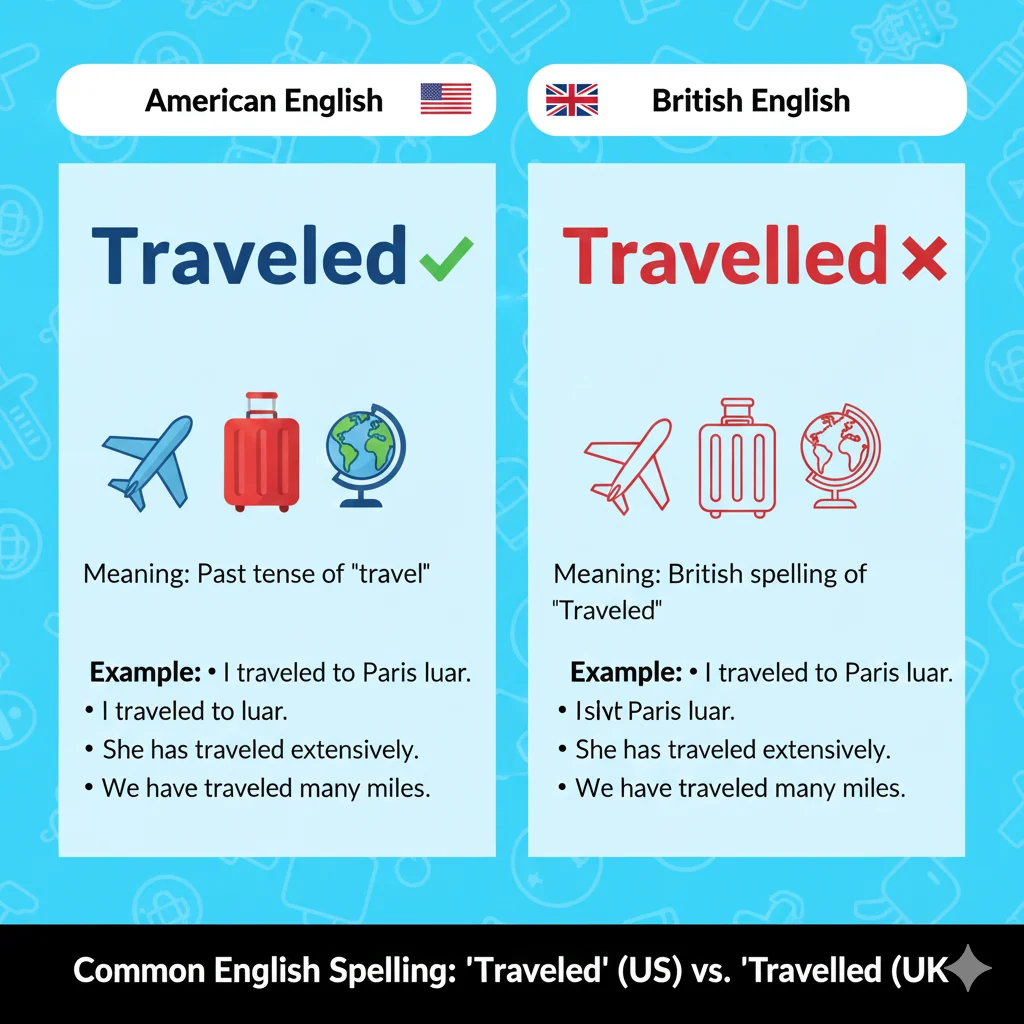
Travelled
Travelled is the British English spelling of the past tense and past participle of travel. It is used in the same way but follows UK spelling rules.
Part of Speech: Verb (past tense)
Simple Examples:
- I travelled to London last year to see Big Ben.
- He has travelled to many countries in Europe for work.
- We travelled by bus to the countryside during our vacation.
Mini Story Example:
Sophie loved exploring new places. Last summer, she travelled to France with her family and enjoyed tasting French pastries.
Memory Trick: The double “l” in travelled is a helpful clue that it is British English.
The Key Difference Between Traveled and Travelled
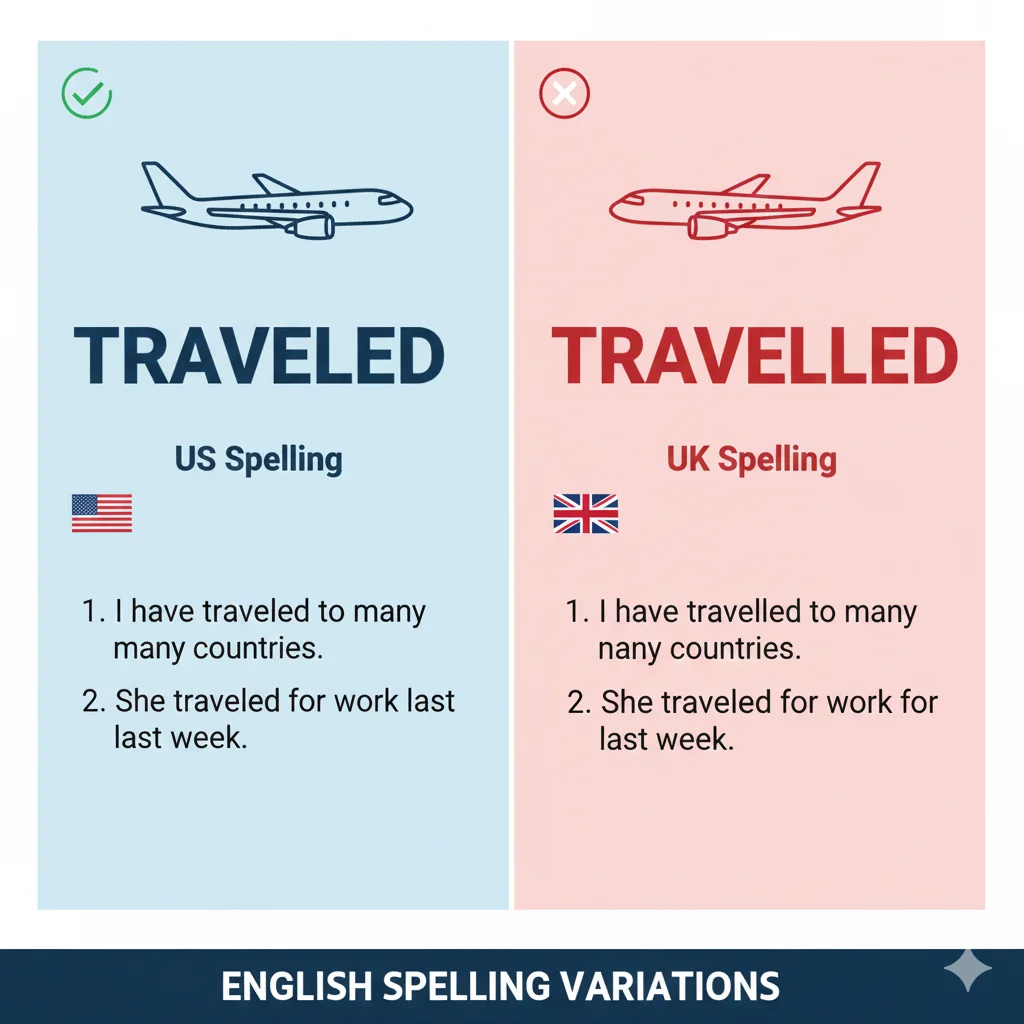
Even though traveled and travelled mean exactly the same thing, their spelling depends on the English variant you are using. Let’s make it easy with a comparison table:
| Feature | Traveled (US) | Travelled (UK) |
|---|---|---|
| Spelling | Single “l” | Double “l” |
| English Variant | American English | British English |
| Usage Example | I traveled to Japan last month. | I travelled to Japan last month. |
| Common Context | US newspapers, books, emails | UK newspapers, essays, formal writing |
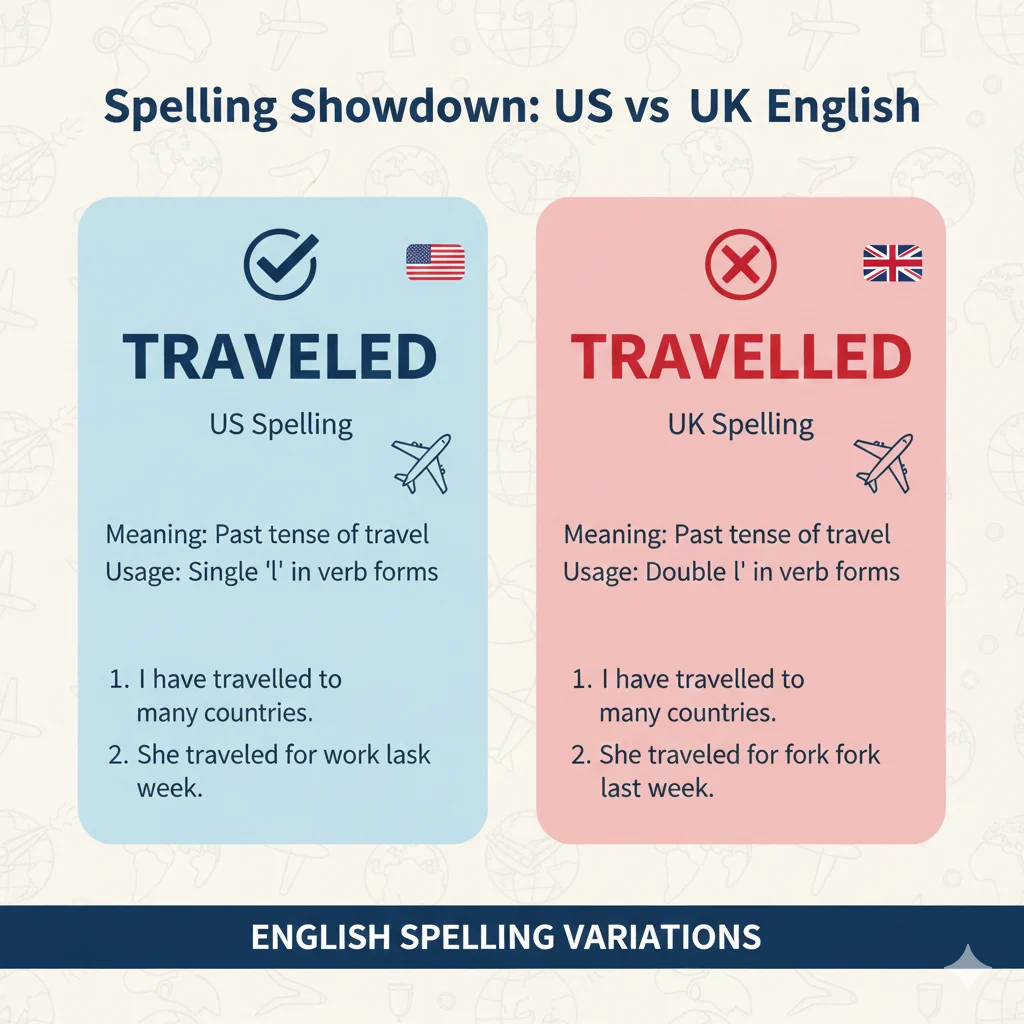
Quick Tip: If your audience is American, always use traveled. If your audience is British or international, use travelled.
Common Mistakes and How to Avoid Them
Even though the difference is small, many learners make mistakes. Let’s go over the most common ones.
Mistake 1: Mixing American and British spelling in one text
- ❌ I travelled to Paris last summer. I traveled to Rome next year.
- ✅ I travelled to Paris last summer. I travelled to Rome next year. (UK)
Mistake 2: Using the wrong spelling for your audience
- ❌ I traveled to London last week. (in a UK school essay)
- ✅ I travelled to London last week.
Mistake 3: Forgetting the double “l” in British English
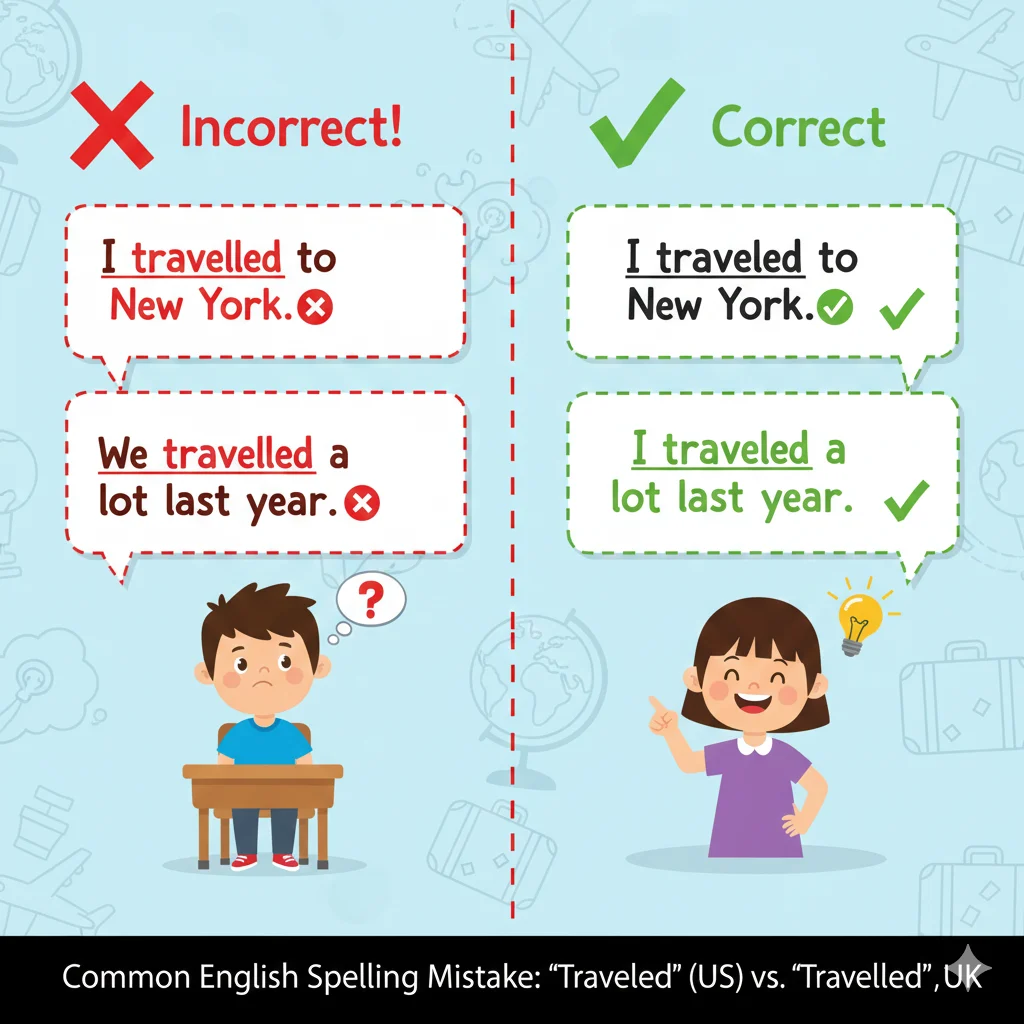
- ❌ He has traveled to many countries. (UK context)
- ✅ He has travelled to many countries.
Why these mistakes happen:
Many learners mix the spellings because they read both American and British English online. The best way to fix it is to decide your audience first and stick with one spelling throughout your text.
When to Use Traveled
Use traveled in American English writing. Common situations include:
- School essays in the US
- Emails or letters to American readers
- US-based newspapers, blogs, or social media posts
Examples in Real Life:
- I traveled to California for summer vacation.
- She traveled by plane to see her grandparents.
- They traveled across the country to visit family.
- He has traveled to five different states this year.
- We traveled together last weekend.
Memory Tip: Single “l” → USA spelling. Think “American English is simple, single l.”
When to Use Travelled
Use travelled in British English writing. Common situations include:
- UK school assignments or exams
- Newspapers, books, and magazines in the UK
- Formal writing in countries following British English rules (India, Australia, etc.)
Examples in Daily Life:
- I travelled to Scotland during the summer holidays.
- She has travelled extensively for work.
- We travelled by train to the countryside.
- He travelled alone to Paris last month.
- They have travelled to three continents.
Memory Hack: Double “l” = London = British English. Imagine the “l”s as two London towers.
Fun Ways to Remember the Difference
- American = Traveled: Single “l,” simple and short like American words.
- British = Travelled: Double “l,” fancy and traditional like British spelling rules.
- Picture the words visually:
- Traveled → a straight road in America.
- Travelled → two parallel roads in London.
Advanced Tips
- Origin: The word travel comes from Middle English travailen, which meant “to work or journey.” Over time, it evolved into the modern verb we use today.
- Formal Writing: In essays, reports, or exams, choose the spelling based on your English variant and stick with it.
- Online Writing: Using inconsistent spelling in blogs, emails, or social media may confuse readers, but it won’t change meaning. Consistency looks professional.
- Grammar Check: Both words are verbs and are used for the past tense; there’s no difference in grammar rules.
Mini Quiz
Fill in the blanks with traveled or travelled:
- I _______ to Paris last year.
- She has _______ all over the United States.
- We _______ to the countryside for the weekend.
- He _______ alone to London last summer.
- They have _______ through Europe many times.
- I _______ by plane to New York yesterday.
- She _______ extensively for work in the UK.
Answer Key:
- travelled
- traveled
- travelled
- travelled
- travelled
- traveled
- travelled
Quick Recap: Traveled vs Travelled
- Traveled: American English, single “l,” used in US schools, emails, and writing.
- Travelled: British English, double “l,” used in UK, Australia, India, and formal writing.
- Both are past tense verbs meaning the same thing.
- Pronunciation is the same; only spelling changes.
- Stick to one form for consistency.
FAQs
1. Are traveled and travelled the same?
Yes, both words mean the past tense of travel. The only difference is spelling.
2. Which one should I use in exams?
Use the one consistent with the English variant your school or exam follows: US = traveled, UK = travelled.
3. Can I mix traveled and travelled in the same text?
No, mixing spellings is considered incorrect. Always use one spelling consistently.
4. How do I remember the difference?
Single “l” → US English; double “l” → UK English. Think of the double “l” as two towers in London.
5. Is the pronunciation different?
No, both words sound the same.
6. Can I use traveled in British English?
It’s generally considered incorrect in formal British English, but readers will still understand. For school, exams, or formal writing, use travelled.
7. Does this apply to other verbs ending with “l”?
Yes! For example, canceled (US) vs cancelled (UK), modeled (US) vs modelled (UK). Same rule applies.
Conclusion
Now you can confidently use traveled and travelled. Both words are past tense forms of travel, but their spelling depends on the English variant you are using. Traveled is preferred in American English, while travelled is correct in British English. Remember to choose your audience first and stay consistent in your writing. Using simple memory tricks, mini-stories, and examples from real life can make these words easy to remember. The more you practice, the more natural it will feel to write correctly. English is full of small differences like this, but understanding them can make your writing clearer, professional, and impressive. Keep learning, practicing, and having fun with words — and soon you’ll master these little but important details effortlessly.

English novelist Elizabeth Gaskell (1810–1865) depicted Victorian society with compassion, exploring class, gender, and social reform in vivid storytelling.