“Who” and “whom” look almost the same, sound very similar, and appear in many of the same kinds of sentences. Because of this, people often mix them up — even adults, native speakers, and professionals. But the truth is: understanding when to use whom or who is surprisingly simple once you learn a few easy rules.
In this guide, you’ll learn the basic meaning of each word, how they are used in everyday English, the difference between who vs whom, and how to choose the correct one every time. Each explanation uses simple English and real-life examples so even a 4th-grade student can understand.
By the end, you’ll feel confident using who and whom in school assignments, conversations, emails, and even exams.
What Does Each Word Mean?
Meaning of “Who”
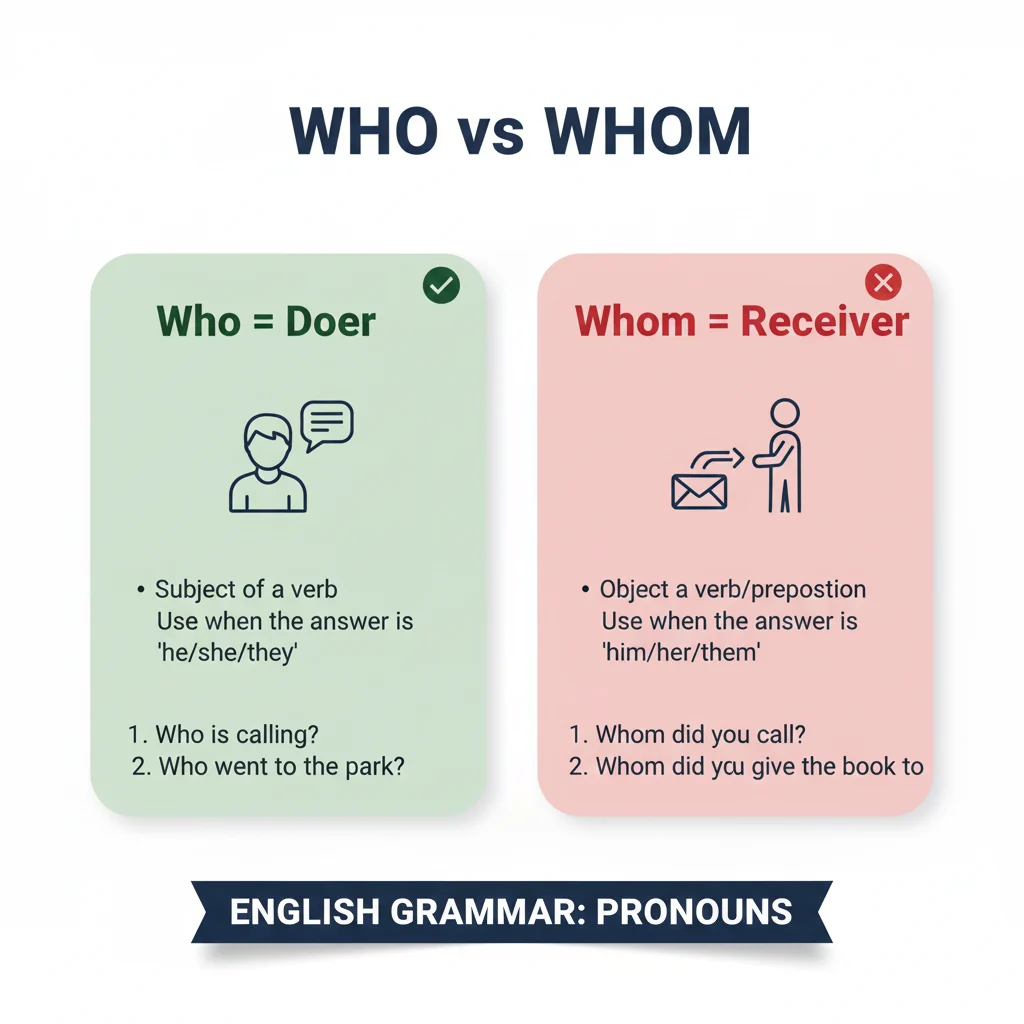
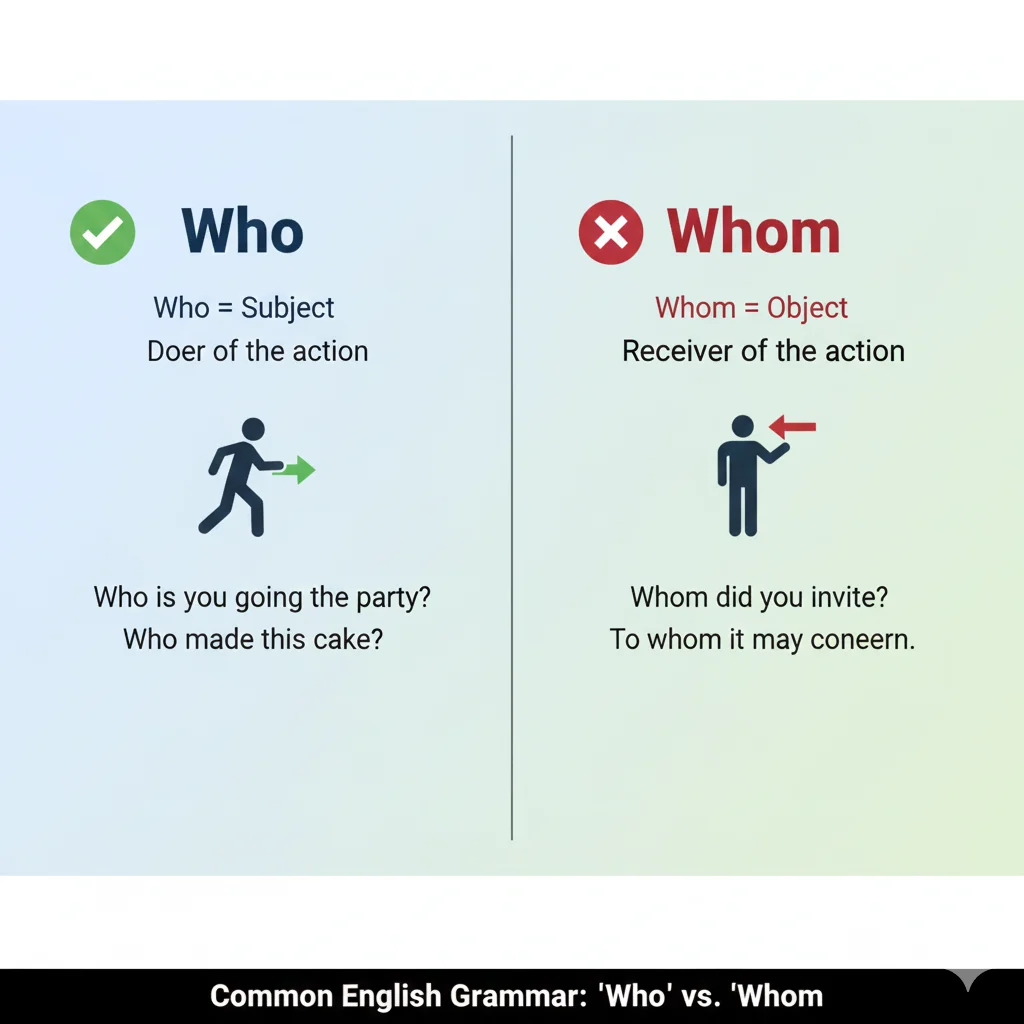
Who is used for the doer of an action — the person who performs something.
It acts like a subject in a sentence.
Think of “who” as the hero of the sentence, the one doing the activity.
Examples of “Who”
- Who is calling me?
- Who made this drawing?
- Who ate the last cookie?
In all these examples, the person using who is asking about the person doing the action.
Meaning of “Whom”
Whom is used for the receiver of an action — the person something is done to.
It acts like an object in a sentence.
Think of “whom” as the target of the action.
Examples of “Whom”
- Whom did you meet yesterday?
- Whom are you inviting to the party?
- To whom should I send this letter?
In all these examples, the person is receiving the action — someone met them, invited them, or sent something to them.
The Key Difference Between Who and Whom
The simplest rule:
Use WHO for the person doing the action.
Use WHOM for the person receiving the action.
Here’s a simple table to make it clear:
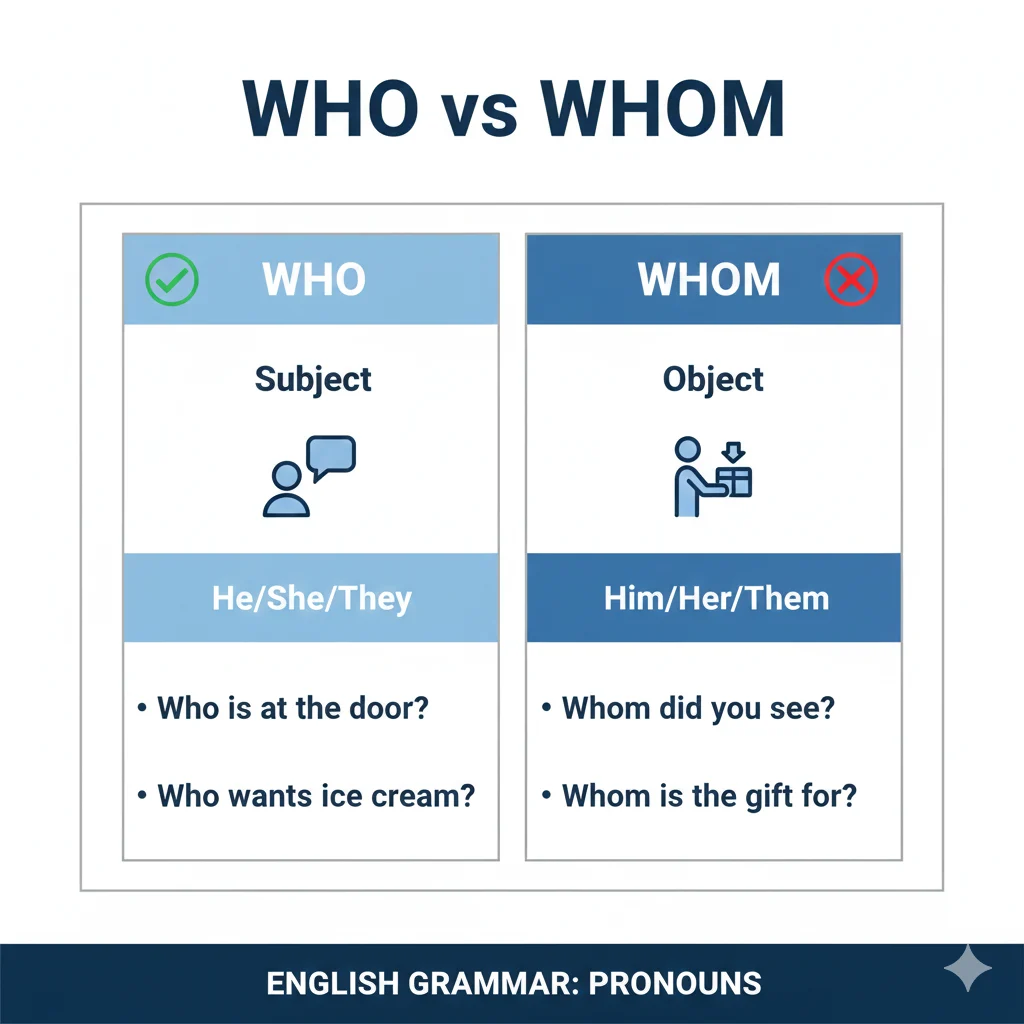
| Purpose | Who | Whom |
|---|---|---|
| Role | Subject (doer) | Object (receiver) |
| Meaning | Person who acts | Person who gets acted upon |
| Example | Who broke the window? | Whom did you call? |
| Easy Test | Replace with he/she → works | Replace with him/her → works |
| Memory Trick | Ends with “o” → like doer | Ends with “m” → like him |
Quick Tip to Remember
If you can replace the word with he/she, use who.
If you can replace it with him/her, use whom.
Example:
- “___ did you invite?”
Try replacing: - You invited him → Him = Whom
Correct: Whom did you invite?
Common Mistakes and How to Avoid Them
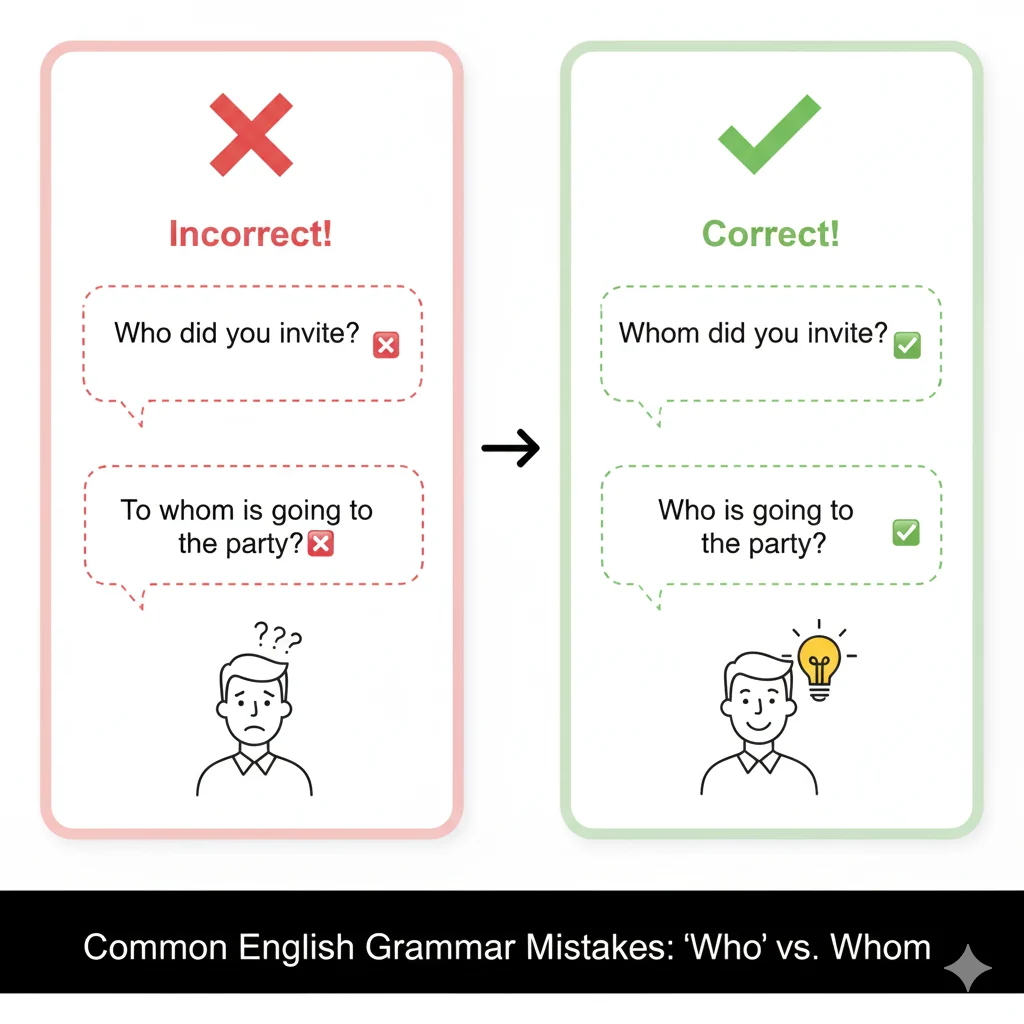
❌ Mistake 1: Using “who” when the sentence needs “whom”
Wrong: Who did you give the gift to?
Right: Whom did you give the gift to?
Why? Because the gift was given to him/her → takes whom.
❌ Mistake 2: Using “whom” to sound formal, even when “who” is correct
Wrong: Whom is coming to the meeting?
Right: Who is coming to the meeting?
Why? Because the person is doing the action (coming) → subject.
❌ Mistake 3: Avoiding “whom” completely
Some people think “whom” sounds old or unnecessary.
But in formal writing — school, essays, professional emails — using “whom” correctly makes your writing more polished.
When to Use “Who”
Use who when talking about the person who does the action in the sentence.
It’s like asking, “Which person is doing it?”
Examples:
- Who is sitting in my chair?
- Who wants ice cream?
- Do you know who wrote this?
- Who can help me with homework?
- Tell me who broke the vase.
Easy Memory Hack
Think of “who” as the word that goes with he or she.
If you can answer with he/she, use who.
Example:
“Who is laughing?” → He is laughing.
When to Use “Whom”
Use whom when talking about the person receiving the action.
It’s like asking, “Which person is this being done to?”
Examples:
- Whom did the teacher call?
- Whom are you waiting for?
- To whom should I give this message?
- Whom did you choose as your partner?
- Whom are they talking about?
Easy Memory Hack
If you can answer the question with him/her, use whom.
Example:
“Whom did you help?” → I helped him.
So whom is correct.
Quick Recap: Who vs Whom
- Who = person doing the action
- Whom = person receiving the action
- Who → he/she
- Whom → him/her
- Who = subject
- Whom = object
- If unsure, check if the answer is he/she (use who) or him/her (use whom)
This mini-chart helps:
| Use | Word |
|---|---|
| Doer of action | Who |
| Receiver of action | Whom |
| Replace with he/she | Who |
| Replace with him/her | Whom |
Advanced Tips
1. Origin of the Words
- “Who” comes from Old English hwā, meaning “which person.”
- “Whom” comes from an older form showing the object case.
This is why “whom” acts like the receiver of the action.
2. Use in Formal Writing
In essays, exams, and business emails, using whom correctly can make your writing more professional and clear.
Example:
- “To whom it may concern” is a very common formal phrase.
3. Use in Modern English
In casual speech, many people use who even when whom is technically correct.
But in writing, especially for school or professional work, using whom correctly shows strong English grammar skills.
Mini Quiz: Test Yourself
Fill in the blanks with who or whom.
- ______ are you talking to?
- ______ wants to play football?
- To ______ did you send the invitation?
- ______ knows the correct answer?
- ______ did they choose as the team leader?
- ______ is knocking at the door?
- With ______ did she go to the concert?
(Answers can be checked using the he/she → who and him/her → whom trick.)
5 FAQs
1. What is the difference between who and whom?
Who is used for the person doing the action; whom is for the person receiving the action.
2. How do I know when to use whom?
If you can replace the word with him or her, use whom.
3. Is “whom” still used in everyday English?
Yes, especially in formal writing, emails, and polite questions.
4. What is the simplest rule for who vs whom?
He/she = who.
Him/her = whom.
5. Can “whom” start a sentence?
Yes. Example: “Whom did you meet?
Conclusion
Choosing between who and whom doesn’t have to be confusing. Once you understand that who is for the person doing the action and whom is for the person receiving it, everything becomes simple. By using the easy he/she → who and him/her → whom test, you’ll always pick the correct word. Keep practicing with the examples and mini quiz, and soon you’ll use both words confidently in schoolwork, conversations, and writing.
Improving your grammar is a journey, and every small step helps you become a stronger communicator. Keep learning — you’re doing great!

Scottish novelist Muriel Spark (1918–2006) crafted sharp, witty stories exploring human nature, morality, and society with dark humor and insight.