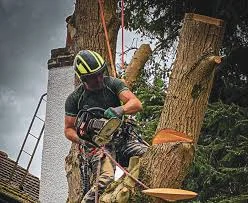
Most Tree Problems Don’t Announce Themselves
Leaves that are a shade off from what they should be this time of year. Bark that’s doing something it wasn’t doing last summer.
The things worth getting on your knees for: sap weeping from a spot on the trunk that doesn’t look like a clean wound. Mushrooms pushing up from the soil right at the base — that’s seldom a good sign. A trunk that’s developed a crack running the wrong direction. Leaves that came in lighter than usual and never really darkened up.
None of these means the tree is definitely dying. Some are treatable. Some are early warnings that give you time to do something about it. But none of them are things you want to shrug off and check on next season either.
The ones that get expensive are the ones that got ignored when they were still small.
Most people walk past those signs for months before doing anything about it. By then, what was treatable has sometimes crossed into removal territory.
That’s exactly why many homeowners turn to a Tree Health Surgeon in Mason OH before minor warning signs become major problems.
What Tree Care in Mason Actually Looks Like
The Pests and Diseases Showing Up in Ohio Right Now
Mason sits in Warren County, and the tree pressure here isn’t abstract. Common tree pests and diseases in the greater Cincinnati and Mason area include lace bugs, eastern tent caterpillars, and bagworms — all of which can do serious damage if they go undetected through a season.
What Good Tree Care Actually Covers
Fertilization and deep-root feeding are a good examples. Most residential soil in Mason has been compacted for years — foot traffic, mowing, construction nearby, drainage issues. But come spring, the difference in how a treated tree pushes out new growth versus one that’s been struggling in tired soil — it’s noticeable.
Pruning gets misunderstood a lot. People think it’s cosmetic. Sometimes it is. But a properly pruned tree has better airflow through the canopy, carries weight more evenly, and is significantly less likely to lose a major limb in a wind event. Done at the right time of year for the right species, it’s one of the more genuinely protective things you can do.
Risk assessments are worth scheduling before you think you need one — not after a branch has already come down on something. An arborist walking your property and flagging what’s structurally questionable costs a fraction of what emergency work runs.
Stump grinding — straightforward enough, but worth doing properly. A stump left in the ground doesn’t just look unfinished. It can harbor fungal disease that spreads through the root system to healthy trees nearby. Getting it ground down and the debris cleared out lets the surrounding soil start recovering instead of sitting under something rotting.
None of this is complicated once someone explains it plainly. The problem is most people don’t hear any of it until something’s already gone wrong.
What to Ask Before You Hire Anyone
Tree care isn’t a regulated industry the way some trades are. That means the gap between a certified arborist and someone with a chainsaw and a truck is wider than it should be. Before anyone touches your trees:
- Are they ISA certified? Ask to see it — not just take their word for it.
- Do they carry liability insurance for tree work specifically?
- Will they give you a written assessment before recommending removal?
That last part matters. Some people make money removing trees. There are also people whose job is to keep them alive. Those aren’t always the same person.
The Right Time to Call Is Before You’re Sure There’s a Problem
Here’s the honest version of this: most homeowners in Mason wait too long. A tree that gets assessed in early spring — before pest season hits, before summer drought stress sets in — has far more treatment options than one that gets called in after a bad summer.
An experienced Tree Health Surgeon in Mason, OH isn’t just there for emergencies. Regular assessments, seasonal fertilization, early pest detection — that’s where the real value is.

