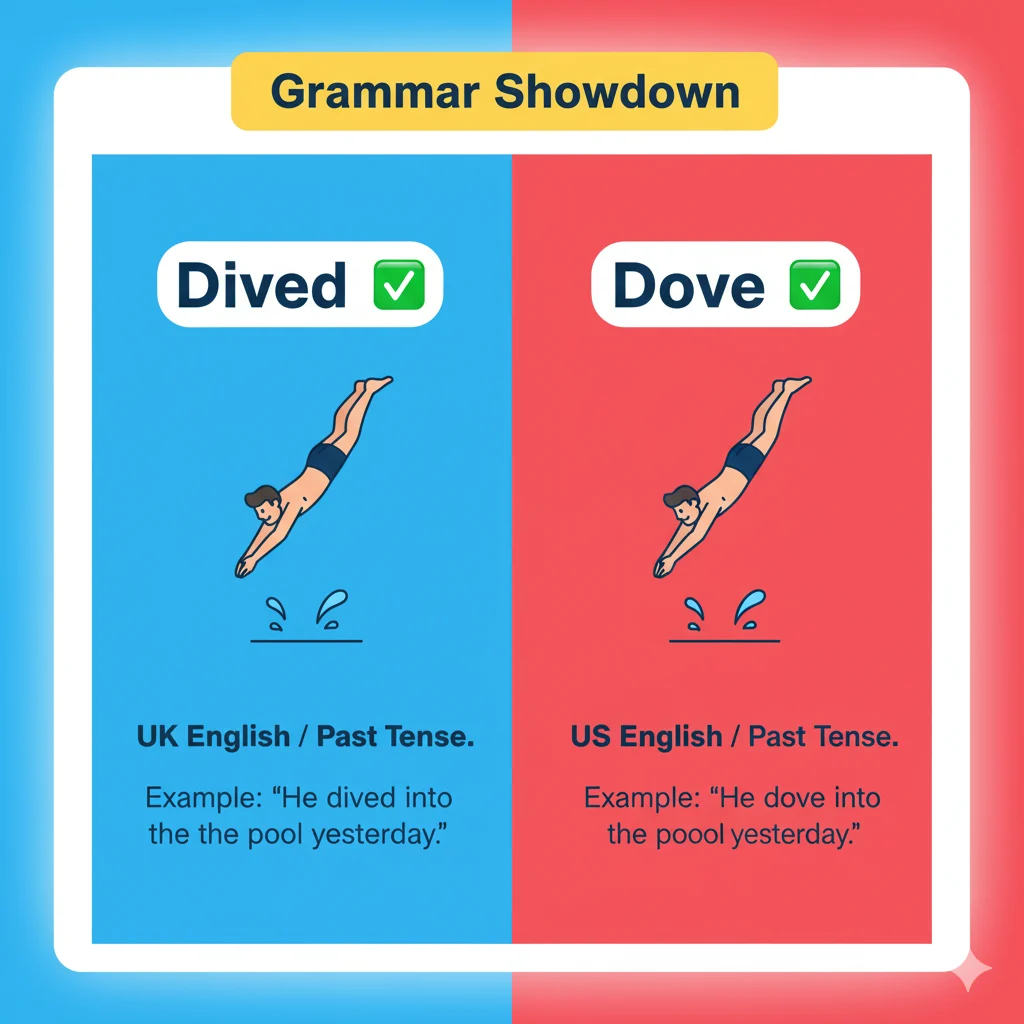
English is full of tricky words that sound similar but have different meanings. One pair that often confuses both beginners and native speakers is “dived or dove.” You might have read a sentence like, “He ___ into the pool” and wondered which word fits. Should it be dived or dove?
Many people mix these words because they are both past tense forms of the verb “dive.” But knowing the difference is simple once you understand the rules and context.
In this guide, you will learn the meaning of “dived” and “dove,” the key difference between them, common mistakes, and how to use each word correctly in daily life, school writing, or casual conversations. By the end, even beginners will feel confident using these words without hesitation.
What Does Each Word Mean?
1. Dived
Meaning:
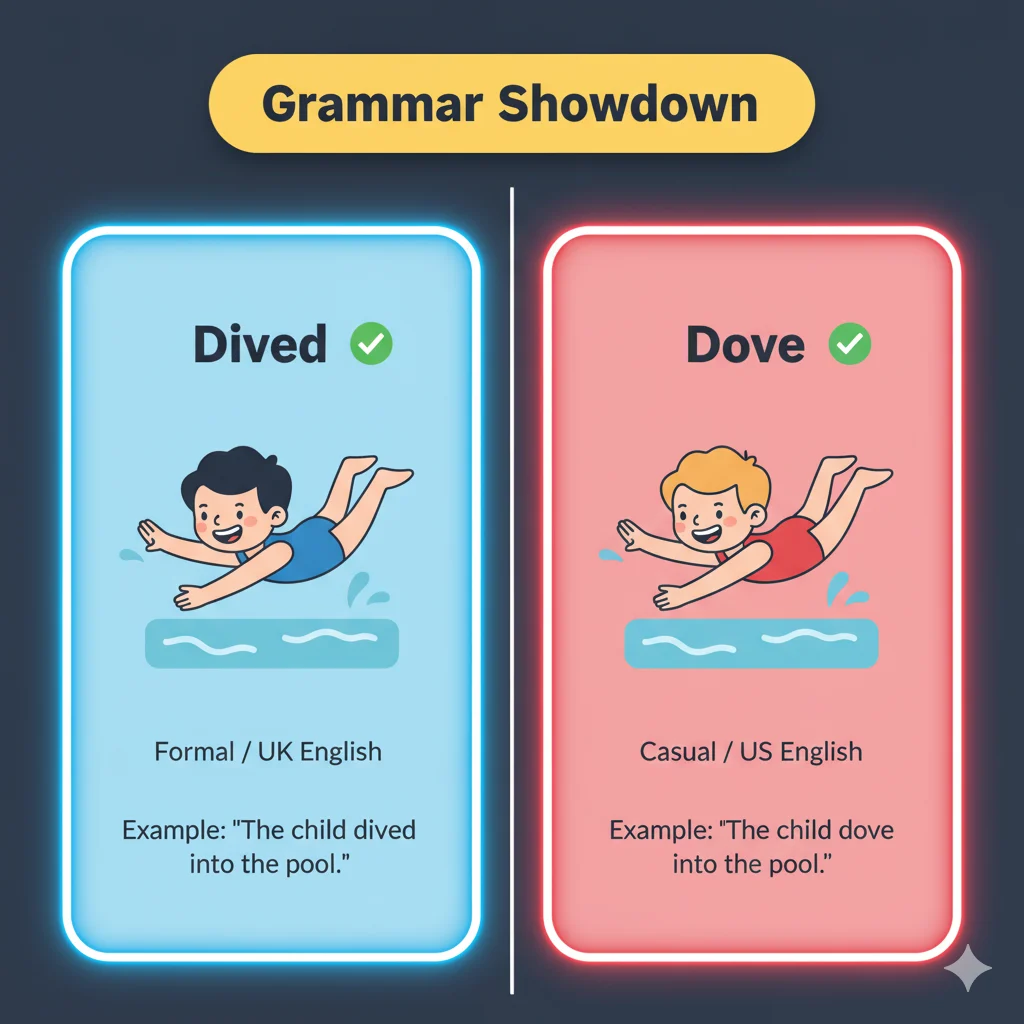
“Dived” is the standard past tense and past participle of the verb “dive.” It means to jump headfirst into water or plunge into an activity.
Part of Speech: Verb
Examples:
- She dived into the lake on a hot summer day.
- The cat dived under the bed when it heard a loud noise.
- He dived straight into his homework after school.
Tip: Think of “dived” as the more formal, universal version used worldwide.
2. Dove
Meaning:
“Dove” is an alternative past tense of “dive”, mostly used in American English. It has the same meaning as “dived” in past events.
Part of Speech: Verb
Examples:
- She dove into the swimming pool with excitement.
- He dove behind the sofa when the balloon popped.
- The kids dove into the pile of autumn leaves.
Tip: “Dove” is casual and widely accepted in the U.S., but less common in British English.
The Key Difference Between Dived and Dove
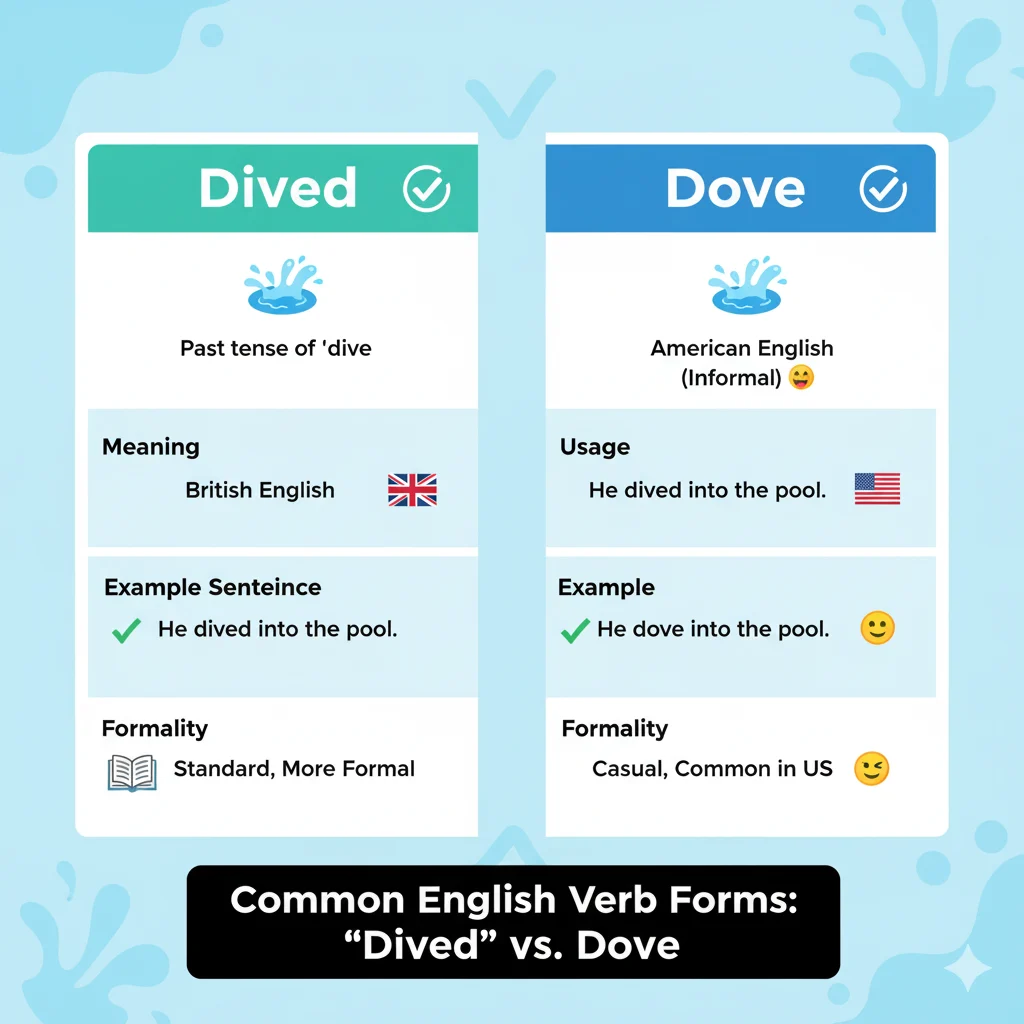
| Word | Meaning / Use | Example Sentence | Formality / Region |
|---|---|---|---|
| Dived | Standard past tense of “dive” | She dived into the ocean. | Universal, formal |
| Dove | Alternative past tense (US) | She dove into the pool. | Casual, mostly American |
Quick Tip:
If you’re unsure, use “dived” — it’s always correct. Use “dove” in casual American writing or speech.
Common Mistakes and How to Avoid Them
Mistake 1: Mixing regional preferences
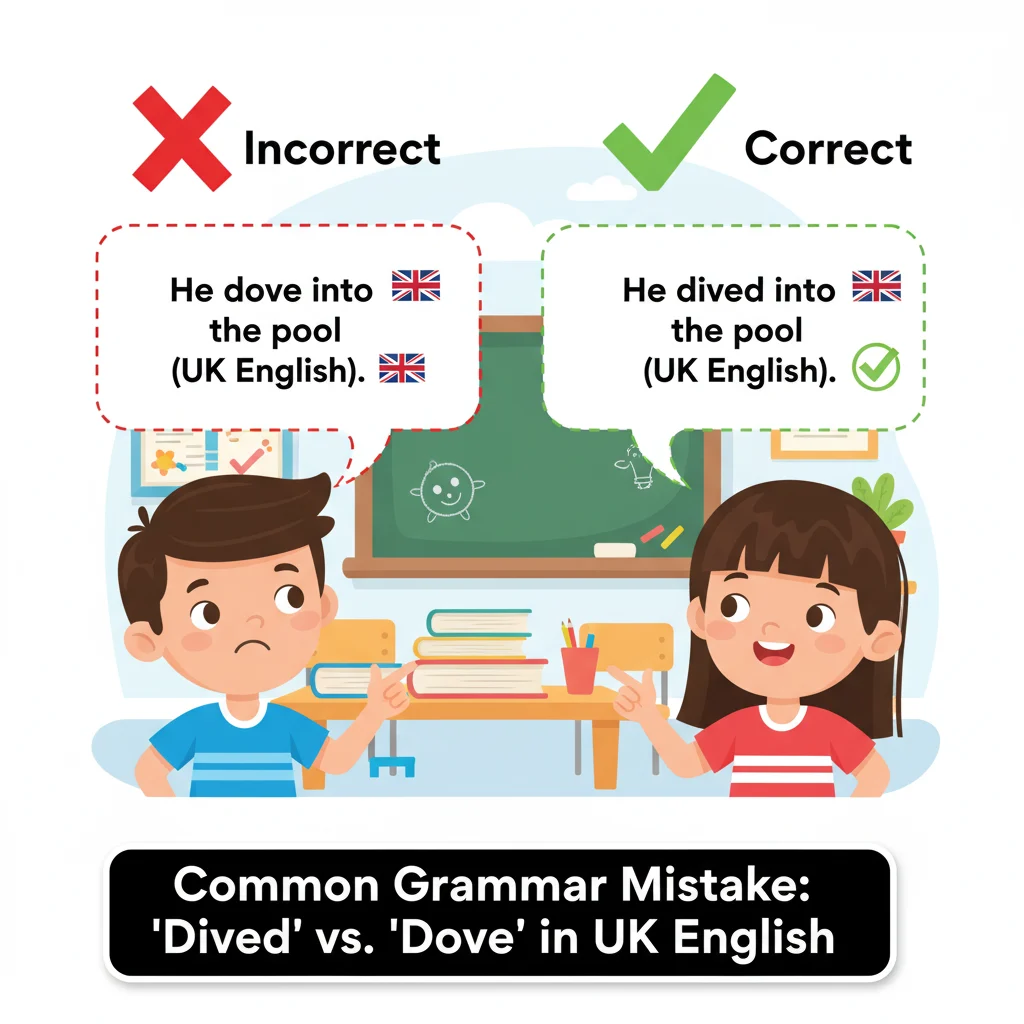
Incorrect: He dove into the lake. (in formal UK English)
Correct: He dived into the lake.
Reason: “Dove” is mainly American English. In formal British writing, dived is preferred.
Mistake 2: Confusing verb tenses
Incorrect: Yesterday, she dives into the pool.
Correct: Yesterday, she dived into the pool.
Reason: Past tense requires “dived” (or “dove” in US English), not “dives.”
Mistake 3: Using dove as a noun accidentally
Incorrect: The bird dove flew away.
Correct: The dove flew away.
Reason: “Dove” can also mean a type of bird. Context matters!
When to Use Dived
Use dived in:
- Formal writing: essays, reports, school assignments
- British English contexts
- Any situation where you want to be safe and universally correct
Examples:
- She dived into the clear blue ocean.
- The firefighter dived through the window to save the child.
- He dived into his studies to prepare for exams.
- During the game, the goalkeeper dived to block the ball.
Memory Hack: Think of “dived” = proper, everywhere safe choice.
When to Use Dove
Use dove in:
- Casual American English
- Stories, conversations, and informal writing
- Texting or social media posts
Examples:
- I dove into the chocolate cake without hesitation!
- She dove into the river on a hot day.
- The child dove under the table during hide-and-seek.
- He dove headfirst into painting his room.
Trick: Imagine a cute little bird (dove) jumping into water — helps remember it’s casual US English.
Quick Recap: Dived vs Dove
- Dived: Standard past tense, universal, formal. ✅
- Dove: Alternative past tense, casual, mainly American English. ✅
- Use dived if unsure.
- Both words describe plunging or jumping into water or activities.
- Watch out for the bird meaning of “dove.”
Advanced Tips
- Origin: “Dived” comes from Old English “dýfan,” meaning “to plunge.” “Dove” as a verb arose in American English in the 19th century.
- Formal usage: In essays, exams, or business writing, dived is safer.
- Texting/Online: Using “dove” is fine in informal online posts. Misusing can slightly confuse readers in formal contexts.
Mini Quiz: Test Your Knowledge
Fill in the blanks with dived or dove:
- She _______ into the pool with a big splash.
- Last summer, he _______ into learning guitar.
- The cat _______ under the couch when the doorbell rang.
- I _______ straight into the chocolate pie!
- Yesterday, the swimmer _______ into the ocean confidently.
Answers: 1. dove/dived, 2. dived, 3. dove/dived, 4. dove, 5. dived
FAQs
1. Is “dove” correct English?
Yes, “dove” is correct in American English as the past tense of “dive.”
2. Can I always use “dived”?
Yes, “dived” is universally accepted and safe for formal writing.
3. What is the difference between “dived” and “dove”?
Both are past tense of “dive.” “Dived” is standard; “dove” is mainly American and informal.
4. Can “dove” refer to a bird?
Yes, context is key. “Dove” can be a bird or past tense of “dive.”
5. Which is better for exams or essays?
Always use dived in formal writing to avoid mistakes.
Conclusion
Now you know the difference between dived or dove, their meanings, and when to use each one. Remember, dived is the safe choice everywhere, while dove adds a casual, American touch. By practicing with examples from swimming, school, or everyday life, you’ll soon use both words confidently.
English can be tricky, but small steps like mastering tricky verbs make a huge difference. Keep reading, practicing, and trying new sentences. With each correct use, your grammar will improve, and confusing words will become easy. Start noticing these words in books, conversations, and social media — and soon, “dived or dove” will never confuse you again!

English playwright and novelist Patrick Hamilton (1904–1962) captured psychological tension, social decay, and dark humor in gripping, unforgettable stories.