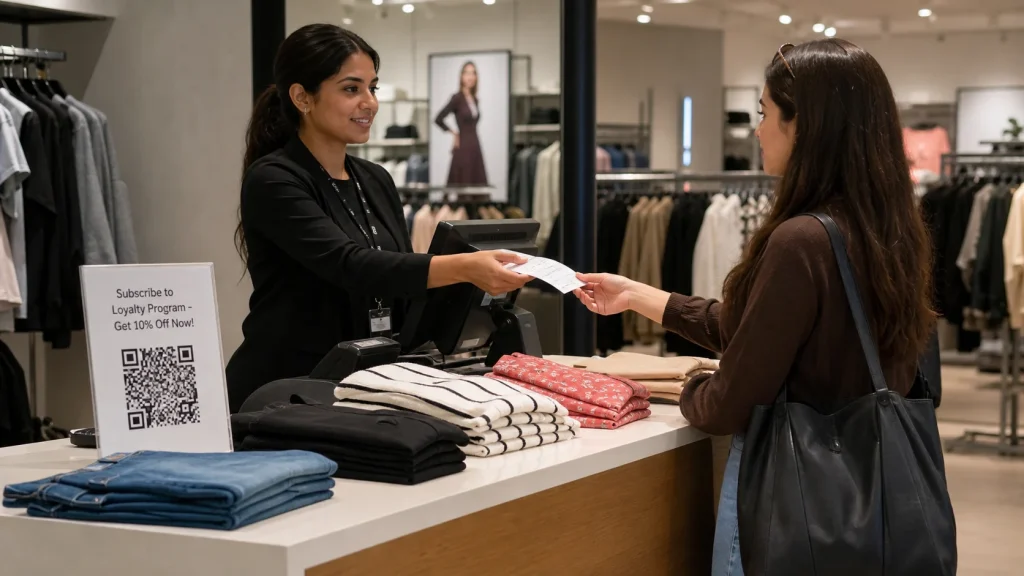
By using a QR code generator to build your in‑store strategy, you can turn key touchpoints—fitting rooms, checkout counters, receipts, and displays—into simple gateways to loyalty programs, styling content, and follow‑up offers that keep people coming back.
In fashion, loyalty is about more than points. It is about recognition, convenience, and the feeling that a store understands someone’s style. QR codes help capture those moments when attention is highest and make it effortless for shoppers to join your world: signing up for rewards, saving outfits to a digital wishlist, or grabbing a time‑limited offer with one quick scan on their phone.
Why QR Codes Work So Well for Fashion Loyalty
Fashion shopping is emotional and highly visual. People discover pieces on mannequins, rails, and tables, try things on, and imagine outfits. In that flow, pulling out a phone to search for a website or manually typing a URL rarely happens. QR codes remove that friction. When the path from “I like this” to “I want to stay connected” is as simple as scanning a code next to a mirror or at the checkout, more shoppers actually take that step.
QR codes also respect how people already behave. Shoppers are used to scanning codes for menus, boarding passes, and tickets. Bringing that same behavior into your store feels familiar rather than technical. At the same time, each scan gives you a chance to start a relationship: capturing an email, connecting on social media, or enrolling someone in a rewards program that encourages them to return.
Using QR Codes to Grow and Activate Loyalty Programs
Frictionless sign‑ups at key touchpoints
One of the biggest barriers to loyalty programs is the sign‑up process. If it requires filling a long paper form or dictating details at the register, many shoppers will skip it. QR codes make sign‑ups feel lightweight and optional, which paradoxically increases participation.
You can place loyalty QR codes:
- At checkout counters, with a short message like “Scan to join our rewards in under 30 seconds.”
- Near store entrances, inviting shoppers to “Scan for members‑only offers while you browse.”
- Inside fitting rooms, where customers already feel a stronger connection to the brand as they try on outfits.
Each scan opens a mobile‑friendly form where shoppers can enter a few essential details. You can offer a small, instant reward—such as a percentage off today’s purchase or bonus points—to encourage completion.
Making membership benefits tangible in‑store
Once a customer joins, QR codes help them actually feel the benefits. For example, a small sign near a featured rack might say, “Members: scan for this week’s exclusive deal.” When members scan, they see a coupon or special price. Non‑members who scan are prompted to join to access the same benefit.
This approach turns your loyalty program from an abstract idea into something visible and immediate. It also gives customers a reason to keep their membership active and their contact details up to date, because their phone becomes a key to extra value each time they visit.
Turning Fitting Rooms Into Loyalty Engines
Fitting rooms are where interest turns into decision. A shopper standing in front of a mirror with two dresses or different sizes is deeply engaged. QR codes placed thoughtfully in this space can both support that moment and open the door to a future visit.
You might, for example, place a small sign beside the mirror with a QR code that offers “Scan for styling ideas and save this outfit for later.” When scanned, it could:
- Show suggested pieces that match what they are trying on, encouraging larger baskets now.
- Offer a simple way to save the look to a digital wishlist or email it to themselves.
- Include an option to join your loyalty program in the same flow, connecting the outfit to their profile.
If a shopper walks away without buying that day, the saved outfit or follow‑up email can bring them back for a second look. They may return to try it again, look for a different size, or check out recommendations that came with it. The fitting room experience becomes the beginning of a relationship instead of a one‑time decision point.
QR Codes on Labels and Tags for Post‑Purchase Loyalty
A purchase is not the end of the story. Every garment or accessory leaves your store and continues the relationship at home, at work, and on social media. QR codes on labels and swing tags let you stay connected long after someone leaves the register.
These tags can link to:
- Care instructions and fabric details, so shoppers feel supported in keeping items in good condition.
- Outfit inspiration galleries that show different ways to style the item.
- A space where customers can register their purchase for points, extended perks, or early access to new collections.
When a customer scans a tag at home and lands on a page that recognizes the item and offers extra value, it reinforces the idea that this store understands their style and wants them to enjoy their purchase. That emotional reinforcement is a subtle but powerful driver of repeat visits.
How QR Codes at Checkout Encourage Returns
The checkout area is another prime moment to invite people back. Shoppers are already in a buying mindset, and small prompts can shape their future behavior.
Here are a few practical ways to use QR codes at checkout:
- A code on the counter that links to a simple “rate your visit” page, with a thank‑you offer for next time.
- A code on printed receipts that lets customers snap a quick scan to save the receipt digitally and enroll it into a points system.
- A code on a small card placed in the bag that says, “Scan after you try everything on at home for a surprise,” leading to a follow‑up offer or styling tips.
Each of these not only invites feedback or engagement but ties the idea of a “next visit” into the immediate experience. It nudges shoppers to think in terms of an ongoing relationship instead of a one‑off purchase.
Connecting In‑Store QR Codes With Personalized Follow‑Ups
QR codes work best for loyalty when they are tied to thoughtful follow‑ups. Collecting a scan is only step one; what happens next determines whether someone comes back.
Once a shopper has scanned a code to join a program or save a look, you can:
- Send a welcome message that references the store or collection they engaged with, not just a generic introduction.
- Trigger reminders about items they looked at or categories they seemed interested in, timed for when new arrivals land.
- Share in‑store‑only offers that can be redeemed by scanning a code on their next visit, reinforcing the loop between digital and physical.
Because QR codes can be placed in specific zones—denim wall, sneaker section, premium dresses—you can also infer interests without asking many questions. A scan near the sneaker display tells you something different from a scan in the formalwear section. That insight can make messages feel more tailored and relevant.
Designing QR Codes and Messages That Feel On‑Brand
In fashion, aesthetics matter. QR codes should not feel like an awkward tech add‑on; they should blend with your brand while remaining easy to scan.
A few design considerations help:
- Place codes where they feel natural, such as near outfit descriptions on mannequins, close to mirrors, or alongside price tags, rather than floating randomly on walls.
- Use a short, clear copy that matches your brand voice. A playful store might say “Scan for your secret perk,” while a luxury boutique might use “Scan for personalized styling.”
- Keep the code size and contrast high enough that it works well in store lighting and at typical viewing distances.
When done well, QR placements feel like part of the store’s storytelling. Shoppers do not see them as tech features but as invitations to get more value from the visit.
Measuring How QR Codes Affect Loyalty and Return Visits
To understand whether QR‑driven tactics are actually improving loyalty, you can look at what happens after each scan. Scans from loyalty sign‑up codes show how many shoppers are entering your program in‑store. Codes tied to specific offers reveal how many people come back to redeem them. Codes on receipts and tags show how often customers engage after leaving the store.
Over time, patterns emerge. For example:
- You might notice that fitting room codes generate fewer scans but higher repeat‑visit rates, suggesting stronger intent.
- Counter codes may yield many quick scans, which are useful for growing your database, even if not every scanner becomes a frequent shopper.
- Tag codes may be scanned days or weeks later, offering a window into long‑term engagement with products.
These insights help you refine placements, messages, and rewards so that each scan is more likely to turn into a return visit rather than a one‑off interaction.
Frequently Asked Questions
1. Where should a fashion store start if it has never used QR codes for loyalty before?
The easiest starting point is usually at checkout. Adding a simple QR code near the counter that links to a short loyalty sign‑up form lets you test how shoppers respond without changing your entire layout. Once you see sign‑ups coming in, you can expand to fitting rooms, displays, and product tags.
2. What kind of rewards work best to get shoppers to scan and join a loyalty program?
Immediate, easy‑to‑understand rewards tend to perform best, such as a small discount on today’s purchase, bonus points, or early access to new collections. When the benefit is clear and can be used right away or on a near‑future visit, customers feel that scanning and signing up is worth their time.
3. How can fashion brands avoid making QR codes feel too “techy” or out of place in a stylish store?
The key is thoughtful placement and on‑brand copy. Codes should sit naturally next to mirrors, outfit displays, or price tags, with messages that match your tone and visual style. Clean design, good contrast, and a simple, attractive call‑to‑action can make scanning feel like part of the shopping experience rather than a technical chore.
4. Can QR codes help small boutiques as much as large fashion chains?
Yes. Small boutiques often benefit even more because they rely heavily on loyal, repeat customers. QR codes give independent stores a low‑cost way to build contact lists, share styling content, and deliver targeted offers without complex systems. Even a single, well‑placed code that grows a simple email or SMS list can make a noticeable difference in repeat visits.
5. How can stores tell if QR‑based loyalty tactics are really bringing customers back?
By connecting QR scans to unique pages or offers, stores can track how many people redeem in‑store rewards, return within a certain time frame, or respond to follow‑up messages. Looking at repeat purchase rates among customers who joined via in‑store QR codes compared to those who did not give a clear picture of whether these tactics are boosting loyalty.

