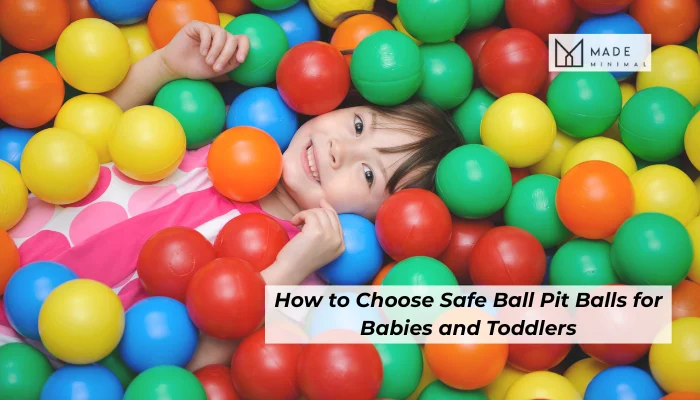
When you’re choosing safe ball pit balls for your kids, look for BPA-free, non-toxic PE plastic and a size that’s suitable for your child’s age. They should also have smooth edges and a durable, crush-resistant design for added safety.
The market is full of options that look fine on the surface but fall short of important things, like material safety and compliance with Australian standards.
At https://www.mademinimal.com.au, our team knows how to source play products for Australian families. We understand that parents want items that come with safety, quality, and practicality.
In this guide, we’ll walk you through exactly what to check when you’re buying ball pit balls for your children. You’ll also learn how to keep things clean once you’re set up.
Ready? Let’s begin.
When Are Ball Pit Balls Safe for Babies and Toddlers?
Ball pit balls are safe for babies and toddlers when they’re BPA-free and made from non-toxic PE plastic with smooth edges. Since not every ball on the market meets those standards, it’s important to know what makes one option safer than another.
Here’s what to examine before letting your little one near a single ball:
- BPA-Free and Non-Toxic Materials: PE plastic balls should carry explicit BPA-free and non-toxic labelling. Babies mouth everything they can reach, and safe materials are your first line of defence during active play. Always verify those claims before you purchase ball pit balls in Australia.
- Age-Appropriate Ball Size: Smaller balls pose a serious choking risk for very young children. The manufacturer’s recommended age range can help you pick the safest option, so check it before your kids get near the pit. Ball size also affects how safe and fun the play actually turns out to be.
- Smooth Edges: If there are any rough seams or sharp points on a ball, it can scratch small hands and mouths. That’s why we recommend running a finger along each ball before your babies access them and make sure they’re smooth.
- Crush-Proof Construction: When a ball breaks under pressure, it creates sharp fragments that can hurt kids quickly. In comparison, quality balls compress under weight and spring back without splitting, so they hold up through hours of play without becoming a hazard.
Even after checking these criteria, you should always supervise your child, especially those under 12 months of age.
What Should You Look for When Buying Ball Pit Balls in Australia?
When buying ball pit balls in Australia, it’s important to pay attention to safety standards, materials, sizing, and age suitability rather than focusing only on colours or quantity.
We’ll now get into more detail about these factors.
AS/NZS ISO 8124 Compliance
Most people have never heard of AS/NZS ISO 8124, but it’s one of four standards accepted as a pathway to meeting Australia’s mandatory toy safety requirements. The standard covers physical properties, sharp parts, and choking hazards for kids’ toys.
In particular, compliance with AS/NZS ISO 8124 satisfies Australia’s mandatory Consumer Goods Safety Standard 2023. That’s why you should always check whether a product clearly states compliance before buying.
ACCC Mandatory Toy Standards
Australia’s Consumer Goods Safety Standard 2023 sets design and construction requirements for all toys marketed to children up to 36 months. It’s a legal requirement under Australian toy safety laws (the oversight reduces unnecessary risks).
The Australian Competition and Consumer Commission (ACCC) enforces these standards and can issue fines, recalls, and bans for non-compliant products. As mentioned, toys sold for babies, including ball pit balls, must meet these requirements if suitable for children under 36 months.
So, parents should check product listings carefully before adding anything to the cart.
Parent Takeaway: Clear compliance details are often a sign that the seller takes product safety and transparency seriously.
Age Readiness for Ball Pit Play
When kids start ball pit play at the right age, the experience tends to feel safer, more enjoyable, and more beneficial for their development. If children begin too early, playtime can become more difficult for both them and their parents.
More specifically, babies under 6 months lack the motor control needed for safe ball pit play. Shallow pits with safe balls suit youngsters well from 6 months, particularly with close adult supervision.
And toddlers from 12 months can enjoy more active play on their own terms.
Sensory and Developmental Benefits
Do you know that even a simple set of colourful balls contributes a lot to your child’s development? Ball pits support your kids’ fine motor skills, coordination, and imagination all at once (especially in the early toddler years).
What’s more, playing in ball pits builds strength and sensory awareness in young children. Colourful balls also capture little ones’ attention naturally and keep playtime fun and engaging for much longer.
Ball Count and Fill Depth
Most home ball pits need between 200 and 400 balls to give kids enough depth for safe play. Too few balls reduce the fun and strip away most of the sensory value.
However, too many balls restrict safe movement for kids, which defeats the purpose entirely. Plus, if a pit is too shallow, young children and their friends may lose interest in it quickly.
We’ve found that adding more balls gradually tends to work better as your child grows and your setup changes. That approach also gives you more flexibility to adjust the setup based on how your child plays and moves around the pit.
Colour Selection and Active Play Value
If you choose the right colour mix for your ball pit balls, it can create a more engaging play experience for your child. Bright, varied colours also help kids learn to sort, count, and recognise shapes more naturally through play.
At the same time, a mix of colours keeps playtime feeling fresh and supports more imaginative play. And if you prefer a calmer look at home, a cohesive palette can also fit more naturally with your space.
Design Perspective: Softer colour palettes can help spaces feel less visually overwhelming in smaller homes or shared rooms.
How Do You Keep Ball Pit Balls Clean and Safe?
You should keep your ball pit balls clean, check regularly for signs of wear, and refresh older sets over time to maintain a safe play environment.
Here are 4 simple habits worth building from the beginning:
- Weekly Wipe-Down Routine: When you clean ball pit balls, a light spray with diluted baby-safe disinfectant and proper air-drying on towels is usually enough. If you fully soak them, trapped moisture inside the plastic can lead to mould over time.
- Check for Cracks Before Each Use: You need to pull any damaged balls out immediately and replace them. A cracked ball is dangerous because it exposes sharp internal edges that can hurt little ones quickly, without anyone noticing.
- Keep Food and Drinks Away: Bacteria can build up quickly on plastic surfaces after spills or messy play. That’s why many parents avoid snacks near the pit whenever possible.
- Replace Balls Every 6 to 12 Months: If the colours start fading or the walls feel softer than usual, it’s probably time to replace the balls. Since older balls become less durable over time, it can make play less safe and enjoyable for kids.
The cleaning question tends to come up right after the first big spill. Get ahead of it with a routine, and it stays manageable all year round.
The Final Word on Safe Ball Pit Balls Australia
Safe ball pit play usually comes down to choosing perfect materials, setting things up properly, and keeping everything clean over time. Once you’ve covered those basics, your child can enjoy safer and more comfortable play at home.
If you’re ready to create a safe and colourful play space at home, discover our stock of eco-friendly ball pit balls at Made Minimal. You’ll find BPA-free, non-toxic options designed for little hands and everyday family use.

