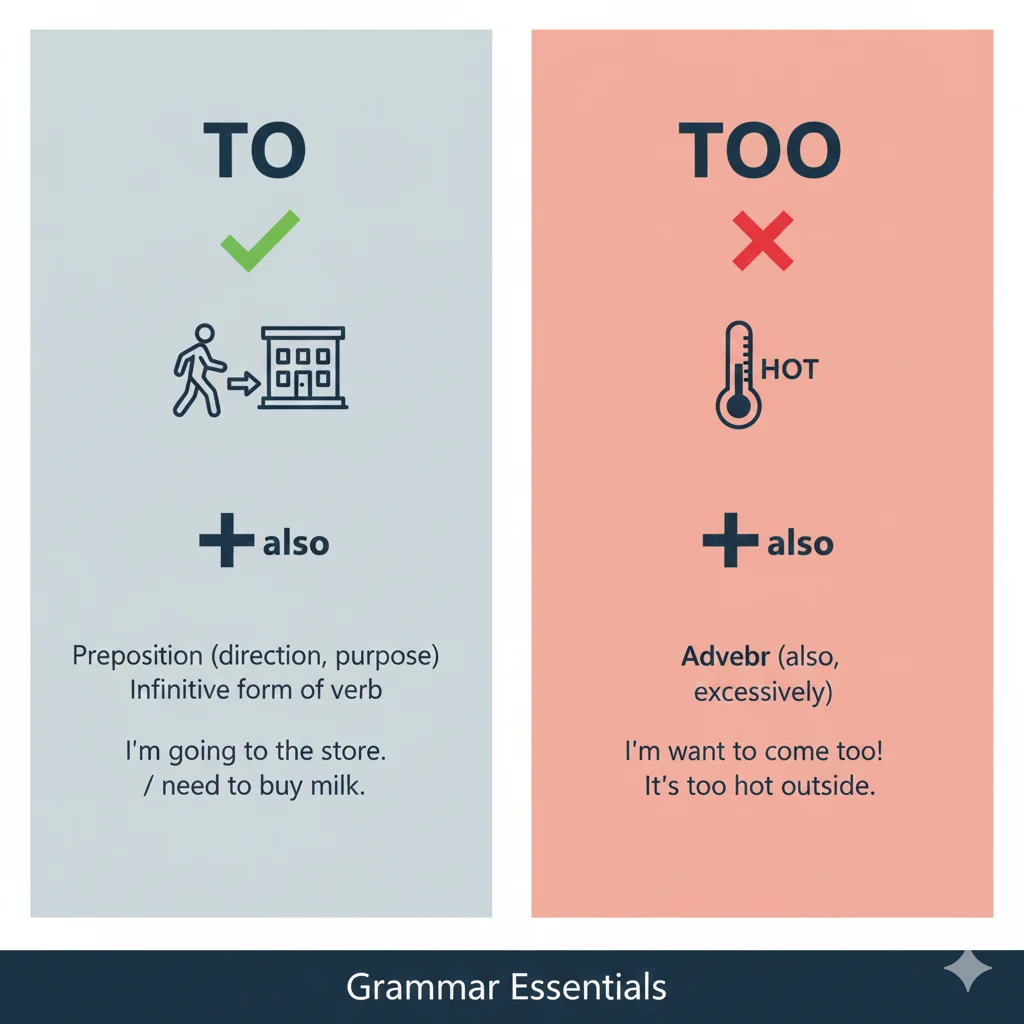
The words “to” and “too” look almost the same, and they even sound the same. That is why many people — children and adults — often mix them up. Using the wrong word can change the meaning of a sentence, confuse the reader, or make your writing look incorrect.
In this simple guide, you will learn the meaning, difference, and correct usage of to and too with clear examples and easy explanations. We’ll look at short stories, memory tricks, and real-life sentences you can use in school, texting, emails, and everyday conversation.
By the end of this article, even a 4th-grader will understand exactly when to use to and when to use too. Let’s make English easy and fun!
What Does Each Word Mean?
1. Meaning of “To”
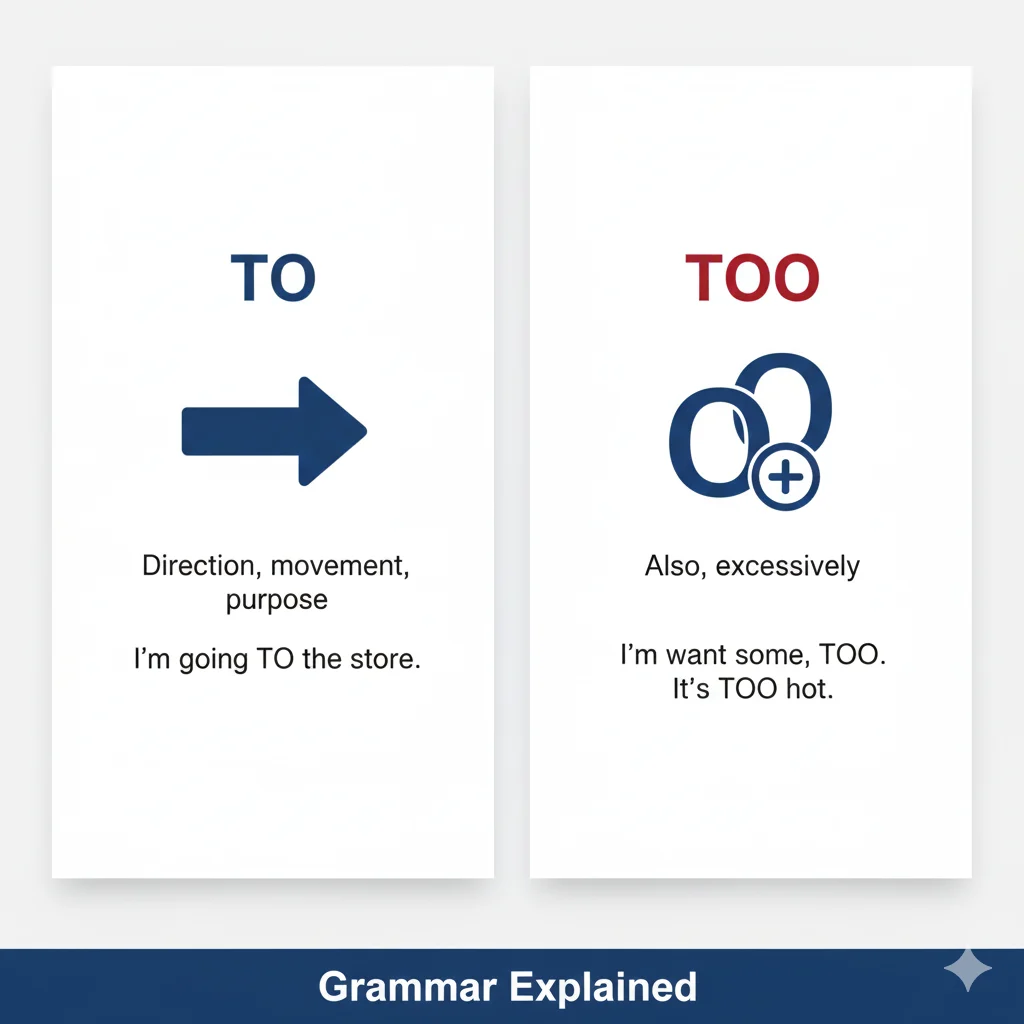
“To” is a very common word in English. It is mainly used as a preposition (showing direction, place, or purpose) or as part of a verb form (to eat, to play, to learn).
Simple Examples of “To”:
- I am going to school.
- She wants to read a book.
- Give the ball to him.
Mini story tip:
Think of “to” as a tiny arrow → showing movement or purpose. It points toward something.
2. Meaning of “Too”
“Too” means “also,” “in addition,” or “more than needed.”
It is an adverb.
Simple Examples of “Too”:
- I want ice cream too. (also)
- The water is too hot. (more than needed)
- She talks too fast.
Mini memory tip:
“Too” has two O’s → think of it as meaning “also” or “extra.”
The Key Difference Between To and Too
The main difference is simple:
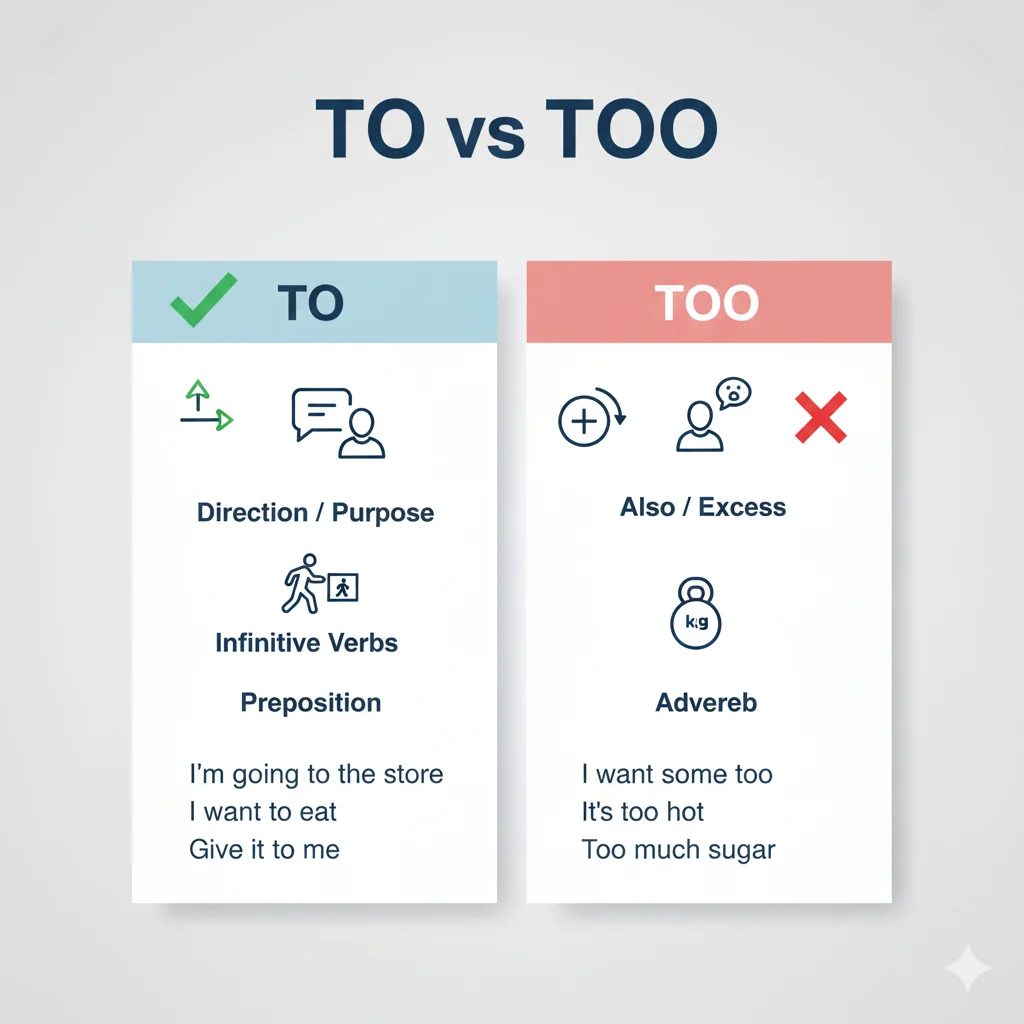
- TO = direction, purpose, movement, or part of a verb
- TOO = also / very / more than enough
Here’s a quick and easy comparison:
Comparison Table: To vs Too
| Word | Meaning | Usage | Example Sentence |
|---|---|---|---|
| To | Direction, purpose, part of a verb | Used before places, people, actions | I am going to the park. |
| Too | Also, very, more than needed | Used to show extra amount or “also” | I want to play too. |
Quick Tip to Remember
✨ If you can replace the word with “also,” use “too.”
If not, use to.
Common Mistakes and How to Avoid Them
❌ Mistake 1:
I want to go too the mall.
Correct: I want to go to the mall.
✔ “To” is needed because it shows direction.
❌ Mistake 2:
She is to tired.
Correct: She is too tired.
✔ “Too” means “very” or “more than enough.”
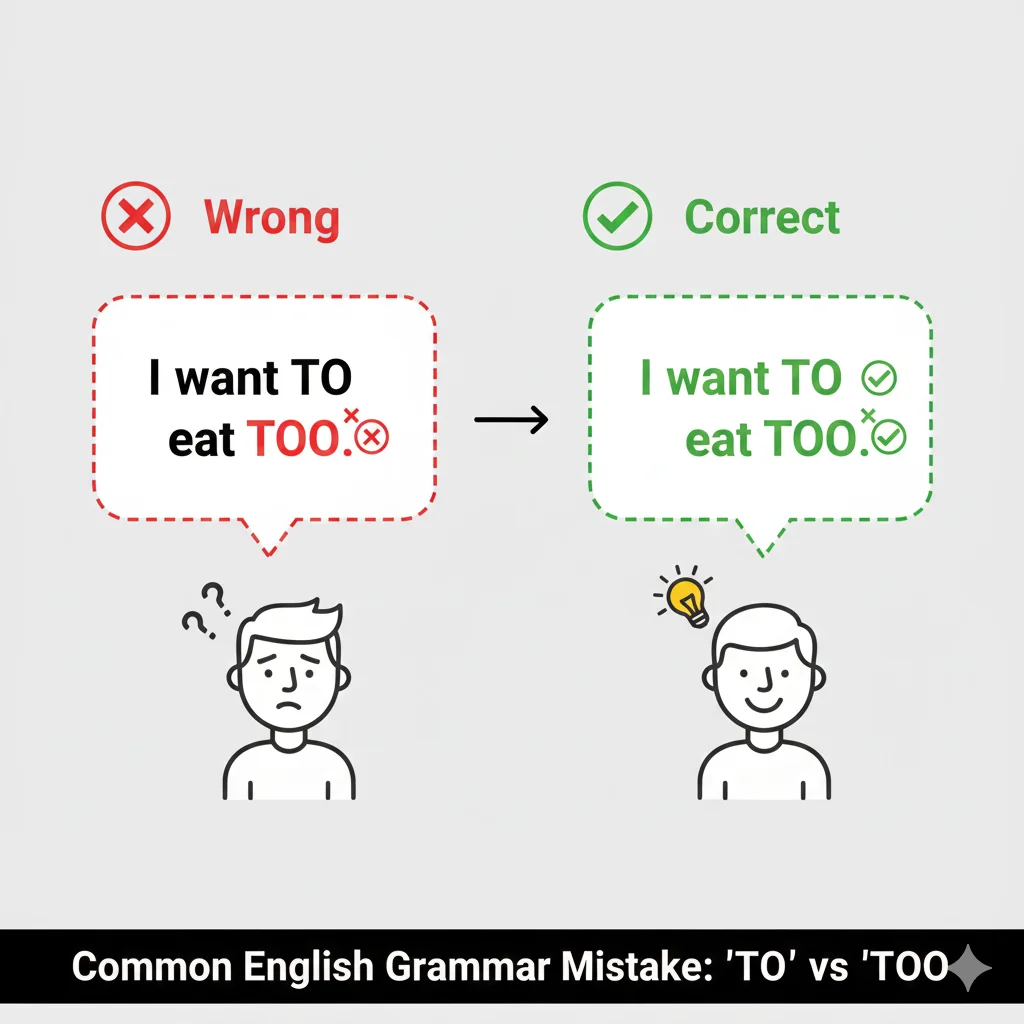
❌ Mistake 3:**
I will call you to.
Correct: I will call you too.
✔ “Too” means “also.”
Why people make these mistakes:
Because “to” and “too” sound exactly the same, many writers choose the wrong one. But if you remember the arrow (to →) and the extra O (too = extra), you will always choose the right word.
When to Use “To”
Use to in these situations:
1. Showing Direction
- I am going to school.
- She walked to the store.
2. Showing Purpose
- I am studying to pass the test.
- He works hard to earn money.
3. Used Before a Verb
- I want to sleep.
- We need to learn.
4. Showing Relationship Between Things
- Give the book to Ayesha.
- Say hello to your mom.
Real-Life Examples
- I am going to bed.
- We need to talk.
- He came to help us.
When to Use “Too”
Use too when you mean:
1. “Also”
- I want to come too.
- She likes chocolate too.
2. “More than enough” / “Very”
- The tea is too hot.
- This bag is too heavy.
3. To show strong emotion
- I am too happy!
- He is too excited.
Memory Hack
TOO = two O’s = extra or also.
If you can replace the word with “also,” choose too.
Quick Recap: To vs Too
- To = direction, purpose, verb form
- Too = also, very, more than enough
- “Too” has two O’s → shows extra
- If you can replace it with “also,” use too
- If not, use to
Advanced Tips
✔ Origin
Both words come from Old English, which is why they sound alike even today.
✔ Formal Writing
Using the wrong word in essays, exams, or emails can change the meaning and affect your grades or clarity.
✔ Texting Mistakes
People often rush while typing and use “to” everywhere. Slow down and check:
Does it mean also? Then use too.
Mini Quiz: Fill in the Blanks
Try these:
- I want to go ___ the park.
- This dress is ___ big for me.
- Can I come ___?
- She needs ___ finish her work.
- The water is ___ cold.
(Answers: 1. to 2. too 3. too 4. to 5. too)
FAQs
1. What is the main difference between to and too?
“To” shows direction or purpose; “too” means “also” or “very.”
2. When should I use “too” in a sentence?
Use “too” when you mean “also” or “more than enough.”
3. Is “to” a preposition?
Yes, most of the time “to” is a preposition showing movement or purpose.
4. How can I remember the difference easily?
“Too” has two O’s, which means extra. Use it for “also” or “very.”
5. Can “too” replace “also”?
Yes, if “also” fits the sentence, “too” is correct.
Conclusion
Understanding the difference between “to” and “too” is easy once you know their meanings. “To” is used for direction, purpose, or actions, while “too” means “also” or “very.” With the examples, tricks, comparison table, and practice sentences in this guide, you can confidently choose the correct word every time.
Keep practicing by writing small sentences in your notebook or using them while texting friends. The more you use them, the more natural they will feel.
Improving your English is a journey, and every step makes a big difference. Keep learning — you’re doing great!

English novelist Elizabeth Gaskell (1810–1865) depicted Victorian society with compassion, exploring class, gender, and social reform in vivid storytelling.