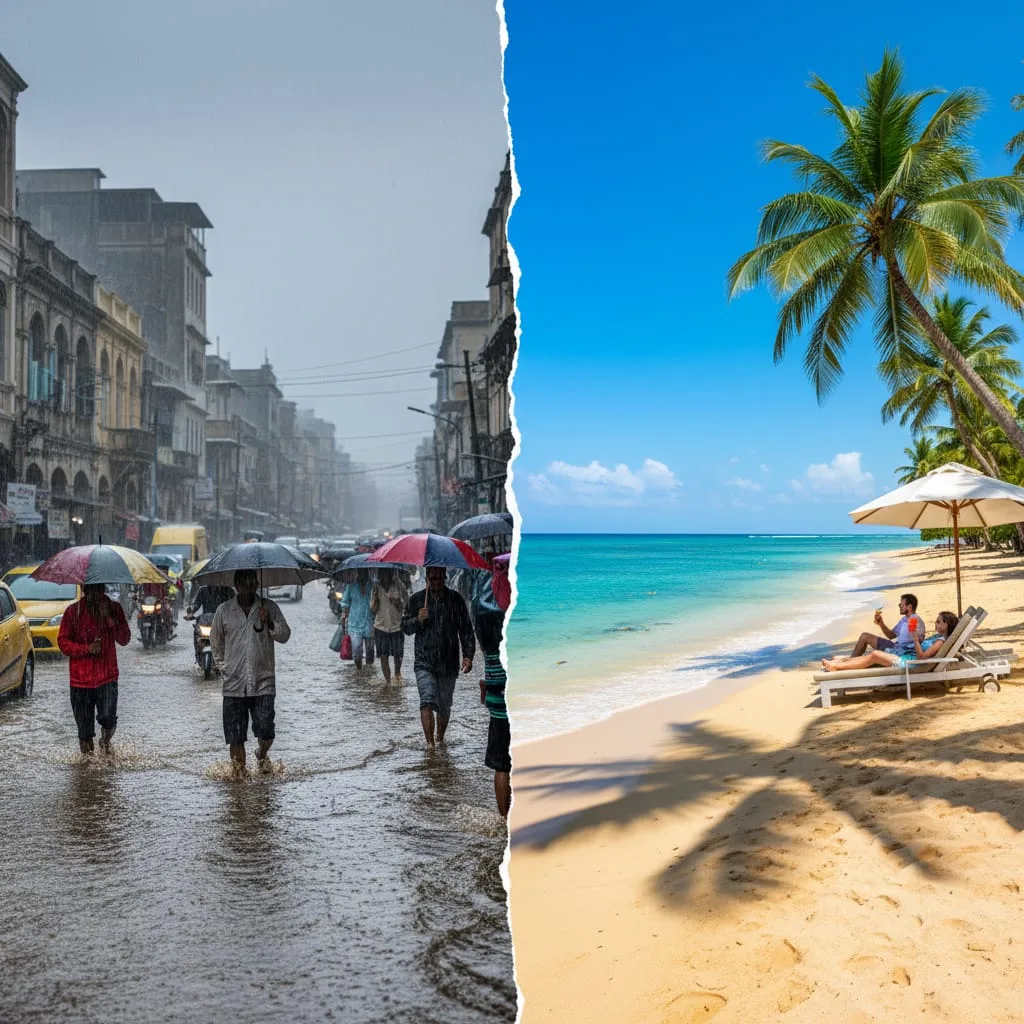
Every June, residents of Budhni brace for rain. However, it rarely arrives as anyone expects. The weather Budhni (during monsoon onset) is shaped by something most people overlook- the Narmada valley’s geography. The river corridor acts like a funnel. This draws moisture-laden winds inland faster than regional averages suggest. That is why rain clouds often appear days earlier than forecast, or in volumes that seem disproportionate to what neighbouring towns receive.
Understanding this pattern is not just useful knowledge. For farmers, road users, and event planners, it is the difference between a good decision and a costly one.
How the Narmada Valley Shapes Monsoon Behavior
The Narmada flows west through a rift valley flanked by the Vindhya and Satpura ranges. This makes the Arabian Sea moisture travel deep into central India. Budhni is directly in the path of this inland push when the southwest monsoon advances.
What this means practically:
- Rainfall totals here can exceed district-level averages by 15–20% during active monsoon spells.
- Cloud systems that appear distant on regional maps can reach Budhni within hours.
- Low-pressure systems over the Bay of Bengal also intensify local rainfall when they interact with the valley’s wind corridor.
None of this is random. It follows identifiable atmospheric patterns that pre-monsoon data can detect well before the rains arrive.
Reading Early Forecast Signals Before the Monsoon Officially Arrives
Meteorologists track several indicators in the weeks leading up to monsoon onset. Outgoing longwave radiation values drop noticeably over the Arabian Sea. Sea surface temperatures rise. Cross-equatorial wind flows strengthen.
At the local level, Budhni tends to show-
- Southerly wind shifts replacing the pre-monsoon westerlies
- Rising atmospheric instability indices in 10-day model outputs
- A spike in humidity levels above 75% for consecutive days
- A gradual drop in afternoon temperatures as cloud cover builds
These are not vague signals. They appear in hyperlocal forecast data days before the first heavy rain. Residents who track them gain a meaningful head start on preparation.
How Farmers Around Budhni Make Time Sowing Decisions
Agriculture in Sehore district depends heavily on the timing of the monsoon. Soybean, urad dal, and maize are the dominant kharif crops, and each has a narrow sowing window tied to soil moisture thresholds.
Experienced farmers here have long used informal cues: the flowering of certain trees, the behavior of insects, and wind direction at dusk. These carry real wisdom. What advanced rainfall probability data adds is a quantified layer on top of that intuition.
A 10-day forecast showing a 60–70% precipitation probability for the first week of July, for instance, tells a farmer that waiting two more days before sowing reduces the risk of waterlogging without losing the moisture window. That kind of timing is worth more than most crop insurance policies.
Weather Budhini- Road Flooding, Transport Delays, and What Residents Wish They Had Known
Budhni’s low-lying road sections near the Narmada banks flood faster than most drivers anticipate. The 2023 monsoon season saw at least three multi-day closures on routes connecting Budhni to Hoshangabad, not because the rain was extreme by regional standards, but because it concentrated rapidly over a 48-hour period.
Budhni residents frequently cite the same frustration: they knew it was “monsoon season” but had no specific heads-up that a particular 48-hour stretch would be significantly worse than surrounding days.
A location-specific 10-day outlook changes that. Knowing that Tuesday through Wednesday carries a high rainfall probability allows households to move vehicles, defer travel, and stock essentials. It converts a reactive situation into a manageable one.
Replacing Last Year’s Memory With a 10-Day Hyperlocal Outlook
Most people in small towns still plan around informal recall, “this time last year it rained heavily,” or “monsoon usually sets in by the 12th here.” That mental model fails precisely when the season deviates from historical norms, which is becoming more frequent.
A hyperlocal 10-day forecast built on real-time model data replaces that guesswork with day-by-day precipitation probability, wind readings, humidity levels, and pressure trends specific to Budhni’s coordinates. It does not just say “rain expected.” It tells you how much, at what intensity, and how the pattern changes across the week.
For residents, farmers, school administrators, and small business owners around Budhni, this kind of advance visibility is no longer a luxury. It is a planning tool that pays for itself the first time it prevents a bad decision.
MeteoFlow provides hyperlocal forecasts, real-time conditions, air quality data, and 10-day outlooks for locations across India, giving communities like Budhni the weather intelligence needed to plan with confidence.

