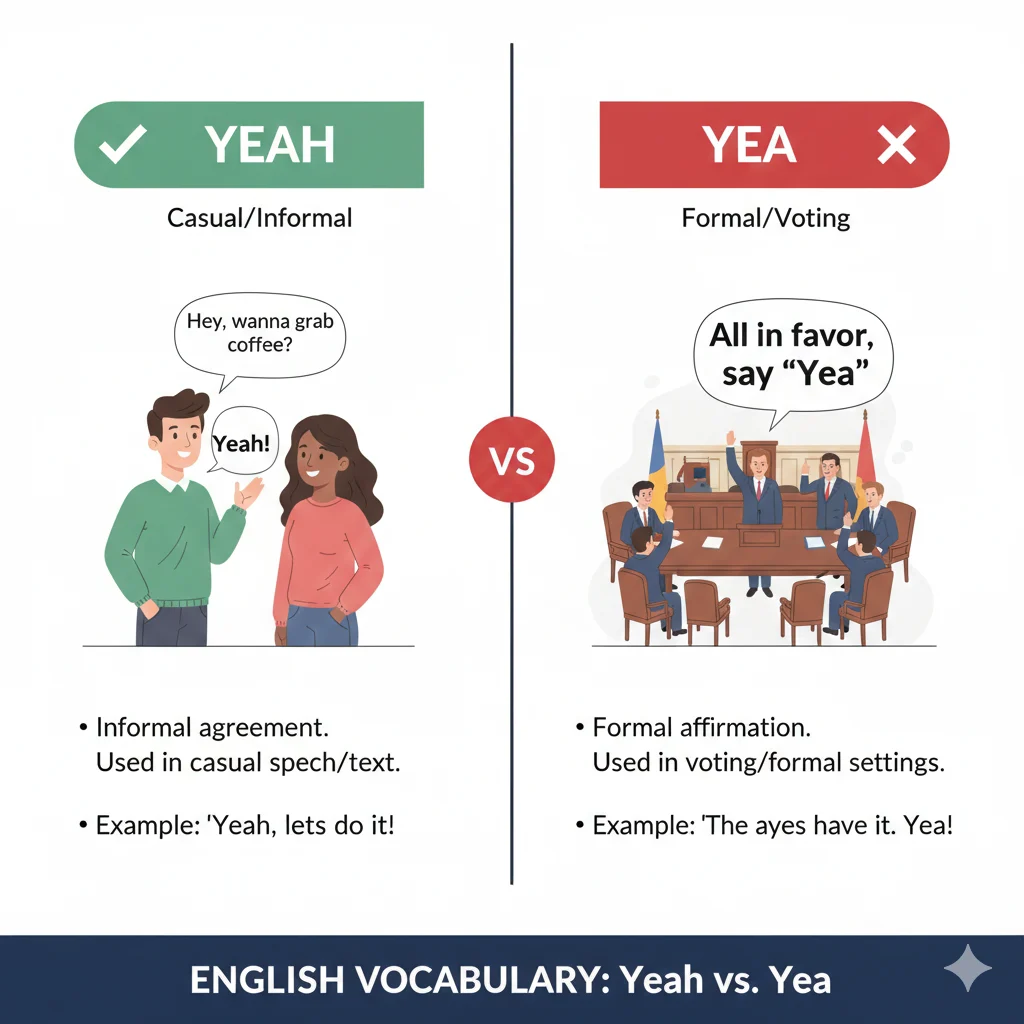
English is full of small words that look or sound alike but mean very different things. One common pair that confuses many learners—and even native speakers—is yeah or yea. At first glance, they seem almost the same. Both can sound like a way to say “yes,” right? That’s exactly why people mix them up in writing, texting, schoolwork, and even professional emails.
But here’s the good news: the difference between yeah and yea is actually simple when explained in the right way. In this easy guide, you’ll learn the meaning of each word, how to use them correctly, and how to avoid common mistakes. We’ll use plain English, short sentences, and real-life examples so even a 4th-grade student can understand. By the end, you’ll never feel confused about yeah vs yea again.
What Does Each Word Mean?
Let’s first understand each word on its own. This makes everything much easier.
What Does Yeah Mean?
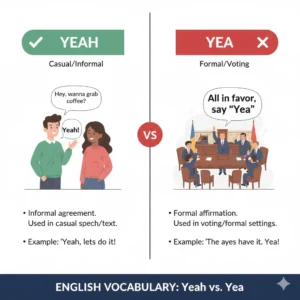
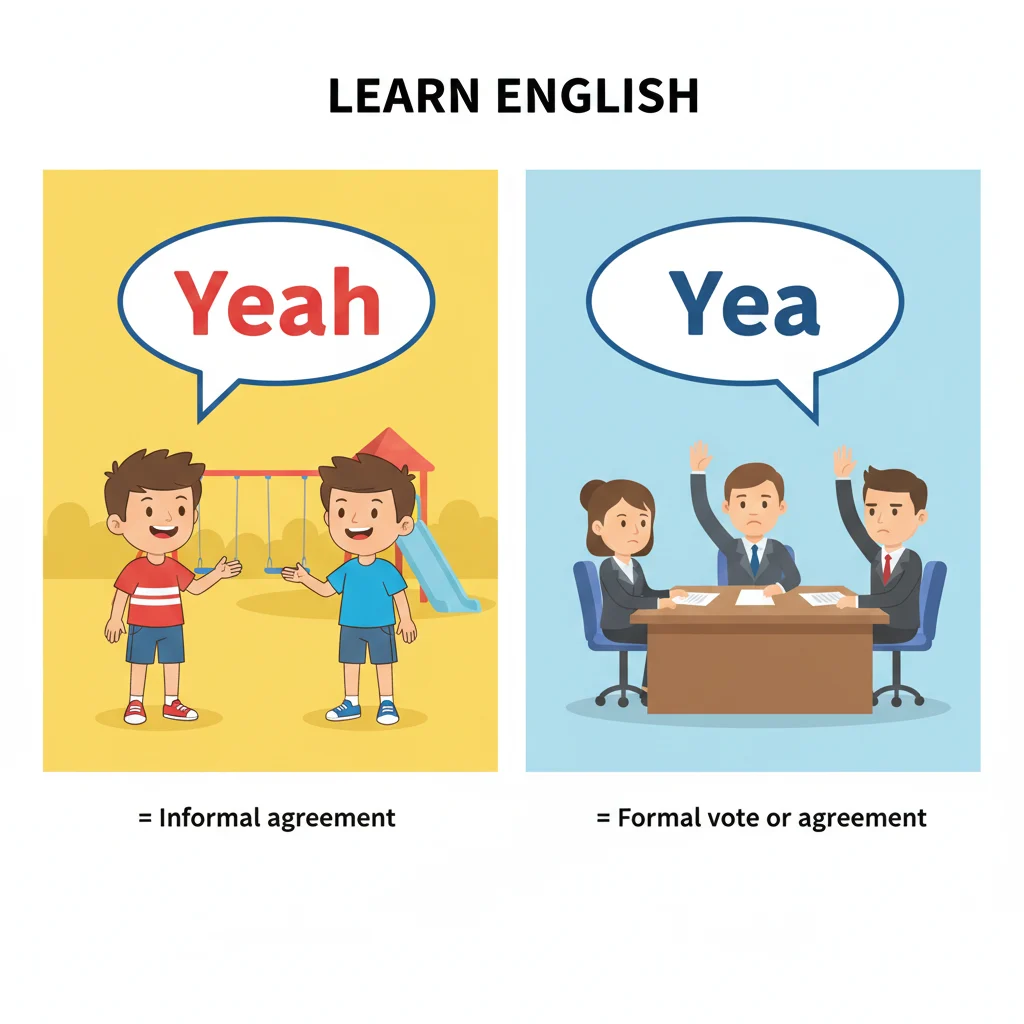
Yeah is an informal word. It means yes in casual conversation.
- Part of speech: Interjection (a word used to express feeling or response)
- Used in: Speaking, texting, friendly writing
People use yeah when they talk to friends, family, or classmates. It sounds relaxed and friendly.
Easy examples of “yeah”:
- “Yeah, I can help you with homework.”
- “Do you like pizza?” — “Yeah, I love it!”
- “Yeah, that movie was really fun.”
Think of yeah as a spoken word. You hear it more than you see it in books.
What Does Yea Mean?
Yea is a formal word. It also means yes, but it is used in special situations.
- Part of speech: Adverb
- Used in: Voting, old writing, formal records
You may see yea in meetings, laws, or old books. For example, when people vote, they say yea or nay (nay means no).
Easy examples of “yea”:
- “All those in favor say yea.”
- “The vote was 10 yeas and 2 nays.”
- “Yea, though I walk through the valley…” (old-style writing)
Yea sounds the same as yay, but it is spelled differently and used differently.
The Key Difference Between Yeah and Yea
The main difference between yeah and yea is formality and usage.
| Feature | Yeah | Yea |
|---|---|---|
| Meaning | Yes (casual) | Yes (formal) |
| Used in | Speaking, texting | Voting, formal writing |
| Tone | Friendly, relaxed | Serious, official |
| Common places | Chats, messages | Meetings, laws, old texts |
| Example | “Yeah, sure!” | “All members voted yea.” |
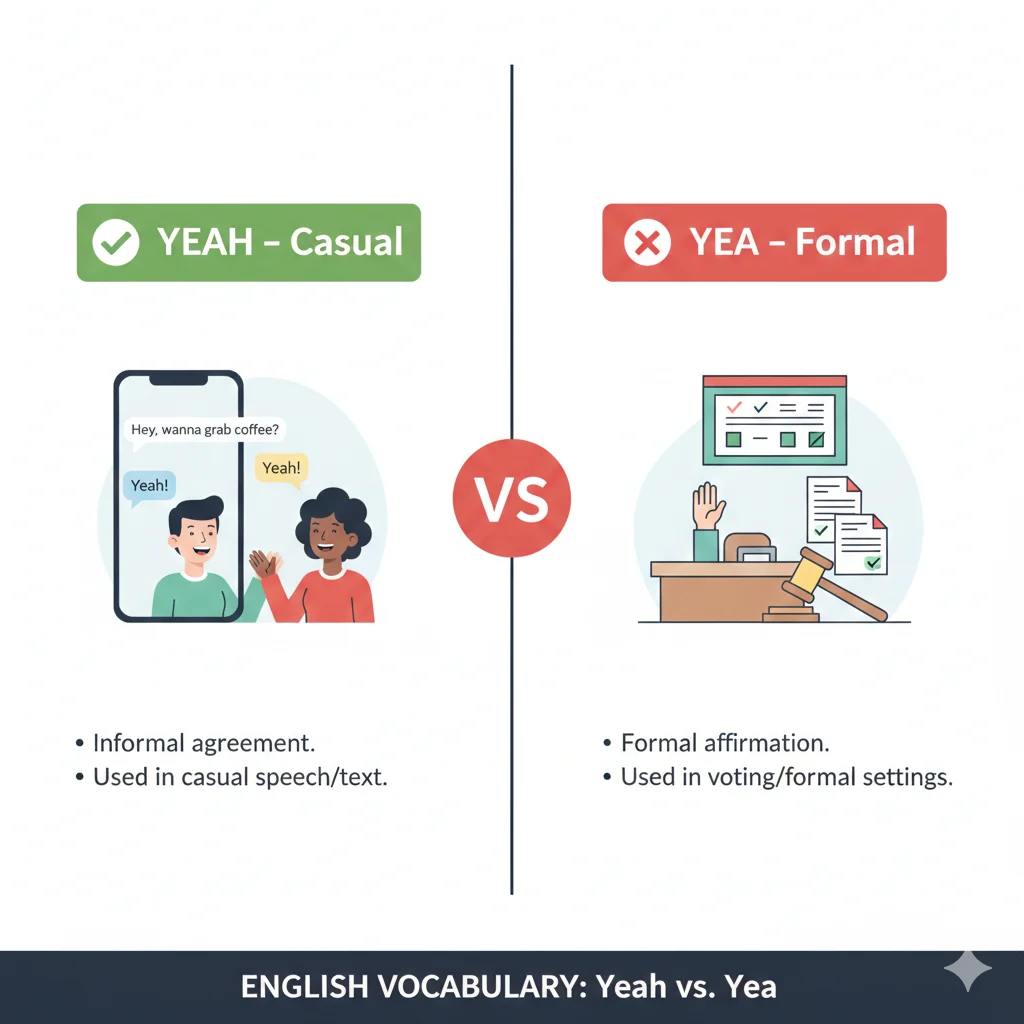
Quick Tip to Remember
- Yeah = Chat with friends
- Yea = Vote or formal record
If you are unsure, ask yourself: Am I talking casually? If yes, use yeah. Is it a formal vote or official text? Then use yea.
Common Mistakes and How to Avoid Them
Many people make mistakes with yeah vs yea, especially in writing. Let’s fix those.
Mistake 1: Using yea in casual texting
❌ “Yea, I’ll call you later.”
✅ “Yeah, I’ll call you later.”
Why it’s wrong: Texting is informal. Yea sounds too serious here.
Mistake 2: Using yeah in voting or formal writing
❌ “All in favor say yeah.”
✅ “All in favor say yea.”
Why it’s wrong: Voting language needs the formal word yea.
Mistake 3: Confusing yea with yay
❌ “Yea! I won the game!”
✅ “Yay! I won the game!”
Why it’s wrong: Yea is not for excitement. Yay shows happiness.
How to avoid mistakes:
- For talking → yeah
- For voting → yea
- For excitement → yay
When to Use Yeah
Use yeah in everyday life. It is friendly and relaxed.
Situations to use “yeah”:
- Talking to friends
- Texting or chatting online
- Answering simple questions
- Casual writing
Simple examples:
- “Yeah, I finished my homework.”
- “Can we go outside?” — “Yeah!”
- “Yeah, that sounds like a good idea.”
- “Yeah, I saw your message.”
- “Yeah, my favorite color is blue.”
Real-life tip:
If you would say it out loud while smiling, yeah is usually the right choice.
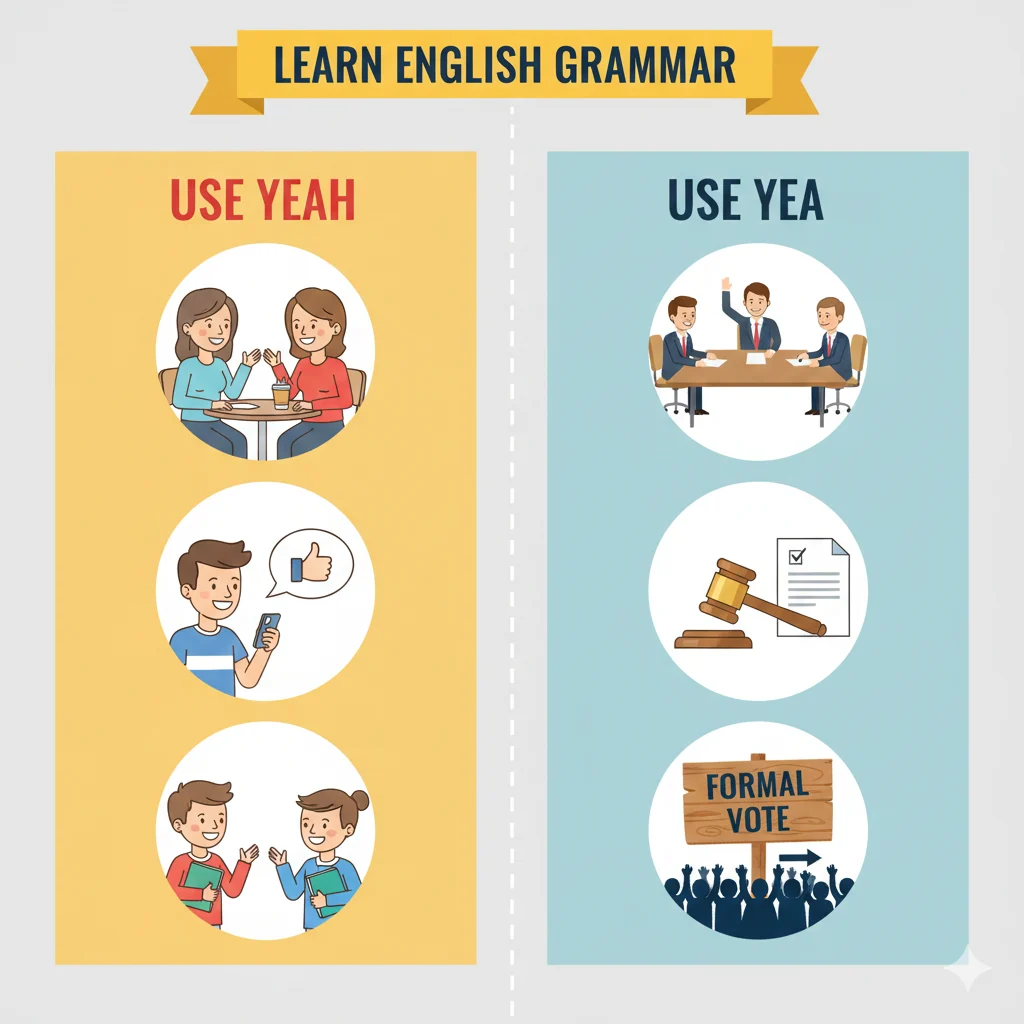
When to Use Yea
Use yea only in special and formal cases.
Situations to use “yea”:
- Voting in meetings
- Official decisions
- Government or school councils
- Old or formal writing
Simple examples:
- “The board voted yea on the new rule.”
- “Those who agree say yea.”
- “The motion passed with five yeas.”
- “He recorded his vote as yea.”
Memory Hack
Think of yea as wearing a tie and suit. It’s serious and official.
Quick Recap: Yeah vs Yea
Let’s make it super easy to remember.
- Yeah
- Casual
- Used in speech and texting
- Friendly “yes”
- Yea
- Formal
- Used in voting or records
- Official “yes”
👉 Most of the time, you need yeah.
👉 You need yea only in formal situations.
Advanced Tips
Word History
- Yeah comes from spoken English. It grew popular as a relaxed way to say yes.
- Yea comes from Old English. That’s why it sounds old-fashioned today.
In Exams and Formal Writing
- Teachers usually expect yes, not yeah.
- Yea is correct only if the question is about voting or formal approval.
In Texting and Online Writing
Using yea instead of yeah can sound strange or too serious. It may even confuse the reader.
Mini Quiz: Test Yourself
Fill in the blanks with yeah or yea.
- “_____ , I can help you tomorrow.”
- “All in favor, say _____.”
- “_____ , that game was fun!”
- “The final vote was a loud _____.”
- “Did you enjoy the trip?” — “_____!”
Answers:
- yeah
- yea
- yeah
- yea
- yeah
Great job if you got them right!
Frequently Asked Questions (FAQs)
1. What is the main difference between yeah and yea?
The difference between yeah and yea is usage. Yeah is casual. Yea is formal.
2. Can I use yea instead of yeah?
No. Use yea only in voting or formal situations, not in daily conversation.
3. Is yea old-fashioned?
Yes. Yea is mostly used in official records or old-style writing.
4. Which word should I use in exams?
Use yes. Avoid yeah. Use yea only if the context is voting.
5. Is yea the same as yay?
No. Yea means yes in a formal way. Yay shows happiness.
Conclusion
Now you know the clear difference between yeah or yea. Even though both words can mean “yes,” they are used in very different situations. Yeah is your everyday word for talking, texting, and friendly replies. Yea is a formal word used in voting and official records. By remembering this simple rule, you can avoid common mistakes and sound more confident in English. Keep practicing with real-life examples, and don’t worry if you make mistakes—learning English is a journey. Every small step makes you better each day.

English playwright and novelist Patrick Hamilton (1904–1962) captured psychological tension, social decay, and dark humor in gripping, unforgettable stories.