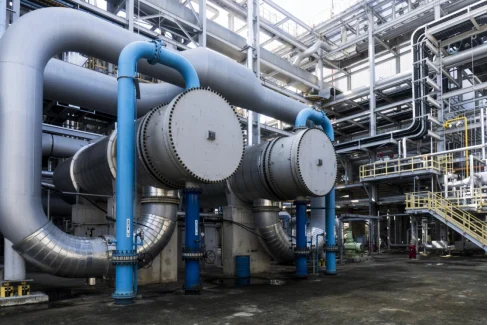
In modern engineering, materials are supposed to be able to perform at increasingly demanding conditions. Aerospace system components, power plant and chemical processing facilities are typically subjected to extreme temperatures, pressure changes, and corrosive environments.
The selection of materials can be a game changer in such situations particularly when it comes to the tubing that carries fluids, gases or structural loads. Heat resistant tubing is crucial in promoting safety, durability and efficiency in these applications.
The best remedy in this category is the 321 stainless steel tube that is characterized by great resistance to high temperatures and oxidation. This material is particularly stabilized with titanium that serves to prevent the formation of carbides during welding and exposure to high temperatures. Consequently, it retains its structural integrity even in high-temperature conditions, which last long, thus making it an ideal choice to engineers operating in demanding industries.
The Importance of Heat Resistance in Engineering
Heat resistance does not merely concern the ability to resist high temperatures. It also deals with mechanical strength, deformation prevention and chemical degradation resistance. The tubing systems are commonly used in a condition where thermal expansion and contraction are common phenomena. MaterialS that fail to withstand these stresses may crack, bend or break causing unplanned, costly down time and safety hazards.
A heat resistant tube guarantees uniform operation, even with variable conditions. This is a critical reliability to industries where failure of the system is not an option, including energy production, aviation, and manufacturing.
Applications Across Industries
Aerospace and Aviation
The temperature of aircraft engines and exhaust systems is extremely hot. Heat-resistant tubing is needed to maintain safety and performance in such temperatures. It also makes sure that fuel lines, hydraulic systems and exhaust pathways are efficient and will not easily break down.
Power Generation
Tubing is subjected to high heat and pressure in the power plant. High creep rupture strength materials are necessary to provide long-term reliability and avoid system failures.
Chemical Processing
The chemical plants are often forced to deal with the reactions of high temperatures and corrosive substances. The tubing used in these environments should be resistant to heat as well as chemical attack. The durability required to withstand such difficult conditions is provided by heat-resistant materials.
Automotive and Industrial Manufacturing
There is a lot of heat produced by high-performance engines and industrial equipment. Heat-resistant tubing will ensure that systems are efficient and reliable even when it is operating in the long run.
Benefits of Heat-Resistant Tubing
Enhanced Durability
The heat-resistant materials are engineered to be more long-lasting under severe conditions. It minimizes the occurrence of replacements and maintenance, saving on time, and money.
Improved Safety
The breakdown of materials in a hot environment can pose life-threatening conditions. Heat resistant tubing can help to minimize these risks since it will provide the structure with stability and it will not be able to break even under pressure.
Resistance to Oxidation and Corrosion
Oxidation and corrosion are usually accelerated by heat exposure. To counter such impacts, modern materials are designed to resist these impacts, to achieve long term performance.
Key Features to Look For
Material Composition
The alloy composition will define the capabilities of the tubing to handle the heat as well as corrosion. Elements such as chromium, nickel, and titanium contribute to the resistance and stability. The proper selection of composition makes sure that it is durable in the hard and high-temperature conditions.
Corrosion Resistance
Corrosion resistance means that no chemicals and other environmental factors will damage tubing. High temperatures may speed up the oxidation process and breakdown of the material. Application of anti-corrosion materials will ensure that there is an increment of service life and a reduction in the maintenance requirements.
Mechanical Strength
Mechanical strength is used to determine the ability of the tubing to resist pressure and stress. Hard materials are not readily deformed when they experience thermal expansion and contraction processes. This helps in maintaining the structural integrity and prevents collapses in the event of extreme operating conditions.
Weldability
Weldability is necessary regarding the installation and the durability. Materials that are easy to weld decrease the risk of cracks and weak joints. High weldability ensures safety of connections and stability of high temperature systems.
The Role of Innovation in Material Development
Material science has also advanced to enhance performance of the heat-resistant tubing. Alloys with a higher level of thermal stability, higher strength and more resistance to environmental factors are now easily accessible to engineers. These innovations are steering advances in the various industries, making it possible to have efficient and reliable systems.
As the technological aspect keeps on changing, there will always be an increased demand for materials which will withstand even the most extreme conditions. Heat-resistant tubing will continue to be a pillar of modern engineering, helping build superior systems and infrastructure.
Conclusion
Heat resistant tubing is an essential part of the modern engineering world because it offers sufficient strength, durability and reliability to work in extreme conditions. In the aerospace, power generation, or in any other field, its value cannot be overestimated. When engineers apply the appropriate material and know their potential, they can be assured of the success and safety of their projects.
The demand of heat resistant material will only grow as industries persist in pushing the limits of performance which will be the defining force of the future of engineering and innovations.

