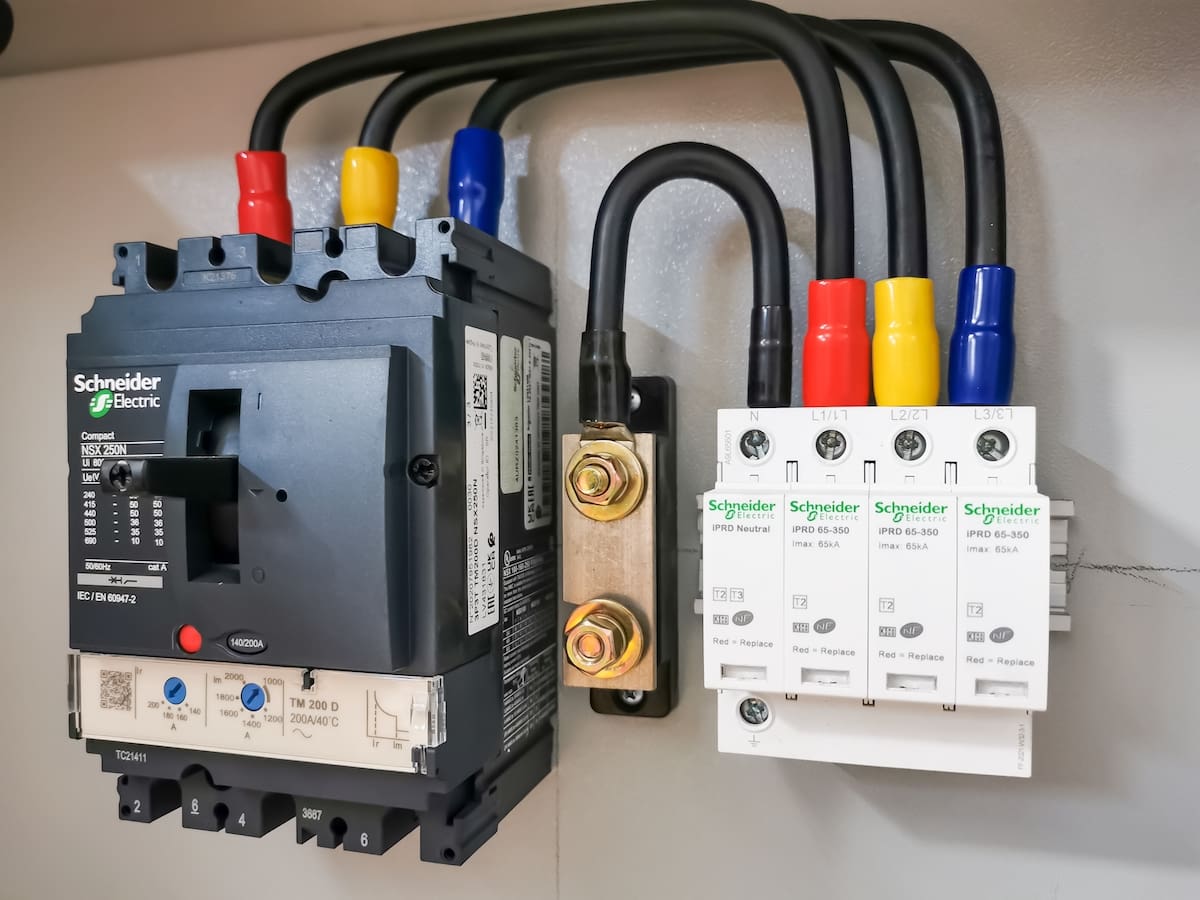
Whole Home Surge Protector Installation: What to Demand from Your Electrician
Most homeowners spend more time researching a new TV or kitchen appliance than they do researching surge protection. That’s understandable. Surge protectors are not particularly exciting, and most people don’t think about them until after an electrical problem occurs and the expensive repair bills start rolling in.
Installing a whole house surge protector is key to preventing lightning strikes, voltage fluctuations, and excess power from entering your home and damaging your appliances. A professional installation will pay for itself many times over, extending the life of your electronics and HVAC system.
Whole House Surge Protector Installation: Quality Matters
You probably have a surge protector plugged into your outlet for a computer or TV. So, you may think installing a whole house surge protector is a simple plug-and-play upgrade. It’s not. It becomes part of your home’s entire electrical system. So, you need professional installation from a licensed electrical company and a qualified electrician.
Even the highest-rated surge protector can be less effective if it is not installed correctly. The device must be connected properly to the electrical panel, sized appropriately for your home’s needs, and installed according to the manufacturer’s specifications.
Small Mistakes Can Reduce Protection
Whole home surge protector installation can be affected by several factors, which is why you need experienced professionals to do the job:
- Long wiring connections
- Improper breaker placement
- Incorrect installation methods
- Failure to follow manufacturer requirements
- Incompatible panel configurations
The Questions Every Homeowner Should Ask About Whole House Surge Protector Installation
You don’t need to be an electrical expert, but there are a few questions you can ask to make sure you understand what’s being installed and that your installer knows what they’re doing.
What Surge Protection Device Are You Installing?
Not all surge protectors provide the same level of protection. An experienced electrician will take the time to evaluate your electrical system and recommend the appropriate unit for your home. Find out the manufacturer, make, and model number so you can review the specs, warranty information, and product ratings.
What Is the Surge Current Rating?
One of the most important specifications is the surge current rating. Higher-rated devices can generally handle large surge events and repeated smaller events better. You have options for the type of device you install, so make sure you choose the right one.
Does the Device Include Status Indicators?
You’ll want to know if the device is working, and a status indicator lets you know it’s doing its job. If the device experiences a significant surge event or reaches the end of its service life, those indicators can provide valuable information.
What Warranty Is Included?
Warranties vary significantly between manufacturers. You want to know what’s involved if a device fails, and whether there’s any equipment protection. Many devices include coverage for damage to major appliances and connected electronics, if the device was installed properly in accordance with the National Electrical Code (NEC) and local requirements.
What Proper Installation Should Look Like
Whole-house surge protectors are typically installed directly at the electrical panel, allowing the device to intercept voltage spikes as close as possible to where electricity enters your home. Because your home’s entire electrical system connects to the panel, this placement provides broad protection throughout the house.
Surge protectors perform best when connected using short, direct wiring paths. Excessively long conductors can reduce the effectiveness of the protection system. Experienced electricians understand the importance of minimizing wire length whenever possible.
Every surge protection device includes installation requirements developed by the manufacturer. These instructions cover topics such as breaker sizing, mounting location, conductor requirements, and wiring methods.
Before the project is complete, the installer should verify that the device is operating properly. This typically includes confirming proper connections and checking any status indicators or monitoring features included with the system. This should also include some basic education so you know the unit is working and how to tell if it’s not.
Should Surge Protection Be Installed During Other Electrical Projects?
Many homeowners add surge protection during larger electrical upgrades because it can be more convenient and cost-effective than scheduling a separate installation later. For example:
- Electrical panel upgrades: The panel is already being evaluated and updated, making it an ideal time to add surge protection.
- EV charger installation: Helps protect both the charging equipment and the home’s electrical system from voltage spikes.
- HVAC replacement: Air conditioners are among the most expensive electrical systems in a home and can benefit from additional protection.
- Smart home upgrades: As homes add more connected devices, security systems, networking equipment, and automation technology, surge protection becomes increasingly valuable.
The cost of installing a whole house surge protector is less than $1,000 as long as you don’t need to upgrade your electrical panel, have a subpanel in a detached garage, or have to bring your grounding system up to code. But, it can save you tens of thousands of dollars if a lightning strike hits your home and fries your AC unit, stove, dishwasher, washer or dryer, or other electrical components.
Call George Brazil Plumbing & Electrical today for same-day service and transparent, upfront pricing for whole home surge protector installation.

